
Reviewed · METEORA MONASTERIES TOURS
4-Day Tour of Mycenae, Epidaurus, Olympia, Delphi & Meteora
Old Greece, nonstop, in smart order. What makes this tour work is the way it strings together major UNESCO sights with enough guided time to make the stories click, then gives you real breaks to reset on the bus. I especially like the licensed guides who bring myths and monuments into focus, and I love that the trip commits to Meteora, not just a look from the road.
There is one catch: you should expect long driving days. The roads can be windy, the seats and timing are organized, but if motion sickness hits you easily, plan for it.
In This Review
- Key Points That Make This Tour Worth a Closer Look
- Price and Value: Why $747 Feels Fair for This Route
- The Coach, the Guide, and the Headphone Trick That Saves Your Day
- Day 1: Corinth Canal Views, Mycenae’s Agamemnon World, Epidaurus, and Nafplio Energy
- Day 2: Olympia Stadium, Museum Highlights, and the Rio-Antirrio Crossing to Delphi
- Day 3: Delphi Oracle Power, the Delphi Museum Charioteer, and the Road to Kalabaka
- Day 4: Meteora Monasteries on the Rocks, Real Stair Time, and a Thermopylae Photo Stop
- Hotels and Meals: 4-Star Comfort, Half-Board Reality, and the Buffet Pattern
- Logistics That Actually Change Your Day: Pickup, Luggage, and Packing for Steps
- Who This Tour Suits Best, and Who Should Rethink It
- Should You Book This 4-Day Mycenae to Meteora Tour?
- FAQ
- What is included in the tour price?
- Are meals like lunch included?
- Is there an extra environmental fee?
- What do I need to wear for Meteora monasteries?
- How does pickup work from Athens?
- Do children and students need ID?
Key Points That Make This Tour Worth a Closer Look
- Licensed guide + headphones so you can hear the explanations clearly at each site
- Mycenae, Epidaurus, Olympia, Delphi, and Meteora in one efficient loop through Greece’s ancient core
- Corinth Canal and the Rio-Antirrio bridge give you big-picture views between the heavy hitters
- Meteora monasteries with rules for what to wear, plus real stairs and steps once you’re there
- 4-star hotel stays with dinner and breakfast on a half-board plan, handled for you
Price and Value: Why $747 Feels Fair for This Route
At $747 per person for 4 days, you are paying for a lot more than transportation. The deal covers your licensed guide, entry fees to the sites and museums, and three nights in 4-star hotels with dinner and breakfast included. Lunch is not included, so you will still budget for that, but day-to-day logistics like ticket handling and guided timing are already taken care of.
The value really shows in the geography. This route is long, moving between the Peloponnese and central Greece, then climbing into the Meteora region before heading back to Athens. Doing all of that on your own usually means either lots of planning or costly last-minute fixes. Here, you’re buying structure, plus a guide who can connect the dots fast enough that the trip doesn’t feel like a checklist.
And the practical side matters. You get an air-conditioned coach, you receive headphones during attraction visits, and the bus rides include Wi-Fi. When you’re crisscrossing Greece with big stops, that adds up to a calmer day.
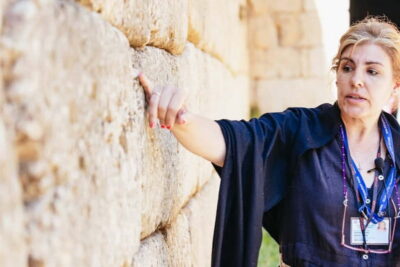
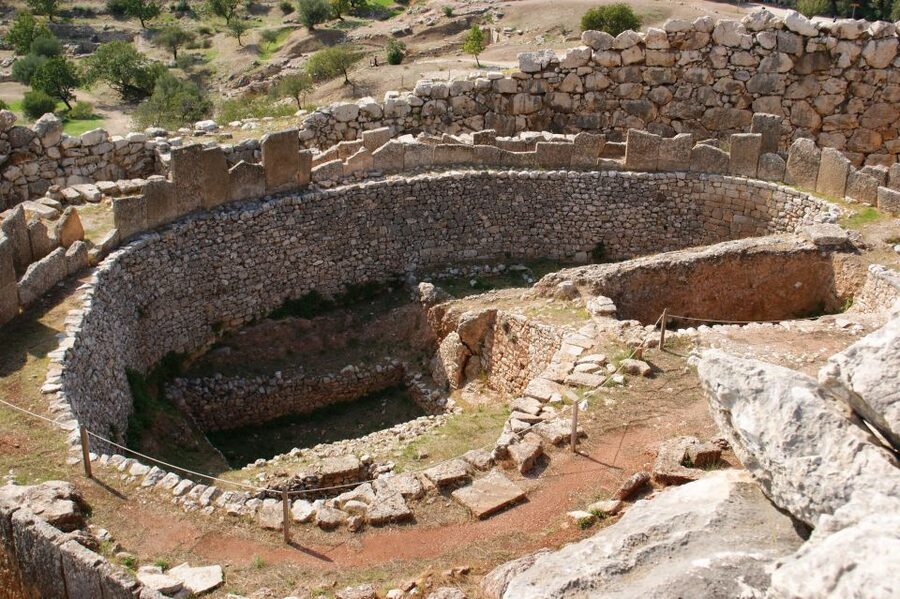
More of the Lion Gate and the great theatre:
The Coach, the Guide, and the Headphone Trick That Saves Your Day
This tour is built around a comfortable bus and a licensed guide who stays with the group. You’ll have headphones during attraction visits, which is a small detail that makes a huge difference at places where crowds, wind, and distance can make audio frustrating. It also means you can keep your pace moving without missing the main points.
Guides on this route have been repeatedly praised for strong storytelling and patient guidance. Names that come up in past tours include Eustasis, Rose, Xenia, Joy, Christina, Evi, Nancy, and Stathi. Even if your guide is someone else, the pattern is clear: the experience is meant to be understood, not just photographed.
One more convenience: the tour is set up with smooth site entry, including skipping the ticket line. That is worth something, because many of these places are popular and queues can chew up your time.
Day 1: Corinth Canal Views, Mycenae’s Agamemnon World, Epidaurus, and Nafplio Energy
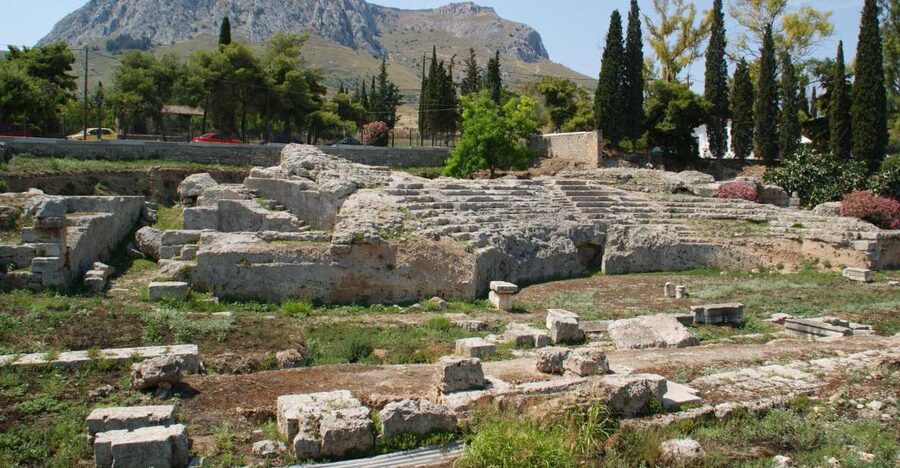
Day 1 starts with a scenic drive west from Athens. Before you get into the ancient sites, you stop at the Corinth Canal for photos. It’s a quick moment, but it’s the right kind of preview. You get that sense of Greece as a crossroads, where the land and sea have been shaping travel routes for centuries.
Next comes Mycenae, guided for about an hour. This is the kingdom of mythical Agamemnon, first sung by Homer, and the site is built for seeing how power lived in the Late Bronze Age. My favorite part of tours like this is when a guide helps you understand what you’re looking at, not just what it’s called. At Mycenae, that matters because walls, gates, and tomb spaces can feel like stone until someone gives them context.
After Mycenae, you have free time for lunch on your own. This is one of the moments you’ll appreciate the most, because it breaks up the day before the heavier walking begins.
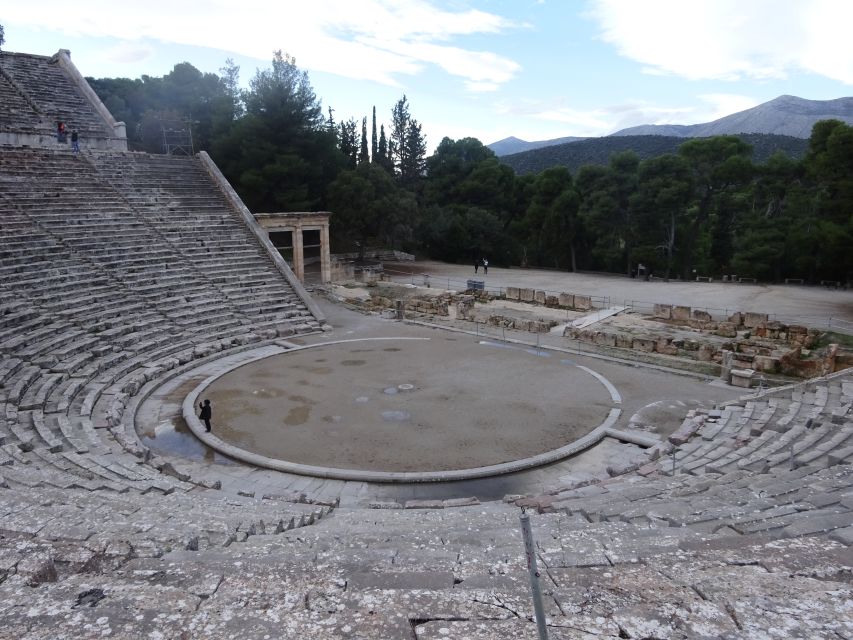
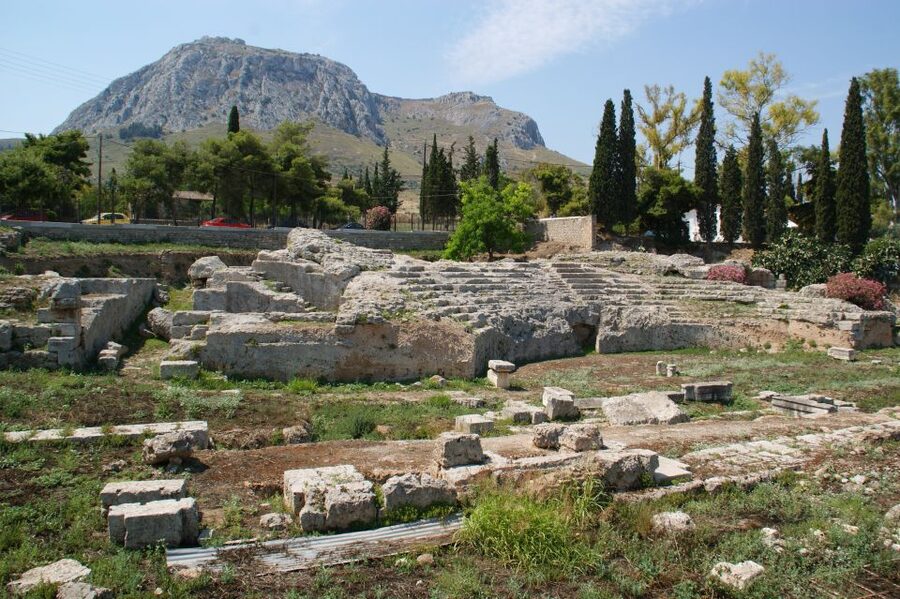
Then you head to Epidaurus, where the star is the ancient theatre. The theatre sits on a headland called Nesi at Palaia Epidaurus, and it is remarkably well preserved. You’ll see the cavea shaped with limestone seating and poros staircases, and you’ll learn why it’s famous for exceptional acoustics. Even if you don’t test the sound yourself, it helps to think of this space as technology for performance and belief.
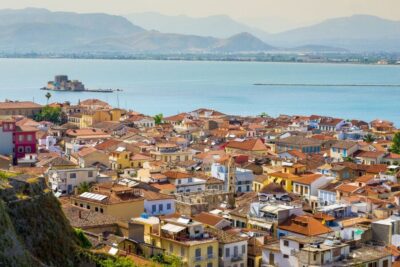
Finally, you stop in Nafplio, the first capital of Greece in 1829. You’ll get time there, so you can stretch your legs and soak up a more modern Greek town feeling after the ruins. Day 1 ends with hotel dinner and overnight.
Practical note: you might even be placed for the first overnight in Olympia depending on the route flow. Either way, you’re building toward the same big day ahead.
Day 2: Olympia Stadium, Museum Highlights, and the Rio-Antirrio Crossing to Delphi
Day 2 is your transition from the Peloponnese’s ancient religious center into the Olympic story and onward toward Delphi.
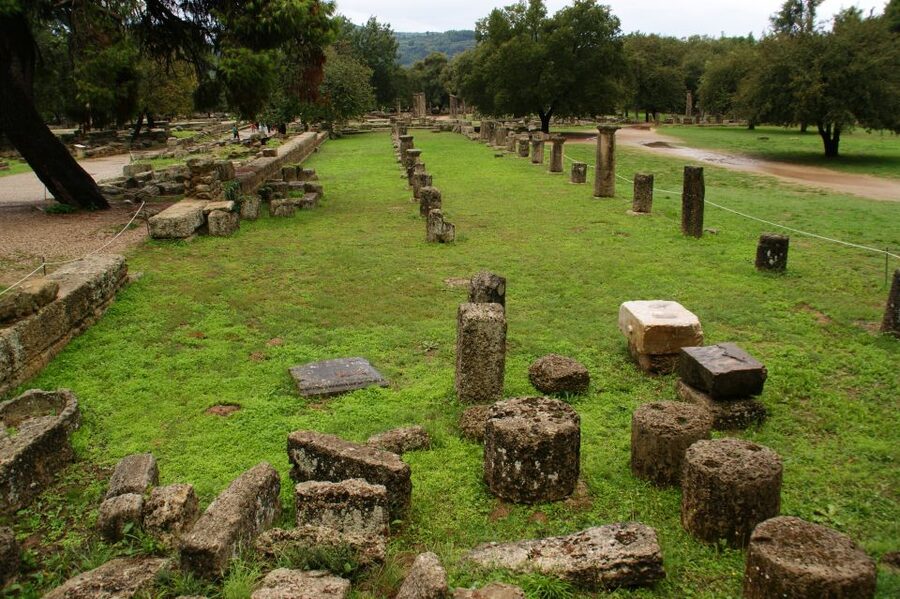
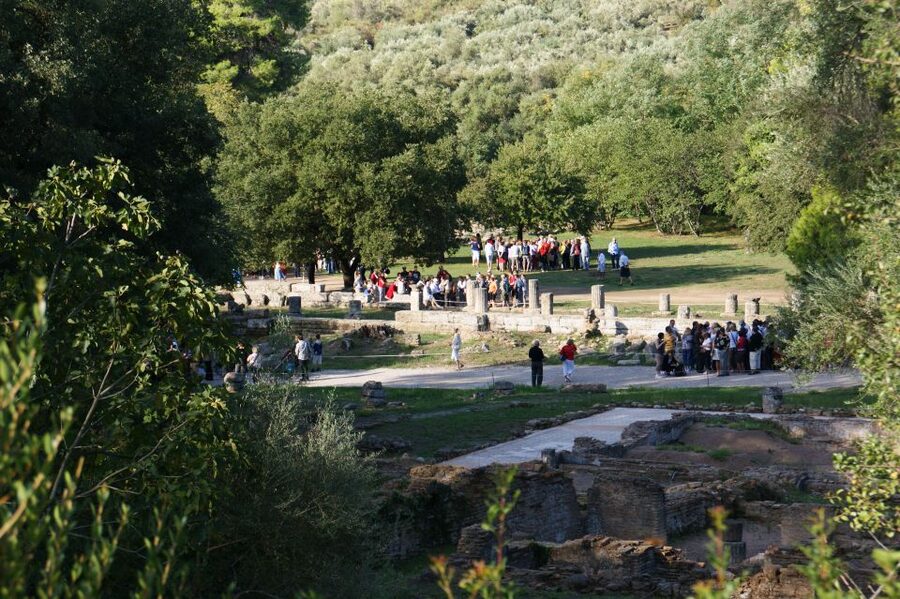
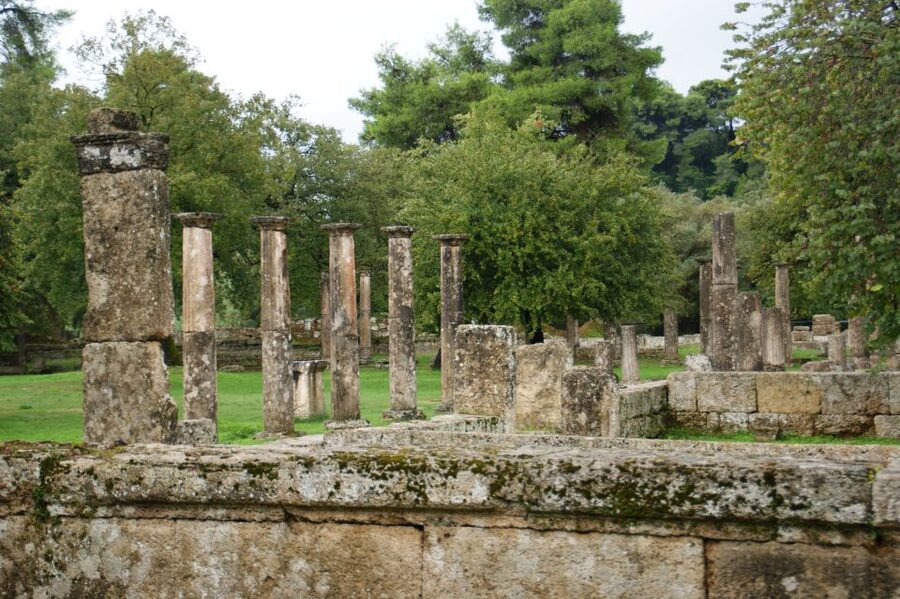
Breakfast and then you go to Olympia, described as the most celebrated sanctuary of ancient Greece. Olympia’s fame rests on the Olympic Games, held every four years to honor Zeus. What I like here is that Olympia isn’t just a pretty ruin. It’s a place that explains how athletics, religion, and politics blended together.
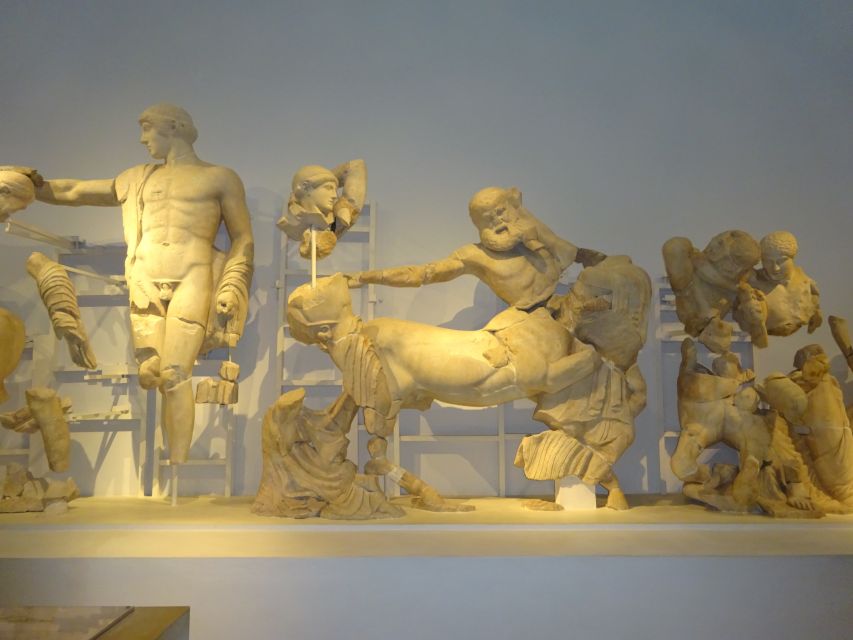
You visit the Archaeological Site and Museum with a guided focus. The museum matters because you can put faces and artifacts to what you see outside. A guided visit also helps you avoid the common trap of thinking all the stones are the same. Olympia has a lot of distinct parts that tell different parts of the story.
Then comes one of the more modern, surprising breaks: a drive via Patras to the Rio-Antirrio crossing. You’ll go across the channel on a new suspended bridge considered one of the longest and most modern in Europe, then continue via Antirion and drive through Nafpaktos. It’s the kind of stop that makes the trip feel like travel, not just sitting in a time machine.
You finish the day in Delphi with dinner and overnight, giving you a strong start for day 3.
Day 3: Delphi Oracle Power, the Delphi Museum Charioteer, and the Road to Kalabaka
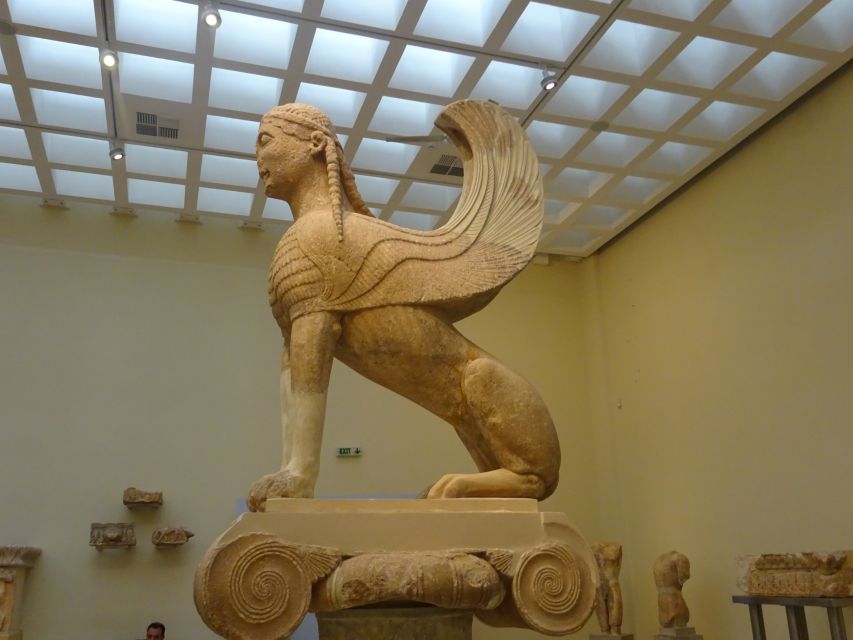
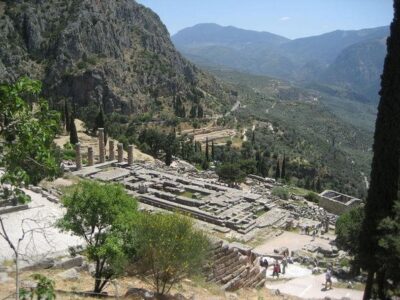
Day 3 begins with Delphi at the center of the stage. Delphi sits at the foot of Mount Parnassos and is famed for the oracle of ancient Greece, often described as the world’s center in ancient thought. The guided visit gives you the chance to understand why people traveled from far away to ask questions there, and why Delphi was more than a temple complex.
You’ll visit the archaeological site and the museum, which is a major reason this tour works. In the museum, one highlight is the bronze statue of the Charioteer, dedicated to Apollo by Polyzalos, the tyrant of Gela. The dedication links to 478 B.C., tied to victory in the chariot race at the Pythian Games.
After Delphi, you drive to Kalabaka, where you’ll have dinner and overnight. Kalabaka is your launch point for Meteora, so this day is basically your setup day, with enough time in Delphi that the oracle idea lands before you start climbing those rock monasteries.
More consultations at Delphi:
- Athens: Mythology of Delphi, Museum and Arachova Guided Tour
★ 4.7 · 5,102 reviews - From Athens: Delphi Full Day V.R. Audio Guided Tour
★ 4.6 · 3,028 reviews - From Athens: Small-Group Delphi, Museum & Arachova Day Trip
★ 4.8 · 2,476 reviews - Delphi English Day Trip from Athens with Official Guide
★ 4.5 · 2,199 reviews
Day 4: Meteora Monasteries on the Rocks, Real Stair Time, and a Thermopylae Photo Stop
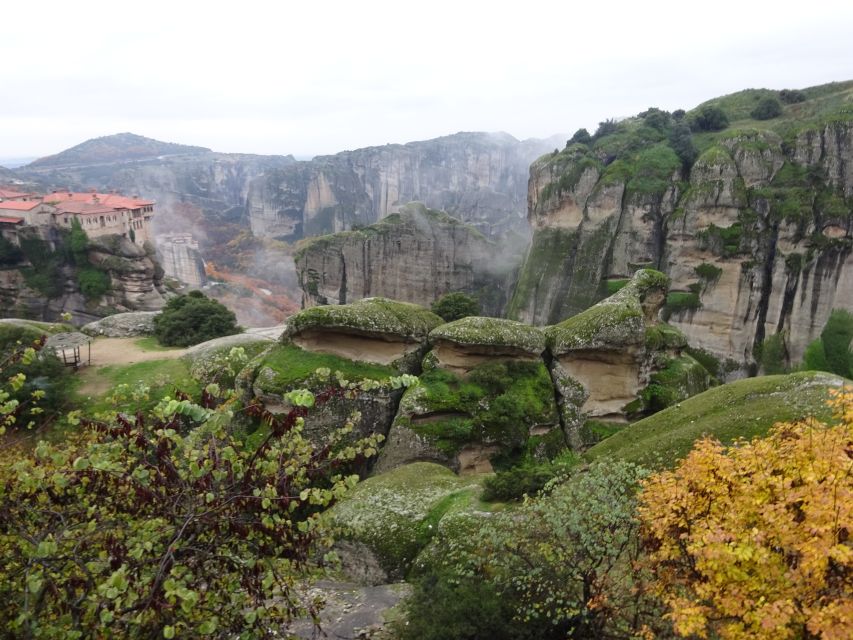
If you want one day to remember long after the photos fade, it’s usually Meteora. Meteora means suspended in air, and it refers to the rock monastery communities that rise dramatically from the valley. The tour focuses on visiting two of the monasteries, which gives you a meaningful taste of what UNESCO calls a unique cultural phenomenon.
You’ll hear about how monks built and survived in this setting: descending in nets or using retractable wooden ladders up to about 40 meters long to reach the fertile valleys below for grapes, corn, and potatoes. That detail changes the experience. You stop seeing it as a viewpoint and start seeing it as a living solution to a difficult landscape.
You visit the monasteries with guided time. This is not a sit-and-stare day. Plan for real steps and uneven surfaces. That matters for comfort and for how you pace yourself once you’re up there.
After Meteora, you start the drive back to Athens and make a Thermopylae photo stop. You get the classic quick moment of recognition, then you return to Athens around 19:00.
Hotels and Meals: 4-Star Comfort, Half-Board Reality, and the Buffet Pattern
The tour includes three nights in 4-star hotels and provides dinner and breakfast at the hotel each day. In general, the stays are described as comfortable and well run.
Still, a pattern shows up in the feedback: hotel meals can get repetitive, because buffet dinners often follow a similar format from one night to the next. Breakfast tends to be a stronger point, while dinners can land anywhere from good to average depending on the stop.
This matters because one of the best ways to feel like you’re traveling, not just touring, is to get at least one meal outside the buffet when you can. Here, lunch is on your own, so you have a built-in chance to choose a local meal. Use that chance. It will also give you a calmer pace mentally before the next big site.
Also, you’ll appreciate the basics: Wi-Fi is available on the coach and at the hotel. After long days, that is more useful than it sounds, especially for map checks and translating signage while you plan your next stop.
Logistics That Actually Change Your Day: Pickup, Luggage, and Packing for Steps
The meeting point is Hotel Amalia Athens at 8:30 AM. Pickup is optional from selected Athens central hotels, with pickup starting at 07:30 and running until 08:15 for hotels with bus access. The departure from Hotel Amalia is the anchor time.
Bring comfortable shoes. You’ll spend time walking at Mycenae, Epidaurus, Olympia, Delphi, and especially Meteora. You also need long pants, and for Meteora specifically:
- men must wear long trousers
- women must wear dresses or skirts
Pack a sun hat and a long-sleeved shirt for the daytime heat. Even in shoulder seasons, Greece can surprise you with strong sun.
Your luggage is limited to one medium suitcase and one small carry-on bag on multi-day tours. And there are clear rules: no pets, no oversize luggage, no smoking, no alcohol or drugs, and no video recording.
One more detail that can matter more than you think: children and students up to 18 need a valid passport or ID to get the discounted entrance pricing. Otherwise, they may need to pay entrance fees again for archaeological sites or museums.
Finally, keep in mind this tour is not suitable for people with mobility impairments, wheelchair users, claustrophobia, or motion sickness. If you know winding roads and long hours in a coach make you feel sick, take that seriously.
Who This Tour Suits Best, and Who Should Rethink It
This is a strong fit if you:
- want to see the core ancient sites of Greece in four days without juggling tickets and timing
- like your history explained with myths and context, not just dates and names
- enjoy guided pacing, but still want some free time in towns like Nafplio
- value comfort basics like a good driver, air-conditioned bus, and headphones for clear audio
It may not be your best match if you:
- need a lot of mobility support or step-free access
- struggle with long drives and windy roads
- dislike strict clothing expectations for indoor or monastery sites
- want a super small group feel. Some past departures have run at a larger group size, around 60, which can make the experience feel more crowded at certain stops.
Should You Book This 4-Day Mycenae to Meteora Tour?
I’d book it if your goal is efficient, guided, high-impact Ancient Greece, with Meteora as the centerpiece. For the money, the biggest win is not just the price, it’s the package: guide, entry fees, headphones, hotel stays, and the hard-to-organize geography.
I’d be cautious if you’re sensitive to motion sickness or you want lots of quiet time, because this route is active and travel-heavy. Also, if you’re picky about meals, plan to treat lunch as your chance to customize your day.
If you’re the type who loves standing where history happened, then checking out the museum artifacts to connect the dots, this tour is built for you. Just bring sturdy shoes, dress correctly for Meteora, and treat the bus rides as the price of getting all these sites into one trip.
FAQ
What is included in the tour price?
The tour includes an air-conditioned bus, a licensed guide, headphones during attraction visits, entrance fees to attractions and museums, 3 night stays at 4-star hotels, dinner and breakfast at the hotel, Wi-Fi on the tour coach and at the hotel, and hotel pick up service from selected Athens central hotels with bus access.
Are meals like lunch included?
Dinner and breakfast are included, but lunch and drinks are not included. Lunch is on your own during the free time stops.
Is there an extra environmental fee?
Yes. There is an environmental fee of 10 EUR per room per night that is paid directly to the hotel reception.
What do I need to wear for Meteora monasteries?
Men must wear long trousers. Women must wear a dress or a skirt. Long pants are also advised for comfort and to match the monastery expectations.
How does pickup work from Athens?
Meeting is at Hotel Amalia Athens at 8:30 AM. Optional pickup starts at 07:30 and ends at 08:15 from selected Athens central hotels with bus access. The 8:15 pick up time is only from Hotel Amalia Athens at Syntagma square.
Do children and students need ID?
Yes. Children and students aged up to 18 must hold a valid passport or ID to receive discounted entrance pricing. Without it, they may have to pay entrance fees again for archaeological sites or museums.
The Original Stadium
Balanced on Stone Pillars



New pins on the Athens chart
- Mycenae, Epidaurus, Nafplio, Corinth Canal Private Full Day Trip From Athens★ 5.0 · 83 reviews
- From Athens: Mycenae, Epidaurus & Nafplion Private Tour★ 4.9 · 83 reviews
- Delphi with Professional English Guide and Transportation★ 4.5 · 84 reviews
- Acropolis of Athens, Ancient Agora and the Agora Museum Tour★ 5.0 · 86 reviews
- Athens: 2.5-Hour Private City Tour Off the Beaten Track★ 4.7 · 86 reviews
- Thermopylae The battle of the 300 Spartans & Delphi Day Tour★ 5.0 · 86 reviews
Meteora Monasteries Tours, compared.
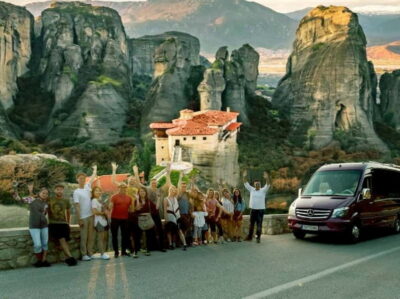
Meteora Monasteries Day Trip with Caves and Lunch
Read our review →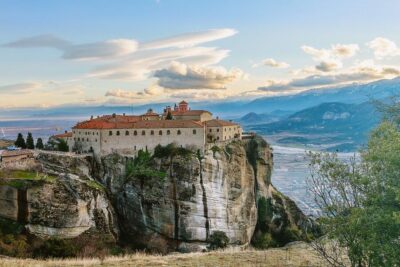

Athens to Meteora: Monasteries, Caves & Seaside Stopovers
Read our review →
Full-Day Meteora Tour with Local Guide & Greek Lunch
Read our review →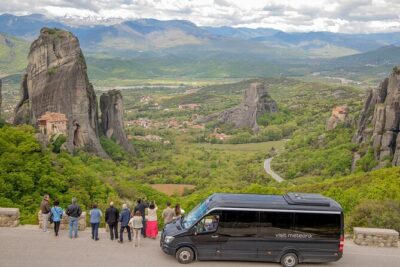
Meteora Monasteries, Caves & Coastal Stopovers with Lunch
Read our review →
Meteora Monasteries & Caves DayTrip from Athens with Greek Lunch
Read our review →
4-Day Classical Greece Tour: Epidaurus, Mycenae, Olympia, Delphi, Meteora
Read our review →Browse the lists this tour appears in