
Reviewed · ACROPOLIS TICKETS & TOURS
Athens: Acropolis, Parthenon & Acropolis Museum Guided Tour
Acropolis feels like it clicks into place quickly. I love that this tour pairs a licensed guide with skip-the-line entry for the Acropolis Museum, and it brings key stops like the Theater of Dionysus to life through story-based explanations (guides such as Sotos, Jason, Chrysa, Giota, and Ioannis get praised for clear English and engaging pacing). One consideration: it is still a lot of walking on Acropolis hill, and it is not suitable for wheelchair users or people with mobility or heart problems.
You also get the practical payoff of seeing both the monuments outdoors and the finds indoors, without wasting time at ticket counters. At around $40 per person for a 2 to 4 hour experience (often closer to 3 to 4 hours), it is a solid way to spend your limited Athens time in the right order. If the weather turns or your group is moving slower, expect the schedule to breathe, since the guides may change the site order to keep things comfortable.
In This Review
- Key things I would not skip
- Skip-The-Line Tickets and the Reality of Getting In
- The 2 to 4 Hour Schedule: What It Feels Like on Your Feet
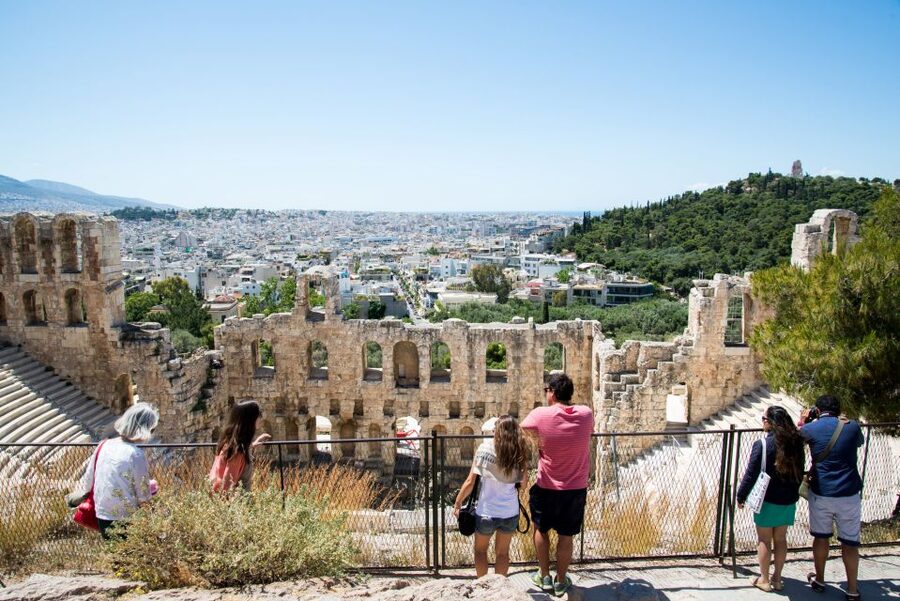
- Theater of Dionysus and the Odeon of Herodes Atticus
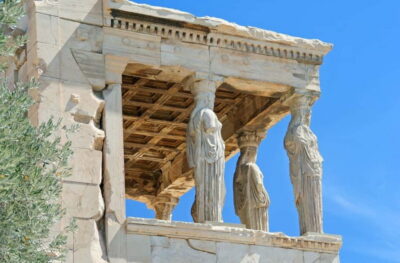
- Propylea, Temple of Nike, and the Erechtheion’s Special Look
- Parthenon: Why It Still Matters
- The Short Break and the Hard Switch to Museum Time
- Acropolis Museum: Natural Light, Glass Floors, and the Caryatids
- Why a Licensed Guide Beats DIY at the Acropolis
- Price and Value: Is $40 Worth It?
- Who This Tour Suits Best (and Who Should Rethink It)
- Book It or Skip It: My Practical Recommendation
- FAQ
- How long is the Athens Acropolis, Parthenon and Acropolis Museum guided tour?
- Does the tour skip the line at the Acropolis and the Acropolis Museum?
- Is there a separate entrance to the Acropolis?
- Are there disposable earphones on the tour?
- Is this tour private or shared?
- Where does the tour meet?
- Is this tour suitable for children or people with mobility issues?
- What should I bring?
- What if I select the option without tickets?
- Can I cancel for free?
Key things I would not skip
- Skip-the-line for the Acropolis Museum with entry through a separate museum entrance
- Acropolis Theater walk with story context, including Dionysus and the Odeon of Herodes Atticus
- Parthenon viewpoints explained simply, tied to the 5th-century Golden Age of Pericles
- New Acropolis Museum lighting and layout, with natural light on surviving temple masterpieces
- Caryatid spotlight, with the originals displayed and the link to the British Museum
- Disposable earphones for larger groups, plus an honest note that audio can get messy when crowded
Skip-The-Line Tickets and the Reality of Getting In

The big value here is time. The tour is built to reduce the hassle at the entrance points, especially for the museum. You get skip-the-line tickets for both the Acropolis and the Acropolis Museum if you select the option that includes tickets, and you enter the museum through a dedicated entrance.
One key caveat matters for your expectations: there is no skip-the-line separate entrance to the Acropolis itself. In other words, you still benefit from smoother entry and reduced ticket-office time, but the museum is where the separate entrance experience is clearly stated.
If you are the type who hates starting a day in a queue, this setup is designed for you. If you do not mind lines and you love wandering freely, you might wonder what you are paying for. That is where the guide earns the money: you are not just walking between “cool rocks,” you are getting context for what you are looking at, in a logical order.
More ascents of the sacred rock:
The 2 to 4 Hour Schedule: What It Feels Like on Your Feet
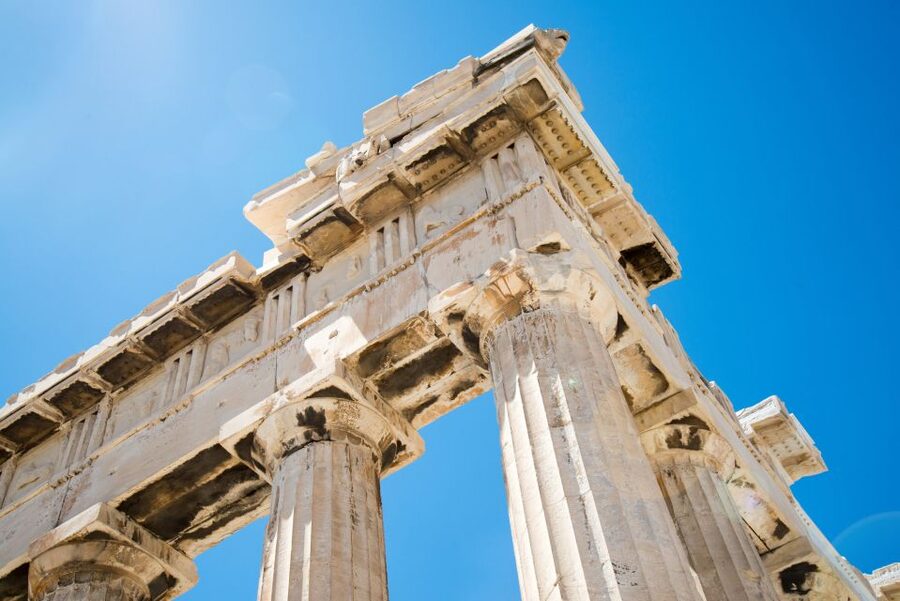
The duration is listed as 2 to 4 hours, with the tour typically running 3 to 4 hours depending on group pace and weather. The pace is not frantic, but it is not a sit-down tour either. You are walking through major sections of the Acropolis hill, then shifting to the museum.
Plan for real steps and uneven surfaces. Comfortable shoes are not optional. You will also want a hat and water, because this is an outdoor site that can bake, and you will be out in the open for parts of the experience.
There is also a safety and comfort note that guides may change the order of stops. That is not a red flag, it is practical. If the site is crowded, hot, or just moving slowly, your guide may adjust so you do not feel stuck waiting too long in one spot.
One more small heads-up: the tour includes disposable earphones for groups of more than 8 people, but audio quality may be affected by other groups equipment during crowded times. So, if you know you are sensitive to audio issues, keep your expectations flexible and stay close to your guide when possible.
Theater of Dionysus and the Odeon of Herodes Atticus
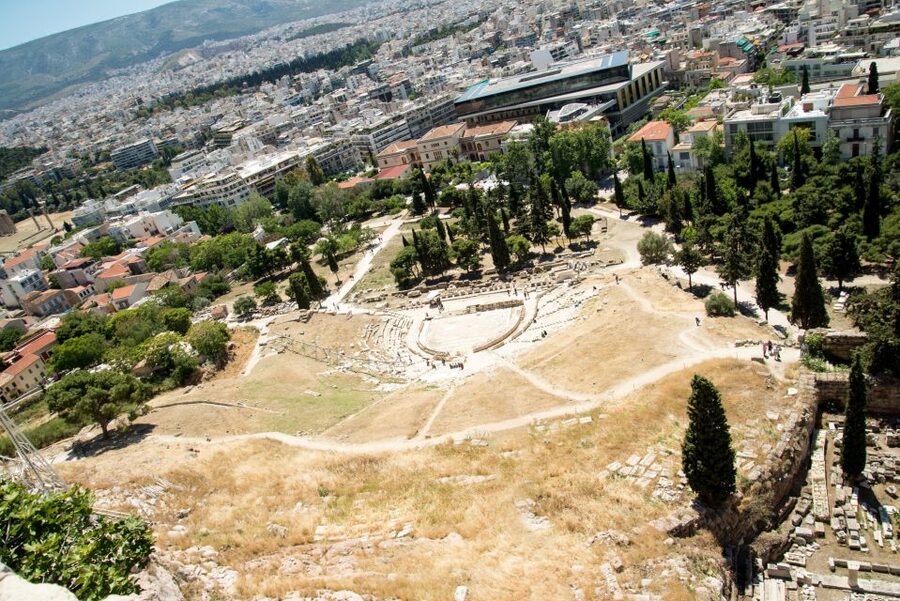
Your Acropolis story starts with performance and ideas, not just architecture. The Theater of Dionysus is a highlight because it is described as the first theater of humanity. That framing is useful. When you stand in the right general area and hear the guide connect the site to ancient dramas and tragedies, it helps you understand why people once gathered there, not only why it looks impressive today.
From there, the tour moves into other linked spaces, including the Odeon of Herodes Atticus. Even if you have heard of it before, having a guide connect this structure to the wider cultural world makes the stop feel more grounded. It turns the monument into a living idea: public gathering, art, civic life.
You also visit the sanctuary of the healing god Asclepius. This stop is easy to overlook when you are trying to rush to the headline views, but it adds a different side of the Acropolis. It reminds you the hill was not just political theater and temple worship. It was also tied to healing, ritual, and the hopes people brought with them.
Propylea, Temple of Nike, and the Erechtheion’s Special Look
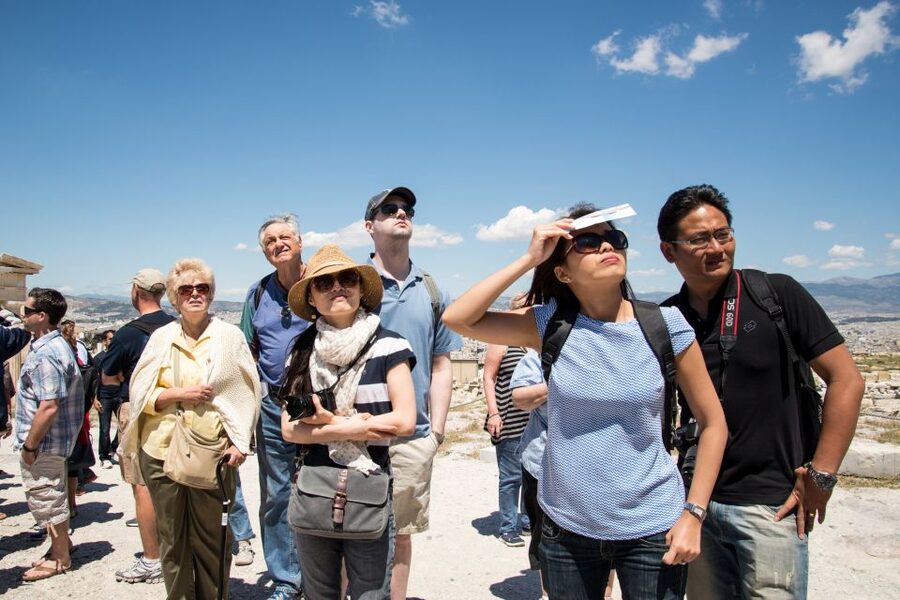
As you climb higher, the tour highlights three major areas: the Propylea Temple of Nike, the Erechtheion Temple, and the key positions that lead your eyes toward the Parthenon.
The Propylea and Temple of Nike stop is where your photos start to get better, because you are gaining height and angles. The Temple of Nike matters because it anchors the military and civic identity side of Athens, not just the philosophical and artistic sides.
Then comes the Erechtheion, and this is where the mind starts doing two jobs at once. You are looking at a temple, but also learning how the Acropolis is really a layered complex with different functions across time. That is the benefit of a guided format. Without a guide, you may see it as a single big hill landmark. With one, it starts to feel like a collection of purposeful spaces.
The guided tone at this stage matters too. In the bookings tied to this tour, guides like Chrysa and Giota are praised for storytelling that puts things in perspective, including timeline thinking. That can help your brain connect what you are seeing now with what people originally built there in the 5th century.
Parthenon: Why It Still Matters
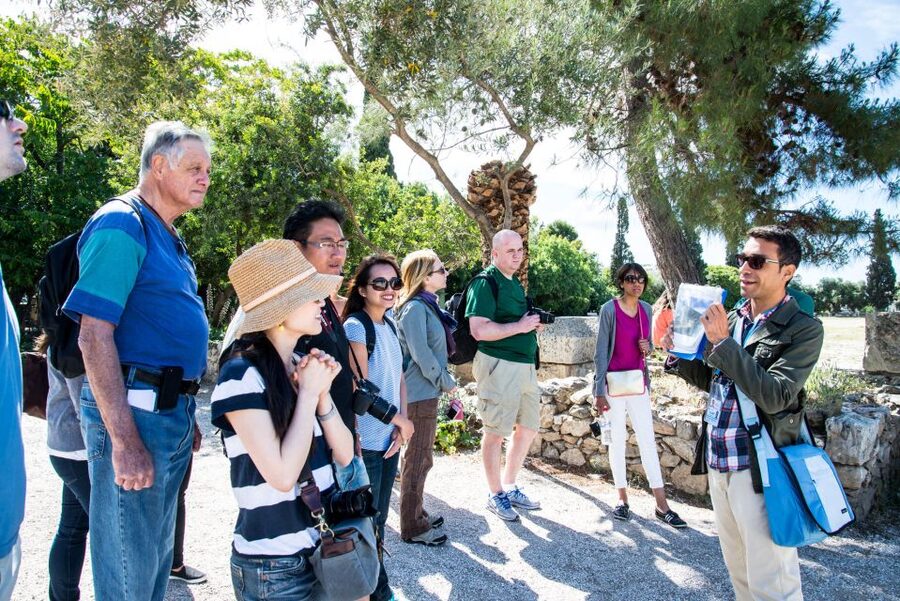
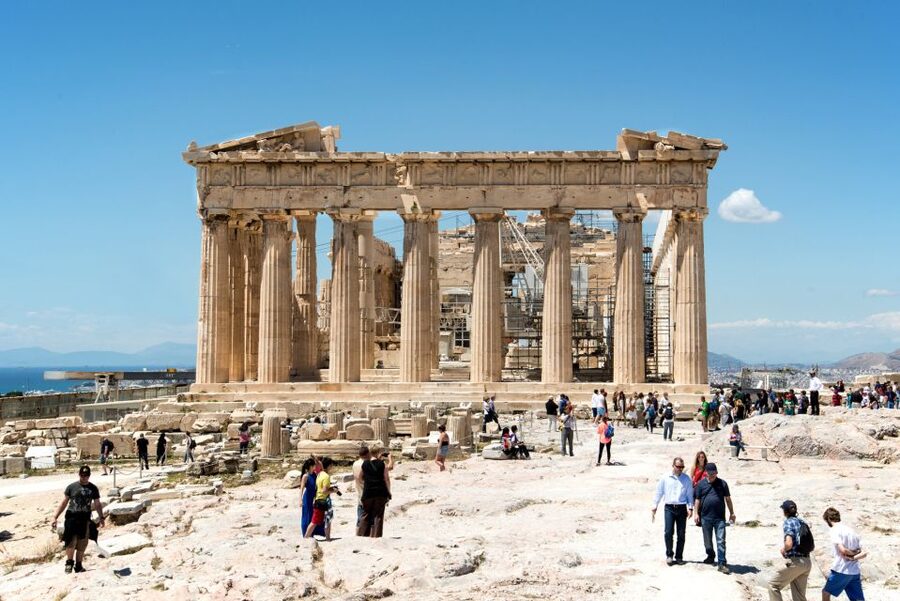
The Parthenon stop is the reason most people come. You will see it as the symbol of democracy and western civilization, and you will get the 5th-century context that ties it to the Golden Age of Pericles.
I like the way a guided visit prevents the Parthenon from becoming a vague icon. When you learn the basics of what the monument represented, you look at details differently. Even surviving remnants and the layout matter more when you understand the original plan.
One practical note: your time at the Parthenon also depends on group pace and weather. You will usually get a chance to look around and take photos, but remember you are sharing time with other groups and your guide may shift the order or timing slightly.
If you are trying to understand Athens in a day, this stop is your anchor. If you are hoping for a slow, museum-style stroll across every crack and carving, you might want more time than this tour offers.
More marble under museum roofs:
- Athens: Mythology of Delphi, Museum and Arachova Guided Tour
★ 4.7 · 5,102 reviews - Athens: Acropolis, Parthenon & Acropolis Museum Guided Tour
★ 4.8 · 3,579 reviews - Acropolis monuments & Parthenon Walking Tour with Optional Acropolis Museum
★ 5.0 · 2,678 reviews - Athens All Included: Acropolis and Museum Guided Tour with Ticket
★ 4.5 · 2,673 reviews
The Short Break and the Hard Switch to Museum Time
There is a built-in pause before the Acropolis Museum visit, described as a short break where you can use the bathroom. That is genuinely helpful. After minutes of climbing and scanning stone, you want a reset before you step indoors.
This is also where the tour shifts from outdoor grandeur to object-based learning. Outside, the story is shape and position. Inside, the story is surfaces, artifacts, and how people interpret a site long after it fell out of daily use.
Depending on the day, you may also have time to grab a drink or coffee during that transition area, and the pacing helps you avoid feeling rushed the moment you enter the museum.
Acropolis Museum: Natural Light, Glass Floors, and the Caryatids
The New Acropolis Museum is one of the most satisfying parts of the day, mostly because it solves a common frustration: seeing ruins outdoors and then wondering what they looked like in real life.
This museum uses natural light to display the original surviving masterpieces from the Acropolis temples. That lighting approach is not a gimmick. It helps you see how sculptural work was meant to be experienced, and it makes details easier to appreciate without constant bright glare.
You will also see excavations visible under glass floors and walkways. That is a powerful learning tool because it shows you the site was not erased. It was buried, preserved in layers, and then uncovered again. If you like understanding how archaeology works in practice, this part is a treat.
Architecturally, the museum is credited to architects Fotiadis and Tschumi, and the building itself does a good job of connecting to the larger Acropolis setting. You are also near a view of the hill from the museum side, which helps your brain reassemble the landscape you just walked across.
Then there is the Caryatid moment. The museum’s description calls out that it displays the original Caryatids, with five residing here and the sixth in the British Museum. Seeing those figures in place is a reality check after you have stared at stone blocks outside. They make the human scale feel obvious, even when the temple is gone.
Finally, on the top floor, you get the Parthenon frieze and a recreation of the Parthenon, alongside a breathtaking view of the Acropolis. This is the place where the tour really pays off if you came for understanding, not just selfies.
Why a Licensed Guide Beats DIY at the Acropolis
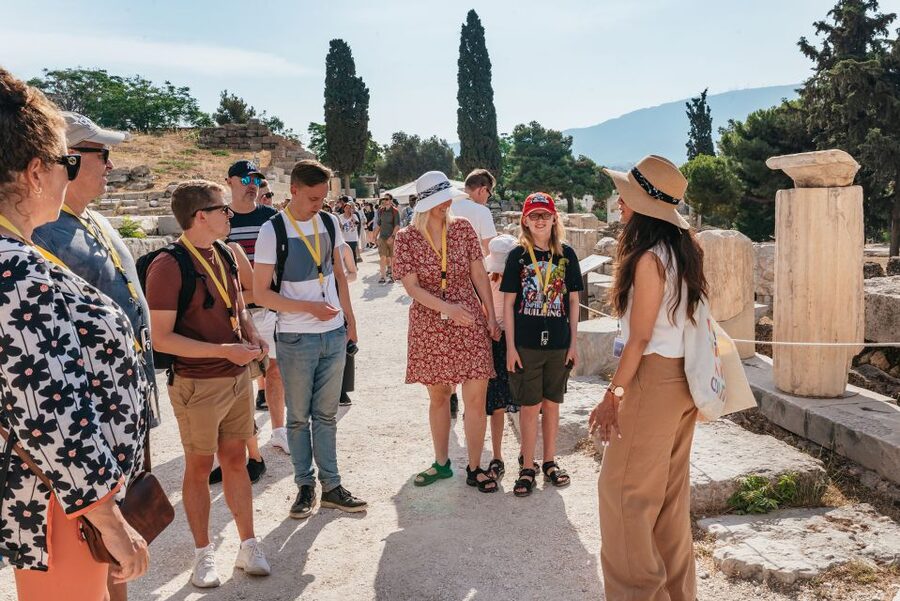
You could technically do the Acropolis and museum on your own, but the guided format is what makes this experience feel organized rather than overwhelming.
The tour is led by a live, English-speaking guide described as licensed. That matters because you are not only hearing facts. You are getting the stories that connect mythology, civic life, and the physical structures. When a guide is strong in English and playful with explanation, you end up walking away with a mental map, not just a list of names.
A pattern shows in the tour’s high ratings: guides such as Sotos, Jason, and Julia are praised for being entertaining and engaging, with explanations that keep attention through the whole route. That matters on the Acropolis, because fatigue can sneak in fast. A good guide is basically a fatigue manager, by keeping you curious at each stop.
The pacing also helps. You do get breaks for bathroom use and time for your own looking. One of the best ways to enjoy the Acropolis is to alternate between guided explanations and your own scanning. This tour builds that rhythm.
Price and Value: Is $40 Worth It?
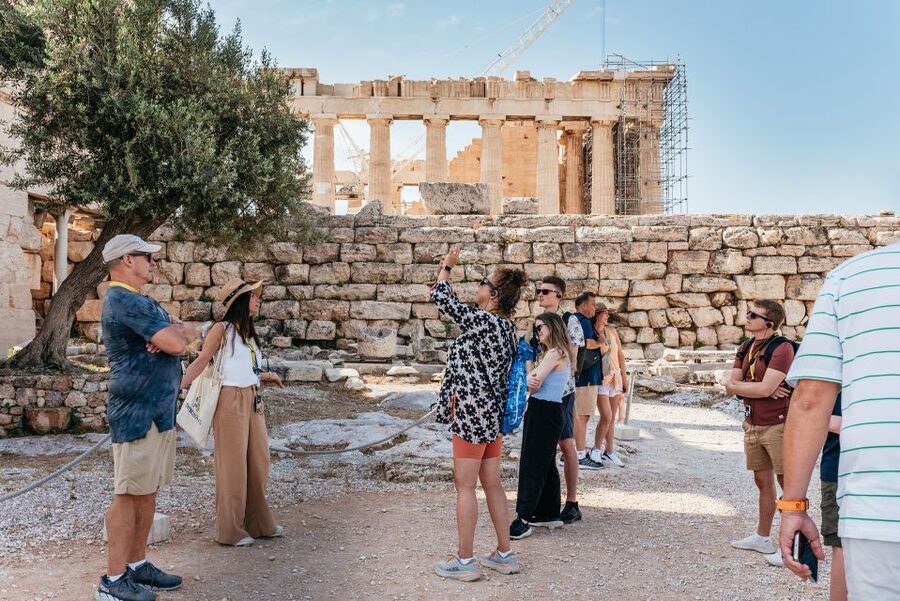
At $40 per person and roughly 3 to 4 hours for both the Acropolis and the Acropolis Museum, the value comes from three things you would otherwise piece together yourself:
- A live, English-speaking guide who explains what you are seeing.
- Skip-the-line tickets for the Acropolis and museum if you select the ticket-inclusive option.
- A museum visit structured to match what you saw outdoors, so the day makes sense.
If you are traveling with limited time, this bundled format is efficient. If you have the stamina and want the deepest museum time, you might consider doing the Acropolis and museum on separate days. One piece of guidance from the supplied info is that doing both together can be a lot to absorb, even if the pace is good.
But for most visitors, the combined plan is the best use of a half-day block. You end the day understanding why the Parthenon is more than a symbol, and you see the Caryatids and frieze in a setting built to help you see them clearly.
Who This Tour Suits Best (and Who Should Rethink It)

This is a strong pick if you want a guided, story-led Acropolis day in English and you prefer not to handle lines and entry logistics yourself.
It is also a good fit if you like theater, mythology, and civic history as a single connected theme. The itinerary touches politics through the Parthenon, public culture through the Theater of Dionysus and Odeon, and spiritual life through Asclepius.
Now the limitations are important:
- Not suitable for children under 6.
- Not suitable for people with mobility impairments.
- Not suitable for heart problems.
- Not suitable for wheelchair users.
- Not allowed: pets, baby strollers, luggage or large bags.
- Elevator use at Acropolis hill is not included.
If you fall into a mobility risk category, I would not treat this as a flexible walking tour. It is described as tricky for people with mobility issues, even though an elderly couple was able to manage on one tour. That is a reminder that individual tolerance varies, but the stated restrictions mean you should plan carefully.
Also, reduced or free ticket verification may require a passport or ID. If you are bringing children on reduced fares, expect ID checks to happen.
Book It or Skip It: My Practical Recommendation
Book this tour if:
- You want skip-the-line entry to save time, especially for the Acropolis Museum.
- You want a licensed guide in English who turns monuments into stories, including Dionysus theater and Asclepius.
- You want one organized day that links the outdoor ruins to the indoor masterpieces, including the Caryatids and Parthenon frieze.
Consider skipping or choosing a different format if:
- You need wheelchair access or rely on elevator support on the Acropolis hill, since elevator use is not included and the tour is not suitable for wheelchair users.
- You hate walking and uneven ground.
- You prefer to set your own pace for reading, photos, and museum time, without a 3 to 4 hour structure.
If you can handle the walking and you want your Athens day to feel coherent, this is a high-quality way to see the Acropolis and the museum together, without wasting prime hours at ticket counters.
FAQ
How long is the Athens Acropolis, Parthenon and Acropolis Museum guided tour?
The duration is listed as 2 to 4 hours, and it typically runs 3 to 4 hours depending on the group’s pace and weather conditions.
Does the tour skip the line at the Acropolis and the Acropolis Museum?
If you choose the option that includes tickets, you get skip-the-line entry at both places, including separate-entry handling for the Acropolis Museum.
Is there a separate entrance to the Acropolis?
No. The separate entrance is for the Acropolis Museum, not the Acropolis.
Are there disposable earphones on the tour?
Yes. Disposable earphones are provided for groups of more than 8 people. Audio quality may be affected by other groups equipment during crowded times.
Is this tour private or shared?
Private group options are available, and there is also a shared group option depending on what you select.
Where does the tour meet?
The meeting point may vary depending on the option you booked.
Is this tour suitable for children or people with mobility issues?
It is not suitable for children under 6, and it is also not suitable for people with mobility impairments, heart problems, or wheelchair users.
What should I bring?
Bring comfortable shoes, a hat, water, and comfortable clothes.
What if I select the option without tickets?
If you choose the without tickets option, you should purchase Acropolis and museum entry tickets at least one day before the tour and contact the provider first to confirm appropriate time slots. If you do not purchase ahead of arrival, full-priced adult entry tickets can only be supplied at the meeting point, paid in cash.
Can I cancel for free?
Yes. Free cancellation is available up to 24 hours in advance for a full refund.
New pins on the Athens chart
- Mycenae, Epidaurus, Nafplio, Corinth Canal Private Full Day Trip From Athens★ 5.0 · 83 reviews
- From Athens: Mycenae, Epidaurus & Nafplion Private Tour★ 4.9 · 83 reviews
- Delphi with Professional English Guide and Transportation★ 4.5 · 84 reviews
- Acropolis of Athens, Ancient Agora and the Agora Museum Tour★ 5.0 · 86 reviews
- Athens: 2.5-Hour Private City Tour Off the Beaten Track★ 4.7 · 86 reviews
- Thermopylae The battle of the 300 Spartans & Delphi Day Tour★ 5.0 · 86 reviews
Acropolis Tickets & Tours, compared.
Acropolis & up to 5 Archaeological Sites Combo Pass
Read our review →
Acropolis Ticket with Optional Audio or Live Guide
Read our review →
The Acropolis, Parthenon & Acropolis Museum Guided Tour
Read our review →

Acropolis and Parthenon Guided Walking Tour
Read our review →
Acropolis, Parthenon & Acropolis Museum Guided Tour
Read our review →

Athens Scenic Electric Bike Tour with optional Acropolis visit
Read our review →Browse the lists this tour appears in