
Reviewed · WALKING TOURS
Athens Highlights: Myths & Philosophers Private Walking Tour
Socrates, Plato, and street-level Athens. That mix is what makes this private 4-hour walk such a smart way to see Athens. You connect Greek mythology and philosophy to famous places, from the University area to the Acropolis view at Areopagus Hill.
What I really like is how the guide turns big ideas into something you can picture on a sidewalk. You’ll talk Socrates and Plato while looking at the architectural “trilogy” by Theofilus Hansen, then shift to Epicurus and the Garden setting in the National Gardens. The second thing I love is the built-in break, with Greek coffee included, so the conversation stays human instead of lecture-only.
One consideration: it’s a walking tour through central neighborhoods, and it’s not suitable for people with mobility impairments. Comfortable shoes matter, and the route has enough ups and downs to make sunscreen and water feel like a good plan.
In This Review
- Quick hits before you go
- Why this Athens philosophy walk feels different
- Starting outside Panepistimio, then Hansen’s Trilogy of Athens
- Apollo vs Athena, and why myth helps you understand philosophers
- Hellenic Parliament and National Gardens: Epicurus and the Garden
- Ermou Street and Kapnikarea: Aristotle’s Lyceum in the city
- Thissio coffee stop: where Pre-Socratics get practical
- Ancient Agora and Poikile Stoa: Stoicism’s birthplace
- Plaka and Anafiotika: Cynic perspectives and the walk toward the Acropolis
- Tower of Winds and Aiolos: myth with a map
- Areopagus Hill finale: myths, Acropolis views, and a satisfying close
- Price, value, and what you might spend on top
- Who this tour fits best
- Should you book Athens Highlights: Myths and Philosophers Private Walking Tour?
- FAQ
- What is the duration of the tour?
- Where do I meet the guide?
- Is this a private tour?
- What language is the tour in?
- What’s included in the price?
- Are entrance fees included?
- Is the tour suitable for people with mobility impairments?
- Is there free cancellation and can I pay later?
Quick hits before you go
- Meet by Panepistimio Metro, then start with the architectural Trilogy of Athens by Theofilus Hansen
- Myth meets philosophy via Apollo and Athena, plus Socrates and Plato in real city spaces
- Epicurus’ Garden logic in the National Gardens, paired with practical philosophy talk
- Coffee and questions in Thissio, with time to connect Pre-Socratic thinkers to modern life
- Stoicism starts here at the Poikile Stoa near the Ancient Agora
- Aiolos and wind myths at the Tower of Winds before the Acropolis view from Areopagus Hill
Why this Athens philosophy walk feels different
Athens can be overwhelming. You see stones, statues, and signs, but it’s easy to miss the ideas that built the city’s reputation. This tour helps you connect the “why” behind the places, not just the “what.”
The secret sauce is that you’re not running between random highlights. You’re following a line of thinking, starting with the earliest philosophical questions, then moving through the major schools tied to specific parts of town. As you walk, the guide keeps pointing out how myth and philosophy worked together in everyday Greek life, from gods with human habits to thinkers trying to explain truth and virtue.
Because it’s private, the guide can tailor the pace to your interests. You might notice it especially when the guide switches examples to match what you care about, whether that’s classic texts, how the schools argued with each other, or how to use philosophy as a daily tool.
More Private Tours in Athens
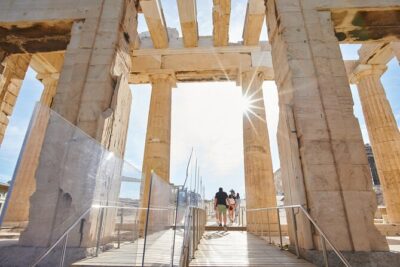

Starting outside Panepistimio, then Hansen’s Trilogy of Athens
You begin outside Panepistimio Metro Station, with starting options tied to the University area. Within the first stretch, you’re in the heart of Athens’ layered identity, where older ideas meet newer civic life.
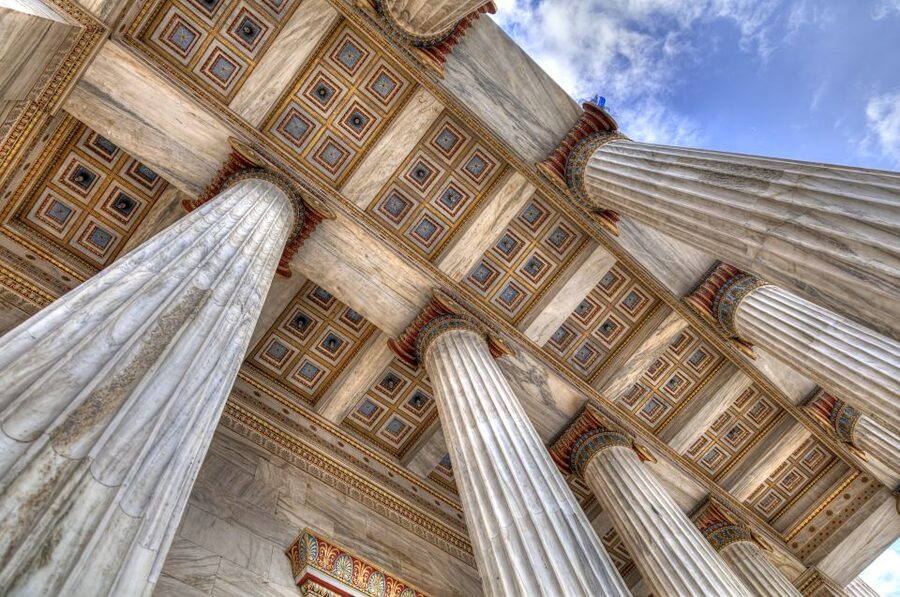
The early anchor is the Trilogy of Athens by architect Theofilus Hansen. You’ll admire the 19th-century architectural design and nearby statuary by famous sculptors of the era. This matters because it sets up a theme for the whole tour: later Athenians built monumental spaces while looking back at ancient Greece.
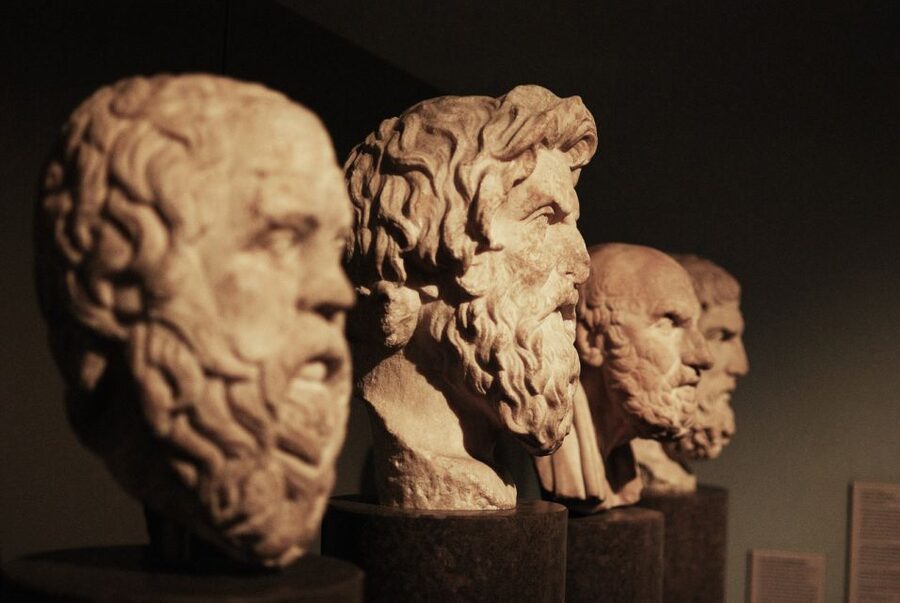
Then the guide starts connecting the physical setting to intellectual life. You’ll talk about Socrates and Plato while you’re still seeing Athens as a place where ideas could be argued face to face. It’s a smart way to start, because you’re not waiting until the Acropolis to begin the philosophy thread. You get it early, then keep adding layers.
Apollo vs Athena, and why myth helps you understand philosophers

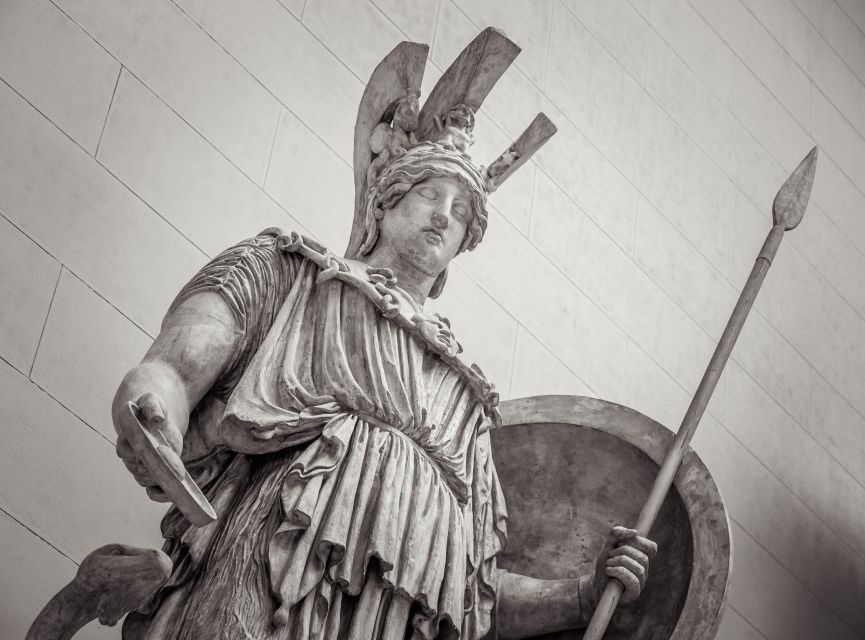
One of the most enjoyable parts is how the tour treats myth as more than decoration. Apollo and Athena can feel like separate worlds, but you’ll learn how they connect through shared ideas, symbols, and cultural values.
Apollo represents a kind of clarity and order, while Athena brings a different angle of wisdom and strategy. The point is not memorizing divine family trees. The point is learning how the Greeks used myth to explain what humans should aim for, and how that mindset overlaps with philosophical questions.
From there, the Socrates and Plato conversation clicks into place. Socrates asked uncomfortable questions, then pushed people to test their assumptions. Plato built systems that tried to map how knowledge works. Seeing those ideas while standing near major civic buildings makes it feel less like a dusty school unit and more like a living argument the city kept having.
Hellenic Parliament and National Gardens: Epicurus and the Garden
After the early Athens landmarks, the route moves toward the Greek Parliament area and then the National Gardens. This is a good mid-tour shift, because the National Gardens give you a calmer setting for a thinker who valued simpler, steadier living.
Here you meet Epicurus, and the guide explains his school, the Garden. This isn’t just philosophy as a theory. It’s philosophy as a daily method, including how you think about pleasure, desire, friendship, and peace of mind. The setting helps you understand why Epicurus is linked to gardens and refuge. It’s easier to grasp the idea of measured living when the air and pace slow down around you.
Also, this is where the tour’s storytelling style really earns its place. Guides often explain schools in terms of dates and famous lines. This approach links the school to the feeling of a place, so Epicurus becomes understandable, not only quotable.
Ermou Street and Kapnikarea: Aristotle’s Lyceum in the city
Next you walk down Ermou Street, a busy commercial street named after Hermes, the god of merchants. This detail sounds small, but it’s useful. You get reminded that Athens was never just thinkers in quiet halls. It was a city of trade, talk, and daily problem solving.
From there, you’ll see Kapnikarea, an 11th-century temple that adds another layer of time to your walk. It’s a reminder that places in Athens keep getting reused and reimagined. That matters for philosophy too, because Greek ideas were not locked in one moment. They traveled forward, reshaped by new eras.
Then the guide brings Aristotle into the story, along with his Lyceum school. The biggest takeaway is how Aristotle’s approach feels different from Socrates and Plato, more grounded and observant. Standing in the middle of Athens, you can almost see why his style fits a city that constantly notices, classifies, and argues about how the world works.
More Walking Tours in Athens
- Acropolis and Parthenon Guided Walking Tour
★ 5.0 · 4,755 reviews - Greek Food Walking Tour in Athens
★ 5.0 · 4,740 reviews - Athens: Guided Greek Food Walking Tour with Tastings
★ 4.9 · 2,859 reviews - Acropolis monuments & Parthenon Walking Tour with Optional Acropolis Museum
★ 5.0 · 2,678 reviews
Thissio coffee stop: where Pre-Socratics get practical
A pitstop comes in the Thissio area, with a Greek coffee (included) at a cozy cafe. This part is more than a break. It’s time to reset your brain and keep the conversation from turning into sightseeing fatigue.
What makes this coffee stop valuable is the discussion theme. The guide uses the pause to connect Pre-Socratic philosophers, the earliest thinkers, to the bigger questions the later schools argued about. Pre-Socratics are often taught as names and fragments, but here they become early attempts to explain nature, change, and truth.
The guide can also tie the discussion back to everyday thinking, which is a big reason this tour works well even if you do not plan to write a philosophy paper. You’re learning how people reasoned, not just what they believed.
If you’re the kind of person who asks lots of questions, this is where your curiosity pays off. In past experiences with guides on this route, conversation flow stays relaxed, and you can steer the talk toward what you actually want to understand.
Ancient Agora and Poikile Stoa: Stoicism’s birthplace
Near the Ancient Agora, the tour heads to the Poikile Stoa, where Stoic philosophy is described as having been born. This is one of those stops where the location matters because the Stoics cared about discipline, endurance, and handling life as it comes.
The Poikile Stoa gives you a sense of public space, where ideas could be discussed in a setting designed for everyday gathering. Stoicism fits that vibe. It’s philosophy that tries to help you deal with uncertainty, not wait for perfect conditions.
What you’ll get from this section is a practical framing. The guide explains the school’s logic and how it contrasts with other approaches you heard earlier in the day. You’ll start to notice patterns: how each school answers questions about what you control, what you don’t, and how you should behave while the world keeps moving.
Plaka and Anafiotika: Cynic perspectives and the walk toward the Acropolis
Once you reach Plaka and Anafiotika, you feel the old-city mood shift. This is a great zone for thinking about how philosophy lived close to everyday life. It’s easy to picture people hanging around, debating, and passing ideas from street to street.
The tour ties this area to Cynic philosophers. Cynics are often misunderstood as simply anti-comfort, but the discussion tends to focus on sharper themes: simplifying values, questioning social norms, and rejecting performative living. When you see these neighborhoods near the Acropolis foot, the ideas come across as more streetwise than academic.
This section also helps you slow down visually. You’re seeing the city’s textures, but you’re also learning how different schools would have interpreted the same urban reality in totally different ways.
Tower of Winds and Aiolos: myth with a map
The Tower of Winds is one of the stops that makes you feel like Athens has a built-in storybook. You’ll learn about Aiolos, keeper of the winds, and you’ll hear how Greek myth used the physical world as a language.
This is a strong mid-to-late tour moment because it ties myth to something you can actually point to in the city. Winds are not abstract here. They’re felt, they change your body’s mood, and they influence daily plans. Aiolos becomes a way to understand how people once explained forces they couldn’t control.
And after so much philosophy talk, it’s refreshing to reset your brain with a myth that has a concrete setting. The guide uses it to keep the story thread moving while you head toward the final viewpoint.
Areopagus Hill finale: myths, Acropolis views, and a satisfying close
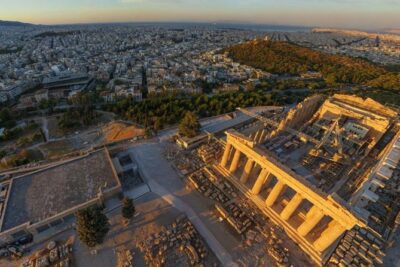
The tour ends on Areopagus Hill with a breathtaking view of the Acropolis. This is not just a photo stop. It works as a wrap-up because it gives you a sense of scale, the kind that makes the earlier conversations feel grounded.
You’ll hear more myths about the Olympian gods here, which gives the day a circular feel. You started with Apollo and Athena, moved through major schools, and now you return to the bigger divine framework that helped shape Greek thinking.
The best part of the finale is how the view helps you synthesize. From this height, you can mentally connect the different neighborhoods you walked through into one mental map. That makes your philosophy notes stick, because you’re not memorizing in isolation. You’re remembering in space.
Price, value, and what you might spend on top
The price is $100 per person for a 4-hour private walking tour. To judge value, I look at what you get that you would normally have to piece together yourself.
First, you get an expert tour guide, plus all taxes and fees. Second, you get one Greek coffee or other traditional refreshment per person, which is a real cost you would otherwise pay. And since it’s private, the guide can adapt the conversation to your pace and interests.
The part you should budget for is entrances, since entrance fees to points of interest are not included. You might also pay for personal expenses like souvenirs. So the all-in cost depends on how many sites you decide to enter during the walk.
If you want a guided Athens experience that teaches you how to connect the city’s landmarks to the way Greeks thought, $100 for four hours can feel like fair value. If you only want quick photos and no discussion, you could spend less with a self-guided route. This tour is for people who like to ask questions and walk with context.
Who this tour fits best
This works best if you:
- Like philosophy and want it tied to real places, not just names
- Enjoy mythology as a lens for understanding the culture
- Prefer a private pace with time for Q and A
- Want a guided overview of Athens that still feels personal
It may not be the best choice if you:
- Need step-free or mobility-friendly routes, since it is not suitable for mobility impairments
- Don’t enjoy walking or can’t handle a full half-day on your feet
Should you book Athens Highlights: Myths and Philosophers Private Walking Tour?
I think you should book it if you want Athens to make sense intellectually, not only visually. The combination of Socrates, Plato, Epicurus, Aristotle, plus Stoics and Cynics, all tied to specific city locations, is exactly the kind of structure that turns a short trip into a lasting memory.
Skip it if your idea of a good Athens day is mostly minimal walking and maximum free time. This is a guided conversation plus city walking, and it rewards curiosity.
If you like the sound of connecting myth and philosophy to street corners, then this is a very solid use of half your day in Athens.
FAQ
What is the duration of the tour?
The tour lasts 4 hours.
Where do I meet the guide?
You meet outside Panepistimio Metro Station. Starting location options may vary depending on what you book.
Is this a private tour?
Yes, it is a private group tour.
What language is the tour in?
The tour is in English.
What’s included in the price?
The price includes an expert tour guide, 1 Greek coffee or other traditional refreshment per person, and all taxes and fees.
Are entrance fees included?
No, entrance fees to points of interest are not included.
Is the tour suitable for people with mobility impairments?
No, it is not suitable for people with mobility impairments.
Is there free cancellation and can I pay later?
You can cancel up to 24 hours in advance for a full refund, and there is an option to reserve now and pay later.
Stepped Lanes, Kastro Quarters



New pins on the Athens chart
- Shore Excursion: Acropolis, Athens City tour and The New Acropolis Museum★ 4.5 · 30 reviews
- Private Luxury Tour: Marathon – Battle & Run That Changed History★ 5.0 · 30 reviews
- 2 Day Private Tour Of Delphi, Thermopylae & Meteora From Athens★ 5.0 · 30 reviews
- Athens Airport – Athens Center Private Transfer★ 4.0 · 30 reviews
- From Athens: Ancient Corinth Half-Day Private Tour★ 4.8 · 30 reviews
- Private City Kickstart Tour: Hidden Districts★ 5.0 · 30 reviews
Walking Tours, compared.
Acropolis and Parthenon Guided Walking Tour
Read our review →

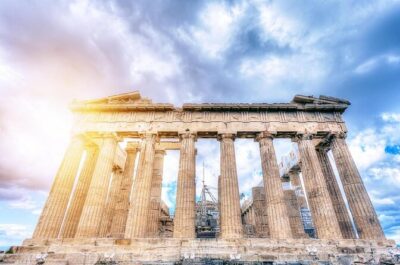
Acropolis monuments & Parthenon Walking Tour with Optional Acropolis Museum
Read our review →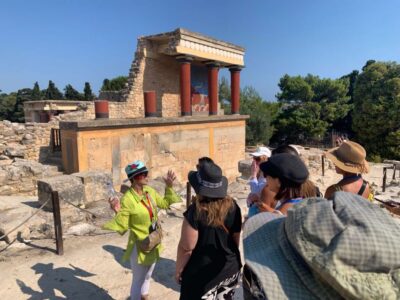
Knossos Palace Skip-the-Line Guided Walking Tour
Read our review →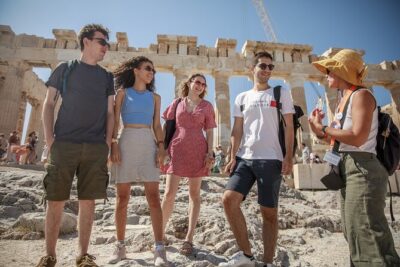
Athens Acropolis and Parthenon Walking Tour
Read our review →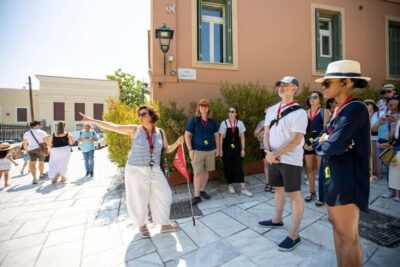
Acropolis, Parthenon & Athens Old City Heritage Walking Tour
Read our review →
Athens Authentic Greek Food Walking Tour (Small Group)
Read our review →Browse the lists this tour appears in