
Reviewed · WALKING TOURS
Athens Highlights: Myths & Philosophers Walking Tour
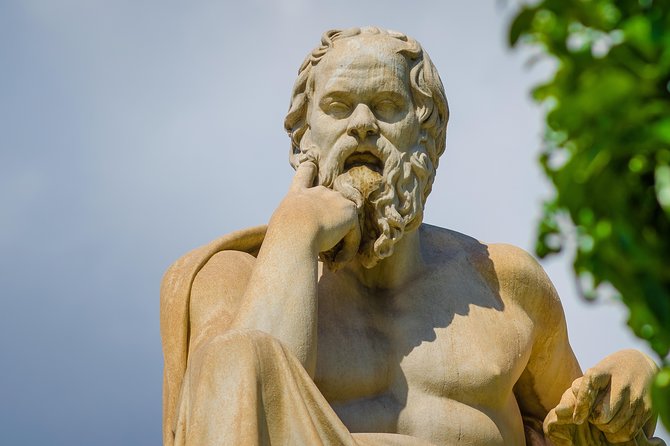
Athens turns philosophical fast. This private walking tour connects Athens landmarks to ancient thinkers, from Thales of Miletus to Socrates and Plato, with real Q&A as you move. You’re not just looking, you’re figuring out why these ideas mattered in the first place.
I especially like how the guide keeps the conversation active so the city feels like a discussion space, not a one-way lecture. You also get coffee and/or tea plus bottled water, which helps a full 4-hour walking rhythm. One consideration: some major stops have admission fees that are not included, so your final day cost may be a bit higher than the base price.
The route also has a nice balance, mixing iconic sights (like the Hellenic Parliament) with calmer corners near Plaka and Anafiotika under the Acropolis, then ending on Areopagus Hill for myth-tinted views.
In This Review
- Key highlights you will feel right away
- Turning Athens Landmarks Into Philosophy Lessons
- Where You Meet, and Why the Route Ends on Areopagus
- Academy of Athens: Trilogy Views and the Big Ideas Behind the Walk
- Hellenic Parliament, Then the National Garden for Ideas You Can Use
- Ermou Street and Hermes, Then the Agora Where Stoicism Took Shape
- Tower of the Winds and Aiolos: Why Air and Weather Became Philosophy
- Anafiotika for the Cynics, Then Areopagus for Myths and Final Views
- Guides Who Turn Questions Into the Main Event
- Price and Value: What $102.80 Really Buys You
- What to Bring for a 4-Hour Walking Day in Athens
- Should You Book This Athens Myths and Philosophers Tour?
- FAQ
- How long is the Athens Highlights: Myths & Philosophers Walking Tour?
- Is this tour private or shared with other groups?
- What language is the tour offered in?
- What is included in the tour price?
- Are entrance fees to the stops included?
- Which stops have admission fees not included?
- Where does the tour start and end?
- What is the cancellation policy?
- Are service animals allowed?
Key highlights you will feel right away
- Private, question-friendly pace: your group only, with time to ask follow-ups as ideas come up
- Philosophy through landmarks: stops are tied to thinkers and themes, not random sightseeing
- Hands-on Athens breaks: coffee or tea plus bottled water built into the walk
- Classic sights plus quieter neighborhoods: Plaka and Anafiotika appear in the second half of the tour
- Myths as explanations: gods and stories are used to make philosophy easier to remember
- Some entrances cost extra: tickets for a few sites are not included
Turning Athens Landmarks Into Philosophy Lessons
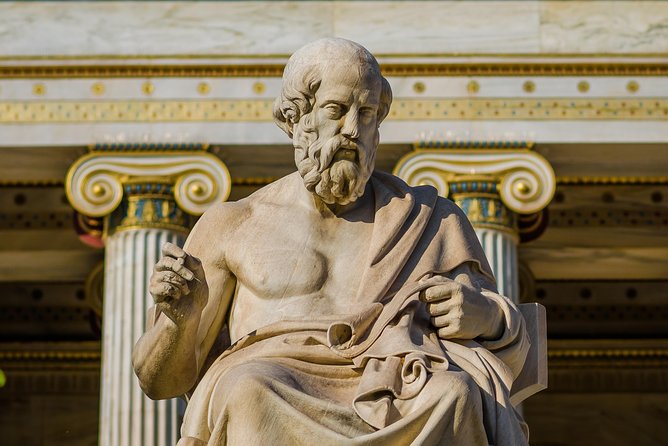
Athens is full of statues and stone. This kind of tour gives you a spine for it, a reason to connect what you see to how ancient Greeks tried to explain life, society, and thinking itself.
You walk through the city with themes that keep returning: democracy and ethics, physics and astronomy, and the moral questions philosophers kept arguing over. Expect names like Thales of Miletus, Socrates, and Plato woven into the sights. And because it is a private walking tour, you can ask the annoying questions that make you actually understand something, like why a concept fits a place, or how a myth maps onto an idea.
More Walking Tours in Athens
Where You Meet, and Why the Route Ends on Areopagus
The tour starts at Panepistimio, Athens (PanepistimioAthens 106 79, Greece). It ends on Areopagus Hill (Theorias 21, Athina 105 55, Greece, near Areopagus Hill).
That ending matters. Areopagus is your finish line, with a view of the Acropolis and myth stories tied to the hilltop setting. It helps you “land” your understanding at the end, instead of sprinting away right after the last landmark.
The full walk is about 4 hours, and it is offered in English. It is designed so most travelers can participate, and it is near public transportation, which makes it easier to connect with the rest of your day.
Academy of Athens: Trilogy Views and the Big Ideas Behind the Walk
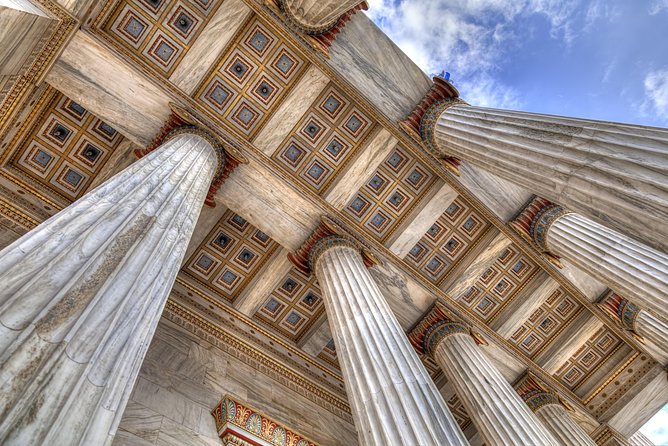
The first stop is the Academy of Athens. You spend about 15 minutes here, and admission is not included.
What makes this stop more than just a photo stop is the framing. You’ll see the Trilogy of Athens and get a “journey through time” explanation of philosophical movements in ancient Greece. It is a way to start broad, so the later stops start clicking instead of feeling like disconnected trivia.
There’s also a museum note in this early section: it houses one of the greatest collections of coins, ancient and modern. If coin history sparks your interest, you might want to plan for some extra time or budget, since the base tour doesn’t include admission tickets.
Hellenic Parliament, Then the National Garden for Ideas You Can Use
Next up is the Hellenic Parliament area. You’ll stop outside for about 15 minutes to watch the Changing of the Presidential Guard. Entrance here is free.
This is one of those moments where Athens shows you its layers at once: government formality, traditional ceremony, and the sheer focus people put on details. Even if your main goal is philosophy, it is a useful stop because it grounds the tour in civic life, not only in ancient texts.
After that comes the National Garden, another 15 minutes and free. Here the philosophy themes shift toward applied ideas: democracy, physics, astronomy, ethics, and more.
This is also a practical palate cleanser. Garden stops usually give you a slower pace and more space to talk, which matters because later parts of the route get more intense visually and conceptually.
Ermou Street and Hermes, Then the Agora Where Stoicism Took Shape
You then move to Ermou Street for about 15 minutes. This stop is free, and the focus is on Hermes, the mischievous god connected to messaging and movement.
I like this transition because it stops being strictly “ancient philosophy lecture” and turns into cultural storytelling. Hermes works as a bridge between myth and daily life, a reminder that Greek myths were not only bedtime stories. They were a way people explained the strange and unpredictable parts of living.
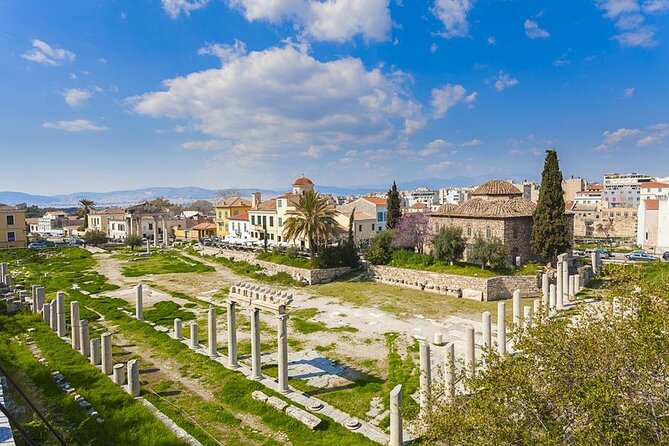
From there you head to the Ancient Agora of Athens, about 15 minutes. Admission is not included for this stop.
This is where the tour brings in Stoic philosophy and connects it to place: Stoic philosophy was born in the Poikile Stoa. Even if you do not know much about Stoicism, you will leave with a sense of why thinking about virtue, self-control, and reason belonged in a public space like the Agora.
One practical note: since admission is not included, decide ahead of time if you want to pay for entry and spend extra moments there, or if you’re happy with the “see and learn outside” pace.
More stepped lanes through the kastro quarters:
- Acropolis monuments & Parthenon Walking Tour with Optional Acropolis Museum
★ 5.0 · 2,678 reviews - Athens Acropolis and Parthenon Walking Tour
★ 4.5 · 1,355 reviews - Acropolis, Parthenon & Athens Old City Heritage Walking Tour
★ 4.5 · 876 reviews - Athens Authentic Greek Food Walking Tour (Small Group)
★ 5.0 · 809 reviews
Tower of the Winds and Aiolos: Why Air and Weather Became Philosophy

The next landmark is the Tower of the Winds. You’ll spend about 15 minutes, and admission is not included.
Here the story shifts again, to wind and mythology. The guide connects the tower to Aiolos, keeper of the winds. It’s a reminder that Greek thought often blended observation with myth to explain the world around them.
This stop also gives you a nice variety of scenery and architecture in the middle of the tour. Athens can move fast visually, so a distinct landmark helps your brain keep track of the different ideas the guide is linking together.
Anafiotika for the Cynics, Then Areopagus for Myths and Final Views
The walk continues to Anafiotika, in the Plaka area, near the foot of the Acropolis. Plan about 20 minutes here, and admission is free.
This is the stop that many people remember afterward because the environment feels more intimate. You’re in the Plaka orbit, and you’ll hear about Cynic philosophers. The Cynics are a great choice for a walk like this, because they push against comfort and showy living, which fits naturally with the feel of small lanes and local atmosphere.
The tour ends at Areopagus, about 15 minutes and free. You get a breathtaking view of the Acropolis and myth stories tied to the Olympian gods.
The best part is that this finish doesn’t just repeat earlier ideas. It adds a sense of scale, why the myths mattered to people who lived among these sites, and how the stories kept philosophy emotionally connected to daily life.
Guides Who Turn Questions Into the Main Event
The single most praised part of this experience is the guide. Names like Bianca, John, Gianni, and Effrosyni come up again and again for one consistent reason: they talk like real people, not like reciters.
What you should look for on this tour is a guide who adjusts pace based on your questions. If you are new to philosophy, you get clear explanations. If you already know some basic ideas, you can go deeper. That flexibility is a major value in a private tour.
You’ll also notice how the tour often uses small changes in setting to keep you comfortable. Reviews point out shaded spots, good timing, and a drink break in the middle. That is not a “nice bonus,” it changes the quality of the conversations, because you are not rushing or wilting.
Since it is private, discussions can run longer than the official 4-hour estimate if your group keeps talking. I suggest you plan this tour as a main event in your Athens day, not something you squeeze between museum tickets and dinner reservations.
Price and Value: What $102.80 Really Buys You
The price is $102.80 per person for an about 4-hour private walking tour in English. It includes coffee and/or tea and bottled water, plus you get a mobile ticket and there are group discounts.
Here is the value logic I would use. You are paying for time with a guide who can handle questions and connect philosophy to real places. That’s harder to get on typical group tours where you spend more time standing still than thinking.
Now, about the one cost surprise to budget for. Admission tickets are not included for the Academy of Athens, Ancient Agora of Athens, and Tower of the Winds. If you plan to enter all paid sites (or you want extra time inside), your day cost can rise.
Finally, it is booked fairly far in advance on average. That’s a hint to reserve early if your schedule is tight, especially in high season.
What to Bring for a 4-Hour Walking Day in Athens
This is a walking tour through mixed urban and historic areas. Bring comfortable walking shoes first, then think sun and heat. Even if the route includes garden time, you can still get sun exposure during city walking.
Since bottled water is included, you don’t need to buy water right away. Still, it helps to carry a small personal snack if you tend to get hungry while talking.
Because the experience requires good weather, have a flexible mindset if weather shifts. If a date is canceled due to poor weather, you should expect a new date offer or a full refund.
If you travel with a service animal, service animals are allowed. And because it is near public transportation, you can plan a simple start and end without complicated transfers.
Should You Book This Athens Myths and Philosophers Tour?
Book it if you want Athens to make sense through ideas, not just through landmarks. This is one of the best choices for people who like philosophy, mythology, history, or simply good conversation while walking. It works especially well for couples and families with teens and young adults, because the guide can pace explanations and keep questions moving.
Don’t book it if you only want short, low-walking sightseeing. The duration is about 4 hours, and a few stops may involve paid admission tickets if you want to go inside. Also, if you are expecting a museum-heavy day, the tour is more about the walk and the story glue.
If your goal is to leave Athens with names you can explain, like why Socrates and Plato still matter, then yes, this is a smart use of time.
FAQ
How long is the Athens Highlights: Myths & Philosophers Walking Tour?
The tour is about 4 hours.
Is this tour private or shared with other groups?
It is a private tour/activity. Only your group participates.
What language is the tour offered in?
The tour is offered in English.
What is included in the tour price?
It includes coffee and/or tea, and bottled water.
Are entrance fees to the stops included?
No. Entrance fees are not included for some points of interest.
Which stops have admission fees not included?
Admission tickets are noted as not included for the Academy of Athens, the Ancient Agora of Athens, and the Tower of the Winds.
Where does the tour start and end?
It starts at PanepistimioAthens 106 79, Greece, and it ends on Areopagus Hill at Theorias 21, Athina 105 55, Greece.
What is the cancellation policy?
You can cancel for a full refund up to 24 hours in advance. If it’s canceled due to poor weather, you will be offered a different date or a full refund.
Are service animals allowed?
Yes, service animals are allowed.
New pins on the Athens chart
- Mycenae, Epidaurus, Nafplio, Corinth Canal Private Full Day Trip From Athens★ 5.0 · 83 reviews
- From Athens: Mycenae, Epidaurus & Nafplion Private Tour★ 4.9 · 83 reviews
- Delphi with Professional English Guide and Transportation★ 4.5 · 84 reviews
- Acropolis of Athens, Ancient Agora and the Agora Museum Tour★ 5.0 · 86 reviews
- Athens: 2.5-Hour Private City Tour Off the Beaten Track★ 4.7 · 86 reviews
- Thermopylae The battle of the 300 Spartans & Delphi Day Tour★ 5.0 · 86 reviews
Walking Tours, compared.
Acropolis and Parthenon Guided Walking Tour
Read our review →


Acropolis monuments & Parthenon Walking Tour with Optional Acropolis Museum
Read our review →
Knossos Palace Skip-the-Line Guided Walking Tour
Read our review →
Athens Acropolis and Parthenon Walking Tour
Read our review →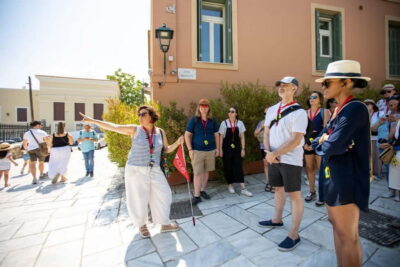
Acropolis, Parthenon & Athens Old City Heritage Walking Tour
Read our review →
Athens Authentic Greek Food Walking Tour (Small Group)
Read our review →Browse the lists this tour appears in