
Reviewed · METEORA MONASTERIES TOURS
Athens: Meteora Monasteries Tour with Local Guide and Greek Lunch
Meteora day trips can be a lot. This one turns a long ride into a full-on UNESCO day, with a local English guide and enough stops to see the scale of Meteora without getting lost. I love the way the guide builds context as you go, so the cliffs and monasteries feel personal instead of just postcard pretty.
Two things I especially liked: first, you visit three monasteries on the inside (plus see the others), which is the difference between passing by and actually understanding the place. Second, the tour is structured so you get multiple photo stops and guided storytelling, not just free time and a bus schedule.
One drawback to plan for: it is a long day. You are looking at about 14 hours total, with roughly 8 hours on the road, and many visits involve stairs and uneven paths.
In This Review
- Why this Meteora tour feels different
- Athens to Meteora: the ride, the timing, and what you should pack
- The big Meteora payoff: why UNESCO here looks unreal in person
- Stop by stop: what to expect at each monastery visit
- Roussanou Monastery (Arsani)
- Saint Nicholas of Anapafsas
- Varlaam Monastery
- Holy Trinity Monastery
- Agios Stefanos
- Great Meteoron Monastery
- The guide factor: Maria, Nicholas, and how the storytelling changes everything
- Kalambaka: where the day turns from cliffs to town life
- Lunch options: what value looks like in the real world
- Accessibility and effort: what the steps really mean
- Transportation reality check: WiFi, AC, and what you can control
- Price and value: is $84.66 worth it?
- Who this tour is for, and who should skip it
- Should you book this Meteora day trip?
- FAQ
- Where does the tour start in Athens?
- How long is the tour from Athens to Meteora?
- What time does the bus leave?
- Do you visit monasteries inside or only from the outside?
- Are monastery entrance fees included?
- Is lunch included?
- What is lunch like?
- Is this tour good for people who do not like stairs?
- What should I wear for the monasteries?
- Are there audio guides in languages besides English?
- Is WiFi available on the bus?
Why this Meteora tour feels different
- Local guide, not just a headset, and you get commentary as you move between sites.
- Three inside visits included, so you see how worship and daily life looked up close.
- Photo stops timed for real viewing, not just quick pull-offs.
- Kalambaka adds a human scale, with a traditional lunch option or time to wander.
- Audio guides in many languages, in case English is not your strongest choice.
Athens to Meteora: the ride, the timing, and what you should pack
This is an all-day excursion that starts early from Stathmos Larisis (Central Railway Station area), with the bus departing around 7:45 AM from the street across the station. You return in the evening, typically arriving back in Athens around 10:15 PM. The tour length is about 14 hours, and that matters because you are spending a big chunk of the day in transit.
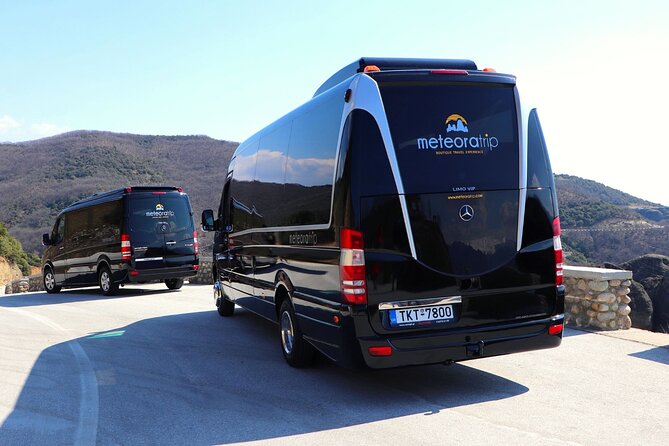
Good news: the bus is air-conditioned and includes onboard WiFi and USB charging. Still, based on real-world experience, do not plan your day assuming everything will work perfectly. Bring a power bank if you rely on your phone for photos or audio.
What I’d pack for comfort:
- Comfortable shoes with grip, since paths can be steep and rocky.
- Water, plus a small snack for the in-between hours.
- A light layer, because monastery interiors can feel cooler than the outside air.
- Cash for entrance fees, since these monasteries require cash only.
Also think about your ears and eyes. You can use free audio guides on your smartphone in Spanish, French, German, Italian, Japanese, Chinese, and Korean, but you will need your own earphones.
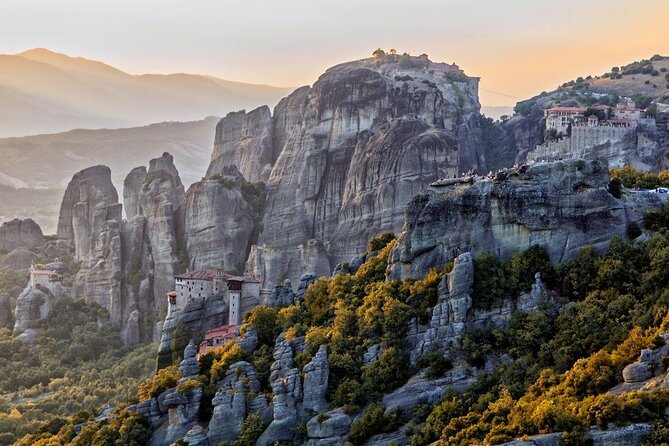
More monasteries balanced on stone pillars:
The big Meteora payoff: why UNESCO here looks unreal in person

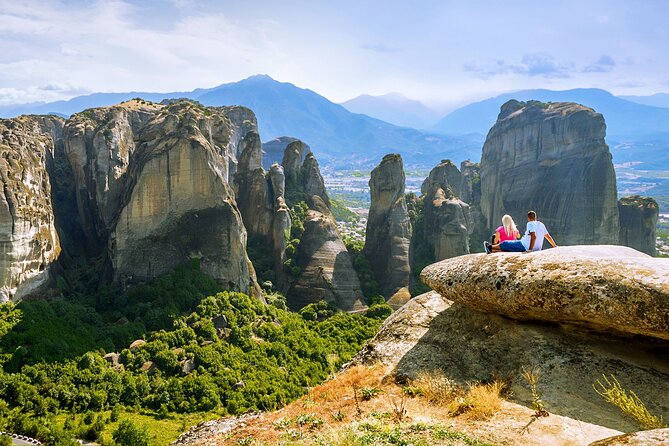
Meteora is one of those places that looks exaggerated in photos, then somehow looks even better after you arrive. The monasteries cling to high rock pillars, and the views change as you move. That is why the tour is structured with multiple stops instead of a single viewpoint and then off you go.
The guided portion is designed to help you connect the dots. The story is not only about architecture and art. It is also about why people chose these caves and cliffs in the first place. Your guide talks through the logic of isolation, plus myths and practical details about hermits living in a vertical world.
One more plus: the tour mentions a special sunset viewpoint for November to January. If you travel in those months, you may get a chance to see the cliffs glow from a panoramic spot before heading into the next schedule block.
Stop by stop: what to expect at each monastery visit
The tour plans for you to see all the major monasteries at Meteora, and to step inside three of them. Which three you enter can depend on the day’s flow and each monastery’s schedule, but the structure stays the same: you get guided context, viewpoint time, and short walks where you can take in the scale.
Roussanou Monastery (Arsani)
Roussanou sits on a steep cliff, positioned between Saint Nicholas Anapafsas and Varlaam. This is one of the locations that helps you understand why these sites were so hard to access. You will feel it in your legs first, then in your imagination.
Plan for a quick stop, with time to look carefully at the monastery setting and take photos from the best nearby angles.
Saint Nicholas of Anapafsas
This monastery is described as being almost suspended on a small rock and is often the first one you notice on the way from Kastraki area toward the stone forest of Holy Meteora. It is a good stop for photos because the surrounding rocks frame the monastery like a natural stage.
Expect some uphill walking and stairs depending on where you start your route that day.
More Athens landfalls to plot
- All Day Cruise -3 Islands to Agistri,Moni, Aegina with lunch and drinks included
★ 5.0 · 4,958 reviews - From Athens: Hydra, Poros, and Aegina Day Cruise with Lunch
★ 4.1 · 4,305 reviews - Athens: Islands Swimming Day Cruise. DJ, Lunch & Drinks inc.
★ 4.6 · 1,887 reviews - Athens cruise: Agistri, Moni/Metopi, Aegina with lunch & drinks
★ 5.0 · 1,783 reviews
Varlaam Monastery
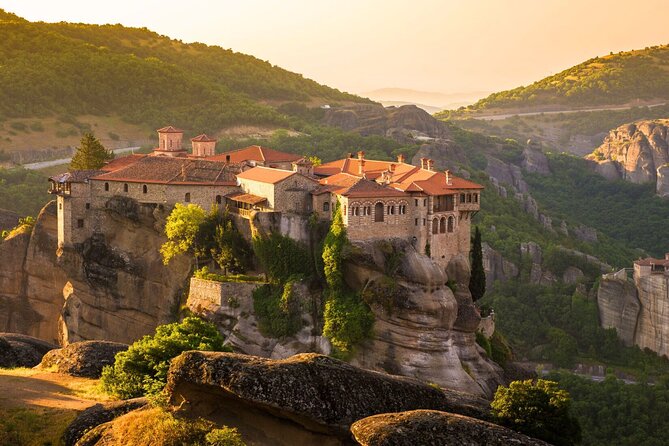
Varlaam is one of the larger Meteora monasteries, known as the Monastery of All the Saints. It is located on an imposing rock directly opposite Great Meteoron, which is helpful because the sightline shows the dramatic layout of the complex.
If you like photography, you will likely appreciate how this stop gives you another angle on the same cliff world.
Holy Trinity Monastery
Holy Trinity is considered one of the harder ones to reach, because you cross a downhill path and then climb 145 steps carved into the rock. The route is part of the experience, including the history of how materials were carried up in earlier times.
If you have knee trouble, mobility limits, or you simply hate step-heavy routes, this is the stop to think about ahead of time. Even if you do not fully realize how tough a climb feels until you are doing it, this one is clearly flagged as the most demanding in the tour plan.
Agios Stefanos
Agios Stefanos is noted as the most accessible monastery on the Meteora side of things, with no steps to reach the entrance and an easy approach via a small stone bridge near Kalambaka.
This stop is a good “breather” between the more vertical walks. If you want to reduce the total strain, ask yourself how your energy is on the day and whether you need a slower pace during the earlier legs.
Great Meteoron Monastery
Great Meteoron, also called the Transfiguration of Christ, is described as the oldest and most important monastery of Holy Meteora. It is also the one many people picture when they think of Meteora, because the scale and position make it feel central to the entire story.
This is typically where the day’s emotion clicks into place. The view plus the interior experience tends to stick in your memory, especially if your guide is good at turning facts into moments.
The guide factor: Maria, Nicholas, and how the storytelling changes everything
A lot of Meteora tours can feel the same if the guide is just naming buildings. The difference here is that the guide ties the sites to the human reason for being there.
In the experiences I saw, guides like Maria repeatedly came up as a standout. People praised her energy, her ability to explain history and daily life in plain terms, and her talent for making photo stops feel purposeful rather than random. Nicholas also got mentioned as a great guide in at least one account.
The goal is simple: you should leave understanding more than where the monasteries are. You should leave knowing why anyone would choose to live there.
One small note: the tour includes audio guides for other languages too, but the live guide portion is the backbone. If you want the best day, show up ready to listen during the short transfers and viewpoints.
Kalambaka: where the day turns from cliffs to town life
By around noon, you arrive at Meteora and begin the monastery circuit with your guide. Then you get a stop in Kalambaka, the foothills town that works as the practical base for most Meteora visits.
Kalambaka is useful even if you have no plan to sightsee. It is where you can reset your body after rock steps and open views. If you book the option with lunch, you get a traditional Greek lunch at a local restaurant, usually including fresh salad, a choice of main dish, freshly baked bread, and water. Vegetarian and vegan options are available.
If you choose the option without lunch, you get free time to explore Kalambaka, including restaurants, cafes, and local shops. You can relax under the Meteora formations or take a short walk through town.
My practical take: if lunch is included, it saves time and stress. But if you are picky about food, or you prefer to eat somewhere that feels less like a set menu, free time can be a better fit. Either way, use your stomach wisely, because you will not get dinner back in Athens that night.
Lunch options: what value looks like in the real world
The tour’s lunch is positioned as “traditional Greek” and is meant to keep you fueled for the afternoon route. In many cases it is described as filling and decent, with some people calling it good but not amazing.
So here is the practical question for you: do you want a set meal that reduces decision-making, or do you want an extra hour to roam and pick your own spot? If you are traveling with dietary needs, the included option signals there are vegetarian and vegan choices.
Also remember: the monasteries can be cash-sensitive. Plan to have enough euros on hand not only for entrances, but for any small purchases that pop up during the day.
Accessibility and effort: what the steps really mean
This tour is “most travelers can participate,” but the day is still physically demanding. The monastery routes include stairs and steep paths, and some stops involve climbs that can be tiring even when you are fit.
Holy Trinity is clearly the toughest based on the way the steps are described. Other monastery approaches also include flights of steps and inclines.
If you have mobility limits, you might find the day challenging. In that case, consider bringing walking support if you use it, and plan on slower pacing, extra pauses, and fewer photo jogs. Bring your own water and snacks too, because not all monastery areas provide convenient facilities.
One more practical tip: restroom access can be limited. Based on the way people describe the day, I strongly suggest using facilities before you start climbing and before you commit to interior visits where restrooms might not be nearby.
Transportation reality check: WiFi, AC, and what you can control

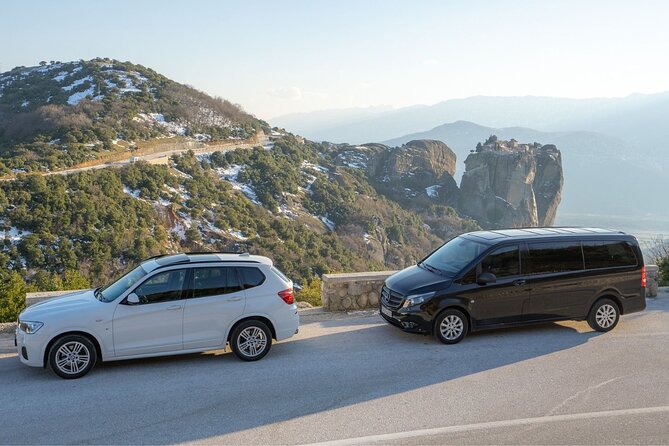
The tour includes a modern air-conditioned coach with onboard WiFi and USB chargers. Some accounts describe the WiFi as available, but not all power points were reliable seat by seat.
Also, AC performance can vary based on season and bus behavior. In hot months, people noticed it did not always feel cold enough and had to ask to adjust airflow. In other words, expect the bus to be air-conditioned, but treat it as comfort support, not a guarantee of winter-like cold.
Finally, there can be confusion around the meeting point and which vehicle is yours. The start is at Stathmos Larisis, and the bus should be clearly marked. Still, give yourself time to find your name on the list and board calmly. You do not want to start your day stressed when you will be doing steps later.
Price and value: is $84.66 worth it?
At about $84.66 per person, this tour has a strong “value for time” angle because it bundles transportation, an English-speaking local guide, photo stops, and guided monastery visits. The catch is that entrance fees are not included in the price.
You should budget about €5 cash per monastery entrance, and you might pay for multiple monasteries depending on which ones you are allowed to enter that day. Also note that guided tour inside the monasteries is not included, meaning you explore the interiors during the guided itinerary windows rather than having a guide strictly in the room with you the whole time.
So is it worth it? For most people, yes, if you want:
- Built-in logistics from Athens
- A guide who explains the why, not just the what
- The convenience of not having to plan your own transport up to Meteora
If you already know you want to spend hours hiking on your own, you might prefer a self-guided day and pay only for entrances. But if you want a structured, guided highlight route, this price range is a fair entry point.
Who this tour is for, and who should skip it
This works best if you want a guided highlight day and you do not want to figure out timing and transport from Athens. It is also a solid pick if you like photography and want planned stops at viewpoints.
It is less ideal if:
- You hate long bus days and prefer shorter trips.
- You have limited tolerance for stairs and steep paths, especially for Holy Trinity’s route.
- You expect lunch to be restaurant-perfection. Some meals are described as good and traditional, but not everyone rates them as great.
If you have the stamina, you will come away with photos, stories, and a clearer sense of Meteora’s strange beauty.
Should you book this Meteora day trip?
If Meteora is your priority and you are staying in Athens, I think this is a smart booking. The route saves you from the hardest part, which is planning the day across a remote area with big elevation changes. And the best reviews keep pointing to the same thing, the guide energy and the focus on making the monasteries make sense.
Before you hit confirm, do three quick checks:
- Bring cash euros for entrances, since it is cash only.
- Plan your shoes and energy level for stairs and steep paths.
- Decide whether the included lunch helps you, or whether you would rather use that time in Kalambaka on your own.
If you do those things, you will spend your day where it counts, on the rock pillars of Meteora, with the day’s story told in a way you can actually remember.
FAQ
Where does the tour start in Athens?
The meeting point is Stathmos Larisis, Athina 104 39, Greece. The activity ends back at the same meeting point.
How long is the tour from Athens to Meteora?
The duration is listed at about 14 hours, with around 4 hours in the morning travel and about 4 hours returning, plus the time at Meteora and in Kalambaka.
What time does the bus leave?
The start time is listed as 8:00 am, and the summary notes a departure around 7:45 am from the street across the Central Railway Station of Athens.
Do you visit monasteries inside or only from the outside?
You see the monasteries and visit three of them, with time to step inside three during the guided Meteora portion.
Are monastery entrance fees included?
No. Entrance fees are not included and are listed as €5 per person per monastery. The monasteries accept cash only.
Is lunch included?
Lunch is included if you choose the option with lunch. If not, you get free time in Kalambaka to explore on your own.
What is lunch like?
The lunch option includes fresh salad, a choice of main dish with multiple options, freshly baked bread, and water. Vegetarian and vegan options are available.
Is this tour good for people who do not like stairs?
The tour includes steep paths and stair climbing at multiple monasteries. Holy Trinity is described as requiring 145 steps, so it can be challenging if you have limited mobility.
What should I wear for the monasteries?
There is a dress code. Men need long trousers and shirts with sleeves. Women must wear skirts that fall below the knee and cover their shoulders, and trousers are not permitted. A long scarf wrapped around the waist can also meet the requirement.
Are there audio guides in languages besides English?
Yes. Free audio guides are offered in Spanish, French, German, Italian, Japanese, Chinese, and Korean. You need your smartphone and earphones.
Is WiFi available on the bus?
The tour description says the bus includes onboard WiFi and USB chargers. You should still plan with backup power if you rely on your phone for photos or audio.
New pins on the Athens chart
- Mycenae, Epidaurus, Nafplio, Corinth Canal Private Full Day Trip From Athens★ 5.0 · 83 reviews
- From Athens: Mycenae, Epidaurus & Nafplion Private Tour★ 4.9 · 83 reviews
- Delphi with Professional English Guide and Transportation★ 4.5 · 84 reviews
- Acropolis of Athens, Ancient Agora and the Agora Museum Tour★ 5.0 · 86 reviews
- Athens: 2.5-Hour Private City Tour Off the Beaten Track★ 4.7 · 86 reviews
- Thermopylae The battle of the 300 Spartans & Delphi Day Tour★ 5.0 · 86 reviews
Meteora Monasteries Tours, compared.
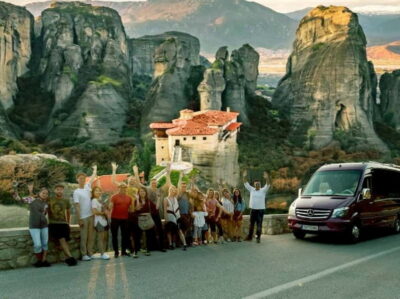
Meteora Monasteries Day Trip with Caves and Lunch
Read our review →

Athens to Meteora: Monasteries, Caves & Seaside Stopovers
Read our review →
Full-Day Meteora Tour with Local Guide & Greek Lunch
Read our review →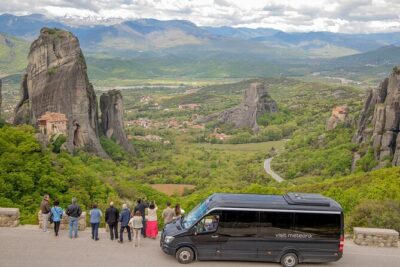
Meteora Monasteries, Caves & Coastal Stopovers with Lunch
Read our review →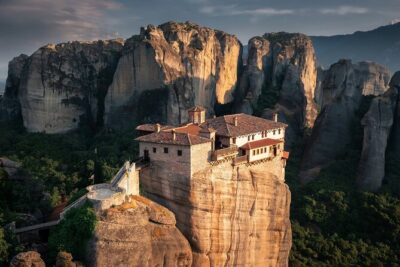
Meteora Monasteries & Caves DayTrip from Athens with Greek Lunch
Read our review →
4-Day Classical Greece Tour: Epidaurus, Mycenae, Olympia, Delphi, Meteora
Read our review →Browse the lists this tour appears in