
Reviewed · WALKING TOURS
Athens: Philosophy and Democracy Walking Tour
Democracy has a street-level walking route. This Athens walk turns big ideas like philosophy and democracy into real places you can point to as you go. It is led by Panos, and his storytelling makes ancient politics feel oddly current.
I especially love the way the route builds from burial grounds and speeches at Kerameikos all the way to hilltop viewpoints at Philopappos Hill. I also like the balance of “what happened” and “why it mattered,” with stops that show education, science, and political life side by side.
One heads-up: this is a walking tour that runs rain or shine, and it is not suitable for people over 70. If you have very small kids, the philosophy themes can be a lot to follow for a whole 3.5 hours.
In This Review
- Key highlights to pay attention to
- A 3.5-hour Athens walk that treats ideas like street maps
- Meeting at the Statue of Theseus, then easing into the Agora story
- Kerameikos: Pericles, burial grounds, and politics right next to you
- Monastiraki and the Roman-era city vibe you can still shop and wander
- Ancient Agora and the political, commercial, and social core
- Tower of the Winds: science, timekeeping, and weather in stone
- Pnyx Hill and the debate stage for democracy
- Hadrian’s Library and education that still shows in the ruins
- Filopappos and Philopappos Hill: end with big views and a human scale
- Plaka streets and the Acropolis pass-by: use the tour as orientation
- Price and value: $49 for context, not just checkpoints
- Who should book this tour, and who might want to think twice
- Should you book Athens: Philosophy and Democracy Walking Tour?
- FAQ
- How long is the Athens Philosophy and Democracy Walking Tour?
- Where do I meet the guide?
- Is the tour in English?
- Is the price $49, and what is included?
- Does it run in bad weather?
- Can I get a refund if my plans change?
Key highlights to pay attention to
- Start at Kerameikos where prominent Athenians were buried for centuries, and where Pericles gave his famous speech
- Tower of the Winds with its octagonal marble design, used for wind indication and as a clock, tied to an early weather station
- Pnyx Hill the historic stage for democracy, paired with strong viewpoint time
- Philopappos Hill views plus the Philopappos Monument, so the walk ends with payoff for your photos
- Hadrian’s Library and the Roman Agora zone to connect education with civic life
- A small group (max 15) led in English, which keeps the pace conversational
A 3.5-hour Athens walk that treats ideas like street maps
If you want Athens to feel more than a photo stop, this tour is built for that. You start in the central neighborhoods and move through the kinds of spaces where thinking, arguing, teaching, and governing all happened. For me, the magic is how the guide links philosophy and politics to the specific stones in front of you, so the concepts stop floating in the abstract.
The format also matters. The group is limited to 15 people, so you are not just listening from the back of a crowd. And because it is a live English guide (Panos), you get explanations that stay readable, with humor and a clear “big picture” thread. The pace is described as easy, with a few steps at the end, but it still takes steady walking in outdoor Athens.
At $49 for 3.5 hours, this is a strong value when you compare it to typical “single-site” tours. You are getting a guided tour of multiple landmarks tied into one storyline, and many of the stops are in the most central ancient core areas where you would otherwise scramble for context.
More Walking Tours in Athens
Meeting at the Statue of Theseus, then easing into the Agora story
Your tour begins in front of the Statue of Theseus, opposite the train station, across the road. That is a practical meeting point because it is easy to orient yourself before you start walking, and the tour then threads you through the Athens people actually moved through.
Once you begin, expect short walking segments that feel manageable: around 10 to 30 minutes between major stops. The itinerary is built to keep you moving without turning it into a marathon, and the guide uses each location as a chapter. Think of it as a walking outline where each landmark adds one missing piece to the puzzle.
You should still plan for real outdoor time. The tour runs rain or shine, so pack for weather, and wear shoes that can handle uneven ground and curb cuts. Comfortable shoes are not a suggestion here, it is the difference between enjoying the walk and counting down the minutes.
Kerameikos: Pericles, burial grounds, and politics right next to you
The first major stop is the Kerameikos Archaeological Site. This is not just a scenic ruin field. It is described as the place where many prominent Athenians were buried for centuries, which gives the site an emotional weight you usually only get at cemeteries and memorial spaces.
It also connects to the political heartbeat of Athens. The tour highlights that this is where Pericles, one of the most prominent Athenian leaders, gave his famous speech. That detail changes the tone instantly. Instead of seeing history as an ancient show, you start sensing how public life, honor, memory, and power were tightly linked.
If you like context, this is a great opener because it sets up the theme of the whole tour: how Athens worked as a society of citizens, thinkers, and institutions. Even before you reach the Agora proper, you begin to understand what kind of city this was.
Monastiraki and the Roman-era city vibe you can still shop and wander
After Kerameikos, you head toward Monastiraki, home to the flea market area and antique shops. This section is shorter, but it helps break the “only ruins” feeling. You get a slice of Athens street life right next to the ancient narrative.
Monastiraki’s antique-stall energy also fits the tour theme. Philosophy and democracy were not museum topics back then. They lived alongside marketplaces, everyday transactions, and civic talk. This is your chance to see how Athens still mixes old and new in the same walking corridors.
Practical tip: if you want time to browse, build it into your plans outside the guided portion, because the tour is moving from stop to stop. You will still get the atmosphere, but this is not a guided shopping detour.
Ancient Agora and the political, commercial, and social core
Next comes the Ancient Agora of Athens, described as the best-known example of an ancient Greek agora. This is the big one, the place once focused on political, commercial, administrative, and social activity.
For your understanding, that list is the whole point. The Agora was not just a market. It was where daily life and decision-making overlapped. So when the guide talks about democracy and philosophical theories under a new light, you feel the logic: people argued about ideas in the same spaces where they traded goods and ran city business.
You get a grounded sense of how citizenship worked, because you are not hearing it in a lecture hall. You are seeing the “stage” where those conversations would have played out.
More stepped lanes through the kastro quarters:
- Acropolis monuments & Parthenon Walking Tour with Optional Acropolis Museum
★ 5.0 · 2,678 reviews - Athens Acropolis and Parthenon Walking Tour
★ 4.5 · 1,355 reviews - Acropolis, Parthenon & Athens Old City Heritage Walking Tour
★ 4.5 · 876 reviews - Athens Authentic Greek Food Walking Tour (Small Group)
★ 5.0 · 809 reviews
Tower of the Winds: science, timekeeping, and weather in stone
One of the most satisfying stops is the Tower of the Winds in the Roman Agora area. This is an octagonal marble tower with practical purposes: it served as a wind indicator and also worked as a clock.
The tour also links it to early science. It explains how it functioned like a first meteorological station and how it was used to forecast weather. That detail is a quick reality check in the best way. Ancient Athens and the wider ancient world were not only about speeches and philosophy. They measured, observed, and built tools that helped people manage their day.
This is also a stop where photographs pay off. Even if you only see it briefly (the tour gives it a short walk-in segment), it is the kind of landmark that makes you pause, because the practical design is right there in front of you.
Pnyx Hill and the debate stage for democracy
From the Roman-era surroundings, the tour moves into the heart of the democracy story with Pnyx Hill, a historic location for Athenian democracy. This is where you come to understand that democracy was not an idea that floated down from the sky. It was a process with a physical setting and a public audience.
The tour gives you a longer stretch here (about 30 minutes walking time in the plan), which matters. Pnyx is not just about standing on one spot, it is about feeling the openness of the area and realizing why public gatherings shaped political thinking.
Then you connect that to the broader intellectual thread the guide keeps returning to: how people argued about ethics, wisdom, rational thought, and civic life. Even if you do not know philosophy terms going in, the tour is set up to make the ideas understandable by tying them to what you are looking at.
Hadrian’s Library and education that still shows in the ruins
Another strong stop is Hadrian’s Library. The tour frames it as part of Athens’ larger story of arts and education. It is easy to associate Athens with thinkers like Plato and Socrates, but the “how did people learn and gather” question is just as important.
Seeing Hadrian’s Library in the middle of your walk does something helpful: it widens the lens from famous names to how knowledge functioned socially. Libraries, public buildings, and lecture-like spaces helped shape a culture where debate and teaching could happen.
You also pass by nearby Roman-era structures tied into the same civic world, including the Roman Agora area. That combination helps you track how Athens evolved rather than treating it like one perfectly frozen moment.
Filopappos and Philopappos Hill: end with big views and a human scale
The walk finally leans into payoff with Philopappos Hill and the Philopappos Monument. The tour allots a substantial chunk of time here, about 1.5 hours on the hill route, and it ends at Philopappos Hill.
This section is not only scenic. It gives you a human perspective on the city layout. When you look out over Athens from here, the earlier stops make more sense. The city stops feeling like random ruins and starts feeling like a connected civic map.
If you like your tours ending with a viewpoint that also gives meaning, this is the right kind of finale. You get the high ground, and you can revisit the day’s themes in your head while your feet rest a bit.
Plaka streets and the Acropolis pass-by: use the tour as orientation
Even though the focus is on the ancient core, you also pass by Plaka, described as a historical neighborhood with small scenic houses and narrow streets. That matters because it helps you understand what Athens looks like around the ancient remains.
You also pass by the Acropolis, a rocky citadel above Athens. This tour is not sold as an Acropolis ticket-based deep dive, so you should treat it as orientation. It gives you the “where does everything sit” feeling, then you can decide how much time you want on another day for the Acropolis itself.
If you have only a short window in Athens, doing this first can help you prioritize what you want to return to later. The city becomes easier to navigate once you have a story in your head.
Price and value: $49 for context, not just checkpoints
Let’s talk value honestly. At $49 per person for 3.5 hours, you are paying for guided interpretation, not admissions. Site entry and admissions are listed as not included for several key places such as Athens, Hadrian’s Library, the Roman Agora, the Tower of the Winds, and the Ancient Agora of Athens.
So your real bargain is not the ticket cost. It is that you get multiple landmarks explained in one coherent storyline: philosophy, education, political systems, and early science. And because the group is capped at 15, the guide can keep the flow clear instead of repeating the same answers for everyone.
This is also one of those tours where the guide makes or breaks the experience. The repeated praise is about Panos and his style: he is described as a storyteller who makes complex history and philosophy easier to follow, with humor and room for questions. That is exactly what you want when you are paying for guidance through ideas, not just walking between stones.
Who should book this tour, and who might want to think twice
I think this tour is ideal if you:
- want a philosophy and democracy framework you can carry around Athens
- enjoy learning through walking and visual context
- like tours that connect big themes to real landmarks, like Pnyx Hill and the Agora
- will appreciate a small group atmosphere led in English by Panos
I would think twice if you:
- are traveling with someone who needs minimal walking, since it runs rain or shine and involves outdoor terrain
- are over 70, since the tour is not suitable for that age group
- have very young kids who struggle with abstract ideas for long periods, since this is more “thinking tour” than “kids playground tour”
Also, bring realistic expectations about the content. This is not just ancient background. It is built around the birth and evolution of democratic thinking and philosophical theories, so go in with curiosity. If you are in a mood for pure sightseeing without questions and connections, you may want a more “ruins-first” route instead.
Should you book Athens: Philosophy and Democracy Walking Tour?
Yes, if you want Athens to make sense fast. I would book it early in your trip because the route gives you orientation around the Agora zone, then ties everything to why democracy and philosophy mattered. The combination of landmark variety, short time chunks, and Panos’s storytelling style is a rare mix: you get education without losing momentum.
If you have limited time and you care about ideas, this tour is a great use of a half day. If you only want tickets and photos and nothing else, you might find the philosophy focus heavier than expected. But for most people who want more than surface-level sightseeing, this one is a smart call.
FAQ
How long is the Athens Philosophy and Democracy Walking Tour?
The tour lasts about 3.5 hours.
Where do I meet the guide?
Meet in front of the Statue of Theseus, opposite the train station, across the road.
Is the tour in English?
Yes, the live tour guide speaks English.
Is the price $49, and what is included?
The price is listed as $49 per person. The tour includes a group of max 15 persons, and children up to 14 years old join for free. Admissions to sites are not included.
Does it run in bad weather?
Yes. The tour takes place rain or shine.
Can I get a refund if my plans change?
Free cancellation is available up to 24 hours in advance for a full refund.
New pins on the Athens chart
- Mycenae, Epidaurus, Nafplio, Corinth Canal Private Full Day Trip From Athens★ 5.0 · 83 reviews
- From Athens: Mycenae, Epidaurus & Nafplion Private Tour★ 4.9 · 83 reviews
- Delphi with Professional English Guide and Transportation★ 4.5 · 84 reviews
- Acropolis of Athens, Ancient Agora and the Agora Museum Tour★ 5.0 · 86 reviews
- Athens: 2.5-Hour Private City Tour Off the Beaten Track★ 4.7 · 86 reviews
- Thermopylae The battle of the 300 Spartans & Delphi Day Tour★ 5.0 · 86 reviews
Walking Tours, compared.
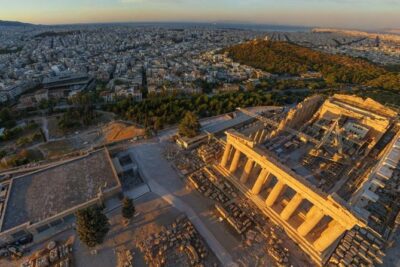
Acropolis and Parthenon Guided Walking Tour
Read our review →

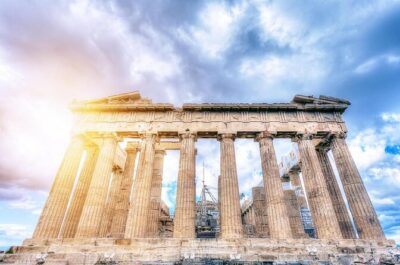
Acropolis monuments & Parthenon Walking Tour with Optional Acropolis Museum
Read our review →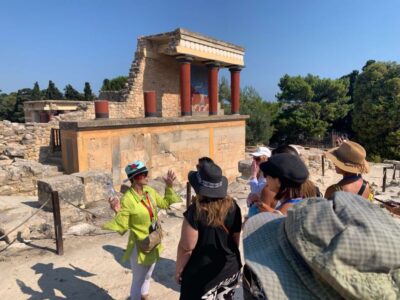
Knossos Palace Skip-the-Line Guided Walking Tour
Read our review →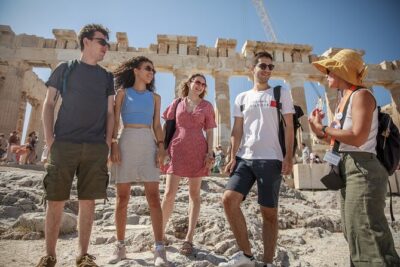
Athens Acropolis and Parthenon Walking Tour
Read our review →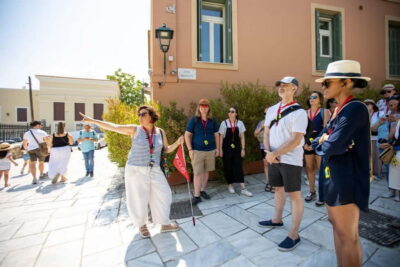
Acropolis, Parthenon & Athens Old City Heritage Walking Tour
Read our review →
Athens Authentic Greek Food Walking Tour (Small Group)
Read our review →Browse the lists this tour appears in