
Reviewed · ANCIENT CORINTH TRIPS
Footsteps of Apostle Paul from Athens to Corinth, Private Day Tour
Paul’s footsteps feel close here. This private day tour strings together the key Athens and Corinth sites tied to Apostle Paul, from the Areopagus to the Kechries port, with A/C pickup and a driver who keeps the story moving.
I really like two things about it: first, the itinerary makes religious history tangible by linking places to specific events in Acts, like Paul preaching in Athens and staying in Corinth. Second, you get a true private setup, with flexible pickup from Athens or Piraeus and the ability to adjust timing for what you care about most.
One thing to consider: the driver can give commentary but cannot enter archaeological sites, and some major entrances are not included, so you may want to budget for Ancient Agora and Ancient Corinth tickets (plus the optional licensed guide add-on if you want deeper on-site interpretation).
In This Review
- Key highlights worth your attention
- Areopagus Rock, the Acropolis zone, and why this spot matters
- Ancient Agora: where politics, commerce, and Paul’s preaching meet
- Athens stone classics: Olympian Zeus, Panathenaic Stadium, and the Hadrian vibe
- Syntagma Square and the Unknown Soldier: a short ritual stop that hits
- Neoclassical Athens: Academy, University, and National Library outside the main museum circuit
- Corinth Canal: the narrow throat between Gulf and Saronic Sea
- Ancient Corinth: Paul, Priscilla and Aquila, Gallio, and a place you can picture
- Kechries port: where Paul sailed on toward Ephesus
- Price and value: is $286.02 per person a good deal?
- How the private setup feels on the ground
- What to do if you care most about the Paul story
- Who this tour fits, and who might prefer something else
- Should you book Footsteps of Apostle Paul from Athens to Corinth?
- FAQ
- What time does the tour start?
- Is pickup available, and where from?
- How long is the tour?
- Is this tour private?
- What language is the tour in?
- Can the driver enter the archaeological sites?
- Are entrance fees included?
- How much are the entrance fees for the major sites?
- Is food included?
- What is included in the transportation?
Key highlights worth your attention
- Areopagus setting for Paul’s famous speech, with the Acropolis zone right nearby
- Ancient Agora time where Paul preached to Greeks, plus the option to add the museum
- Corinth Canal quick stop for a real geographic feel of land, sea, and shipping routes
- Ancient Corinth focus tied to Gallio’s time and Paul’s 18-month stay
- Kechries port visit aimed at where Paul sailed onward toward Ephesus
Areopagus Rock, the Acropolis zone, and why this spot matters
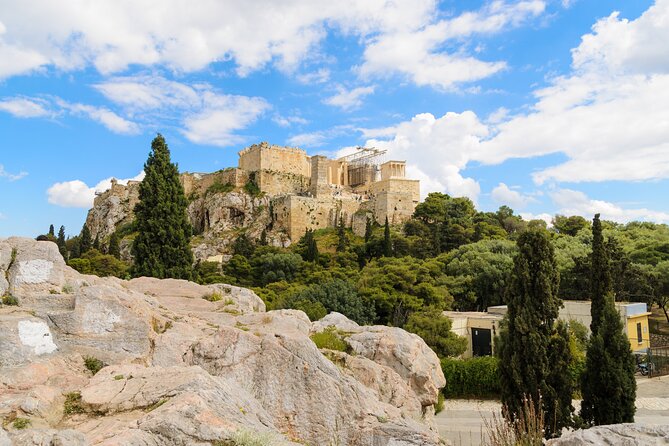
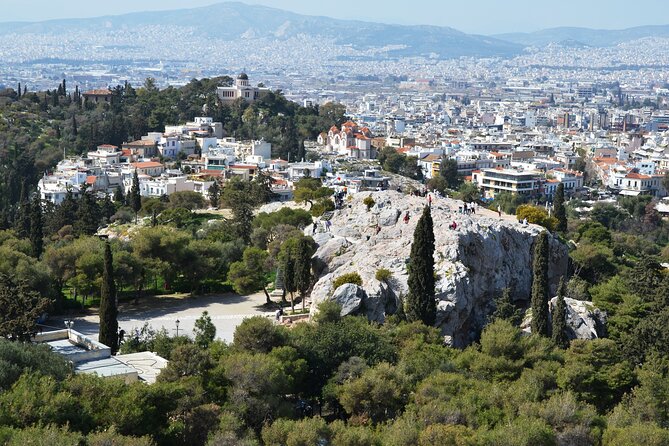
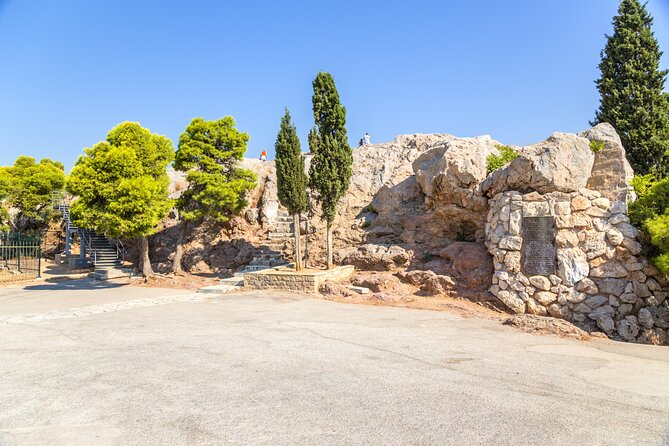
Start with the Areopagus area, a rock outcropping just northwest of the Acropolis. In earlier Greek times, it served as a council area, then later shifted into a court role. Roman-era references tie Paul’s famous speech to this general location, and the whole point of stopping here is to understand the setting: this is where ideas were argued out in public, not in private rooms.
If you like religious history with real geography, you’ll appreciate how the placement works. It is not just a name on a map, you are standing in the Athens conversation space, with the Acropolis looming overhead as your visual anchor. And because the tour is private, you can ask questions and linger a bit if the story grabs you.
The Areopagus stop is short, about 20 minutes, and the admission there is free. So you get the meaning without spending a lot of paid time in this one.
More Private Tours in Athens
Ancient Agora: where politics, commerce, and Paul’s preaching meet
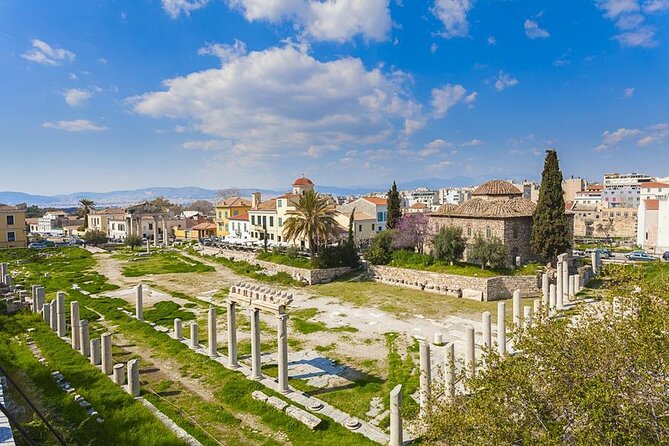
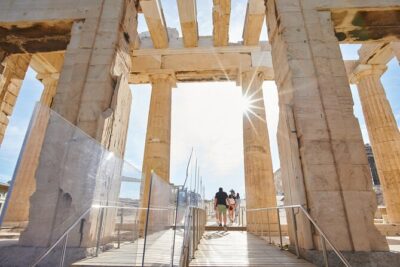
Next you head to the Ancient Agora of Athens, the city’s working heart. This was political, commercial, administrative, social, and legal center all at once. It is also a rare site in that it was used without interruption across many eras, starting extremely early and continuing through later city life.
For Christian history, this is one of the itinerary’s strongest moments: it is described as the place where Paul preached Christianity to Greeks for the first time around 51 A.D. The value here is not only spiritual, it is practical. Agora ruins help you understand how public life actually functioned, which makes Paul’s message feel less abstract.
Plan for about 1.5 hours here. The big catch is cost. Entrance to the Ancient Agora and its museum is not included, and the tour data lists an entrance fee of €20 per person for that. If you want the museum too, budget time and money. If you prefer ruins only, you can still get the main atmosphere, but you will likely miss some context.
Athens stone classics: Olympian Zeus, Panathenaic Stadium, and the Hadrian vibe
After Agora, you shift into iconic Athens landmarks that are easy to recognize and fun to picture with historical context.
You will see the Temple of Olympian Zeus. The site once featured impressive column arrangements, and today only sixteen columns survive, thirteen on the east side intact. A remaining west-side column even fell later, in 1852, which is a reminder that what you see is a mix of ancient design and modern survival.
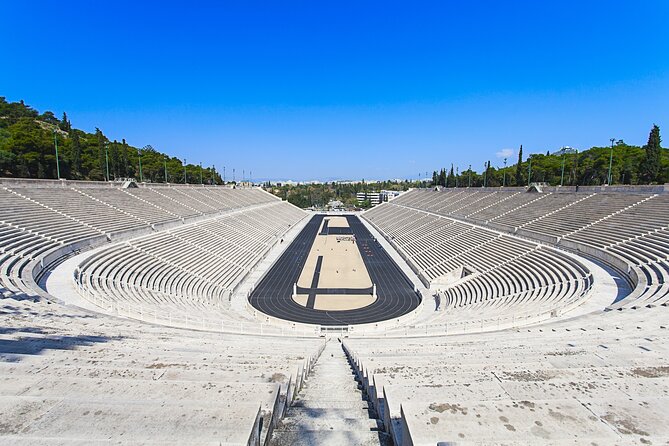
Then comes Panathenaic Stadium, a stadium that traces back to a natural hollow turned into a sports venue around 330 to 329 B.C. A later restoration in the Roman period helped shape the form that shows up after modern excavations. The stadium’s horseshoe outline and long track measurements make it easy to imagine the scale when crowds gathered for festivals.
These stops are quick, and the stadium stop is listed as about 15 minutes. That makes them good for a first pass, especially if you are trying to cover a lot of ground from Athens to Corinth without burning your day.
There is also time for the Arch of Hadrian, built in A.D. 131. The inscriptions are a neat way to read Athens in two directions: the ancient city of Theseus on one side, and the city of Hadrian on the other. It is a small stop, but it gives you a concrete Roman lens for the city you are standing in.
Syntagma Square and the Unknown Soldier: a short ritual stop that hits
You then move to Syntagma Square, the big marble plaza in front of the Greek Parliament. This is a practical break in the day because it is a wide, open space. You can reset your eyes, watch traffic and pedestrians, and take in the scale of the city’s main political center.
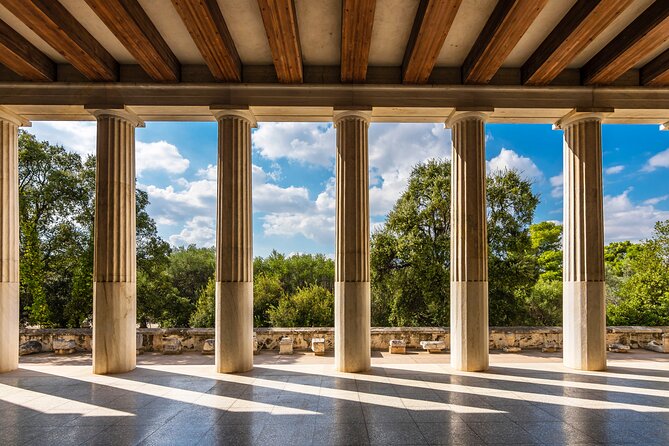
From there, you visit the Monument to the Unknown Soldier at the Tomb of the Unknown Soldier. It is a war memorial with 24-7 guarding by the Evzones, the Presidential Guards. In practice, this stop works because it is visual and immediate. Even if you are not focused on military history, it is a memorable pause.
You also get time for the Changing of the Guard ceremony, again about 15 minutes. This one has a tourist reputation for a reason, the figures are striking and the routine is consistent. If you want the best experience, go a little early and pick a spot where you can see without constantly craning your neck.
Neoclassical Athens: Academy, University, and National Library outside the main museum circuit
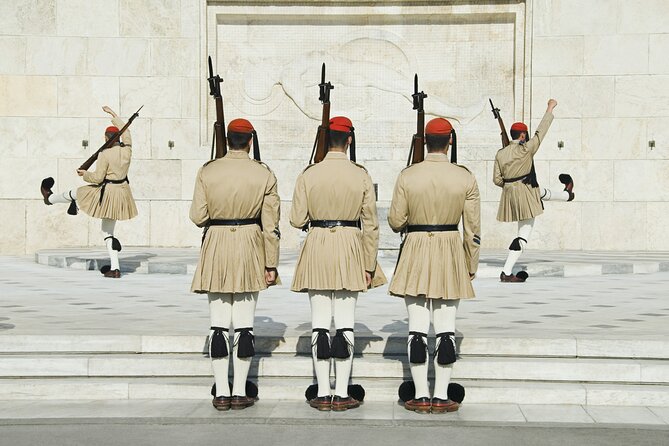
One of the quieter wins in this itinerary is the Athens academic-and-cultural trio. You will pass by or visit the Academy of Athens, the National and Kapodistrian University of Athens, and the National Library of Greece.
The Academy is Greece’s national academy, established in 1926. The National Library is designed as part of a famous neo-classical set, a trilogy of landmark buildings that also includes the Academy and Athens University. These structures are not always the first things people chase in Athens, but they make a nice contrast to ancient ruins.
This is the type of stop that works well on a private day, because the driver can point out what you are actually looking at, so you do not just walk past pretty stone.
More stops at ancient Corinth:
- From Athens: Ancient Corinth Day Trip with Canal & VR Guide
★ 4.6 · 1,073 reviews - Private Biblical Tour Ancient Corinth & Isthmus Canal from Athens
★ 5.0 · 762 reviews - Athens: Ancient Corinth & Nafplio Full Day Trip with Swim
★ 4.8 · 531 reviews - Athens: Corinth Canal, Mycenae & Nafplio Premium Guided Tour
★ 4.7 · 322 reviews
Corinth Canal: the narrow throat between Gulf and Saronic Sea
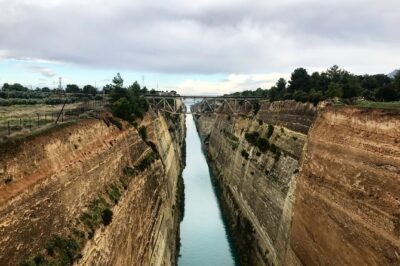
Next you switch gears from Athens ruins to a real geographic engineering moment, the Corinth Canal. The canal connects the Gulf of Corinth with the Saronic Gulf and helps ships avoid a longer route. In other words, it is not just scenic, it is practical.
You get about 30 minutes here, and that is the right amount for a canal stop. You can take in the high walls that rise around 170 feet, notice the canal width variations, and feel how land and sea are squeezed into a navigational corridor.
It is also a psychological break. After long days of walking, the canal stop is more about looking and absorbing than pushing through crowds.
Ancient Corinth: Paul, Priscilla and Aquila, Gallio, and a place you can picture
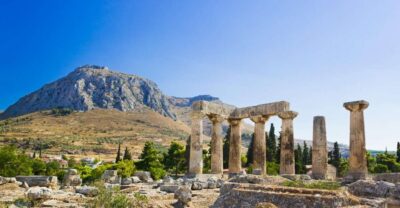
Ancient Corinth is where the day becomes fully “Paul-focused.” You will spend about 1.5 hours at Archaeological Corinth, and the setting is tied directly to events from Acts.
This is described as a place Paul visited around AD 49 or 50, during the time when Gallio was proconsul of Achaia. Paul reportedly stayed for about eighteen months. It is also where he met Priscilla and Aquila, worked with them as tentmakers, and regularly attended the synagogue.
Then there is a key anchor for biblical dating: around AD 51 or 52, Gallio presided over Paul’s trial in Corinth. Having that kind of extra-biblical anchor is why this stop can feel so satisfying. You are not only looking at old stones, you are looking at a place tied to events with real historical weight.
The entrance to Ancient Corinth and the museum of Corinth is not included, and the tour lists €15 per person for that. If you want the museum context, plan for it here. If you want more time exploring the ruins and less time in indoor exhibits, you can still get a lot just by pacing the archaeology itself.
Kechries port: where Paul sailed on toward Ephesus
The day’s final storyline moment is Kechries, an ancient Corinth port. This is described as one of Corinth’s ports in antiquity and specifically as the port from where St. Paul sailed to Ephesus.
The stop itself is brief, about 15 minutes, but the emotional value can be high because ports are where routes become journeys. Even if you do not know the exact ship route or timeline beyond what’s in the biblical record, standing in a port setting helps you picture motion and departure.
This is also an area where photos tend to happen fast, so if you want a quieter moment, ask your driver for a slightly different angle or timing.
Price and value: is $286.02 per person a good deal?
At $286.02 per person for a private day, the value depends on what you want out of the trip.
Here is what you are paying for that matters:
- Private transportation in an A/C vehicle, insured and certified for tourist use
- Flexible pickup and drop-off from Athens hotels or the Piraeus cruise port
- Parking fees handled
- Skip-the-line service to purchase appropriate entrance tickets in advance
- Chilled bottled water
- A driver who provides fluent English commentary en-route
Because it is private, you also avoid the time loss of group logistics. In Athens and Corinth, time adds up fast, especially with heat and crowds. Private means you can make the day feel like your pace.
The main cost you may need to add:
- Entrance fees for Ancient Agora and its museum (listed as €20 per person)
- Entrance fees for Ancient Corinth and its museum (listed as €15 per person)
And if you want a licensed guide who actually enters archaeological sites, the option is mentioned as available for Corinth at an additional €200 depending on availability. Since the driver cannot enter the sites, this is the add-on that can turn the day from a well-guided drive into a fully guided walk.
So I see this as good value if you want a smooth, story-driven day with private comfort, and you are okay either paying site entrances or adding the licensed guide if you really want on-site interpretation.
How the private setup feels on the ground
A lot of the best parts of this kind of tour are not the famous monuments, they are the day management details.
First, you can schedule pickup time to your preferences. Starting at 8:00 am is listed, and that early start can matter. In Athens, you want daylight plus fewer crowd bottlenecks. You also reduce the chance that your heat fatigue hits before you see Corinth.
Second, the private vehicle format helps with practical reality. You can stop for bathroom breaks if you need them, and you can adjust pacing. The tour is built so you are not trapped in a rigid group line.
Third, there is the commentary setup. Your English-speaking driver provides narrative while you are traveling, but cannot enter archaeological sites. That is not a flaw, it is a structure. If you enjoy learning through roadside storytelling and prefer to explore ruins at your own rhythm, this works well. If you want expert answers inside every major ruin, plan for the optional licensed guide.
Also, the tour explicitly notes family-friendly flexibility, including child seats on request. If you are traveling with kids or teens, ask to tailor the pacing in advance.
What to do if you care most about the Paul story
If Apostle Paul’s journey is your main interest, prioritize time in two places:
- Ancient Agora, because it is tied to Paul preaching to Greeks around 51 A.D.
- Ancient Corinth, because it covers Paul’s eighteen-month stay and Gallio’s trial timing
Then use the other stops as story frames. Areopagus gives the Athens sermon setting. Corinth Canal gives the geographic link between the seas. Kechries helps you picture departure.
A helpful way to maximize your day: bring your questions on Acts with you, then ask your driver how each site fits the timeline. In this itinerary, the dates are built into the stop descriptions, which makes it easy to compare what you read with what you see.
Who this tour fits, and who might prefer something else
This works best if you:
- Want a private day with pickup from Athens or Piraeus
- Like biblical history connected to real, walkable locations
- Prefer comfort and smooth scheduling over public transit chaos
- Are comfortable paying some site entrance fees for the best results
You might hesitate if you:
- Want a fully licensed guide inside each archaeological site without extra cost
- Have limited interest in the Athens landmarks and want only Corinth, or only Paul’s story
- Are strictly budget-based, since entrances for Agora and Corinth are additional and the optional licensed guide is extra
Should you book Footsteps of Apostle Paul from Athens to Corinth?
I think you should book it if you want a story-driven private day that connects Paul’s timeline to geography, without turning your trip into a stressful logistics puzzle.
The big reasons to choose it are the private transport comfort, the smart stop order across Athens to Corinth, and the way it frames key moments like Paul’s Athens preaching and Corinth’s Gallio-era events. If you also plan for the paid entrances, or add the licensed guide if your questions run deep, you will leave with more than photos. You will leave with locations you can actually place in your head.
If you want maximum value for your time, do this:
- Budget for €20 for Ancient Agora plus museum and €15 for Ancient Corinth plus museum
- Consider the licensed guide add-on if you want interpretation while you walk the ruins
- Pack water, sunscreen, and a hat, especially in warmer months
FAQ
What time does the tour start?
The start time is listed as 8:00 am.
Is pickup available, and where from?
Yes. Traveler pickup is offered from Athens center hotels, Piraeus hotels, and the Piraeus cruise port. Drop-off is at the same location as pick up.
How long is the tour?
It is listed as about 7 to 8 hours.
Is this tour private?
Yes. It is a private tour/activity, and only your group participates.
What language is the tour in?
The tour notes it is offered in English, and your driver provides English commentary en-route.
Can the driver enter the archaeological sites?
No. The driver provides commentary in fluent English en-route but cannot enter archaeological sites. A private licensed guide can be arranged for an extra cost, depending on availability (listed as additional cost 200€ for Corinth).
Are entrance fees included?
Skip-the-line service to purchase entrance tickets is included, but entrance fees themselves are not included.
How much are the entrance fees for the major sites?
The tour lists: Ancient Agora and the Agora museum, €20 per person. Ancient Corinth and the museum of Corinth, €15 per person.
Is food included?
Food and drinks are not included unless specified.
What is included in the transportation?
You get an A/C, non-smoking vehicle that is insured and certified for tourist use, plus parking fees, and chilled bottled water. Child seats are available upon request.
New pins on the Athens chart
- Private Luxury Tour: Marathon – Battle & Run That Changed History★ 5.0 · 30 reviews
- Shore Excursion: Acropolis, Athens City tour and The New Acropolis Museum★ 4.5 · 30 reviews
- 2 Day Private Tour Of Delphi, Thermopylae & Meteora From Athens★ 5.0 · 30 reviews
- Athens Airport – Athens Center Private Transfer★ 4.0 · 30 reviews
- From Athens: Ancient Corinth Half-Day Private Tour★ 4.8 · 30 reviews
- Private City Kickstart Tour: Hidden Districts★ 5.0 · 30 reviews
Ancient Corinth Trips, compared.
Ancient Corinth Day Trip with Canal & VR Guide
Read our review →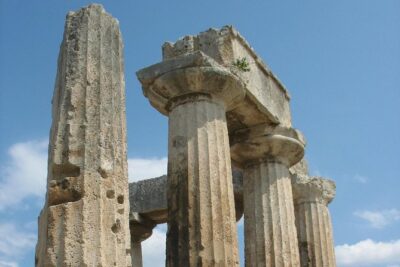
Private Biblical Tour Ancient Corinth & Isthmus Canal from Athens
Read our review →
Corinth Canal, Mycenae & Nafplio Premium Guided Tour
Read our review →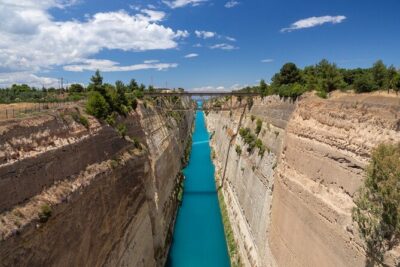
Private Tour of Apostle Paul’s Footsteps in Ancient Corinth
Read our review →
Corinth Half-Day Trip from Athens with Entrance Tickets
Read our review →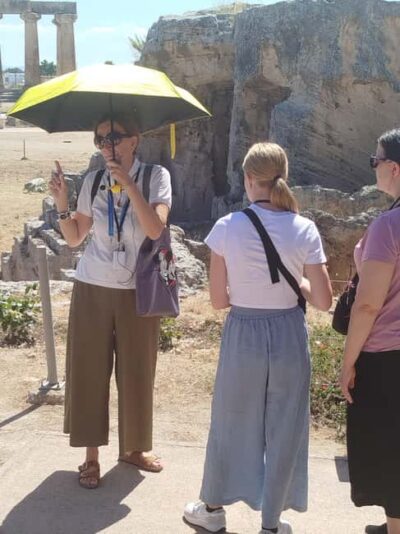
Ancient Corinth Tour with Official Guide & Tickets
Read our review →Browse the lists this tour appears in