
Reviewed · METEORA MONASTERIES TOURS
From Athens:Meteora Caves & Monasteries History Day Trip by Train
Meteora starts working on you before you even climb. This day trip from Athens pairs scenic train time with a small-group van run to the rock-top monasteries, plus Wi-Fi and USB chargers so your photos do not die halfway through the day. I also like the small-group attention once you reach Kalambaka, where the guide keeps things moving and explains what you are actually looking at.
The big consideration is energy. It is a very long day, and Meteora monasteries involve stairs, hills, and uneven paths. If you want slow, detailed viewing, you may feel rushed with only three interiors and a lot of transit.
In This Review
- Key Takeaways Before You Go
- Train Ride From Athens to Kalambaka: Why Sitting Still Helps Here
- The 7:00 am Start and the Real Meaning of a 14-Hour Day
- Meeting Your Guide in Kalambaka: What to Expect, and What Not to Assume
- Kalambaka and Kastraki Breaks: How the Day Finds Breathing Room
- Outside Views of Six Monasteries: The Big Picture Comes First
- Inside the Monasteries: Three Interiors, Several Distinct Personalities
- Hermit Caves: A Different Kind of Meteora Story
- Timing and Photo Strategy: How to Not Waste the Best Light
- Comfort, Air Conditioning, and What to Do About Heat
- Cost and Value: What You Pay, What You Still Need to Budget
- Guides Matter: The Names You Might Hear (and Why It Influences Your Day)
- Weather Rules and When Meteora Might Change Your Plans
- Should You Book This Meteora Day Trip by Train?
- FAQ
- How long is the Meteora day trip from Athens?
- What time does the tour start?
- How many monasteries do we visit, and do we see all six?
- Which monasteries are included as possible stops?
- Are monastery entrance fees included?
- Is lunch included?
- Do we get Wi-Fi and charging on the trip?
- What transport do you use after arriving?
- What language is the tour offered in?
- Final Word: Is This the Right Fit for Your Trip?
Key Takeaways Before You Go
- Scenic Athens-to-Kalambaka train ride with Wi-Fi and USB chargers on the journey
- Max 15 travelers, so you are not stuck in a big crowd shuffle
- See all six monasteries outside, then tour three interiors
- Hermit Caves are included, adding variety beyond church walls
- Cash matters for monastery entry, since credit cards are not accepted
- Photo stops plus short breaks in Kalambaka and Kastraki help break up the day
Train Ride From Athens to Kalambaka: Why Sitting Still Helps Here
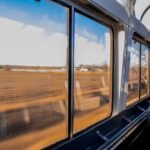
Meteora is famous for its cliff-hugging monasteries, but the real hook of this tour is how you get there. You start from Larissis Station in Athens, then take the train to Kalambaka. That long rail segment matters, because it gives your brain time to switch gears from city time to mountain time.
I like that the train portion is not a dead zone. You have Wi-Fi and USB chargers during the transport, so you can map out your photo plan and keep your phone ready for stops along the route. This is one of those trips where being able to quickly share or back up images is surprisingly useful.
One more practical note: you will likely feel time pressure later in the day, so using the train time to get organized pays off. Charge your phone, download offline maps for Kalambaka, and decide which monastery names you most want to catch first.
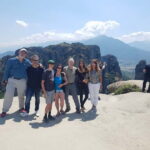
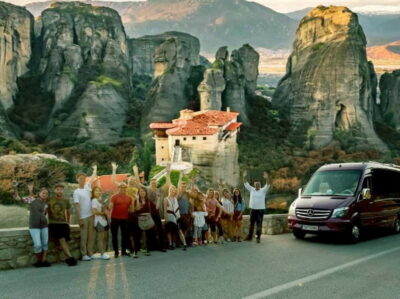
More monasteries balanced on stone pillars:
The 7:00 am Start and the Real Meaning of a 14-Hour Day
The tour starts at 7:00 am and runs about 14 hours. That is long. Not emotionally long, logistically long. This is not a quick cultural hit, it is a full travel day with a concentrated sightseeing window.
Once you leave Athens, expect a chain of moves. You ride the train to Kalambaka, then you meet your guide after arrival and head upward for the monastery area. After the sightseeing blocks, you reverse the process back to your meeting point in Kalambaka, and you still have travel time before you are done.
If your travel style is slow coffee, long museum time, and minimal walking, Meteora will test your rhythm. If you can handle a day with multiple transitions, you will likely feel the payoff in your legs and your camera roll.
Meeting Your Guide in Kalambaka: What to Expect, and What Not to Assume
In Athens, you do not get the classic do-this-with-a-guide-at-the-platform moment. Your train e-tickets arrive by email, and you board the train based on your ticket details. When you reach Kalambaka, your guide meets you with a signboard that has your name on it.
This matters because one common trip problem is missing the meeting point or misunderstanding where staff appear. Your safest move is to treat Kalambaka as the start of the guided portion. Also, double-check your train details in advance, because you need correct seat and carriage info to avoid scrambling.
One practical tip from real-world experience: in Athens, people have mentioned needing to check the platform number and carriage. It is not glamorous, but it prevents stress. Bring patience, and you will be happier when you roll into Kalambaka ready to climb.
Kalambaka and Kastraki Breaks: How the Day Finds Breathing Room
After you arrive and meet your guide, you get transferred into the Meteora monastery area and spend time exploring. There is also an hour in Kalambaka city center after the tour ends, with time for lunch or a coffee. In addition, there is a short stop in Kastraki right after arrival that can cover lunch break, a quick food market visit, and coffee time.
These breaks are not huge, but they help you do two things you need for Meteora:
1) Eat something before you start climbing
2) Regroup before the next walking block
Because lunch is not included, you will want to think ahead. Even if the tour timing is tight, eating before the hills are in full force keeps the day pleasant instead of painful. If you plan to buy snacks at the market, bring cash for small purchases, since not every stand is set up for card payments.
Outside Views of Six Monasteries: The Big Picture Comes First
One of the smartest pacing choices is that you get a wide view before you go inside. You will see all six monasteries from the outside, and then you visit three of them depending on the day.
Seeing them outside helps you understand Meteora’s logic. These monasteries were not random church projects. They are placed on natural rock towers that act like walls, giving the monastic communities isolation and drama. When you spot them from a distance, you start to grasp why these places became spiritual magnets.
It also helps with decision-making. Once you have the overall view, the interiors feel less like separate attractions and more like a connected story of how people lived, worshiped, and preserved their world on top of rock.
More Meteora landfalls to plot
- Discover Meteora’s Monastic Heritage: Personalized Private Tour
★ 5.0 · 122 reviews - Historical Delphi One Day Tour with Arachova Stop & Expert Guide
★ 4.5 · 1,247 reviews - Historic Athens: Small Group Electric Bike Tour
★ 4.9 · 966 reviews - Acropolis, Parthenon & Athens Old City Heritage Walking Tour
★ 4.5 · 876 reviews
Inside the Monasteries: Three Interiors, Several Distinct Personalities
You will tour the inside of three monasteries, and the specific trio depends on the arrival day. The tour lists six possible monasteries you might see, with different levels of access.
Here are the ones the tour can include:
- Great Meteoron: the oldest and biggest
- Varlaam: the second biggest
- Saint Stephens: the most accessible
- Holy Trinity: the most difficult accessible, known from a James Bond movie location
- Roussanou: easy accessible
- Saint Nicholas: important iconography, and often the first one you meet on the way into Meteora
I like that the tour includes a mix of accessibility levels. If you are trying to choose between a steep climb and a less intense walk, it can make the day feel fair. Saint Stephens and Roussanou often sound like the friendly options. Great Meteoron and Varlaam tend to be the big names visually, while Holy Trinity offers the most challenging access and the pop-culture draw.
Be ready for stairs. Even the easier routes can mean uneven ground and lots of climbing. This is not a “wear sandals and cruise” plan.
Hermit Caves: A Different Kind of Meteora Story
Not every Meteora day trip includes the Hermit Caves, but this one does. The Hermit Caves add a layer that feels more human and less postcard.
You can think of it like this: the monasteries show what a community built, lived in, and displayed. The Hermit Caves show what individuals chose when they wanted distance from the world. Together, they help Meteora feel like a living place across centuries, not just a single view.
If you are photographing only monasteries, this cave stop can broaden your images. If you are someone who likes backstories, it adds context to why these rock spaces mattered so much.
Timing and Photo Strategy: How to Not Waste the Best Light
Meteora is a place where good photos happen because you are placed right, not because your camera is fancy. This tour is designed with multiple stops, including photo opportunities and time in Kastraki and Kalambaka.
Here is how I would approach it so you get the most:
- Start the day with charged devices, since Wi-Fi and USB chargers are available but battery anxiety is still real.
- Pick your first two monastery priorities before you arrive in Kalambaka. You will tour three interiors, so a plan helps when you are standing on rock and the route splits.
- Move calmly, but do not hang back. The day is long, and waiting can steal your best angles.
Also, plan on frequent walking and stair climbs once you enter Meteora. One of the most common frustrations with this type of day trip is feeling like the monastery interiors are more “quick look” than “slow study.” This itinerary solves part of that by giving about four hours in the Meteora portion and allowing you to wander inside the monasteries, but you still have a long transit day. If you want maximum depth, you might prefer a longer stay in the area.
Comfort, Air Conditioning, and What to Do About Heat
You get luxury mini-bus transportation by Mercedes, and the monastery transfers are described as air-conditioned. That is a real advantage. When your day includes steep stair segments, it helps to reset in climate-controlled transport between walking blocks.
Still, the day can be warm depending on season. Wear breathable layers you can adjust quickly. Bring water. Bottled water is included, which is helpful because you will likely need it during climbs.
Footwear matters. Even if you are not a hiker, you are dealing with stairs and uneven paths. Sneakers with grip are your friend. If you are dealing with knee issues or mobility concerns, consider whether your pace will work for long stair segments, not just the total number of hours.
Cost and Value: What You Pay, What You Still Need to Budget
The price is $126.71 per person for about 14 hours. That sounds steep until you break down what you are buying.
You are paying for:
- Round-trip train service Athens to Kalambaka, with e-tickets sent by email
- Mercedes luxury mini-bus transportation within the day
- A local English-speaking tour leader
- A guided experience that includes Hermit Caves
- Outside viewing of all six monasteries, plus inside access to three
- Wi-Fi and USB chargers on the transport, plus bottled water
What you still need to budget:
- Monastery entry fees. The tour notes an admission fee of €5.00 per person for monasteries.
- You need cash for the monastery entrance fees, and credit cards are not accepted for paying those fees.
- Lunch is not included, though you do get time to eat in Kalambaka and a short stop in Kastraki that can be used for food.
On value, the small-group cap of 15 travelers is the quiet strength. It tends to make photo stops less chaotic and helps your guide keep track of the group. If you are comparing this to bus-heavy day trips, this one is set up to feel more controlled once you hit Meteora.
Guides Matter: The Names You Might Hear (and Why It Influences Your Day)
A good Meteora day trip can feel like two different tours. One is the place. The other is the narration, and how fast you figure out what you are looking at.
On this kind of tour, the guide’s role is huge. They help you connect rock shape, monastery placement, and religious history so the visit feels more than scenic hiking. Some names you may encounter include Kris, Joanna, Chrissy, Juliana, and Chrysa. The common thread across these guide styles is clarity and story, plus practical help with where to stand for photos.
If you want a day where someone translates the site into something you can actually remember, this is where that investment shows up.
Weather Rules and When Meteora Might Change Your Plans
Meteora is weather-dependent, and the tour requires good weather. If the experience is canceled due to poor weather, you are offered a different date or a full refund.
That is not unique to this operator, but it matters for your planning. Meteora is not a “take a random weather day” kind of trip if you want smooth access and good viewpoints. If you are building your itinerary around it, give it flexibility.
Should You Book This Meteora Day Trip by Train?
Book it if you want:
- A long-day adventure that still includes guided structure
- The convenience of train time plus guided monastery visits in one shot
- A small group setting, with Wi-Fi and chargers to stay sane
- Hermit Caves and inside access to three monasteries, not just outside photos
Skip or reconsider if you:
- Hate long travel days and tight schedules
- Need more time inside each monastery to feel satisfied
- Know you struggle with steep stairs and uneven cliffside paths
If you are flexible, in good walking shape, and you like the idea of starting with a train ride through Greece before you hit the rock monasteries, this is a solid way to experience Meteora in one day.
FAQ
How long is the Meteora day trip from Athens?
It runs about 14 hours.
What time does the tour start?
The start time is 7:00 am.
How many monasteries do we visit, and do we see all six?
You see all six monasteries from the outside, and you visit three of them inside (the exact three depend on the arrival day).
Which monasteries are included as possible stops?
The tour lists Great Meteoron, Varlaam, Saint Stephens, Holy Trinity, Roussanou, and Saint Nicholas.
Are monastery entrance fees included?
Monastery admission is not included. There is an admission fee of €5.00 per person, and you need cash because credit cards are not accepted for monastery entrance fees.
Is lunch included?
No. Lunch is not included, though there is time for food in Kalambaka and a short break stop in Kastraki.
Do we get Wi-Fi and charging on the trip?
Yes. Wi-Fi and USB chargers are provided on board.
What transport do you use after arriving?
You get around the monastery area by an air-conditioned luxury mini-bus by Mercedes (van or bus is used depending on the part of the day).
What language is the tour offered in?
The tour is offered in English, with a local English-speaking tour leader.
Final Word: Is This the Right Fit for Your Trip?
I think this works best when you treat Meteora like a full-day event and you are ready for stairs, timing, and a lot of moving. If you do, the mix of train comfort, small-group attention, three monastery interiors, plus Hermit Caves can feel like a very efficient, memorable way to see one of Greece’s most dramatic spiritual landscapes.
More Train Experiences in Meteora
New pins on the Meteora chart
- 2 Day Private Tour Of Delphi, Thermopylae & Meteora From Athens★ 5.0 · 30 reviews
- Delphi and Meteora, 2-Days Private Tour★ 5.0 · 30 reviews
- Breath-taking Monasteries Morning E-Bike Tour★ 5.0 · 31 reviews
- 4-hours Monasteries Tour★ 5.0 · 33 reviews
- Athens: 2-Day Trip to Meteora with Guided Tours and Hotel★ 4.5 · 33 reviews
- From Kalambaka or Kastraki: Midday Meteora Tour★ 4.8 · 34 reviews
Meteora Monasteries Tours, compared.
Meteora Monasteries Day Trip with Caves and Lunch
Read our review →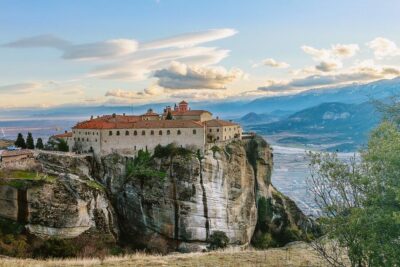
Athens to Meteora: Monasteries, Caves & Seaside Stopovers
Read our review →
Full-Day Meteora Tour with Local Guide & Greek Lunch
Read our review →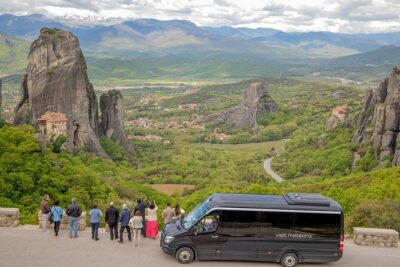
Meteora Monasteries, Caves & Coastal Stopovers with Lunch
Read our review →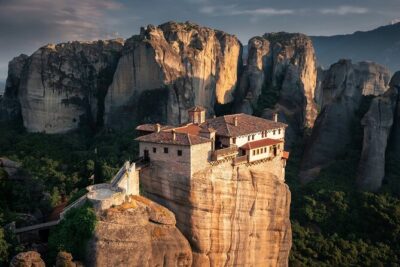
Meteora Monasteries & Caves DayTrip from Athens with Greek Lunch
Read our review →
4-Day Classical Greece Tour: Epidaurus, Mycenae, Olympia, Delphi, Meteora
Read our review →Browse the lists this tour appears in