
Reviewed · SCUBA DIVING
Heraklion: Try Scuba Diving
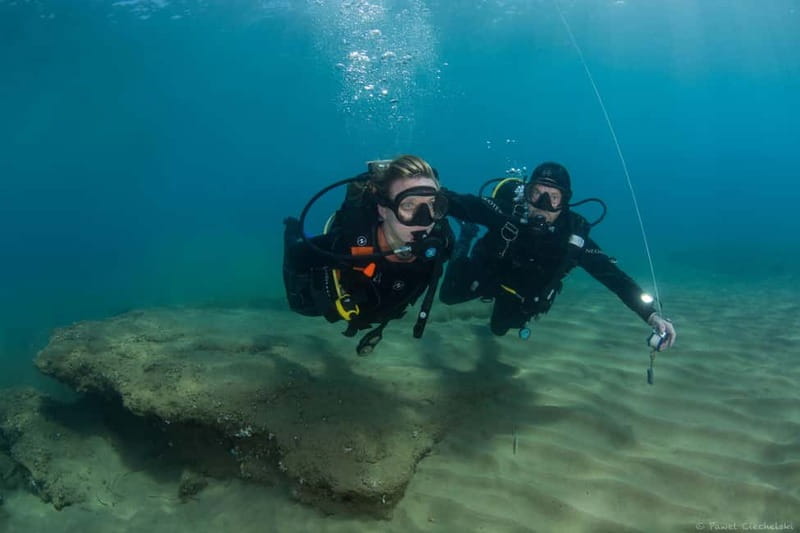
Want to breathe underwater in Heraklion? This Try Scuba experience is the fastest path to that first unforgettable moment, with a calm, step-by-step format and max 6 people so you get real attention. I especially like how the course builds confidence through shallow-water practice before you spend time at a maximum 5 meters, and I also like that you’re guided by an SSI instructor rather than left to figure it out. The main drawback: it’s not a good fit if you are a non-swimmer, have certain medical conditions, or feel uncomfortable with tight, enclosed setups.
You start with a 30-minute theory session that keeps expectations clear, then you move right into practicing basic scuba skills in a pool or very shallow water near the center. After that, the main confined-water session gives you about 30 minutes underwater time under supervision, so you’re not rushing or guessing.
Logistics are friendly, too. Free hotel pickup covers a long list of Heraklion-area resorts, with departures between 8:30 and 9:30, then a return starting at 4:00 pm.
In This Review
- Key Points You’ll Care About
- First Breath Underwater, Without Chaos
- The 2.5-Hour Flow, Theory to Shallow-Water Skills
- The 30-minute theory session
- Pool or shallow-water practice
- Break before the main session
- The Confined-Water Session to 5 Meters, What to Expect
- Gear and Wetsuits Included, So You Travel Lighter
- Price in Context: Is $76 Worth It?
- Instructor Quality and Small-Group Limits
- Who Should Book (and Who Should Skip)
- Getting There from Heraklion, Pickup and Timing
- Practical Tips Before You Go
- Should You Book Try Scuba in Heraklion?
Key Points You’ll Care About
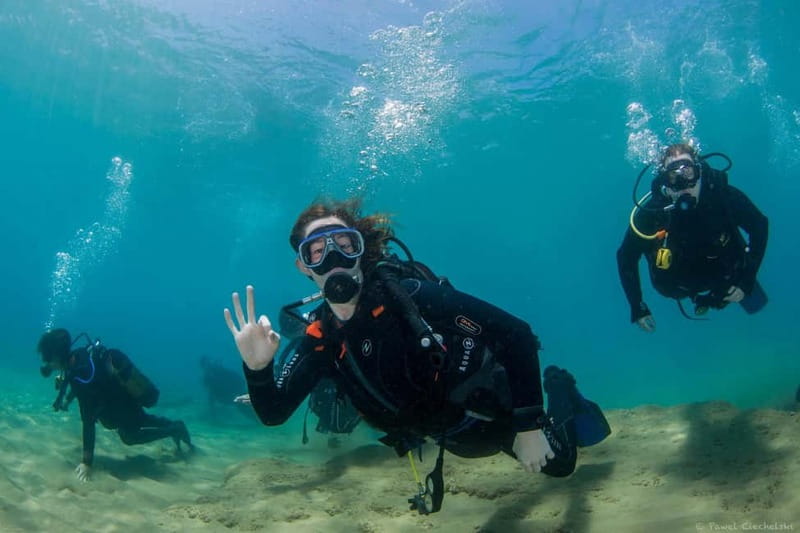
- Max 6 people with a strict instructor-to-student limit (4 students per instructor)
- 30-minute theory first, then hands-on skills in pool or shallow water
- Confined-water session to 5 meters for about 30 minutes
- Full rental gear plus wetsuits included, so you don’t shop or pack heavy
- DAN insurance included, plus eLearning to prep your head
- English, French, Greek, German instruction, with instructors known for patience
First Breath Underwater, Without Chaos
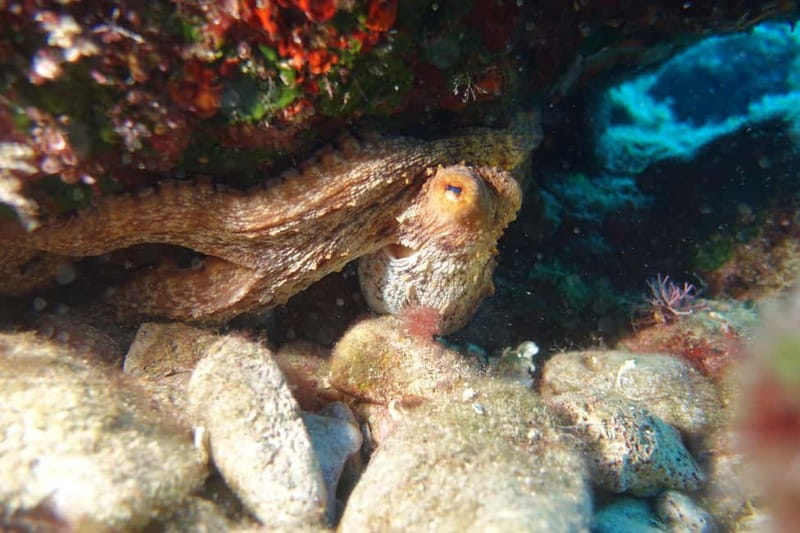
The big reason this course works is the pacing. You get instruction, then you practice, then you get to spend actual time underwater. That sequence matters because the first challenge is not the water. It’s calm decision-making while you’re breathing differently.
I like that the program is designed for beginner conditions, not a trial by stress. The team keeps the atmosphere relaxed, and the small group size helps a lot. Even if you’re nervous at the start, you’re not lost in a crowd. You can actually ask questions and get answers that make sense.
This is also where the human touch shows up in the experience quality. In German, one guide, Jo (Johannes), explained the flow in a patient way, and several people described the session as pressure-free. Another couple referenced instructors Przemek and Jenna handling things with humor and calm focus. That kind of teaching style is not a small detail. It’s the difference between feeling like you’re being watched and feeling like you’re being coached.
One more plus: the course is built around supervision, so you’re not experimenting on your own. The program keeps you inside safe limits and clear boundaries.
More Greek wrecks and walls below:
The 2.5-Hour Flow, Theory to Shallow-Water Skills
Plan on roughly 2.5 hours total. That includes a theory block, practice time in controlled water, and the main confined-water session. Even though the activity duration is listed as 2 hours, the real value is in the full rhythm, especially the first-time coaching.
Here’s how the timeline usually feels:
The 30-minute theory session
You’ll get a structured introduction to what it takes to explore underwater safely. This isn’t just facts. It’s about giving you the mental map so your body follows along once you’re suited up.
What you’ll likely cover:
- How the breathing system works with scuba equipment
- Basic expectations underwater (what you should do, and what you should not do)
- How instructors supervise the session and guide you through skills
If you learn better by understanding the why, this theory bit is worth your attention.
Pool or shallow-water practice
Next comes a short skills phase in a pool or in very shallow water in front of the center. This is where you build comfort, not where you chase thrills.
You practice basic scuba skills using the gear you’ll wear for the main session. For a first-timer, this step is huge. It reduces surprises, because the equipment and movements become familiar before you go deeper.
Also, the instructor-to-student limit helps here. The group max is 6 divers, and the ratio is 4 students per instructor. That means you should get enough personal feedback to correct small issues quickly, like how the equipment feels on your body.
Break before the main session
Between sections, there’s time for surface interval refreshments. It’s a small thing, but it helps you reset. Scuba prep can be tiring, especially when you’re a bit tense.
More Things to Do in Crete
- From Kissamos Port: Boat Cruise to Balos Lagoon & Gramvousa
★ 4.2 · 6,755 reviews - Crete: Day Trip to Agios Nikolaos and Spinalonga Island
★ 4.6 · 4,416 reviews - From Chania: Full-Day Samaria Gorge Trek Excursion & Guide
★ 4.6 · 3,191 reviews - Agios Nikolaos: Boat Trip to Spinalonga with Swim Stop
★ 4.4 · 3,031 reviews
The Confined-Water Session to 5 Meters, What to Expect
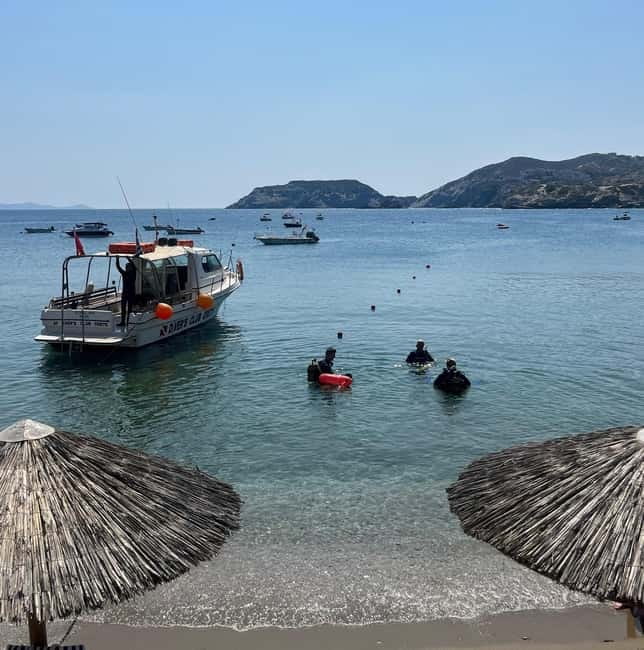
After shallow practice, you move into the confined-water part of the course. The goal is simple: get comfortable underwater while following instruction.
You’ll spend about 30 minutes with a maximum depth of 5 meters. That’s a beginner-friendly range, and it’s intentionally limited so you can focus on steady breathing, basic control, and confidence.
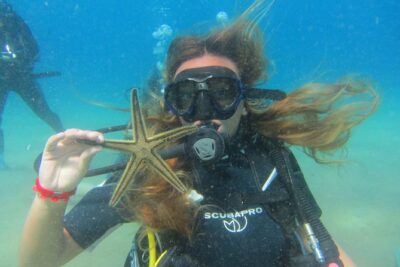
What makes this stage feel rewarding is that it’s not a quick photo op. You have time to move around freely while being supervised. Many first-time experiences are either too short or too overwhelming. Here, the balance is built in: enough time to enjoy the underwater experience, but within a safe, controlled environment.
You’ll also stay in conditions described as ideal for the Try Scuba program. That’s important because conditions shape how stressful or smooth the session feels, especially the first time you’re breathing underwater.
And yes, you should expect that moment when you realize you can actually breathe underwater. That’s the thing people remember, and for good reason.
Gear and Wetsuits Included, So You Travel Lighter
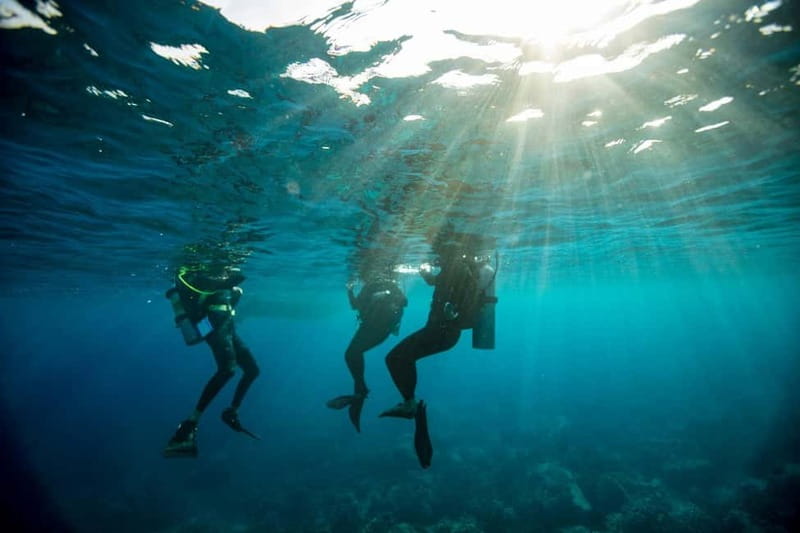
One of the best parts of this course is what you do not have to arrange.
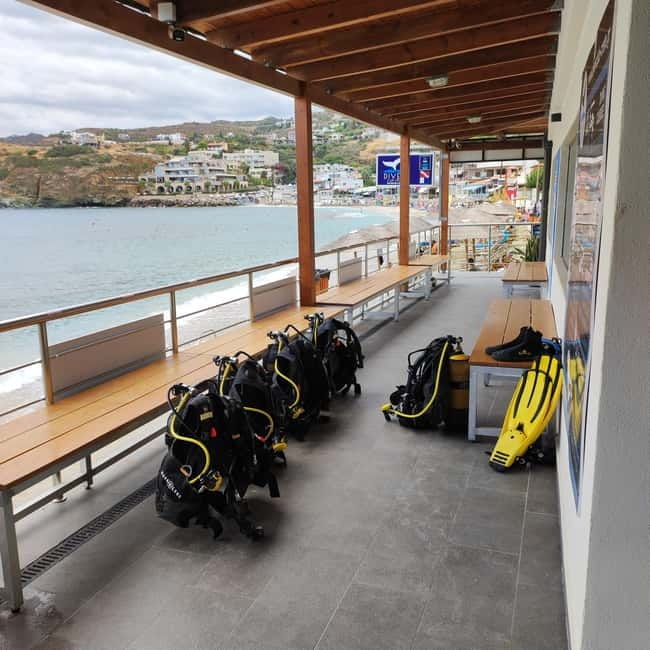
The program includes a full rental set:
- Mask and snorkel
- Fins, available in full foot or open heel
- BCD (buoyancy control device)
- Regulator
- Weights and weight belt, plus tank(s)
- Wetsuit options including a shorty and a 5mm wetsuit
- DAN insurance included
- eLearning
That list matters because scuba gear is bulky and expensive if you rent it piece by piece. Here, you’re paying for a complete package, and the instructors handle the fit. For first-timers, this is a big comfort win.
Also, the inclusion of both shorty and 5mm wetsuit sizes suggests they plan to match water conditions. If you’re sensitive to cold, this is a practical detail you’ll appreciate.
If you were considering buying anything, don’t. Use their gear. Learn the basics first, then decide what you truly need later.
One item not included: HD photos and videos. If you want high-quality underwater images, plan to consider that separately.
Price in Context: Is $76 Worth It?
At $76 per person for a small-group SSI-supervised course with full equipment rental and DAN insurance, this is strong value.
Why? Because you’re not just buying a short activity. You’re buying:
- Instruction from a qualified instructor
- A 30-minute theory portion
- Guided skills practice in controlled water
- A supervised confined-water session to 5 meters for about 30 minutes
- Full scuba gear rental, including wetsuits and weights
- eLearning support
- Surface interval refreshments
Many “intro” experiences charge extra for gear, insurance, or additional training time. Here, the core costs are folded into the price. You also get small-group limits, which often makes the experience better than lower-cost options that are bigger and louder.
So the real question is not only the dollar amount. It’s whether you want a structured, supervised first underwater experience with equipment handled for you. If yes, the price looks fair.
Instructor Quality and Small-Group Limits
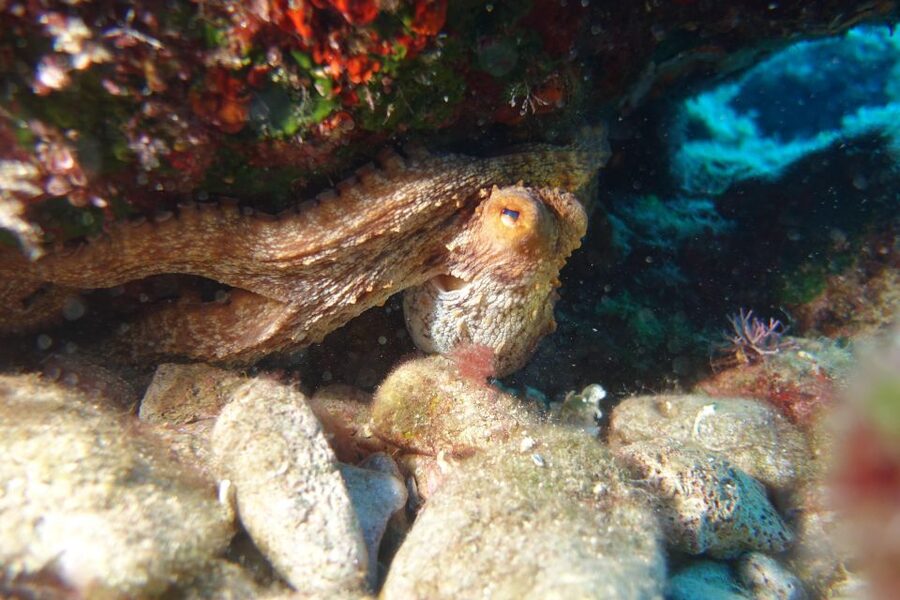
This is where the reviews really line up with the kind of course you want on vacation. People consistently highlight professionalism, patience, and an instructor who explains clearly.
Two things you should care about in particular:
- The group size max is 6
- The instructor ratio max is 4 students per instructor
That ratio is what allows teaching to stay calm. If you’ve ever tried a “group lesson” where you’re waiting for attention, you know how frustrating that can be. Here, the math keeps things manageable.
And you’ll notice different teaching styles mentioned by name:
- Jo (Johannes) for German explanations and a pressure-free course rhythm
- Przemek and Jenna described as patient and playful, with calm support
Even if you don’t know your instructor in advance, the structure is set up so you’re not stuck in silence or confusion.
Who Should Book (and Who Should Skip)
This course is best for people who want a first scuba experience with coaching, clear limits, and safe conditions.
It is not suitable for:
- Children under 10
- Pregnant women
- People with mobility impairments
- People with claustrophobia
- People with heart problems
- Non-swimmers
- People with respiratory issues
- People with epilepsy
- People with a cold
- People with pre-existing medical conditions
- People with recent surgeries
If any of those apply, it’s better to choose a different water activity. Safety comes first, and this program’s limits are explicit for a reason.
If you are a confident swimmer, open to following instructions, and you want the structured basics, this fits well. It’s also ideal for mixed-language travelers because instruction is offered in English, French, Greek, and German.
Families can enjoy it too. One example included a family with teenagers (ages 14 and 17), and everyone had fun. Still, you need to meet the age requirement.
Getting There from Heraklion, Pickup and Timing
The transport is part of the value. Pickup is included for a large number of areas in the Heraklion region, including places like Heraklion, Hersonissos, Malia, Gouves, and Agia Pelagia, among others listed.
Pickup times run between 8:30 and 9:30 in the morning. Return service to your hotel or pickup point starts at 4:00 pm.
This matters because scuba prep does not work if you’re scrambling. Morning pickup helps you arrive with enough time to suit up, do the theory portion, and ease into the skills without stress.
A transport highlight is that 91% of reviewers gave a perfect score for the service. That’s a strong sign the operation runs on time and with low friction.
Practical Tips Before You Go
This course asks for a short list of essentials. Stick to it and you’ll feel smoother:
What to bring:
- Beachwear
- A charged smartphone
Not allowed:
- Alcohol and drugs
A charged smartphone can matter if you’re using the provided eLearning. Even if you don’t use it during the trip, having it ready avoids last-minute problems.
Also, arrive mentally ready for a new breathing routine. That’s the moment most people remember. If you go in expecting it to feel unusual, you’ll handle it better.
And if you’re worried, focus on the process: listen, practice in shallow water, then follow the instructor’s cues at the limited depth.
Should You Book Try Scuba in Heraklion?
I’d book it if you want a first scuba experience that feels organized, instructor-led, and beginner-friendly. The combination of small-group size, structured theory, shallow-water practice, and a supervised confined-water session to 5 meters gives you a real chance to enjoy the moment instead of surviving it.
Skip it if you don’t meet the clear suitability rules, especially if you are a non-swimmer or have claustrophobia or relevant medical concerns. In those cases, it’s not worth forcing it.
If you want an experience that balances safety, teaching quality, and actual underwater time, this $76 course is a solid choice for a Crete trip, especially with free pickup and full gear included.
New pins on the Crete chart
- Heraklion: Ecobike Tour with Food tasting★ 5.0 · 30 reviews
- HIDDEN GEMS – RICHTIS GORGE for nature lovers!★ 4.5 · 30 reviews
- Spinalonga & Agios Nikolaos with BBQ★ 4.5 · 30 reviews
- Heraklion Food Stories Walking Tour with 8 local-favorite stops★ 4.5 · 30 reviews
- Heraklion: Catamaran Cruise to Dia with Sunset, Meal & Bar★ 5.0 · 30 reviews
- Crete: Elafonisi – 4 hours in the beach★ 4.5 · 30 reviews
Scuba Diving, compared.
Scuba Diving Experience in Caldera for Beginners
Read our review →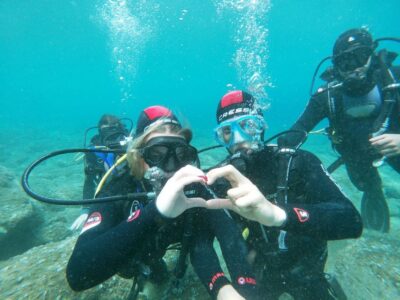
Beginner Scuba Diving Lesson with PADI Instructor
Read our review →
Try a DIVE, discover scuba diving in Mykonos
Read our review →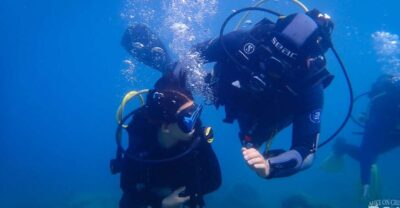
Browse the lists this tour appears in