
Reviewed · METEORA MONASTERIES TOURS
Meteora Monasteries Half-Day Small Group Tour with Transport
Rocks full of monasteries, and you glide up. This small-group half-day tour gives you pickup and round-trip transport from Kalambaka or Kastraki, then you hit UNESCO Meteora with planned viewpoints. One thing to plan for is that monastery entrance fees are not included, and you’ll need cash at a few sites.
What really makes the experience work is the English-speaking local guide, who ties each stop together so the rocks, the churches, and the Orthodox monastic story make sense instead of feeling random. It is still a walking tour with stairs, so wear shoes you trust.
In This Review
- Key highlights to look for
- Meteora in 4 hours: why this half-day format hits the sweet spot
- Price and value: what $36.30 includes, and what you should budget
- Getting picked up in Kalambaka or Kastraki, then using the morning efficiently
- Saint Nicholas of Anapafsas: the first monastery that sets the tone
- Roussanou Monastery inside: accessible rock, damaged past, and a 16th-century cathedral
- Varlaam Monastery inside: the second biggest site and striking wall paintings
- Great Meteoron inside: the oldest core and the feeling of suspended rocks
- Agia Triada and Agios Stephanos: steep steps versus the bridge-style approach
- Dress code and shoes: the stuff that decides whether you enjoy the day
- Guides, narration, and why the English layer matters
- Who should book this Meteora small-group tour
- Book it or skip it: my recommendation for your Meteora day
- FAQ
- What time does the tour start?
- Where do pickup and drop-off happen?
- How long is the tour?
- What language is the guided part?
- How many monasteries do I visit inside?
- Are monastery entrance fees included?
- What should I wear?
- Is food included?
- FAQ
- What is the cancellation window?
Key highlights to look for
- Small group size (max 18) keeps the pace sane and helps with photo stops.
- Inside visits to 3 monasteries plus outside views of the rest, so you cover a lot in about 4 hours.
- English guided narration on the spot, with extra languages available via free audio guide.
- UNESCO and nature protection context, including bird and flower protection in the Natura 2000 zone.
- Local-driver help for timing and drops, which matters when roads are steep and parking is tight.
Meteora in 4 hours: why this half-day format hits the sweet spot
Meteora is one of those places where you can easily waste time. Parking, road access, and figuring out what to prioritize can turn into a stressful scavenger hunt. This tour is built to avoid that. You start at 9:00 am and return to your Kalambaka or Kastraki lodging, so you spend your energy on the monasteries, not logistics.
A half-day plan is also smart here because the views change fast. Even in the morning, light can shift over the cliffs and make the monasteries look different from one viewpoint to the next. This itinerary uses that reality by adding photo stops on the way between monasteries, so you get more than just a quick “walk in, walk out” feeling.
The tradeoff is obvious: you will be on your feet. You are visiting multiple monasteries, and the big ones involve steps, paths, and uphill walking. If you know you get tired quickly, this format can still work, but you’ll want to manage your expectations and bring comfortable shoes.
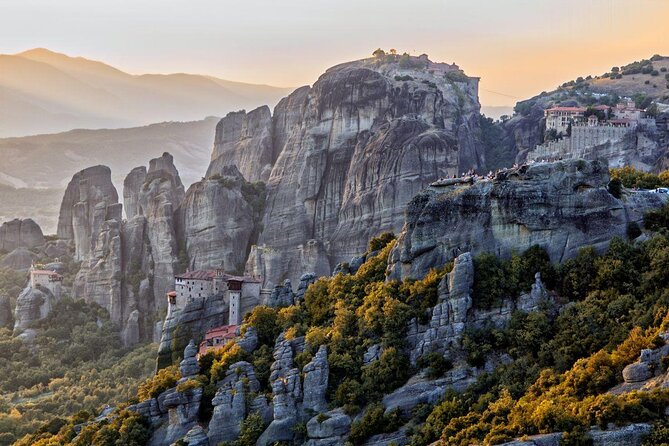
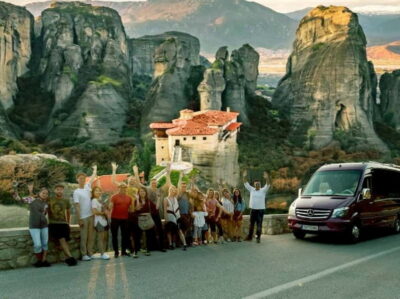
More monasteries balanced on stone pillars:
Price and value: what $36.30 includes, and what you should budget
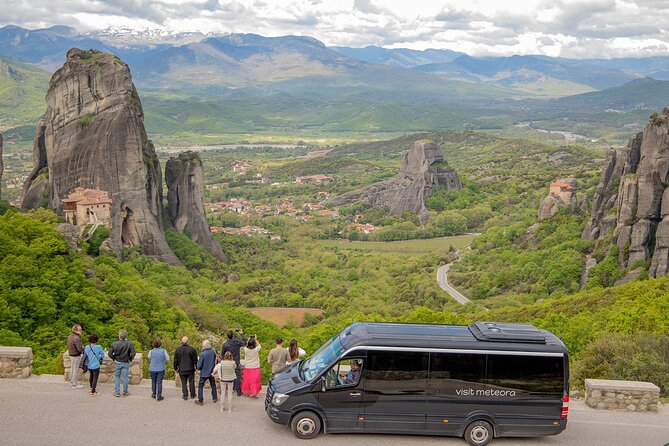
The listed price is $36.30 per person, and it is good value for a tour that includes both the guide and round-trip transportation. You also get bottled water plus free WiFi on board, which sounds minor until you are in a van with limited downtime and want to keep your phone charged and your route handy.
That said, the tour price is not the full picture. Entrance fees are excluded:
- Great Meteoron Monastery: €5.00 per person
- Roussanou Monastery: €5.00 per booking
- Varlaam Monastery: €5.00 per booking
Because the tour includes inside visits to 3 monasteries, it is reasonable to budget roughly another €15 on top for those interiors. You will also want a little cash buffer because some sites do not accept credit cards.
For me, the value comes down to this: you are paying to remove the hardest part, access. In Meteora, that is not trivial. A good guide can also save you time by pointing out what to look for inside, which helps you enjoy what you paid for rather than just snapping photos and moving on.
Getting picked up in Kalambaka or Kastraki, then using the morning efficiently
This tour is designed around the two main bases visitors use: Kalambaka and Kastraki. Pickup is offered from hotels and Airbnbs in those areas, and the schedule is set for a morning start at 9:00 am.
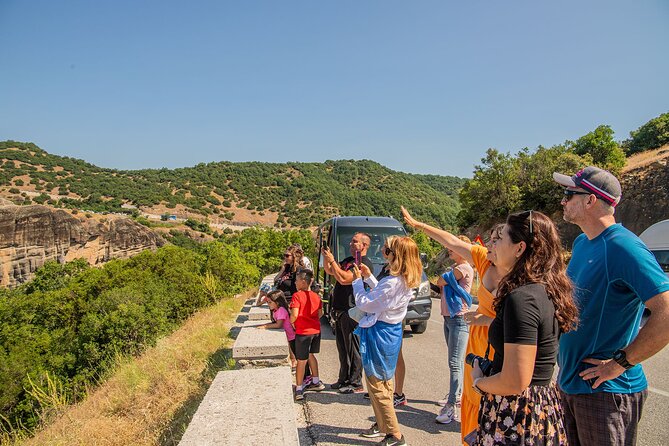
That timing is practical. You see more before the busiest waves roll in later in the day. One of the most common wins people mention is that the time between monasteries feels productive, not wasted. The van rides are part of the experience, with narration happening along the way, and you get photo moments at viewpoint stops rather than rushing straight from one door to the next.
A quick reality check: the route involves steep roads and uphill approaches. The driver matters. In reviews, people repeatedly praised the driver for being careful and for helping with drop-offs and photos, which is exactly what you want when the terrain is unforgiving.
Saint Nicholas of Anapafsas: the first monastery that sets the tone
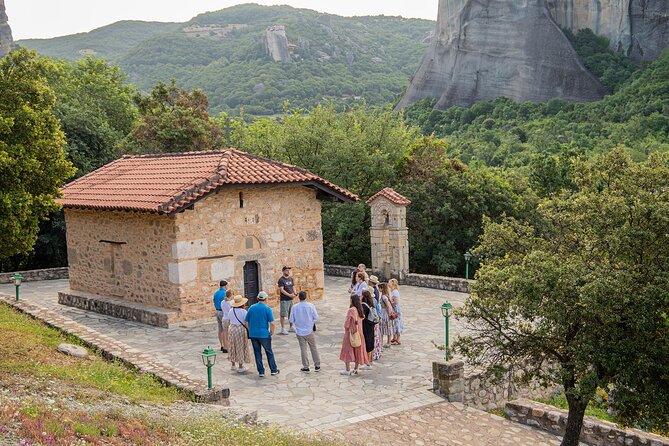
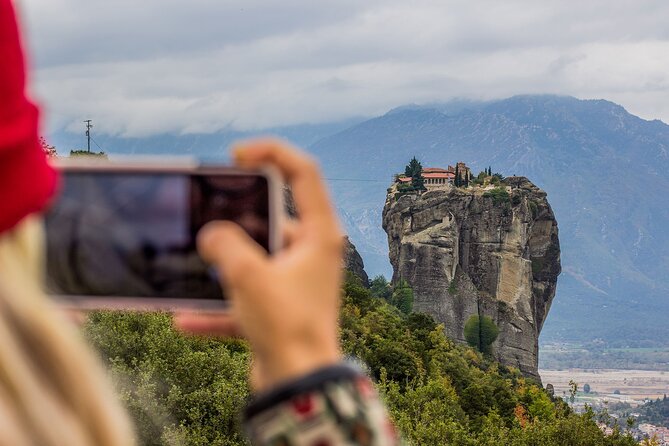
Before you get to the “big three” interior visits, the tour stops at the Holy Monastery of Saint Nicholas of Anapafsas. It is the first monastery encountered on the route up to Meteora and dates to the late 14th century.
Why this stop matters: it gives you context early. The name Anapafsas has a couple explanations, including the idea that it was linked to a benefactor, and another that it served as a resting place for pilgrims before they continued uphill. Even if you only see it briefly, that story helps you understand how people moved through Meteora long before there were paved roads and parking lots.
This is a good moment to slow down mentally. Once you see the scale of the rock formations, Meteora stops being just “cool scenery” and becomes a living system of religious life shaped by geography.
Roussanou Monastery inside: accessible rock, damaged past, and a 16th-century cathedral
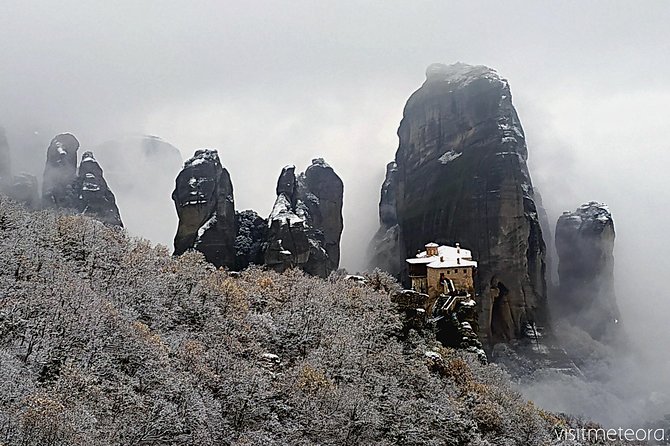
Next up is Roussanou Monastery, one of the interior visits on this half-day route. Roussanou is named after the first probable hermit who settled there. The main cathedral is from the end of the 16th century, and it was decorated about 30 years later.
Roussanou is also described as more accessible than some of the other rock sites because it sits on a lower elevation rock. That does not mean it is flat, but it can feel more manageable compared with the steepest approaches.
There is also a story here about how history leaves marks. The monastery suffered severe damage during World War II and later became a convent in 1988. If you like meaning behind the walls, this one gives you a clear arc: early settlement, later cathedral building, wartime damage, and a return to religious use.
Practical note: the entrance fee for inside visit is €5 per booking, and you are expected to pay on-site. Bring cash.
More Meteora landfalls to plot
- Meteora: Morning Half Day Sightseeing and Monasteries Tour
★ 4.7 · 478 reviews - Meteora: Half-Day Meteora Monasteries Small Group Tour
★ 4.7 · 232 reviews - Meteora: Morning Half Day Sightseeing and Monasteries Tour
★ 5.0 · 165 reviews - Athens: Cape Sounion & Poseidon Temple Sunset Half-Day Trip
★ 4.8 · 8,241 reviews
Varlaam Monastery inside: the second biggest site and striking wall paintings
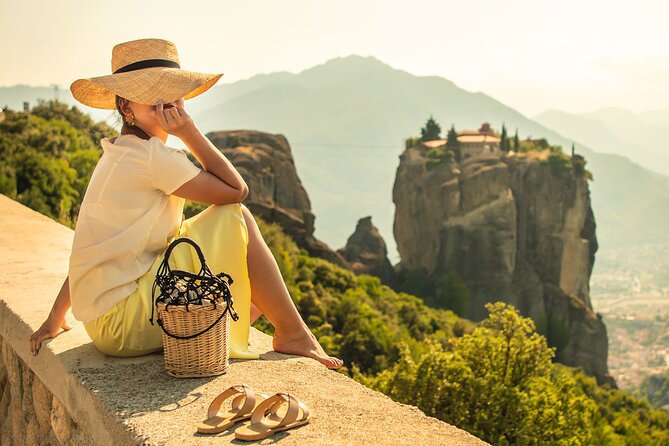
Varlaam Monastery is the second interior stop on the plan and the second biggest monastery on Meteora. It sits opposite Great Meteoron, and it was founded in the mid 14th century by Hosios Varlaam.
If Roussanou feels like an accessible story, Varlaam feels like scale and artistry. The Catholicon was built in honor of Agioi Pantes between 1541 and 1542 by priest-monks from Ioannina. The main church decorations followed in 1548.
One of the standout details you’ll likely hear about from the guide is the wall-painting attribution. Based on stylistic criteria, the wall-paintings are linked to the hagiographer Frago Catelano.
Time is tight on a half-day tour, so your goal is to focus. Look for the way the church interiors communicate with light, and try to spot key icon areas your guide points out. Varlaam is a “slow looking pays off” monastery, even when you only have about 45 minutes.
Also bring cash for the €5 entrance fee for the inside visit. It is not included.
Great Meteoron inside: the oldest core and the feeling of suspended rocks
Now for the big one, Great Meteoron Monastery. It is the biggest and oldest among the monasteries and is the one people describe as “suspended in the air,” thanks to the gigantic rock it sits on.
The monastery was founded by Saint Athanasios the Meteorite. The tour’s storyline places this founding as a turning point, or even the start of organized monastic life at Holy Meteora. In plain terms, this is where Meteora becomes less like scattered hermit living and more like a structured spiritual community with systems and rules.
You typically get about 1 hour here, which is helpful because Great Meteoron is visually dense. It is easy to rush when you see something spectacular. A good guide helps you focus on what matters: the overall monastery setup, the church interior, and the way the site functioned for Orthodox religious life.
Entrance fee applies here too: €5 per person, not included in the tour price.
Agia Triada and Agios Stephanos: steep steps versus the bridge-style approach
After the inside visits, the tour still keeps you connected to the full Meteora map. Two monasteries get special attention because they show the range of access.
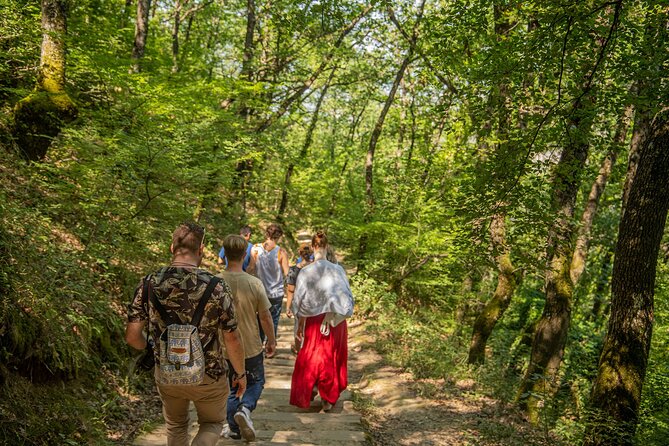
First, Holy Trinity Monastery (Agia Triada). It is known as the most difficult to reach, perched high on a steep rock. Visitors follow a pathway and then walk up about 140 steps to reach it. Once you get there, the panoramic views are the reward. Even if you do not go all the way inside, hearing how it is approached helps you understand why Meteora feels both remote and purposeful.
Second, Agios Stephanos. This one is described as the most accessible. Instead of stairs, you cross a small bridge to reach the entrance. That design difference can be a big deal if stairs are an issue.
One real-world takeaway from reviews: the team can sometimes help when someone has mobility limits. If you have concerns, tell them before your tour so you can plan around steps and paths without surprises.
Dress code and shoes: the stuff that decides whether you enjoy the day
Meteora has a strict dress code, and you will want to follow it. Men must wear trousers and long sleeves. Women must wear a long skirt. If you show up in shorts, trousers, and skirts are provided.
So check your clothes in the morning, not at the monastery gate. You do not want to waste your best light chasing fabric changes. Also pack a little common sense: bring shoes that grip. You are walking on uneven surfaces, and even short approaches feel longer when the rock stairs are involved.
This is one reason I like the half-day format, too. You spend less time stuck in heat and fatigue, compared with longer touring schedules.
Guides, narration, and why the English layer matters
Language can make or break Meteora. The tour is guided in English only, and you get a local English-speaking guide who explains history and practical details while you move between sites.
In reviews, people repeatedly praised guides by name. You may meet someone like Jim and come away with a clear understanding of how the monasteries functioned and why the art matters. You might also run into Apostolis, who is described as passionate and especially good at answering questions. For the driving side, people highlighted Dinos for careful, friendly help and for making photo stops easier.
Even if you use the free audio guide, the English narration is the backbone of the day. There is a free smart audio guide available in multiple languages, including French, Spanish, German, Italian, Portuguese, Chinese, Japanese, Polish, and more. So if you have a friend who prefers another language, it is built to support you without splitting the group.
Who should book this Meteora small-group tour
This one fits best if you want:
- A half-day plan that still includes inside visits to 3 monasteries
- An itinerary that avoids the stressful parts of driving and parking
- A small-group pace with lots of photo stops
You should consider a different style of tour if you are looking for deep, slow study of every interior detail and artwork in multiple monasteries. This half-day plan is more about getting the whole Meteora picture, then making the interiors you visit feel understandable fast.
If you are sensitive to stairs, it can still work, but you should plan around it. The presence of an accessible option like Agios Stephanos is a good sign. The bigger issue is that the monasteries are built on rocks, so you will be doing some uphill movement.
Book it or skip it: my recommendation for your Meteora day
Book this tour if you are short on time and want the simplest way to hit Meteora well. The blend of transport included, English guide, 3 monastery interiors, and planned viewpoint photo stops is exactly what most people need for a first trip.
Skip or look for a different option if:
- You hate stairs and uphill walking.
- You want to spend long, uninterrupted time inside many monasteries.
- You are trying to do a lot of Meteora days back-to-back and you worry about repeating a site.
One last practical tip: plan for the entrance fees, bring cash, and wear the right clothes. Do that, and this becomes one of the easier ways to see Meteora without the day turning into a logistics project.
FAQ
What time does the tour start?
The tour starts at 9:00 am.
Where do pickup and drop-off happen?
Pickup and drop-off are offered from hotels and Airbnbs located in Kalambaka or Kastraki.
How long is the tour?
It is about 4 hours.
What language is the guided part?
The tour is guided in English only. A free smart audio guide is also available in multiple languages.
How many monasteries do I visit inside?
You visit inside 3 monasteries. The included list of entrance fees indicates Great Meteoron, Roussanou, and Varlaam as the inside sites with separate payment.
Are monastery entrance fees included?
No. Great Meteoron is €5.00 per person, and Roussanou and Varlaam have €5.00 entrance fees as well. Cash may be needed.
What should I wear?
Men need trousers and long sleeves. Women need a long skirt. If you arrive in shorts, trousers and skirts are provided.
Is food included?
No. Food and drinks are not included.
FAQ
What is the cancellation window?
You can cancel up to 24 hours in advance for a full refund. If you cancel less than 24 hours before the start time, the amount paid is not refunded.
New pins on the Meteora chart
- From Thessaloniki: Private Day Trip to Meteora with Transfer★ 5.0 · 91 reviews
- Meteora Sunset E-Bike Tour★ 5.0 · 92 reviews
- From Athens: 3 Days in Meteora & Delphi with Tours & Hotel★ 4.6 · 97 reviews
- Meteora: Monasteries Tour, Lunch, and Athens Transfer Option★ 4.8 · 102 reviews
- Athens: Meteora Monasteries Tour with Local Guide and Greek Lunch★ 4.5 · 103 reviews
- Meteora All Monasteries Tour with Photo Stops★ 5.0 · 104 reviews
Meteora Monasteries Tours, compared.
Meteora Monasteries Day Trip with Caves and Lunch
Read our review →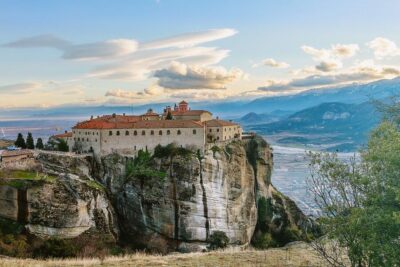
Athens to Meteora: Monasteries, Caves & Seaside Stopovers
Read our review →
Full-Day Meteora Tour with Local Guide & Greek Lunch
Read our review →
Meteora Monasteries, Caves & Coastal Stopovers with Lunch
Read our review →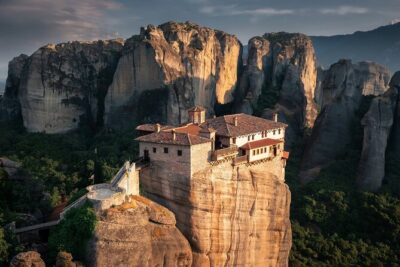
Meteora Monasteries & Caves DayTrip from Athens with Greek Lunch
Read our review →
4-Day Classical Greece Tour: Epidaurus, Mycenae, Olympia, Delphi, Meteora
Read our review →Browse the lists this tour appears in