
Reviewed · ANCIENT CORINTH TRIPS
Private Luxury Biblical Tour: Apostle Paul’s Footsteps – Corinth
Corinth feels close and personal. This private tour strings together key sites tied to Apostle Paul’s time in Corinth, with an English-speaking driver-guide, door-to-door pickup, and a comfortable ride with Wi-Fi on board.
I especially like how the day is built for an easy pace. You move around in a small group, then stop at the right places to understand what you are seeing, without wasting hours in crowded queues. One downside to plan for is cost creep, because archaeological site and museum entrance fees are not included (about €20 per person), and you do not get a separate licensed guide inside the sites.
In This Review
- Key highlights at a glance
- Private luxury pickup and Wi-Fi that makes Corinth easy
- Isthmus of Corinth and the Diolkos: ancient shortcuts
- Kenchreai port: where Paul’s arrival mattered
- Ancient Corinth, Glauke Fountain, and the myth layer
- Paul’s Bema moment in the Roman Forum
- Temple of Apollo and why the Agora shapes the story
- Archaeological Museum of Corinth: artifacts you can actually point at
- Akrokorinthos: the fort and the views that finish the loop
- Apostle Paul Church at the end: closing the story in a basilica
- How long is the day, and where you may feel the pace
- Price and value: what $179.06 buys, plus the €20 entry fees
- Who should book Apostle Paul’s Footsteps in Corinth
- Should you book this Corinth tour?
- FAQ
- Is pickup included in this tour?
- How long is the tour?
- What language is the tour offered in?
- Is Wi-Fi provided?
- Are entrance fees included for archaeological sites and the museum?
- What vehicle size will my group use?
- Is this a private tour?
- What happens if the tour is canceled due to weather?
- Where does the tour end?
Key highlights at a glance
- Private pickup in Athens that meets you at your hotel, apartment, or the port arrival area
- English-speaking driver-guides who connect the ruins to the story in Acts
- Skip-the-crowds style timing through a private ride and focused stop plan
- On-board Wi-Fi and bottled water for a calmer half-day
- A “hang out” pace that lets you linger when you want, instead of rushing
- Acrocorinth viewpoints plus a church finish so the biblical narrative lands emotionally, not just academically
Private luxury pickup and Wi-Fi that makes Corinth easy
This tour is designed for a stress-free half-day. You are picked up from a designated Athens location, and the driver waits outside for hotel or apartment pickups. If you are arriving by ship, the driver meets you at the port arrival area with a sign showing your name, which saves time and confusion.
Once you are in the vehicle, the experience feels intentionally comfortable. You get an air-conditioned ride, bottled water, and Wi-Fi on board, which is genuinely helpful for finding your bearings on the drive and keeping everyone connected if you are sharing photos or checking plans. The group size matters here: 1 to 4 people ride in a luxury sedan, while 5 to 7 people use a mini van. That smaller setup makes the day feel personal, not like you are being shuffled from one stop to the next.
The other practical win is the human factor. Guides like Demetrius, Makis, George, Dimitrios, and Pericles come up in real life as friendly, patient, and relaxed. In plain terms, you get more than driving, you get narration, and you get the chance to ask questions without feeling rushed. That is a big deal at sites where the stones can look the same if you do not have context.
More Private Tours in Athens
Isthmus of Corinth and the Diolkos: ancient shortcuts
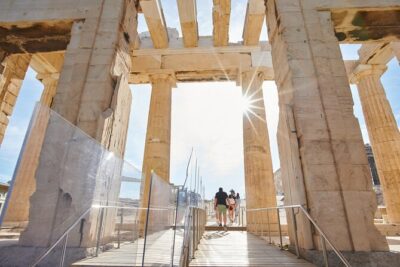
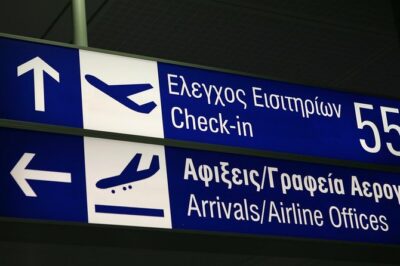
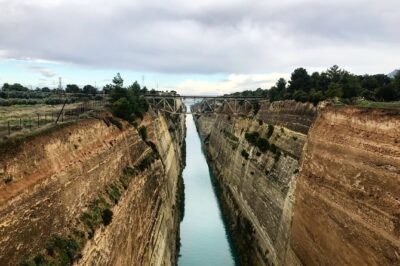
The day starts with the Isthmus of Corinth, a narrow land bridge that connected mainland Greece with the Peloponnese for thousands of years. You see the Corinth Canal, an impressive 19th-century engineering cut through the rock. Even if you care mostly about the biblical side, this stop is useful because it frames Corinth as a strategic hub, not a random city name.
The canal is also a geography lesson. From here, you understand why sailors, merchants, and later travelers cared about getting through this area quickly. It makes the later port story at Kenchreai feel logical, not like separate trivia.
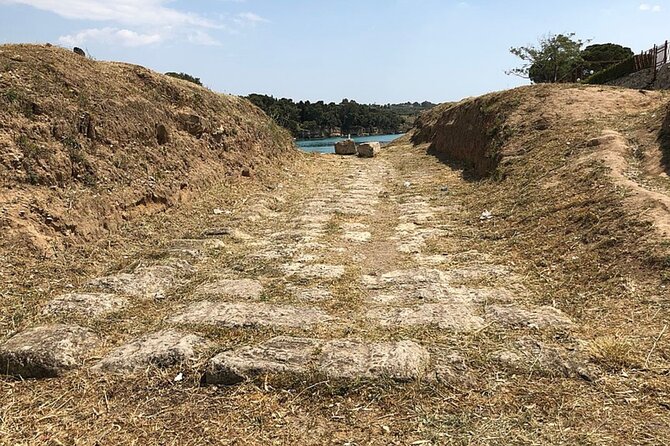
Next comes the Diolkos, an ancient stone-paved path used to haul ships over land across the isthmus. The whole idea is wild in a good way: instead of steering around the longer route, ancient people moved vessels over the land bridge. It is a short stop, but it explains why Corinth could matter so much for trade and travel during different periods.
If you want a tip that keeps the day smooth, this is it: use this early stretch to settle in. Take photos, glance around for viewpoints, and get your legs ready for the ancient city walking later.
Kenchreai port: where Paul’s arrival mattered
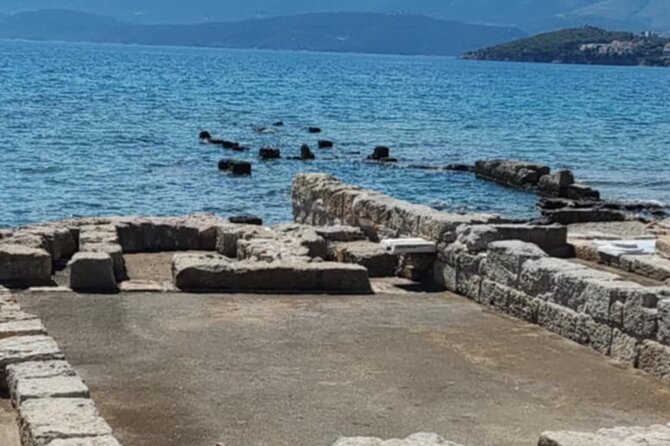
After the isthmus, you head to the Ancient Port of Kenchreai, on the eastern side. This is the place tied to the Roman-era commercial energy of Corinth. It is also where Apostle Paul arrived in 53 A.D., which gives the ruins a direct storyline hook.
What I like about this stop is the mindset shift. Kenchreai helps you picture Corinth as a living port town, with people moving through and stories mixing in real time. You are not just looking at an archaeological site, you are trying to understand the sort of environment where a first-century missionary would land, meet locals, and start building relationships.
You also get a break from walking strain compared with the later city ruins. The stop is short enough that you can take it in without feeling like the whole day becomes one long hike.
A small consideration: since this is outdoor and mostly open air, bring sun protection. Even on a clear day, it is easier to stay comfortable if you have a hat and sunscreen ready.
Ancient Corinth, Glauke Fountain, and the myth layer
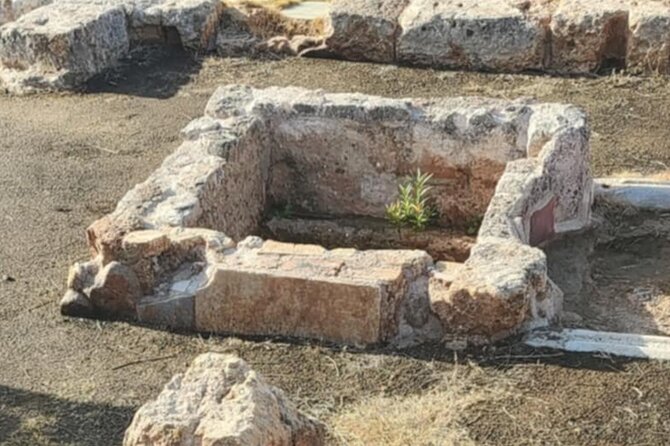
Now you transition into Ancient Corinth (Archaia Korinthos). This is where the place starts doing two jobs at once: it shows you the physical locations, and it gives you the cultural background that surrounded Paul.
You begin at features like the Glauke Fountain, a hillside-carved spot linked to Greek myth. According to tradition, Glauke, daughter of King Creon, sought refuge here after being poisoned by Medea. Is that the same as Acts? No. But myth matters because it helps you see what the city’s imagination and storytelling traditions were like.
When you look at these sites, the goal is not to turn the day into a mythology quiz. It is to understand that Paul entered a world where religion, legend, and daily life were intertwined. That makes the later teaching sites feel sharper.
One practical advantage of a private setup here is timing. You can linger when a sign catches your eye, and you can move on when you want to get back to the biblical beats.
Paul’s Bema moment in the Roman Forum
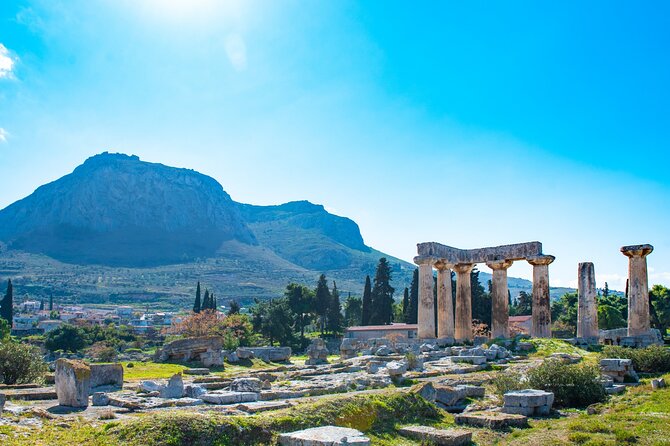
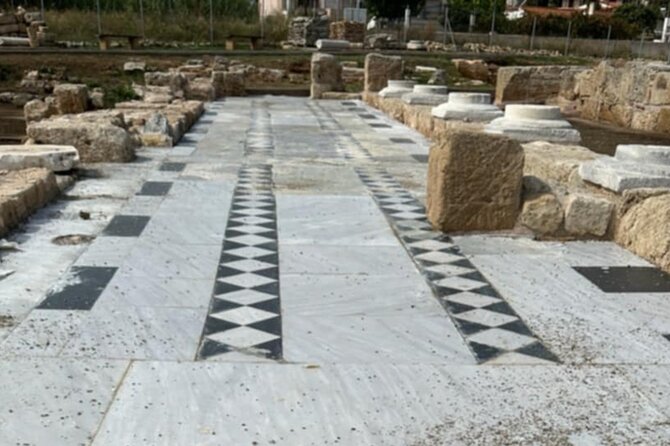
The big biblical stop is tied to the Bema in the Roman Forum area. This is the elevated platform associated with public addresses, and during the Roman period it functioned like a tribunal where decisions and judgments were made.
This is where Acts 18 becomes tangible. Around 51 A.D., Paul was brought before Gallio, the Roman proconsul, after accusations of spreading new teachings. Gallio dismissed the case, which allowed Paul to continue his mission. You see how the story fits into a real civic space used for law and authority.
Two things I think you will appreciate here:
First, the physical scale of a public platform helps you picture how messages were delivered. Second, the setting helps you understand why local audiences reacted the way they did, because you are standing in the kind of public arena where community power was on display.
This stop also tends to pair well with a short pause for photos. If your driver-guide offers to take pictures for you, take them up on it. You spend less time wrestling with a phone and more time actually looking.
More stops at ancient Corinth:
- From Athens: Ancient Corinth Day Trip with Canal & VR Guide
★ 4.6 · 1,073 reviews - Private Biblical Tour Ancient Corinth & Isthmus Canal from Athens
★ 5.0 · 762 reviews - Athens: Ancient Corinth & Nafplio Full Day Trip with Swim
★ 4.8 · 531 reviews - Athens: Corinth Canal, Mycenae & Nafplio Premium Guided Tour
★ 4.7 · 322 reviews
Temple of Apollo and why the Agora shapes the story
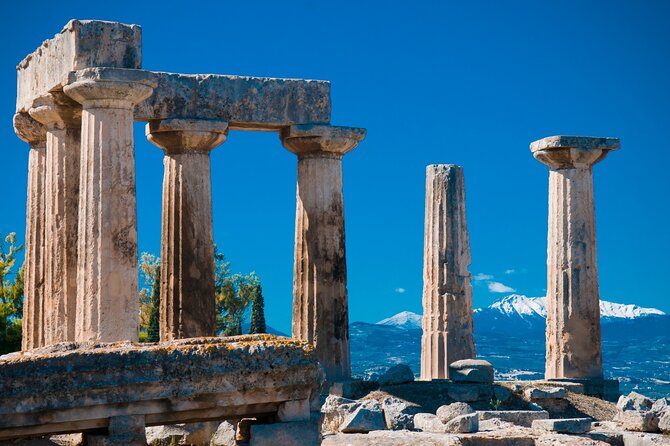
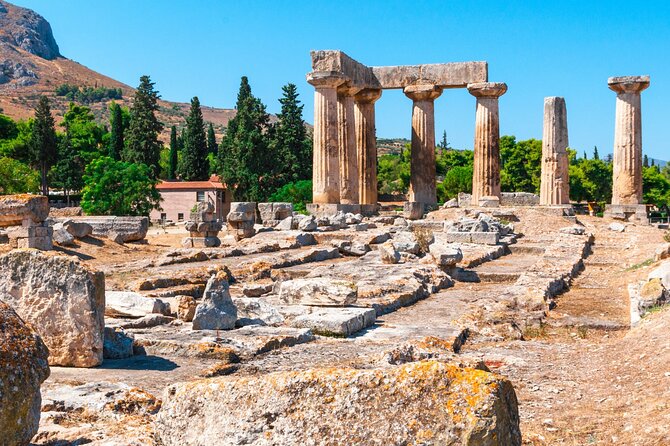
Next is the Temple of Apollo, one of the oldest Doric temples in the Peloponnese. Even for people who focus on the Bible, this temple stop adds context fast. Corinth had religious institutions and public worship spaces, and Paul’s message landed in a world where pagan traditions were woven into daily civic life.
Look at the columns and the proportions, then connect that sense of permanence to what Paul was proposing. In many places, early Christianity spread alongside or in tension with established cult centers. Here, you can sense the contrast between old religious structure and new faith communities.
Right after, you spend time in the Bema of Apostle Paul area and the surrounding Agora context. Depending on how you pace yourself, this can feel like a concentrated “Acts cluster,” with the story of public judgment and the idea of legal authority right in front of you.
If you are the type who likes to keep your day organized, set a mental bookmark now. In a few stops, you are going to shift from open-air ruins to indoor artifacts. It helps to mentally label what you already learned outdoors so the museum makes sense.
Archaeological Museum of Corinth: artifacts you can actually point at
The Archaeological Museum of Corinth is your indoor decompression, and it is worth using that time well. You get about 45 minutes, which is not enough to read everything slowly, but it is enough to walk through with a purpose.
The museum holds artifacts stretching from earlier periods through Roman-era items. You will see statues, pottery, and objects connected to sanctuaries like the Sanctuary of Asklepios. This matters because it gives you something visual to attach to what you just saw outdoors. A Doric temple is easier to understand when you also see the kinds of religious objects a city used.
I also like that the museum space can help you switch gears. Outdoors, you are tracking locations and geometry. Indoors, you are tracking objects and everyday material culture. That balance improves the whole day.
One consideration: museum entry fees are not included in the tour price, so budget for that. If you plan carefully, it feels like a smart add-on rather than an unexpected cost.
Akrokorinthos: the fort and the views that finish the loop
Then you climb up to Akrokorinthos, the ancient fortified acropolis. Expect a real time-and-view payoff here, about 40 minutes, because you are dealing with both ruins and a dramatic vantage point.
This acropolis adds the “layers” of Corinth. You are not looking at one era. You see classical Greek remains, plus later fortifications from Byzantine, Frankish, and Ottoman periods. That long timeline helps you understand why ancient cities are not preserved like frozen museums. They are reused, rebuilt, and repurposed over and over.
Why does this matter for a biblical tour? Because Paul’s Corinth is long gone as a single snapshot. What you see now is what people built on top of, and that affects how the city is remembered. Standing up here can make that reality feel real.
Wear comfortable shoes. Even if the walk is manageable, the ground can be uneven, and you do not want to rush because of footwear discomfort.
Apostle Paul Church at the end: closing the story in a basilica
The tour finishes at the Apostolos Pavlos Church, a three-aisled basilica built in 1936 on a site connected to earlier worship connected to Paul’s influence. This stop is about emotional closure and spiritual tone, not about discovering new ruins.
I like ending here because you go from civic platforms and temple contexts to a place that today is specifically focused on commemoration. It gives your brain a place to land after a day of history, architecture, and narrative detail.
This last stop is also a nice way to avoid feeling like the day ends mid-sentence. You have a coherent arc: canal and travel, port arrival, ancient city structures, then the locations tied to Paul’s public experience, and finally a church setting that frames that story for modern visitors.
How long is the day, and where you may feel the pace
This is a 5 to 6 hour tour, and yes, that includes drive time between the sites. In practice, that means the stops are paced for “enough time to understand,” not “we will spend all afternoon wandering.”
Most people can handle it, but it helps to be honest with your expectations. You are moving between multiple locations, and several stops involve walking around uneven archaeological terrain. You are not doing a full-day trek, but you are not sitting the entire time either.
Bring a hat and sunscreen. Greece can get sunny fast, and the open-air stops start early. Also, if you know you get tired easily, ask for a slower pace. Guides often flex with time at stops, and that relaxed approach is one of the reasons people speak highly of this tour style.
Price and value: what $179.06 buys, plus the €20 entry fees
At $179.06 per person, this tour is not the cheapest way to see Corinth. It is a premium half-day, and you should expect the experience to lean into comfort and structure: private transportation, air-conditioned vehicle, Wi-Fi, bottled water, and pickup and drop-off around Athens.
You also get the advantage of a private group. For many people, that value is not about luxury for luxury’s sake. It is about having a small group size so you can move at your preferred speed and spend less time waiting in lines.
What costs extra is straightforward: entrance fees for archaeological sites and the museum are not included, listed at about €20 per person. So your realistic budget is closer to tour price plus the site fees.
There are two ways this still feels like good value:
First, you are saving travel time by letting the driver handle logistics between Athens and Corinth. Second, you are buying someone’s ability to connect what you see to the Paul story in Acts. That kind of interpretation often matters more than one extra stop.
Who should book Apostle Paul’s Footsteps in Corinth
This tour fits best if you want a biblical itinerary that stays practical. You like the idea of seeing Paul-related locations in a tight, logical sequence, while getting help understanding what those places were used for in public life.
It is also a good choice if you prefer a calm environment. With a private group and a relaxed guide, you are less likely to feel swept up in a crowd. Many people choose it because they want clarity, not chaos.
It may not be ideal if you want a deep, site-by-site licensed archaeological lecture inside every venue. The tour does not include a separate licensed guide for site entry, so you will rely on your driver-guide’s explanations and the information signs in the sites themselves.
If you have specific interests, like the public legal context in Acts 18 or the broader Corinthian setting as a trade and port city, you will likely enjoy the way the day is built around those themes.
Should you book this Corinth tour?
I think you should book it if you want an easy, private way to connect Athens to Corinth and bring the Paul story into focus. The pickup convenience, small group comfort, and English-speaking driver-guide are the big winners, especially if you value a pace that feels relaxed. I also like that the day includes both outdoor sites and a museum stop, so your understanding has a place to settle.
Skip it or consider alternatives if the extra site fees would frustrate your budget, or if you specifically need a licensed guide escort inside archaeological spaces. Also, plan for walking and sun, because this is an outdoors-heavy biblical route.
If your goal is a meaningful half-day where logistics are handled and the locations make sense, this is a strong pick.
FAQ
Is pickup included in this tour?
Yes. Pickup is offered from designated locations in Athens. The driver waits outside for hotel or apartment pickups, and for port pickups they meet you at the arrival area with a sign showing your name.
How long is the tour?
The duration is about 5 to 6 hours, including the time spent traveling between locations.
What language is the tour offered in?
The tour is offered in English, with an English-speaking driver-guide.
Is Wi-Fi provided?
Yes. Wi-Fi is provided on board, and you also get bottled water.
Are entrance fees included for archaeological sites and the museum?
No. Entrance fees for archaeological sites and the museum are not included, and the cost is listed as €20.00 per person.
What vehicle size will my group use?
Groups of 1 to 4 people travel in luxurious sedan vehicles. Groups of 5 to 7 people travel in comfortable mini vans.
Is this a private tour?
Yes. It is private, and only your group participates.
What happens if the tour is canceled due to weather?
This experience requires good weather. If it is canceled due to poor weather, you will be offered a different date or a full refund.
Where does the tour end?
The activity concludes at the original meeting point.
New pins on the Athens chart
- Mycenae, Epidaurus, Nafplio, Corinth Canal Private Full Day Trip From Athens★ 5.0 · 83 reviews
- From Athens: Mycenae, Epidaurus & Nafplion Private Tour★ 4.9 · 83 reviews
- Delphi with Professional English Guide and Transportation★ 4.5 · 84 reviews
- Acropolis of Athens, Ancient Agora and the Agora Museum Tour★ 5.0 · 86 reviews
- Athens: 2.5-Hour Private City Tour Off the Beaten Track★ 4.7 · 86 reviews
- Thermopylae The battle of the 300 Spartans & Delphi Day Tour★ 5.0 · 86 reviews
Ancient Corinth Trips, compared.
Ancient Corinth Day Trip with Canal & VR Guide
Read our review →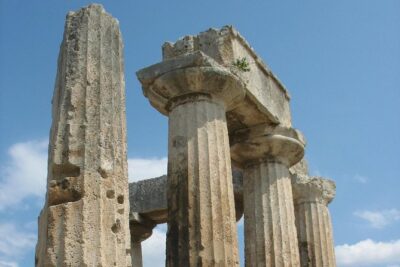
Private Biblical Tour Ancient Corinth & Isthmus Canal from Athens
Read our review →
Corinth Canal, Mycenae & Nafplio Premium Guided Tour
Read our review →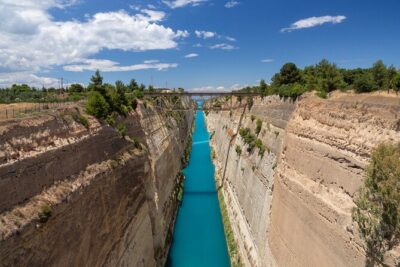
Private Tour of Apostle Paul’s Footsteps in Ancient Corinth
Read our review →
Corinth Half-Day Trip from Athens with Entrance Tickets
Read our review →
Ancient Corinth Tour with Official Guide & Tickets
Read our review →Browse the lists this tour appears in