
Reviewed · WALKING TOURS
Santorini: Akrotiri Prehistoric City Guided Walking Tour
Akrotiri feels like time travel, minus the machine. This guided walk through Akrotiri Prehistoric City helps you picture a Bronze Age settlement that survived under volcanic pumice for about 3,500 years, then was uncovered beginning in 1967. You’ll move past the excavated streets, buildings, and pottery that make the Atlantis-style legend feel less like fantasy.
I love the licensed archaeologist angle, because the explanation connects the ruins to how people actually lived. After the guided portion, I also like having free time to continue at your own pace, and even pop by the nearby beach to cool off with a swim.
One thing to consider is logistics. Even though this is sold as a private group, the experience can occasionally run into guide timing or group-size issues, so you should plan to arrive early and confirm your meeting spot right away.
In This Review
- Akrotiri Prehistoric City: what you’re really seeing
- Your 1.5-hour guided walk with a licensed archaeologist
- The eruption story you can picture in the pumice
- Houses, streets, squares, and workshops: how to look like a pro
- After the tour: where your free time pays off
- Price and logistics: $424 per group up to 2, and what that means
- Who this tour suits best (and who should consider a DIY plan)
- Practical tips for a smoother Akrotiri visit
- Should you book the Akrotiri Prehistoric City guided walking tour?
- FAQ
- Where do I meet my guide for the Akrotiri tour?
- Is the entry ticket to Akrotiri included in the tour price?
- How long is the guided tour?
- Is this tour private?
- What languages are available for the live guide?
- Is there time to explore the site on my own?
- Can I visit the beach after the tour?
- How much does the tour cost?
- Is wheelchair accessibility available?
- What if I book hotel transfer or need pickup details?
- FAQ
- Is there free cancellation for this tour?
- Do I need to pay immediately to reserve?
Akrotiri Prehistoric City: what you’re really seeing
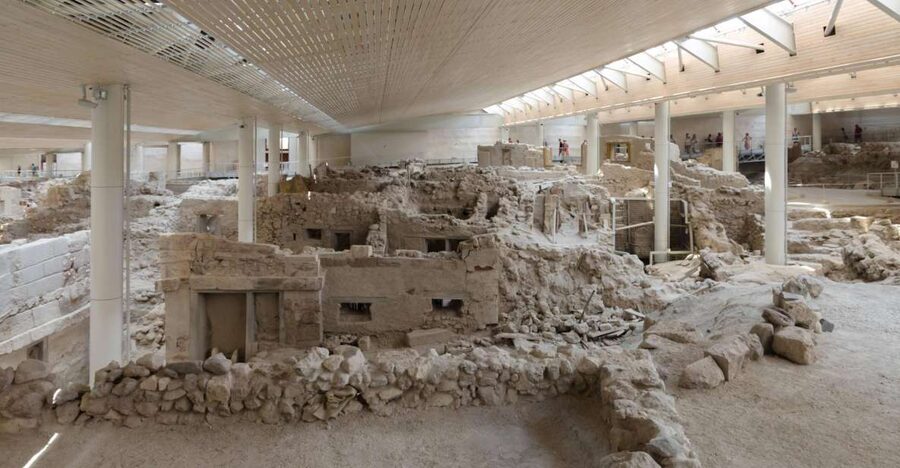
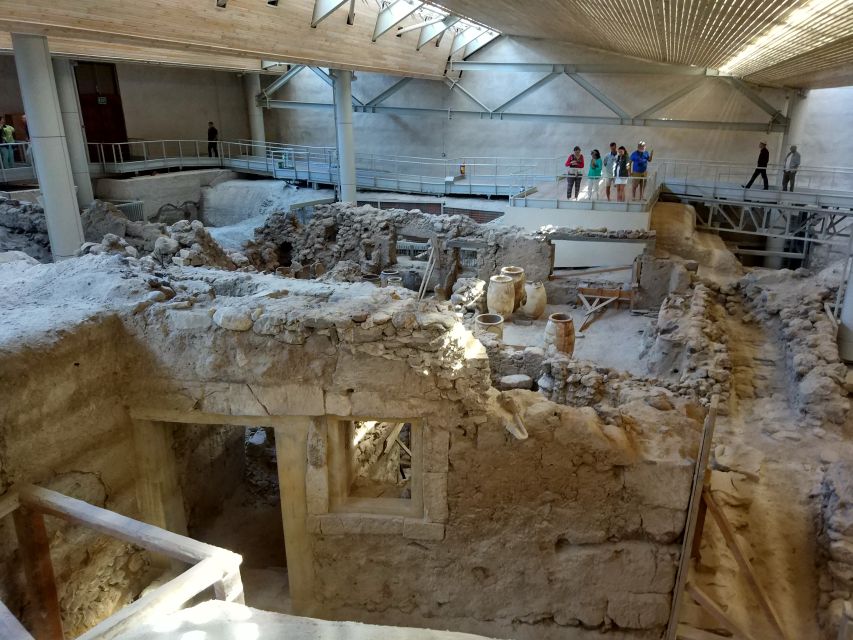
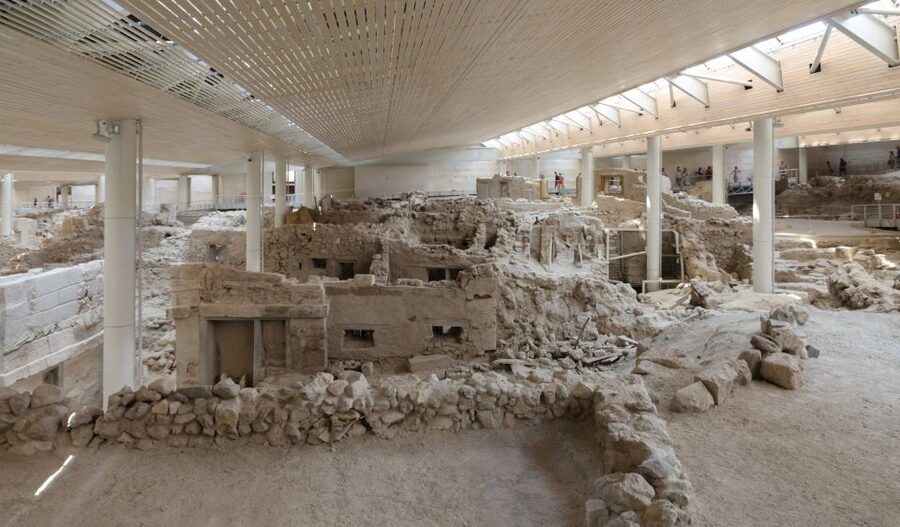
Akrotiri is the kind of site that rewards slow looking. In the 16th century BC, a major volcanic eruption destroyed life on the island, and much of the settlement collapsed and remained buried. What’s fascinating is that thick pumice acted like a protective cover, preserving buildings, passageways, and everyday objects so long ago.
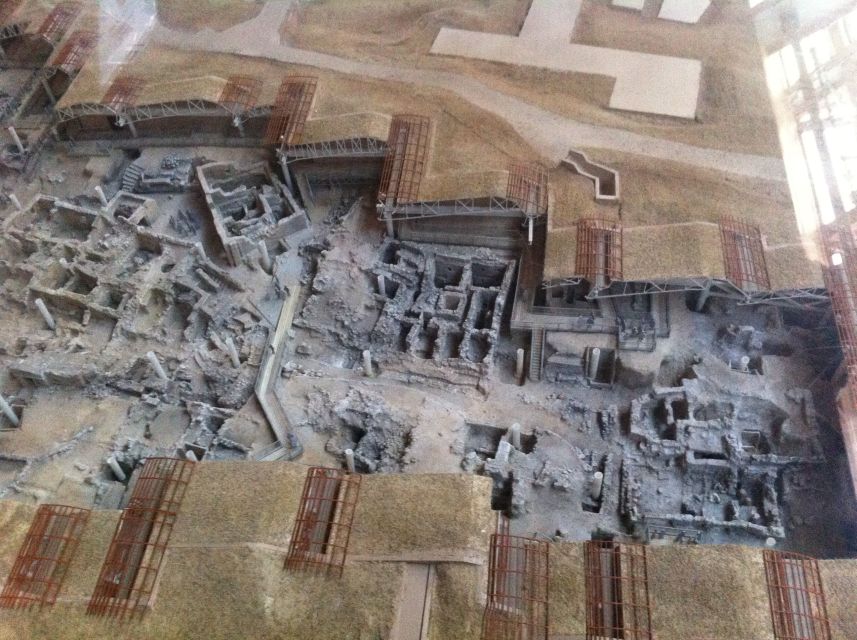
This tour is built around that contrast: the quiet, modern setting of Santorini outside, and the evidence of a carefully planned city inside the excavation area. When you walk those paths with a guide, the layout stops feeling random. You start seeing homes, streets, and shared spaces like a real neighborhood, not a scattered pile of stones.
You’ll also get the cultural context that makes Akrotiri more than a cool ruin. The city is tied to the larger Bronze Age world of the Aegean, often associated with Minoan-era influence. And yes, the myth of Atlantis still hangs around here, partly because the eruption story naturally invites that comparison. The good part of having a guide is separating what’s legend from what’s supported by what’s been uncovered.
Your 1.5-hour guided walk with a licensed archaeologist
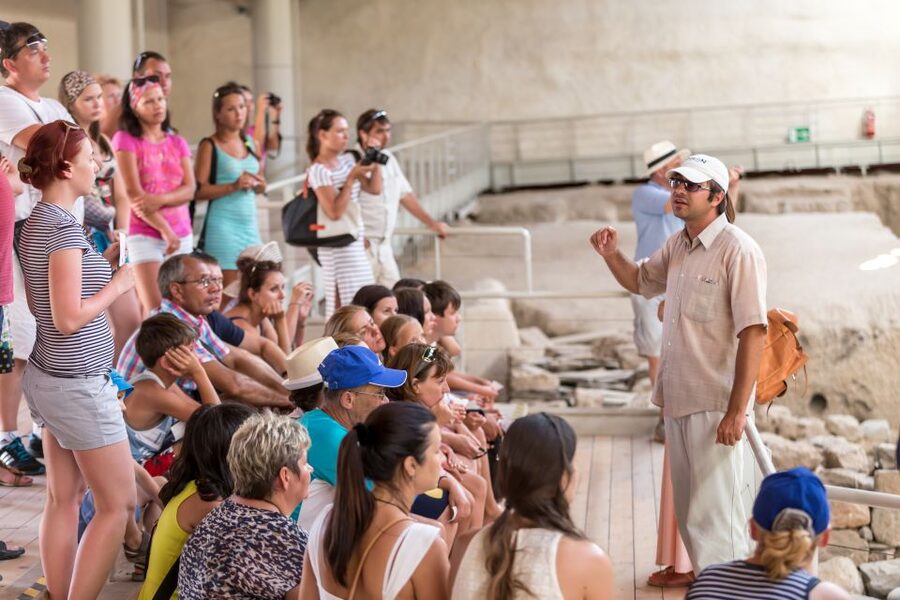
The tour is short on purpose: about 1.5 hours total, with a guide-led segment and then time for you to explore afterward. You meet your assigned guide at the entrance of the Excavation Site, specifically after the ticket office. If you’re coming from elsewhere on Santorini, treat that meeting point as your anchor, and don’t wander until you’ve checked where your group is supposed to form.
A licensed archaeologist guides the experience, and that matters at a place like Akrotiri. The site is complex, and without guidance it’s easy to miss the connections: which walls suggest rooms, how streets and passageways align, and what features point to everyday activity. With a knowledgeable expert in front of you, the ruins become clearer, faster.
The tour is offered in several languages, including English, French, Spanish, and German. If you’re not fluent, this is still a great option because the structure of the explanation helps you follow along even when your Greek is limited.
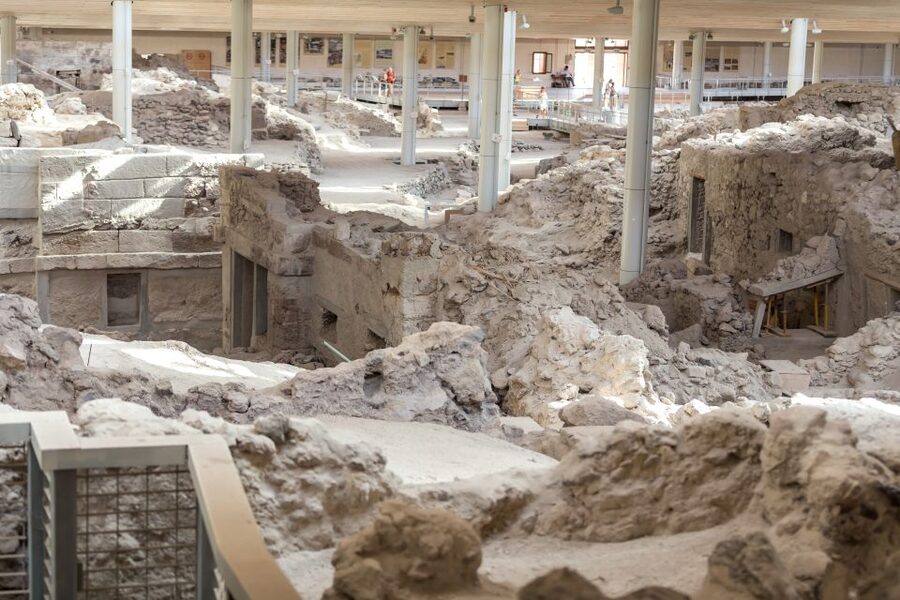
More stepped lanes through the kastro quarters:



The eruption story you can picture in the pumice
The guide’s job here is to make a disaster understandable. In Akrotiri, you’re not just told that a volcano erupted. You’re shown how the eruption’s aftermath shaped what survived and what didn’t.
You’ll hear that excavators uncovered evidence of a city whose buildings, streets, squares, and workshops were covered under pumice for almost 3,500 years. That long burial is why you can walk through passageways and see well-preserved structures at all. The guide’s narration gives you a framework for what you’re seeing right now: features preserved because the pumice covered them, and areas left incomplete because of how the collapse happened.
The best part is how quickly this story turns into visual clues. Once you understand the pumice-cover effect, details like the construction of spaces and the way corridors connect start to make sense as part of an intact city plan, not just isolated fragments.
Houses, streets, squares, and workshops: how to look like a pro
Akrotiri is a walkable site, but it’s not a checklist kind of place. The guided portion helps you focus on the big categories that define the city.
Here’s what you should pay attention to as you move through the excavated area:
- Two- and three-story houses: even if you’re only seeing partial remains, the vertical layout hints at how families organized daily life and how buildings supported community living.
- Passageways and roads: these show movement and access. Instead of imagining a medieval maze, you start seeing practical paths through town.
- Squares and shared spaces: these are your best clues for social life beyond private homes.
- Workshops and functional areas: the guide helps connect these spaces to production and daily tasks, not just architecture.
You’ll also see pottery and everyday objects. Pottery is one of the easiest ways to connect the ruins to humans, because it’s tied directly to routine. A guide can point out what styles and forms suggest about the people who made and used them.
If you tend to read signs slowly, this is still worth it. The guided walkthrough gives you enough context that your own “extra time” afterward becomes more meaningful, not just wandering.
After the tour: where your free time pays off
After the guided segment ends, you’re free to continue exploring on your own. This is a strong element of the experience because Akrotiri is the kind of place you want to revisit with fresh eyes.
Use your extra time strategically. If your guide highlighted specific building clusters or streets, go back and look again, this time focusing on layout. Notice how rooms connect, where passageways narrow, and how open areas might have functioned as communal gathering points.
The itinerary also encourages you to visit the nearby beach for a swim after you finish at the site. Santorini heat can be real, and doing the cultural part in the morning or earlier in the day (when possible) makes that swim feel like a reward instead of a rushed stop.
If you’re the type who likes photos, treat the unguided time as your photo window. You’ll already have the “what am I looking at” answers from the guide, so your pictures turn from random ruins to recognizable city details.
Price and logistics: $424 per group up to 2, and what that means
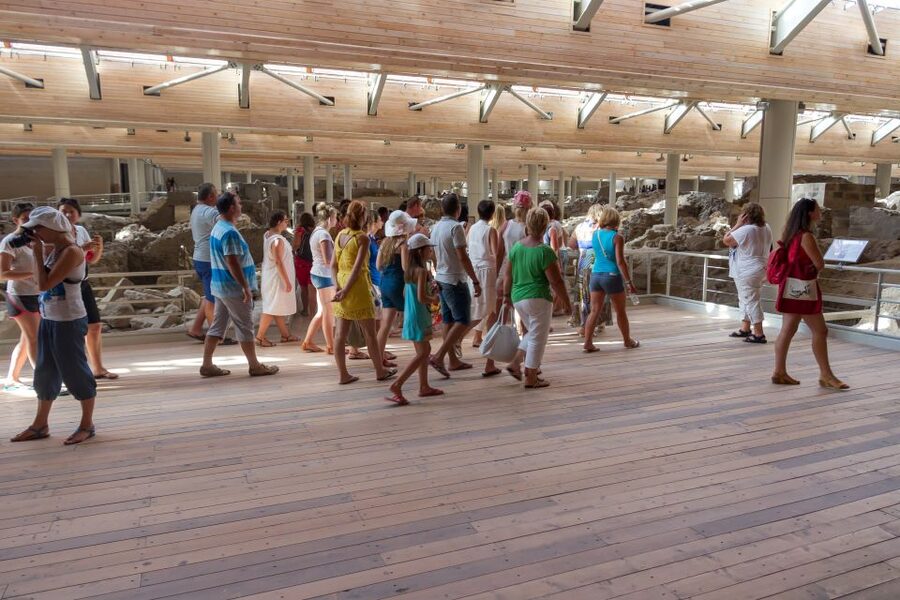
At $424 per group up to 2, the pricing is positioned for small parties and private attention. That’s the upside: you’re not fighting the crowd for hearing distance, and the guide can spend time guiding your path rather than managing a mass group.
But you should also understand how that can play out on site. Based on real-world operational issues that have been associated with this type of booking, the biggest risk isn’t the archaeological content. The risk is guide logistics: difficulty finding the right person, being joined to a larger group, or losing time if the guide is late or missing.
So, here’s my practical advice for getting the value you paid for:
- Arrive early at the meeting point, at the entrance after the ticket office.
- Confirm your guide location immediately instead of waiting for someone to find you.
- If you’re only two people in a group, don’t assume you’ll always stay alone on site. If the guide joins a bigger group, you can still learn a lot, but your experience may become less personal.
If you’re traveling with someone flexible and calm, this tour can still be great value. If your ideal day depends on strict timing and one-on-one guidance, plan a little buffer into your schedule, because the site itself is fixed, but the human part can get messy.
More Things to Do in Santorini
- Santorini: Volcanic Islands Cruise with Hot Springs Visit
★ 4.4 · 10,869 reviews - Santorini: Catamaran Tour with BBQ Dinner, Drinks, and Music
★ 4.6 · 5,886 reviews - Premium Small-Group Catamaran Cruise with BBQ, Open Bar, Transfer
★ 5.0 · 4,209 reviews - Santorini Classic Catamaran Cruise with BBQ, Drinks and Transfers
★ 5.0 · 3,933 reviews
Who this tour suits best (and who should consider a DIY plan)
This guided walk is best for you if you want a structured way to understand Akrotiri quickly. If you care about archaeology, city layout, and how volcanic burial preserved an entire settlement, you’ll get a lot from having an archaeologist interpret what you see.
It’s also a good match if you like a split-day rhythm: guided learning first, then self-directed time afterward. The free time matters because it lets you choose your own pace without feeling rushed or stuck in someone else’s pace.
However, if you’re the type who enjoys reading at your own speed, you might find you can handle Akrotiri independently. The site is accessible, and the core experience is walking among preserved structures. The guide is what turns a set of ruins into a coherent city story.
Practical tips for a smoother Akrotiri visit
A few small choices can make your hour-and-a-half feel longer, in the best way.
First, build in time to manage tickets before you meet your guide. Entry tickets are not included, and the meeting point is after the ticket office. If you arrive right at the start time, you might spend your precious minutes figuring out where you’re supposed to stand.
Second, wear shoes that handle uneven ground. You’re walking through an excavated site, and even when paths look flat, surfaces can be rough.
Third, bring water. You’re on Santorini, and you’ll likely be outside for the duration, with extra time afterward.
Finally, if you choose an option that includes hotel transfer, remember pickup details are sent in a separate email after booking. Check spam folders too, because missing that message can cause last-minute stress.
Should you book the Akrotiri Prehistoric City guided walking tour?
Book it if you want a clear, archaeologist-led explanation at one of Santorini’s most important prehistoric sites. For many people, the value comes from learning how to read the ruins fast: houses, streets, squares, and workshops make sense when someone knowledgeable points out what to notice.
Skip or think twice if you need absolute certainty on guide presence and tight private pacing. Since the experience can occasionally be affected by guide logistics and group size changes, it’s smart to arrive early, confirm the meeting point, and keep your schedule flexible.
If you’re happy to use the guide as your “orientation tool,” then enjoy Akrotiri on your own afterward, this tour is a solid way to turn a volcanic burial story into a real walkable city in your head.
FAQ
Where do I meet my guide for the Akrotiri tour?
Meet your assigned guide at the entrance of the Excavation Site, after the ticket office.
Is the entry ticket to Akrotiri included in the tour price?
No. The entry ticket to the archaeological site is not included.
How long is the guided tour?
The tour lasts 1.5 hours.
Is this tour private?
Yes. It is listed as a private group.
What languages are available for the live guide?
The live guide is available in English, French, Spanish, and German.
Is there time to explore the site on my own?
Yes. After the guided portion, you have free time to continue exploring.
Can I visit the beach after the tour?
The tour highlights that after the guided tour you can visit the nearby beach for a swim.
How much does the tour cost?
It is priced at $424 per group up to 2.
Is wheelchair accessibility available?
Yes. The tour is wheelchair accessible.
What if I book hotel transfer or need pickup details?
If you book the option with hotel transfer, pickup details are sent in a separate email after booking, so check your email and spam folder.
FAQ
Is there free cancellation for this tour?
Yes, you can cancel up to 24 hours in advance for a full refund.
Do I need to pay immediately to reserve?
You can reserve now and pay later, keeping your travel plans flexible.
New pins on the Santorini chart
- Santorini: Private Sunset Cruise with Barbecue and Drinks★ 4.9 · 30 reviews
- Caldera Private Cruise & Volcano Hike★ 5.0 · 31 reviews
- Shuttle Transfers From Santorini Port★ 4.5 · 31 reviews
- Shared Catamaran Half Day Cruise in Santorini★ 5.0 · 31 reviews
- Santorini Private Photoshoot★ 4.2 · 31 reviews
- Santorini Wine Tasting Experience Tour★ 5.0 · 31 reviews
Walking Tours, compared.
Acropolis and Parthenon Guided Walking Tour
Read our review →


Acropolis monuments & Parthenon Walking Tour with Optional Acropolis Museum
Read our review →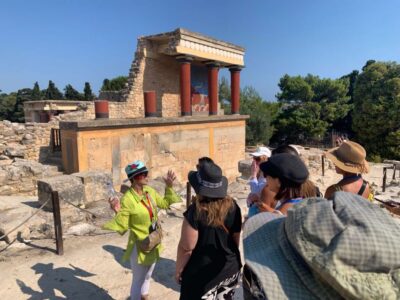
Knossos Palace Skip-the-Line Guided Walking Tour
Read our review →
Athens Acropolis and Parthenon Walking Tour
Read our review →
Acropolis, Parthenon & Athens Old City Heritage Walking Tour
Read our review →
Athens Authentic Greek Food Walking Tour (Small Group)
Read our review →Browse the lists this tour appears in