

Reviewed · WALKING TOURS
Small-group Corfu Town Historical Walking Tour
Corfu’s Old Town tells stories fast. This small-group historical walk connects Venetian, English, and Greek landmarks in about three hours.
You’ll get a guided route through Corfu Town’s UNESCO-listed center, with real context for what you’re seeing and why it matters.
I love two things most: the tiny group size (max 10, often even smaller) and the fact that the route hits major layers of Corfu’s past. You start with the Old Fortress, then move through Spianada Square and the English-era Palace area, before ending among churches and old town buildings tied to different rulers and communities.
One consideration: this is a walking tour where you should expect to be on your feet most of the time. If heat, steep bits, or long stretches inside stops wear you out, plan your pace and shoes accordingly.
In This Review
- Key highlights worth your attention
- Corfu Town on foot: why a guided walk fits this place
- Meeting at Agoniston Politechniou and starting with the Old Fortress
- Spianada Square, Liston arcades, and the cricket fact locals actually keep
- The Palace of Saint Michael and Saint George: English rule made visible
- Church of Saint Spyridon: Venetian-style faith in the middle of town
- Old Town Hall and San Giacomo Theatre: buildings that keep switching roles
- Evraiki, the Jewish quarter: Venetian ghetto patterns and WWII impact
- What makes the guides so good in practice
- Price and value: what $95.86 buys you (and what it doesn’t)
- Morning or evening: picking the best time for your mood
- Who should book this Corfu Town walking tour
- Should you book this Corfu Town historical walking tour?
- FAQ
- How long is the Small-Group Corfu Town Historical Walking Tour?
- What time does the tour start and where do I meet?
- Does the tour offer morning or evening departures?
- How large is the group?
- What languages are offered?
- Which main sights are included?
- Is admission included for any stops?
- What is the cancellation policy?
Key highlights worth your attention
- Small group energy with room for questions and a guide who can adjust pace
- Old Fortress entry included, so you skip the ticket hassle and get right into the experience
- Spianada Square stop with Liston cafés, French-era public square history, and the fun cricket detail
- St. Spyridon Church and its iconic bell tower plus a look at the crypt with relics
- English rule-era Palace area and Corfu’s Asian Arts Museum context (Far East and India collections)
- Evraiki Jewish quarter context, including what WWII bombardments changed in the neighborhood
Corfu Town on foot: why a guided walk fits this place
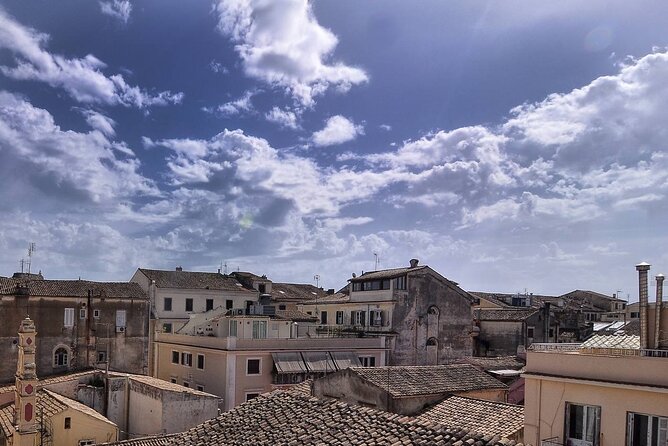
Corfu Town looks like a postcard, but the streets work better when someone explains the map in your head. You’re walking a UNESCO-listed historic center where different eras overlap: Venetian fortifications and street patterns, English rule architecture, and everyday Greek life that still carries on right inside the old walls.
A guided route is the difference between seeing pretty buildings and understanding how Corfu functioned. You learn why squares shaped public life, why churches mattered beyond religion, and why fortifications were built where they were.
And since this is offered as a small-group tour, you’re not stuck shouting over a crowd. Guides in this format often take extra care with timing and movement, and you can feel that when the pacing stays human.
More Walking Tours in Corfu


Meeting at Agoniston Politechniou and starting with the Old Fortress
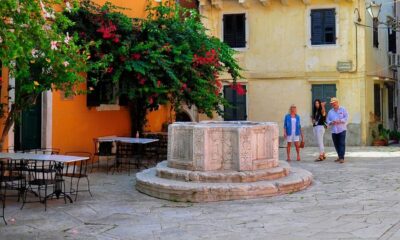
The tour meets at Agoniston Politechniou, Kerkira 491 00, Greece and runs for about three hours. You’ll start at the Old Fortress area, meeting at a statue point described as Schulemburg, then walking in together after your guide gives a quick rundown.
Stop 1 is the Old Fortress of Corfu, with about one hour onsite and admission ticket included. This matters because the fortress isn’t just a photo stop. You get context first, then you can actually notice what you’re looking at: defensive layout, how the fort protected the town, and how that military geography still influences what you see from street level.
Practical tip: fortress steps and uneven areas can happen. Even if the walking is manageable, good shoes help. If the weather is warm, you’ll also want water from the start, because the rest of the old town is more exposed.
Spianada Square, Liston arcades, and the cricket fact locals actually keep
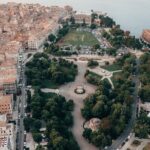
Next you head to Spianada Square, the town’s big open public space. This is a key stop because squares are where power, culture, and daily life all show up. You also learn why it feels Italian and Venetian in spirit: the architecture and café culture that grew up there.
Spianada is described as having a Venetian-derived name meaning open flat area, and it’s often claimed to be the largest square in the Balkans. You’ll also hear how the French turned it into a public square, while before the nineteenth century it served defensive purposes.
Then comes one of those details that makes a guide worth hiring: cricket is played on the Esplanade, described as the only place in Greece where the sport is played. It’s the kind of fact that sticks because it ties sport to history, not just to geography.
You’ll spend around 20 minutes here, and there’s no admission ticket required. Use the pause to scan the scene, especially the Liston area with its line of cafés and restaurants.
The Palace of Saint Michael and Saint George: English rule made visible
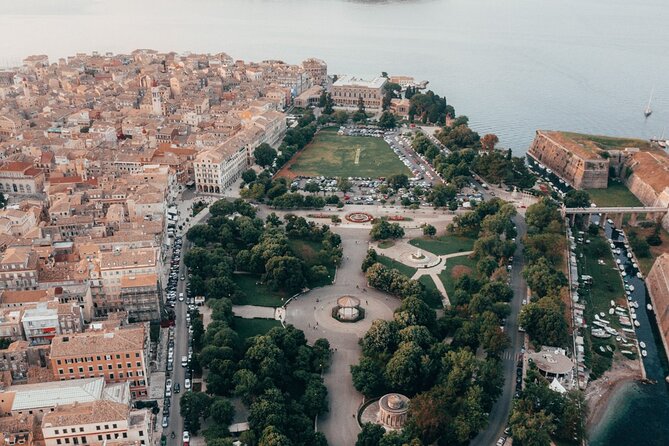
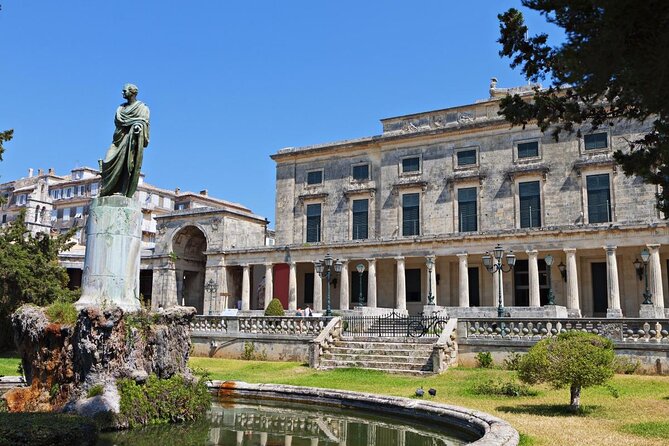
From the square area, you move toward the Palace of Saint Michael and Saint George, on the northern side of the Corfu Town historical center square. The big idea here is scale and purpose: this is the largest and most significant building tied to the period of English rule.
The palace was requested by British Lord High Commissioner Sir Thomas Maitland, built as a luxurious residence and also as administrative headquarters. The architecture signals power, but the real value is learning how rule changes your cityscape.
Today, the palace houses the Corfu Museum of Asian Arts, described as the only museum in Greece devoted solely to art and antiquities of the Far East and India. The collection is said to include around 15,000 works, founded in 1928, with items recognized internationally through exhibitions.
Even if you’re not planning a deep museum session during the tour, this stop gives you something useful: you’ll know where to point your curiosity later. If you love museums, you’ll likely want to return on a separate visit when you have time to slow down.
Church of Saint Spyridon: Venetian-style faith in the middle of town
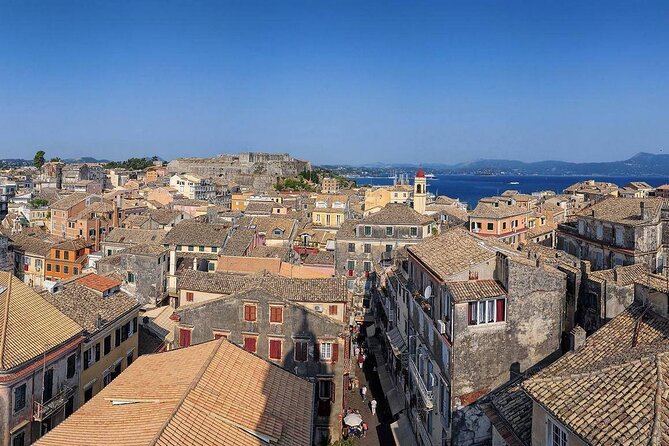
Now the walk turns spiritual, but not in a vague way. You’ll visit the Church of Saint Spyridon, patron saint of the island and described as a miracle worker.
This church is from the sixteenth century, with architecture marked as typical Venetian style. You’ll also hear why the bell tower matters: it’s described as the highest spot in the town, and you can see it across the Old Town.
Inside, the church has a crypt where relics are kept in a double sarcophagus. That’s the kind of concrete detail that makes the visit feel real instead of ceremonial.
This stop is about 20 minutes, and it’s free in terms of admission. It’s a good pacing break in the tour, too, because it gives your feet a chance to transition from street walking to a calmer interior moment.
More stepped lanes through the kastro quarters:
- Small Group Corfu Walking City Tour
★ 5.0 · 57 reviews - Corfu: History and Culture Walking Tour
★ 4.9 · 55 reviews - Corfu: Small Group City Walking Tour
★ 5.0 · 51 reviews - Corfu: Old Town Guided Walking Tour Small Group
★ 4.8 · 36 reviews
Old Town Hall and San Giacomo Theatre: buildings that keep switching roles
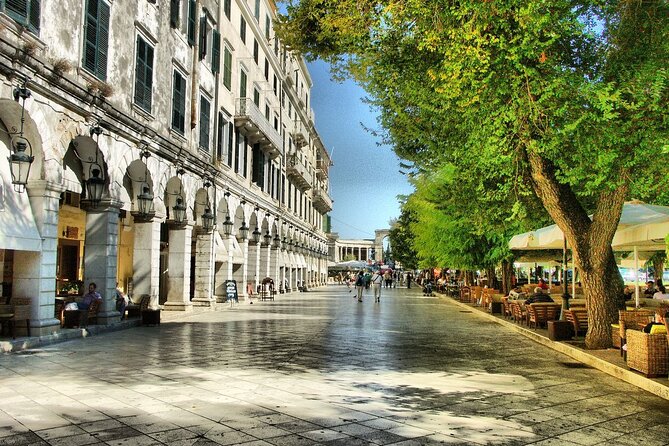
As you move through narrow streets, you pass Town Hall Square and the Old Town Hall of Corfu, also known as the San Giacomo Theatre. This part of the tour is about layers, not just architecture.
You’ll hear the building story in stages: first used as a club for noblemen, then in 1720 it hosted the Noble Theatre of Saint Giacomo of Corfu, and later in 1903 it became the Town Hall. The lesson is simple, and useful for how you tour on your own: buildings often shift function as ruling powers change.
You spend about 15 minutes here. It’s not meant to be an all-day history lecture. Instead, it helps you read the town. When you spot a building that looks “important,” you’ll remember that in Corfu, important roles often moved around over time.
Evraiki, the Jewish quarter: Venetian ghetto patterns and WWII impact
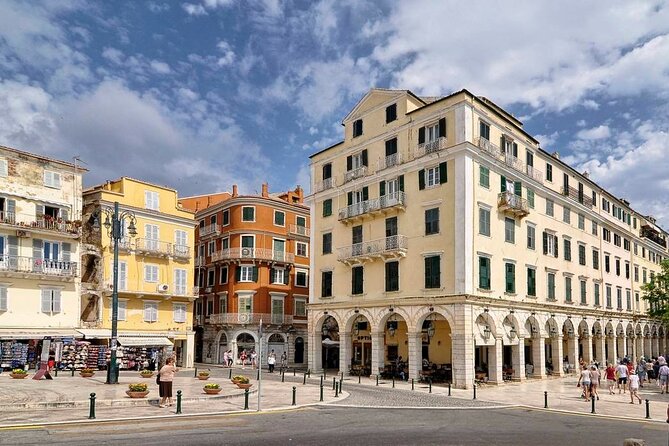
The route also includes the Jewish quarter, known in Greek as Evraiki. The description places it in the southeast section of the city near Venetian fortifications.
Here’s what makes this stop meaningful: the neighborhood is described as having old Venetian ghetto-style alleyways lined with faded, multistoried houses. That maze-like urban shape is a strong reminder that towns can carry legal and social separation in their street plans.
The tour also notes a painful turning point. The Jewish quarter lost much of its urban unity due to bombardments during the Second World War. That fact changes how you look at the area. You start to see not just buildings, but damage, gaps, and what survived.
Even if the time on the street is limited, the context matters. If you walk out of this stop feeling a bit reflective, that’s normal. Corfu’s charm is real, but the town’s story includes disruption too.
What makes the guides so good in practice
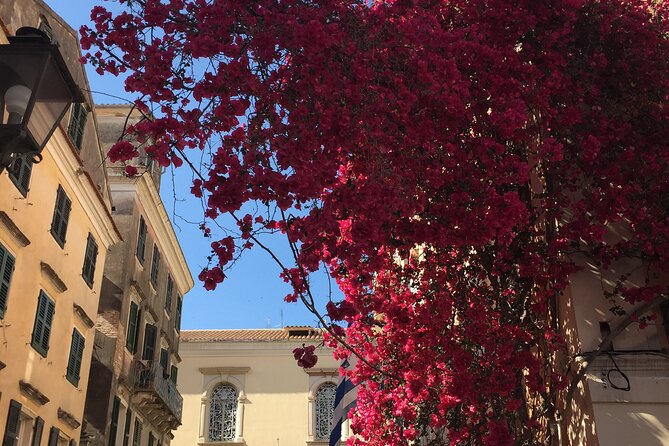
The best part of this tour style is the guide interaction. The description already signals it with a limited group, but the real-world experience shows up in how guides pace you, answer questions, and keep the route moving without rushing.
In the feedback I drew patterns from, names like Electra, Ariti, Nausica, Debbie, and Alice (also referenced as Alkistis) come up often. The consistent thread is personality plus precision. People describe guides who are friendly, warm, and capable of turning dates and rulers into something you understand on the sidewalk.
One practical detail that really stands out: in hot months, guides reportedly keep the group in shade as much as possible. That’s not a small thing. Old Town walking can feel like a series of sun traps, so having someone think ahead about where you stop and how you move helps you enjoy the history without frying.
You may also get added value like coffee stop ideas or lunch suggestions. Even without assuming every guide does the same thing, this is the kind of tour where good guidance tends to spill into real-life help.
Price and value: what $95.86 buys you (and what it doesn’t)
At $95.86 per person, this tour is not the cheapest way to explore Corfu Town. The question is whether you get enough from that price.
Here’s the value logic that makes sense: you’re paying for a live guide, a timed route, and included access to the Old Fortress (admission ticket included there). That reduces your planning effort on day one, and it saves you from wandering the wrong direction until you figure out what matters.
You’re also getting a small-group format with max 10 travelers, and the experience runs about three hours. In cities like Corfu, time is money because you’re moving through uneven streets and still trying to spot the key landmarks. A guided route can help you “lock in” the story faster, which is useful if you only have a limited schedule.
What you should not expect from this price point: a full-day museum program. The palace and museum context is explained, and the church visits include free admission, but this is still a historical walking overview. If you’re a museum deep-dive person, you’ll likely want to pair this with a return visit later.
If the tour feels pricey at first glance, check your travel reality. If you have one free half-day and you want your first Corfu Town experience to be coherent, this kind of guided walk often pays off.
Morning or evening: picking the best time for your mood
The tour offers a choice of morning or evening departure times, with the standard start time listed as 10:00 am. That flexibility is helpful because Corfu’s atmosphere shifts.
Morning tends to work well when you want energy for walking and sightseeing. Evening can feel nicer when you’re trying to slow down after the heat of the day and you want a more relaxed pace through the Old Town lanes.
Either way, you’ll cover the same core landmarks. So your decision should mainly be about comfort: choose the time that matches your temperature tolerance and the rest of your day plan.
Who should book this Corfu Town walking tour
This tour is a great fit if you:
- Want a structured introduction to Old Corfu Town without getting lost in the details
- Like history that you can see in buildings, squares, and street layouts
- Appreciate small-group attention, where you can ask questions and get answers
- Prefer to spend about three hours outdoors with stops that make the time fly
It may not be the best fit if:
- You struggle with sustained walking for around three hours
- You expect a casual stroll with minimal talking. This walk is history-focused, including lots of context at each stop
- Your group includes very restless teens who might tune out during explanations. One piece of feedback suggested that teenagers can get bored with the lecture style, so keep that in mind for family planning.
Should you book this Corfu Town historical walking tour?
I’d book it if you want your first day in Corfu Town to feel organized and meaningful. The route hits the big anchors: Old Fortress, Spianada Square, Saint Spyridon, the English-era palace area, and Evraiki. Even better, the included fortress admission and the small-group pace make it feel more like a guided experience than a generic checklist tour.
If you’re already comfortable navigating Old Town on your own and you’re mainly hunting for independent wandering time, you might skip the paid guide. But if you want to understand what you’re looking at, and you value shade-aware pacing and strong guide personality, this one is worth your attention.
FAQ
How long is the Small-Group Corfu Town Historical Walking Tour?
The tour is approximately 3 hours.
What time does the tour start and where do I meet?
The listed start time is 10:00 am. The meeting point is Agoniston Politechniou, Kerkira 491 00, Greece.
Does the tour offer morning or evening departures?
Yes, the tour offers a choice of morning or evening departure times.
How large is the group?
The maximum group size is 10 travelers.
What languages are offered?
The tour is offered in English.
Which main sights are included?
You visit the Old Fortress, Spianada Square, the Church of Saint Spyridon, the Old Town Hall area (San Giacomo Theatre), and the Jewish quarter known as Evraiki.
Is admission included for any stops?
Admission ticket for the Old Fortress is included. The Church of Saint Spyridon and the other listed stops are described as free of admission.
What is the cancellation policy?
You can cancel for a full refund up to 24 hours before the experience starts.
More Historical Tours in Corfu

New pins on the Corfu chart
- Private Corfu Tour- Glyfada & Paleokastritsa beach★ 5.0 · 31 reviews
- From Corfu Port: Shore Trip with Boat Tour or Beach Time★ 4.8 · 31 reviews
- Deluxe Corfu Shore Excursion with Paleokastritsa and Old Town★ 4.0 · 31 reviews
- Cruise from Corfu Blue Lagoon and Sivota★ 3.5 · 32 reviews
- Corfu: Wine Tasting with 5 native grape varieties.★ 4.8 · 32 reviews
- Full Day Cruise on Sailing Yacht in Corfu Island★ 5.0 · 33 reviews
Walking Tours, compared.
Acropolis and Parthenon Guided Walking Tour
Read our review →

Acropolis monuments & Parthenon Walking Tour with Optional Acropolis Museum
Read our review →
Knossos Palace Skip-the-Line Guided Walking Tour
Read our review →
Athens Acropolis and Parthenon Walking Tour
Read our review →
Acropolis, Parthenon & Athens Old City Heritage Walking Tour
Read our review →
Athens Authentic Greek Food Walking Tour (Small Group)
Read our review →Browse the lists this tour appears in