Reviewed · THINGS TO DO IN CRETE
WWII – The Battle of Crete Day Tour
Cemeteries and battle maps, with context you can feel. This WWII Battle of Crete day trip runs from Chania by air-conditioned minivan and links the key sites, from Maleme to Souda Bay, with an English-speaking local guide who explains what happened and why it mattered.
I love the small-group pace (max 15), because it leaves room for questions instead of rushing everyone along like cattle. I also love the all-in logistics: hotel pickup and drop-off in the Chania region, entrance fees handled, and snacks plus bottled water so you are not scrambling for basics mid-day.
The one thing to keep in mind is time. At about six hours, the tour can feel brisk, and if you want the full, step-by-step action on the battlefield ground level, you may find that some stops use viewpoints and map-style context more than walking every exact fighting line.
In This Review
- Key Highlights You Will Actually Care About
- Why This WWII Battle of Crete Tour Works So Well From Chania
- Getting There: 9:00 am Start, Minivan Comfort, and What You Pay For
- Stop 1: Maleme, Your Starting Point for the 1941 Story
- Stop 2: Tavronitis Bridge for a Change of Pace and a Better Mental Map
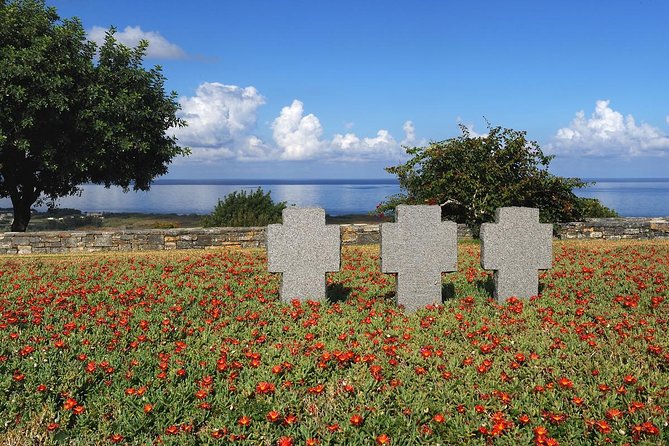
- Stop 3: The German Military Cemetery, Where the Somber Part Becomes Clear
- Stop 4: Souda Bay War Cemetery and the British Commonwealth Perspective
- The Private Collector Museum Stop: Artifacts That Make the Era Feel Close
- What You Actually Learn About Invasion and Resistance
- The Group Size, Timing, and the One Real Limitation
- Best Time to Book and What to Bring for a Comfortable Day
- Value for Money: Is $114.89 a Smart Spend?
- Who This Tour Suits Best
- Should You Book the WWII Battle of Crete Day Tour?
- FAQ
- How long is the WWII Battle of Crete day tour?
- What time does the tour start?
- Where does the tour end?
- Is pickup and drop-off included?
- What stops are included during the tour?
- Are entrance fees included?
- Is the tour offered in English?
- What snacks or drinks are included?
- How many people are in the group?
- What is the cancellation policy if weather changes?
Key Highlights You Will Actually Care About
- Max 15 people, real time for questions with an English-speaking driver/escort.
- Hotel pickup and drop-off from the Chania region plus air-conditioned minivan comfort.
- Four core WWII stops with included entrance fees (Maleme, Tavronitis Bridge, German Military Cemetery, Souda Bay War Cemetery).
- Two cemetery experiences that let you compare perspectives (German and British Commonwealth).
- A memorable stop at a private collector museum where artifacts and stories make the era feel close.
- Snacks, bottled water, and a planned route so your day stays efficient.
Why This WWII Battle of Crete Tour Works So Well From Chania
If you only have a day in Chania and you want WWII context that makes sense, this tour is built for that. You are not trying to piece together sites on your own, and you are not stuck looking at random monuments without explanation.
I also like the way the day is structured around locations tied to the Battle of Crete, rather than forcing you through a long, unfocused drive. You get a tight sequence of stops, plus a guide who connects the invasion story to the people on the island, including Cretans and allied forces.
More Things to Do in Crete
Getting There: 9:00 am Start, Minivan Comfort, and What You Pay For
The day starts at 9:00 am, and it ends back at your meeting point. From the start, the goal is simple: get you out of Chania efficiently, keep you comfortable in transit, and get you to the right spots without wasting time.
Transport is by air-conditioned minivan/minibus, and the group size cap of 15 helps keep things calm. You get snacks and bottled water per person, which matters because you are out long enough that you will notice if your plan depends on finding something later.
Price is listed at $114.89 per person, and a big part of the value is what is included. You are not just paying for a driver, you are paying for a guided route with entrance fees included, plus pickup and drop-off from specific locations in the Chania region.
One practical detail I like: you receive a mobile ticket, so you are not hunting for paper vouchers at the last minute.
Stop 1: Maleme, Your Starting Point for the 1941 Story
Maleme is the first stop and the tour begins there, with about 50 minutes on site. Even at the start of the day, the pacing is designed to help you get your bearings fast, instead of throwing you straight into complicated history without orientation.
Maleme also works well as a “first anchor.” It gives your guide a platform to frame what comes next, and it helps you understand why the rest of the route focuses on specific sites and memorial spaces.
Admission for this stop is listed as free. Still, you should treat it like a real visit, not a quick photo break. This is where you start learning the geography of the story.
Stop 2: Tavronitis Bridge for a Change of Pace and a Better Mental Map
Next up is Tavronitis Bridge, with about 40 minutes allocated. This stop is shorter than Maleme, which is useful because the day is building momentum. You get a change of scenery, and the guide can connect what you are seeing to the broader movement of the battle.
A bridge stop can feel like a “detail” compared to cemeteries, but it often helps you picture how people traveled and how areas connected. If you love history that has a sense of place, stops like this are the difference between knowing dates and actually understanding the route of events.
Entrance is included here, so you can focus on the story rather than adding costs or figuring out tickets on the fly.
Stop 3: The German Military Cemetery, Where the Somber Part Becomes Clear
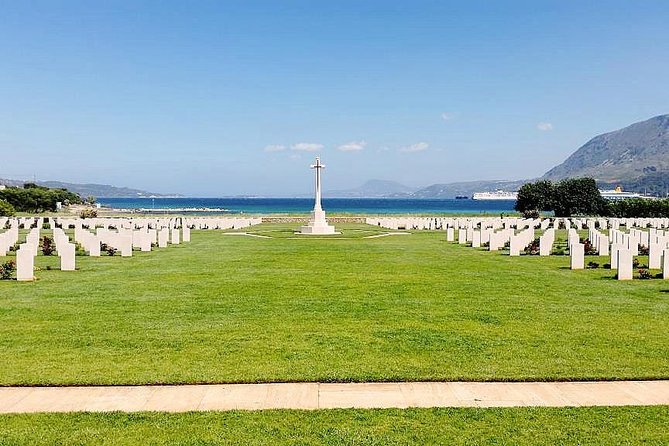
Then you move to the German Military Cemetery, with about 30 minutes. Cemeteries force you to slow down, and that time limit is actually helpful. It keeps the day respectful without turning every memorial moment into a half-hour stress test.
The guide’s job at this stop is important: this is not just reading names. You get the context of who is remembered there and how that fits into the larger island story.
Also, this stop creates emotional balance. Coming from earlier battle-related locations, you get a hard reset that makes the history feel real in a way that maps never fully achieve.
One cove over in Crete:
- Agios Nikolaos: Boat Trip to Spinalonga with Swim Stop
★ 4.4 · 3,031 reviews - Heraklion: Dia Island Sailboat Cruise with Swimming and Meal
★ 4.8 · 2,579 reviews - Crete: Knossos Palace Entry Ticket with Optional Audio Guide
★ 3.9 · 2,251 reviews - Heraklion Area: CRETAquarium Admission Ticket
★ 4.4 · 2,055 reviews
Stop 4: Souda Bay War Cemetery and the British Commonwealth Perspective
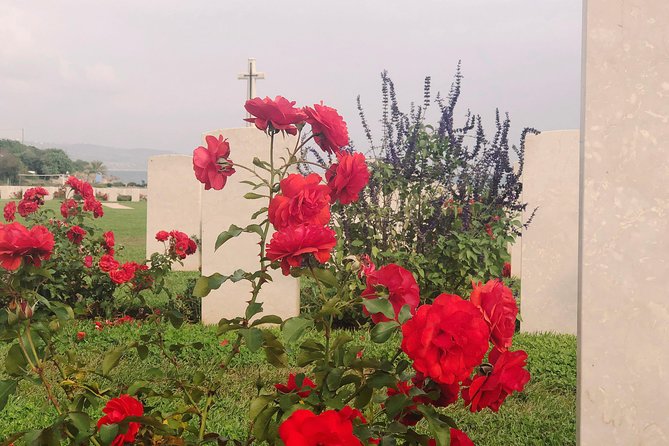
The day finishes with the Souda Bay War Cemetery, also about 30 minutes. This is the British Commonwealth war cemetery, which matters because it shifts your perspective to allied forces and their presence during and after the fighting.
If you have ever read WWII books and felt the accounts were one-sided, this cemetery pairing helps. You see how remembrance works from different sides of the conflict, and you come away with a clearer picture of the human cost across national lines.
Entrance is included, and this is one more reason the tour is worth considering as a package. You are not adding tickets or paying extra on the day.
The Private Collector Museum Stop: Artifacts That Make the Era Feel Close
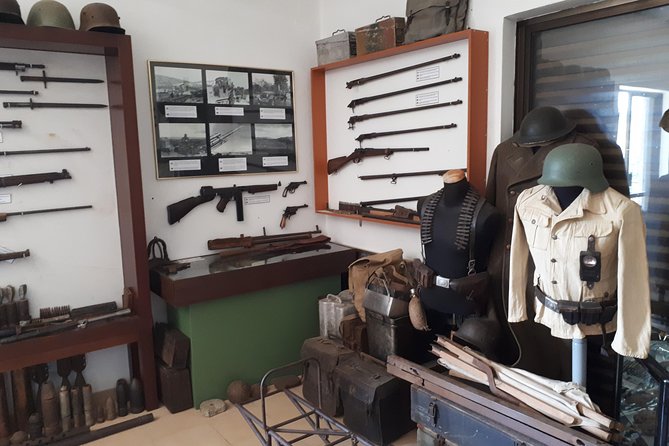
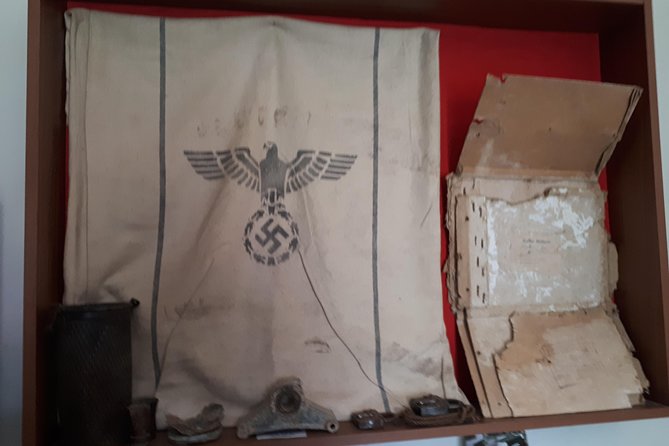
One of the most praised moments is the stop at a private collector’s museum and memorabilia collection. Guests repeatedly describe it as a standout because it goes beyond plaques and gives you tangible objects tied to the period.
Some visitors even mention being shown items such as WWII-era firearms with period accessories. I would treat that as a highlight, not a guarantee, since displays and handling rules can vary by day and setup. Either way, the point is consistent: it helps you connect the battle story to real equipment and lived experience.
What makes this stop especially valuable is pacing. It breaks up the heaviness of battlefield sites and cemeteries with a different kind of learning: visual, object-based, and very local.
What You Actually Learn About Invasion and Resistance
The best tours in history have one trick. They help you stop treating events like distant headlines and start treating them like choices people had to make under pressure.
This tour is praised for explaining the German invasion of Crete and the local resistance, then tying those parts into what allied forces faced. The guide style matters here, and you will meet it firsthand in the way they answer questions.
Guides named Janos, Yannis, Babis, Ioannis, Giannis, Stelios, and Nikos show up in feedback as especially strong at turning complex events into something you can follow. You are not just listening to a lecture. You are getting explanations that feel spoken, not recited.
Another thing that comes through: empathy. Multiple guests highlight that the guide framed the trauma experienced by Cretans and allied forces in a human way, not as a cold list of operations.
The Group Size, Timing, and the One Real Limitation
Let’s be honest about six hours. You will have enough time to see the planned sites well, but you will not have the luxury of lingering all day in deep research mode.
That is the main reason one visitor found it hard to grasp the flow of the three-day battle. Their takeaway was that some viewpoints and map-style explanation made it tougher to follow the exact action sequence, especially if you prefer walking down onto the battlefield ground itself.
If you know you are a big battlefield-walker, consider this your heads up. This tour is more about guided understanding of key locations and how the story fits together, not about turning into a multi-hour, ground-level tactics expedition.
The flip side is that small-group touring can be very efficient for the kind of learning you want on a first visit to the area.
Best Time to Book and What to Bring for a Comfortable Day
This tour is often booked about 41 days in advance, so if you are traveling in peak season, do not wait until the last minute. With a maximum of 15 people, availability can change quickly.
For what to bring, think practical. You will be outside for multiple stops, including cemetery visits, so wear comfortable shoes. Bring sunscreen and a hat, and keep water in mind even though bottled water is included.
Also, arrive with at least a light sense of what the Battle of Crete means. You do not need to memorize dates, but having a basic mental frame makes the guide’s connections land faster.
Value for Money: Is $114.89 a Smart Spend?
In plain terms, this price is paying for less hassle and more learning time.
You get:
- Hotel pickup and drop-off in the Chania region
- Air-conditioned minivan/minibus transport
- All entrance fees included
- English-speaking local driver/escort
- Snacks and bottled water per person
- A route that hits several key WWII-related sites in one day
If you tried to replicate this on your own, you would spend time sorting transport, and you would likely end up paying separate entrance fees plus losing the context that turns those stops into a coherent story. For many people, that context is the whole point.
The “value” sweet spot here is for first-time visitors to Chania who want a guided WWII day without logistical stress.
Who This Tour Suits Best
This tour is a great fit if you:
- Want a focused WWII day trip from Chania with English interpretation
- Like small-group travel and question-friendly pacing
- Prefer guided context at real sites, especially cemeteries that add meaning
- Are curious about how both sides are remembered and explained
It is also ideal if you are traveling with someone who reads WWII but wants it explained in simpler, place-based terms. The route format makes it easier for both history buffs and casual readers to enjoy the day.
Should You Book the WWII Battle of Crete Day Tour?
I would book it if you want a single, well-paced day that connects Maleme, bridge-area context, and both German and Commonwealth remembrance spaces into one coherent WWII narrative. The fact that entrance fees, pickup, transport, and snacks are handled makes it a low-friction way to get real educational value without turning your vacation into homework.
I would hesitate only if you strongly need battlefield ground-level detail and step-by-step action tracing, because a couple of hours of viewpoints and map-style explanation can feel limiting for hardcore reenactment brains.
If your goal is to understand the Battle of Crete and leave with names, places, and meaning you can carry forward, this is a solid choice for Chania.
FAQ
How long is the WWII Battle of Crete day tour?
The tour runs about 6 hours.
What time does the tour start?
It starts at 9:00 am.
Where does the tour end?
The tour ends back at the meeting point.
Is pickup and drop-off included?
Yes. Pickup and drop-off are included from specific places in the Chania region.
What stops are included during the tour?
The tour includes Maleme, Tavronitis Bridge, the German Military Cemetery, and the Souda Bay War Cemetery.
Are entrance fees included?
Yes. Entrance fees are included as part of the tour.
Is the tour offered in English?
Yes. The tour is offered in English.
What snacks or drinks are included?
Snacks and bottled water per person are included.
How many people are in the group?
The tour has a maximum of 15 travelers.
What is the cancellation policy if weather changes?
You can cancel for a full refund up to 24 hours before the experience’s start time. If it is canceled due to poor weather, you will be offered a different date or a full refund. If the minimum number of travelers is not met, you will also be offered a different date/experience or a full refund.
New pins on the Crete chart
- Guided Tour to Knossos Palace & Heraklion★ 4.0 · 83 reviews
- Richtis Waterfall, History, Azoria, OliveTasting, NorthCoast★ 5.0 · 83 reviews
- Spectacular Dinner-Show★ 5.0 · 84 reviews
- Quad Safari Off-Road Evening Tour★ 5.0 · 84 reviews
- From KAVROS/GEORGIOUPOLIS : Elafonisi Island Pink Sand Beach★ 4.2 · 84 reviews
- Small-Group Honey & Extra Virgin Olive Oil Tasting Tour in Crete★ 5.0 · 85 reviews
Things to Do in Crete, compared.
From Kissamos Port: Boat Cruise to Balos Lagoon & Gramvousa
Read our review →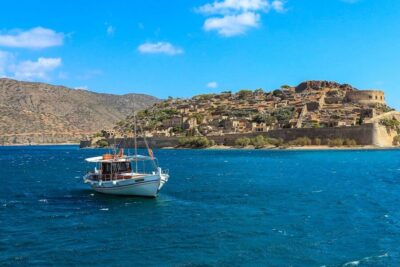
Day Trip to Agios Nikolaos and Spinalonga Island
Read our review →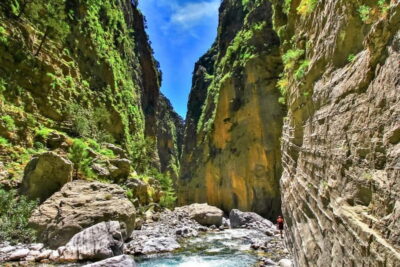
Full-Day Samaria Gorge Trek Excursion & Guide
Read our review →
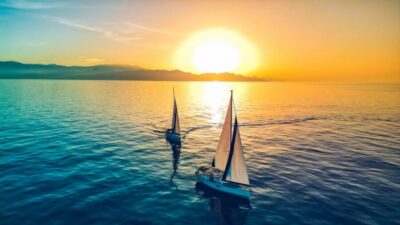
Dia Island Sailboat Cruise with Swimming and Meal
Read our review →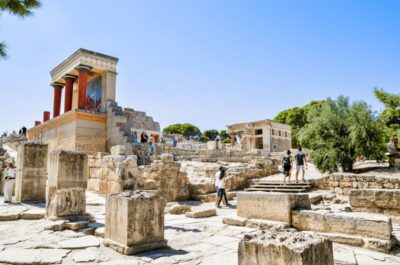
Knossos Palace Entry Ticket with Optional Audio Guide
Read our review →