

Reviewed · ACROPOLIS TICKETS & TOURS
Athens: Acropolis Guided Tour in Spanish-Option Tickets
One look at the Acropolis hill and you get hooked fast. What makes this tour great is the Spanish-speaking licensed guide who turns stone into clear stories, plus the included headphones so you can actually follow along without craning your neck. You’ll get a tight, high-impact route that covers the main monuments without feeling rushed, even though it is still a lot of walking on uneven ground.
The main thing to consider is simple: it’s not suitable for people with mobility impairments, so if walking distance or steps are a concern, you’ll want to choose a different option.
In This Review
- Key highlights to know before you go
- Why a Spanish Acropolis Tour Feels Different Than DIY
- The 2-Hour Route That Links Drama, Medicine, and Power
- Starting at the Theater of Dionysus, Greece’s Drama Machine
- Asklepieion and the Temple of Asclepius, Ancient Medicine in Stone
- Herodes Atticus and Music Life, Odeon Still Used Today
- Propylaea and the Journey to the Sacred Center
- Athena Nike and the View of Athens, The Moment to Look Up
- Parthenon Time: How to See the Details Without Getting Lost
- Erechtheion and the Porch of the Caryatids, The Human Touch
- Practical Value: What $33 Buys You on the Acropolis
- What I’d Pack and How to Get the Most From the Walk
- Guide Style You Want: Clear, Patient, and Built for Different Audiences
- Who Should Book This Acropolis Tour?
- Should You Book This Spanish Acropolis Tour?
- FAQ
- How long is the Acropolis guided tour in Spanish?
- Is a licensed guide included, and what language is it?
- Do I get headphones on this tour?
- Where do I meet the guide?
- Does the price include my entrance ticket?
- Is the tour suitable for people with mobility impairments?
- What items are not allowed during the tour?
Key highlights to know before you go
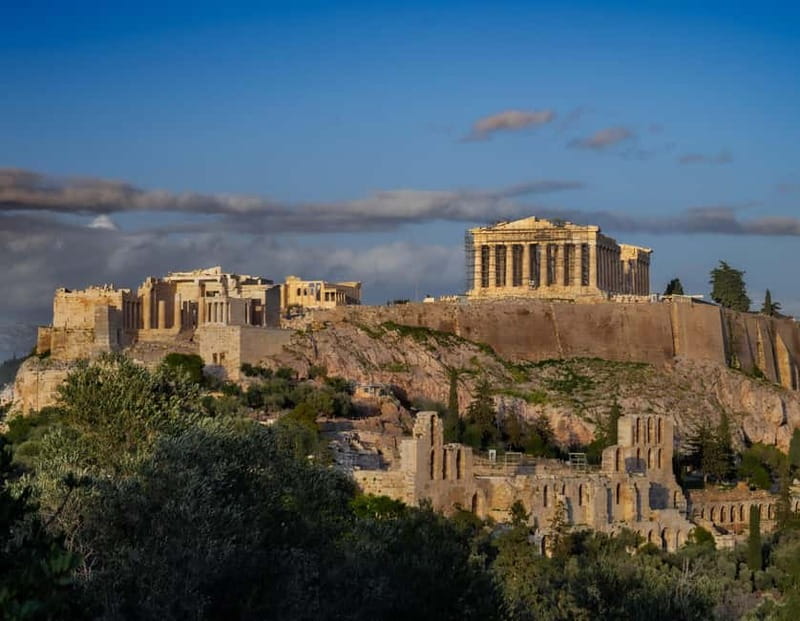
- Spanish guidance with a licensed live guide, designed to help you understand what you’re seeing
- Headphones included, which makes explanations easier to catch in open-air sections
- From Theater of Dionysus to the Parthenon, you’ll connect drama, religion, and power on one route
- Asclepius and ancient medicine, with a specific stop that adds a surprising theme to the visit
- Athena Nike and big Athens views, timed as the emotional high point before the Parthenon
Why a Spanish Acropolis Tour Feels Different Than DIY
The Acropolis is not just one building. It’s an entire complex of meanings piled on top of each other, with different eras, different ideas, and different reasons people came here. When you have a Spanish-speaking licensed guide, you’re not just looking at shapes, you’re getting context that makes the site feel logical instead of random.
I also like how practical this tour is. You’re equipped to hear the guide with headphones, which matters because the Acropolis is open air, windy, and often louder than you expect. And since the route is built around the best-known stops, you avoid the classic problem of spending your energy hunting for the “right” ruin to look at.
The sweet spot here is that you still get to move at a human pace. A guide can slow down for details that you’d otherwise miss, like how the architecture signals status or how religious themes show up in unexpected places.
More ascents of the sacred rock:
The 2-Hour Route That Links Drama, Medicine, and Power
This tour is designed as a smart walk across the Acropolis’s major zones, with short guided stops and quick transitions. In two hours, you’re not trying to “see everything.” Instead, you get the big anchors, then you leave knowing what each anchor is for.
The flow starts at the Theater of Dionysus, then moves through the religious and civic spaces. You’ll pass through key structures on the way up, including the gateway area called Propylaea, and then you finish with the monumental trio of Temple of Athena Nike, the Parthenon, and the surrounding spaces like Erechtheion and the Porch of the Caryatids.
What I like most is that the tour builds meaning in layers. You start with a cultural engine (theater), then you shift to the healing theme at the Temple of Asclepius, and then you land on the power display that is the Parthenon. That progression makes the hill feel less like a checklist and more like a story.
Starting at the Theater of Dionysus, Greece’s Drama Machine
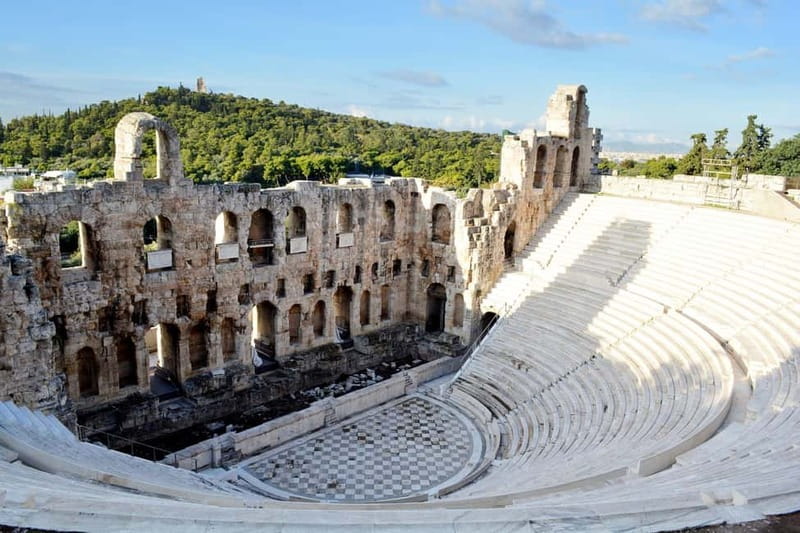
You begin at the Theater of Dionysus, the birthplace of theater. This is where the Acropolis starts to make emotional sense, because theater is not a side hobby in ancient Athens. It was part of civic life, tied to public identity and ritual.
When you’re standing in the theater area, a good guide helps you imagine what the space was built to do. You’ll get explanations that connect performance to the larger Greek worldview, so the ruins don’t just look like seats. They become evidence of a culture that made art a public act.
A short stop like this works well because it sets your mental camera for the rest of the visit. After this, when you see temples and gateways, you can better understand how Athens presented itself: spiritual, artistic, political, all on the same hill.
Asklepieion and the Temple of Asclepius, Ancient Medicine in Stone
Next you’ll reach the Asklepieion of Athens and the Temple of Asclepius, where the focus shifts from art to healing. This stop is one of the more unique highlights because it adds a theme most first-time Acropolis visitors don’t expect: medicine and care in the ancient world.
What I find valuable here is that medicine changes the tone of the whole site. You’re not only looking at power and myth. You’re looking at a place where people went to seek help, guided by the beliefs of the time. A guide helps you connect why that mattered in Athens, and how religious practice and health could overlap.
If you like tours that do more than recite dates, this is a great reason to book. It gives the Acropolis an angle that feels human, not just monumental.
Herodes Atticus and Music Life, Odeon Still Used Today
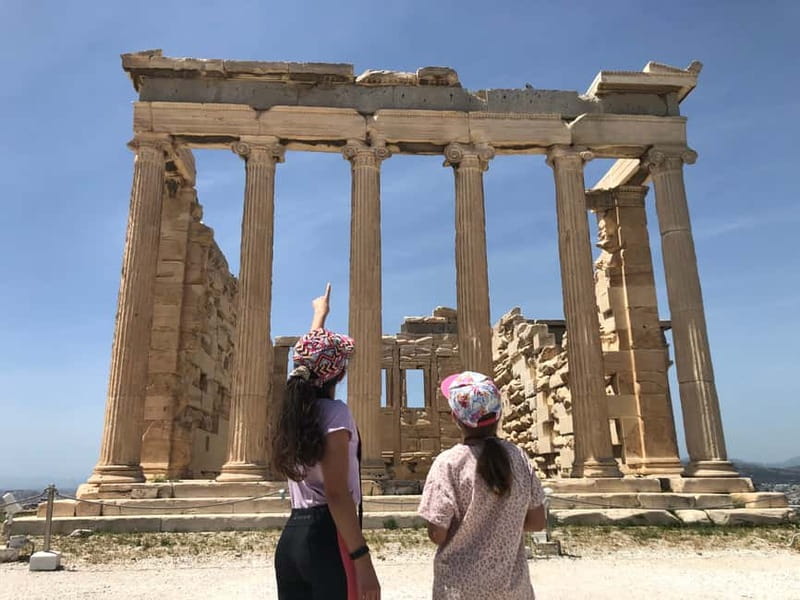
Then you move to the Odeon of Herodes Atticus, a venue closely tied to performances. The key detail here is that it’s still used for Athens’s most important concerts and performances.
That continuity is powerful. You’re not only looking at a “then.” You’re seeing a “still.” The guide can help you understand the structure and the purpose of the space, but the big win is the feeling that Athens keeps reusing its own stage.
Even if you’re not attending a concert, this stop adds rhythm to the walk. You’re pacing through one of the cultural engines of the city, then heading toward the sacred core where monuments were designed to last and to impress.
More Things to Do in Athens
- The Acropolis, Parthenon & Acropolis Museum Guided Tour
★ 4.7 · 8,493 reviews - Athens: Cape Sounion & Poseidon Temple Sunset Half-Day Trip
★ 4.8 · 8,241 reviews - Acropolis: Premium Acropolis and Parthenon Guided Tour
★ 4.8 · 5,208 reviews - Athens: Mythology of Delphi, Museum and Arachova Guided Tour
★ 4.7 · 5,102 reviews
Propylaea and the Journey to the Sacred Center
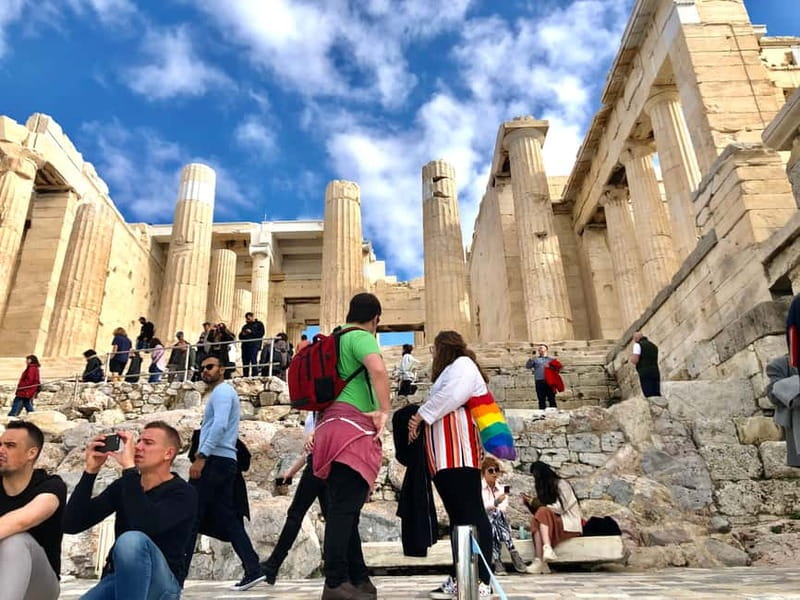
As you approach the core of the Acropolis complex, Propylaea becomes your architectural checkpoint. It’s essentially the gateway area, and your guide uses it to orient you in a way that’s hard to do on your own.
I love gateway spaces on archaeological sites because they act like a mental switch. Behind you is the normal city movement. Ahead is the world of temples, ceremonies, and carefully placed monuments. A good guide helps you notice proportions and transitions, so you understand you’re not randomly walking between ruins.
If you’re the type of person who likes seeing how spaces guide behavior, this is a smart moment. The Acropolis was planned to move people, stage views, and create a sense of arrival.
Athena Nike and the View of Athens, The Moment to Look Up
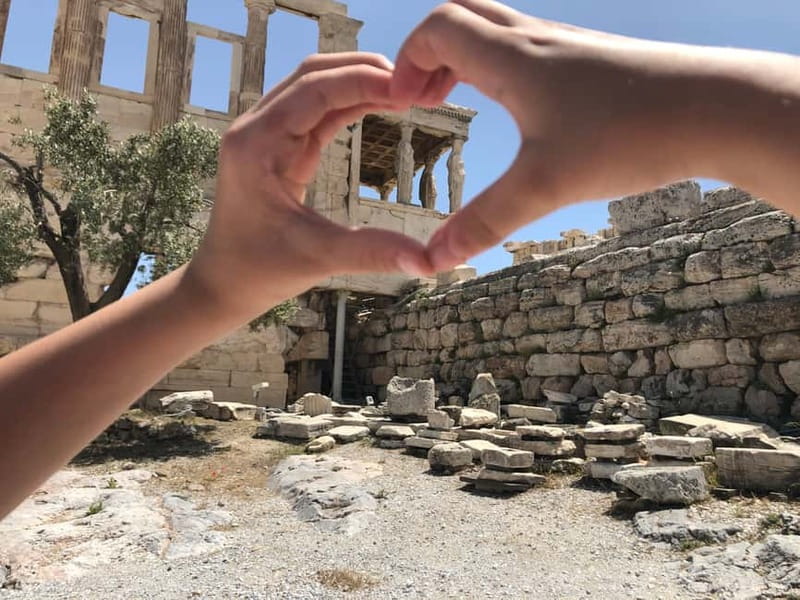
Temple of Athena Nike comes next, and it’s treated as a high point before the Parthenon. This stop is short, but it’s memorable because it forces you to do what most people forget to do: look out.
The guide will point you toward the viewpoint connections, so the city beyond the hill stops being background and becomes part of the meaning. Athena Nike, associated with victory, fits the mood of an Athens that wanted to show strength in public, both in war and in identity.
This is also where your practical preparation pays off. Wear comfortable shoes, and if the sun is strong, use your sun hat. The Acropolis can feel exposed, and this is exactly the stretch where you’ll be thankful you planned for it.
Parthenon Time: How to See the Details Without Getting Lost
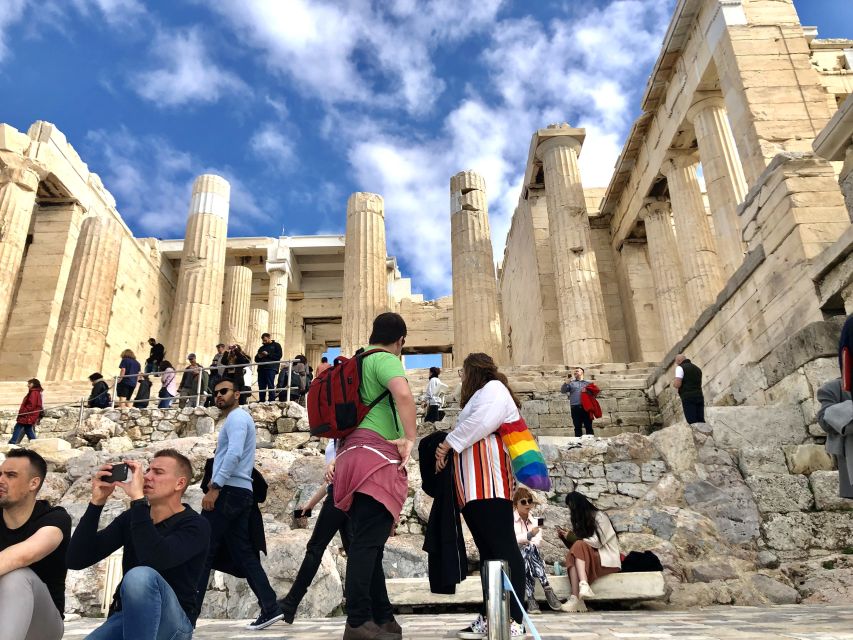
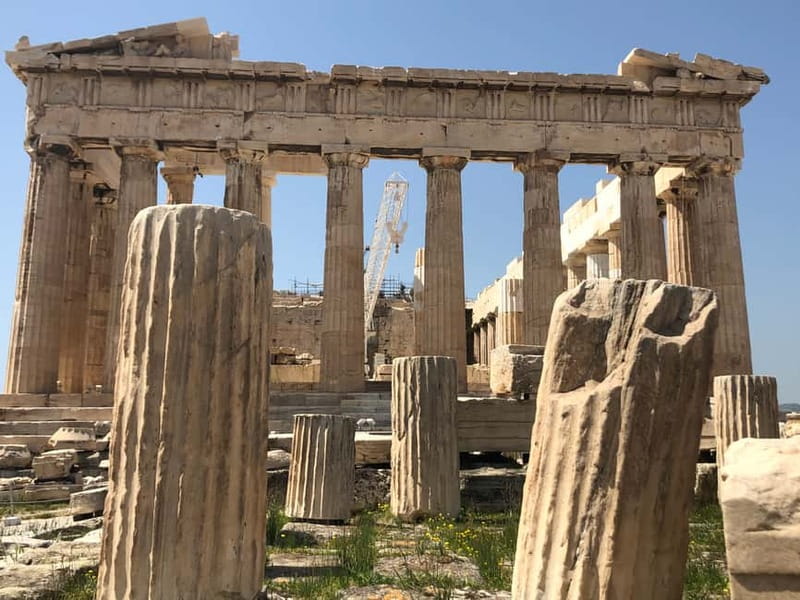
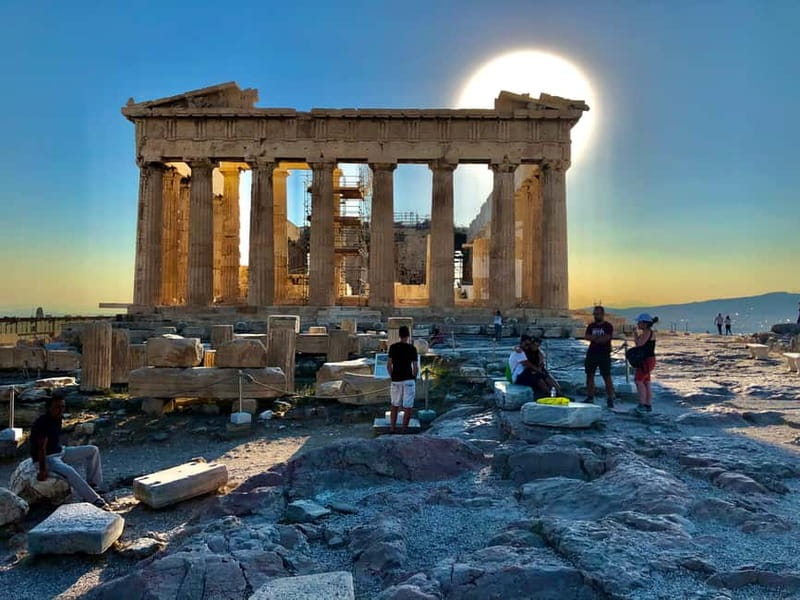
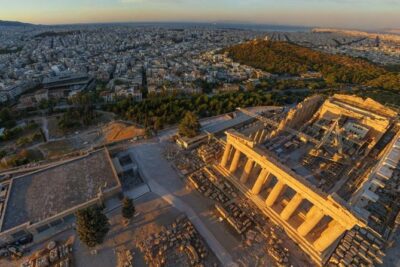
The Parthenon stop is the centerpiece of the visit, and you’ll get guided time there to take it in properly. Even if you’ve seen photos, the Parthenon is one of those places where the real impact is in alignment, scale, and visual logic.
A guide helps you understand what you’re looking at beyond surface aesthetics. You’ll also be shown how the route and the monuments relate to each other, so the Parthenon doesn’t feel like a single isolated building. It feels like the final statement in a plan.
Then there are the nearby spaces, like the Erechtheion, which adds variety because it’s different in character from the big flagship temple. That contrast makes the Parthenon stop feel richer, because you’re not only staring at the main event. You’re also learning how different buildings served different roles.
Erechtheion and the Porch of the Caryatids, The Human Touch
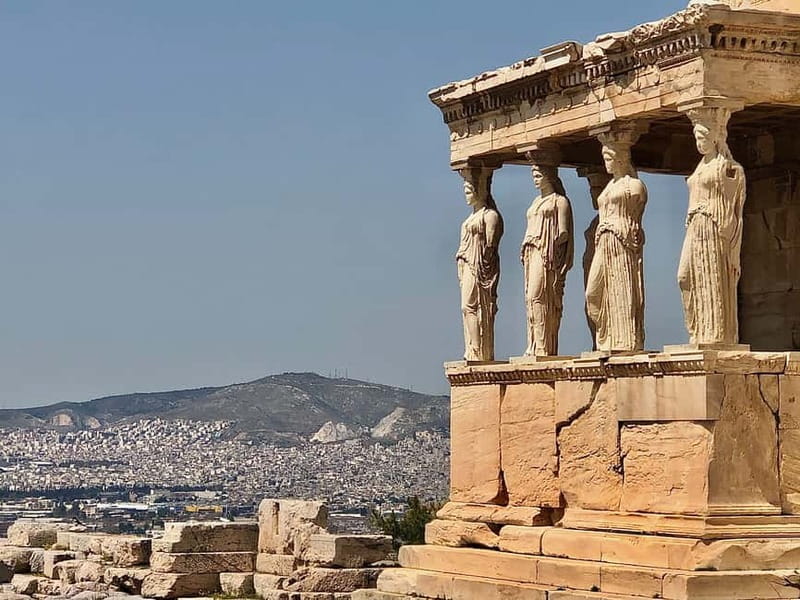
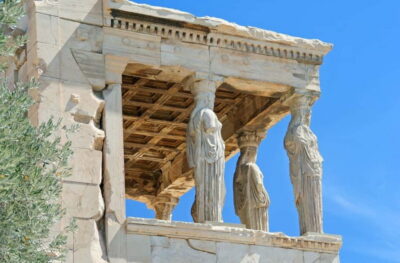
After the Parthenon, the tour continues with Erechtheion and then the Porch of the Caryatids. This is where the Acropolis gets more personal.
The Porch of the Caryatids is famous for its sculpted figures, and the guide’s job is to make you notice the meaning behind what you’re seeing. Without guidance, it’s easy to treat them like a photo prop. With guidance, they become part of how the monument communicates, including how it uses form to project power and dignity.
This section is also where the tour’s pace matters. You’ll want to move carefully, because you’re still on ancient stone with modern foot traffic. Comfortable shoes are not a suggestion here. They keep you steady when you’re stopping to look up and back down.
Practical Value: What $33 Buys You on the Acropolis
At around $33 per person for a two-hour tour, the value comes from what’s included and what it saves you. You’re buying two things that matter at the Acropolis: interpretation and time.
Included essentials:
- Licensed guide in Spanish
- Headphones so the explanations stay clear
- Entrance ticket included only if you choose the ticket-included option
Even if you already planned to buy a ticket, the guide is the real add-on value. The Acropolis is too big to understand just by reading a few signs. A guide helps you connect the dots quickly, which is what most people want when they have limited time.
You also avoid the common DIY trap: spending an extra hour “figuring it out” when the best monuments are the ones that require your attention first. Two hours is short enough to keep you energized, long enough to make the site meaningful.
What I’d Pack and How to Get the Most From the Walk
The tour gives clear direction on what to bring and what not to bring, and you should treat that seriously at this site.
Bring:
- Comfortable shoes
- Sun hat
Plan for what you cannot carry:
- Bags are not allowed
- Baby strollers are not allowed
- Non-folding wheelchairs and electric wheelchairs are not allowed
- Food and drinks are not allowed
This matters because it changes how you travel light. If your day includes other stops, I’d plan to store items elsewhere and travel with only what you need to stay comfortable and hydrated indirectly, since drinks are not part of what you can bring on the tour.
And yes, it’s still Greece. Even if your schedule says “short tour,” the sun can be real. You’ll thank yourself for simple sun protection.
Guide Style You Want: Clear, Patient, and Built for Different Audiences
One of the most praised aspects in the available feedback is guide style. The names that come up include Efi and Simon, both recognized for passion and for explaining without turning the visit into a lecture.
What you should look for in a guide on this kind of tour:
- Clear explanations that make the monuments understandable fast
- Patience with questions and pacing
- The ability to hold attention even when the group includes kids, not just adults
- Practical moments that help you take better photos, plus smart suggestions for where to stand
That combination is what makes a guided Acropolis visit feel worth it instead of like a rushed walk with a soundtrack.
Who Should Book This Acropolis Tour?
This tour is a great match if you want a structured, Spanish-language guided visit that hits the must-see monuments and also explains themes like theater and ancient medicine. It also fits well if you have limited time and you’d rather spend your energy listening and looking carefully than decoding the site alone.
It’s a poor fit if:
- You need accommodations for mobility impairments, since it’s listed as not suitable
- You want to bring a bag, because bags are not allowed
- You’re planning to eat during the tour, since food and drinks are not allowed
If you’re traveling light, comfortable on foot, and you want a high-quality Spanish guide, you’re in the right place.
Should You Book This Spanish Acropolis Tour?
Yes, book it if you want the Acropolis in Spanish with a licensed guide, headphones, and a route that connects theater, medicine, sacred architecture, and the Parthenon in about two hours. It’s especially worth it if you value understanding as much as you value photos, because the guided explanations are clearly the main strength.
Skip it if accessibility is an issue for you, or if the restrictions around bags and food don’t work with your style of traveling. If you’re flexible and ready to walk, this is a solid way to make the Acropolis feel clear, not just impressive.
FAQ
How long is the Acropolis guided tour in Spanish?
The tour lasts 2 hours.
Is a licensed guide included, and what language is it?
Yes, the tour includes a licensed live guide, and the tour language is Spanish.
Do I get headphones on this tour?
Yes, headphones are included.
Where do I meet the guide?
Meeting point may vary depending on the option booked, but one listed starting option is the Tourist Information Center Athens on Dionysiou Areopagitou 18.
Does the price include my entrance ticket?
Entrance ticket inclusion depends on the option you choose. The tour includes the entrance ticket if that option is selected.
Is the tour suitable for people with mobility impairments?
No. The tour is not suitable for people with mobility impairments.
What items are not allowed during the tour?
Bags, baby strollers, food and drinks, non-folding wheelchairs, and electric wheelchairs are not allowed.
New pins on the Athens chart
- Mycenae, Epidaurus, Nafplio, Corinth Canal Private Full Day Trip From Athens★ 5.0 · 83 reviews
- From Athens: Mycenae, Epidaurus & Nafplion Private Tour★ 4.9 · 83 reviews
- Delphi with Professional English Guide and Transportation★ 4.5 · 84 reviews
- Acropolis of Athens, Ancient Agora and the Agora Museum Tour★ 5.0 · 86 reviews
- Athens: 2.5-Hour Private City Tour Off the Beaten Track★ 4.7 · 86 reviews
- Thermopylae The battle of the 300 Spartans & Delphi Day Tour★ 5.0 · 86 reviews
Acropolis Tickets & Tours, compared.
Acropolis & up to 5 Archaeological Sites Combo Pass
Read our review →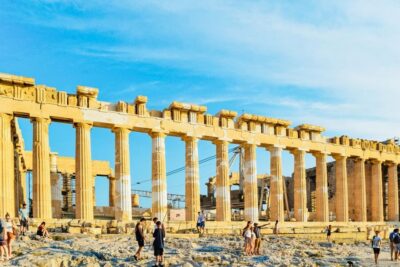
Acropolis Ticket with Optional Audio or Live Guide
Read our review →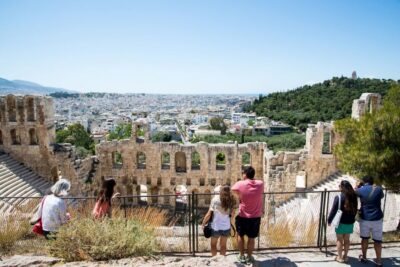
Acropolis, Parthenon & Acropolis Museum Guided Tour
Read our review →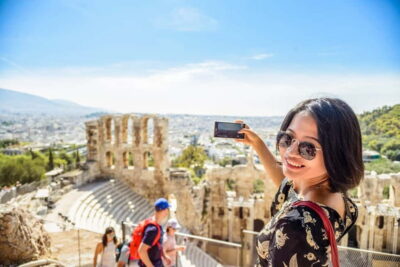
The Acropolis, Parthenon & Acropolis Museum Guided Tour
Read our review →
Acropolis and Parthenon Guided Walking Tour
Read our review →Acropolis, Parthenon & Acropolis Museum Guided Tour
Read our review →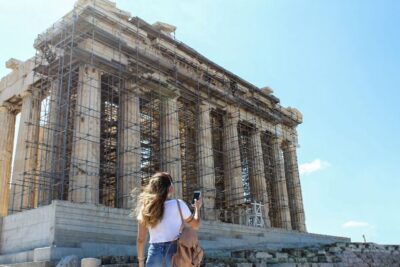
Browse the lists this tour appears in