
Reviewed · ACROPOLIS TICKETS & TOURS
Athens: Acropolis Guided Walking Tour
One sight, endless stories. On this Acropolis guided walking tour, you’ll connect the big monuments to the myths and festivals that shaped ancient Athens, with clear commentary as you move site to site. I like the small-group feel, because it makes questions actually possible, not just a hope. I also like that you hit more than the Parthenon, with stops like the theater of Dionysus and the temple of Athena Nike.
One key consideration: the tour is in Spanish. If you do not follow Spanish well, you might feel like you are looking at rocks instead of meaning.
After the walk, you get free time to stay longer and explore at your own pace. It is a smart way to see the Acropolis without turning it into a stressed checklist.
In This Review
- Key highlights to pay attention to
- What you really get from an Acropolis walking tour in Athens
- Starting at the right angle: meeting point, timing, and ticket reality
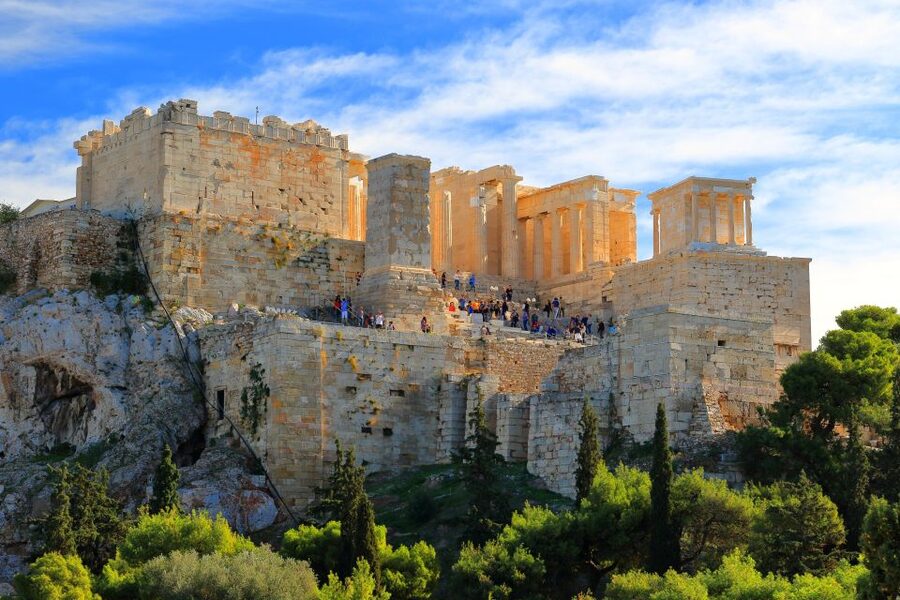
- Propylaea: the gateway into the rocky citadel
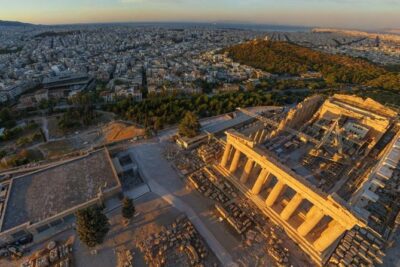
- Parthenon area: seeing Athena’s city as a living idea
- Theater of Dionysus: where festivals turned into spectacle
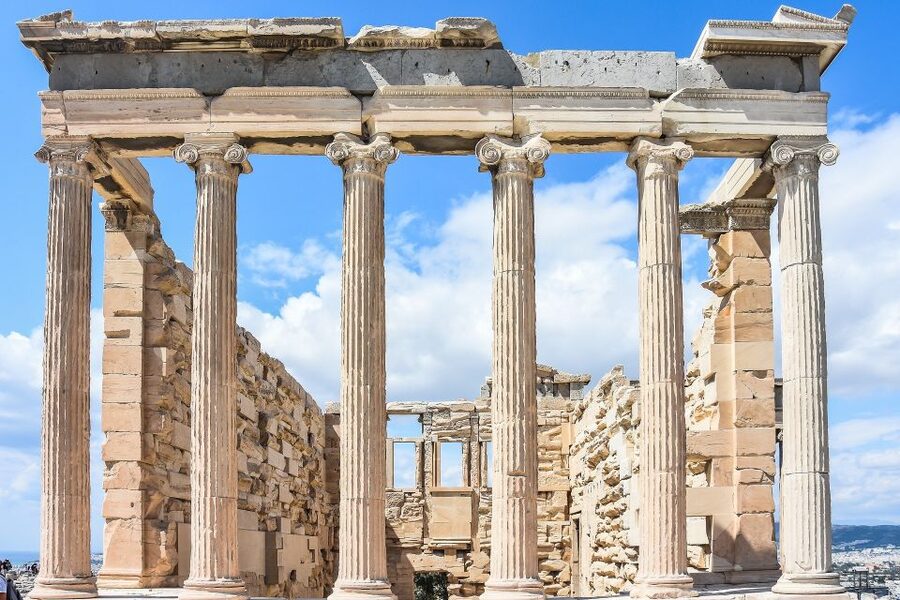
- Erechtheion: myth attached to real architectural details
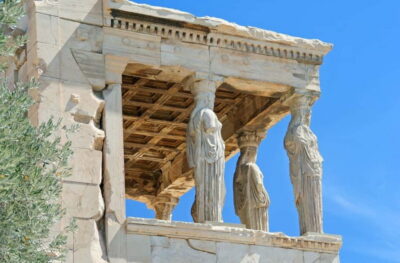
- Caryatides: the carved figures that make the site feel human
- Odeon of Herodes Atticus: the giant stone theater effect
- Temple of Athena Nike: small temple, sharp details
- Your guide in Spanish: getting value without getting lost
- Price and value: why $34 can make sense
- Who should book this Acropolis walk, and who might feel limited
- Best times and ticket time slots to think about
- Should you book this Athens: Acropolis Guided Walking Tour?
- FAQ
- What language is the Acropolis guided walking tour?
- How long is the tour?
- Is the Acropolis entry ticket included?
- If I do not choose the entry ticket option, do I need to buy it myself?
- Where is the meeting point?
- Are baby strollers allowed on this tour?
- Are wheelchairs allowed?
- Can I cancel for a full refund?
Key highlights to pay attention to
- Spanish live licensed guide: you get real explanations, not just a handout.
- Theater of Dionysus: a chance to picture religious festivals that drew huge crowds.
- Propylaea and Caryatides: the gateway approach and the carved figures help you read the site visually.
- Athena Nike and the Parthenon area: you see the contrast between scale, detail, and purpose.
- Erechtheion and myth tied to place: mythology gets attached to specific ruins, not floating in the background.
- 2 hours on foot: enough time to cover the highlights, with time left over after.
What you really get from an Acropolis walking tour in Athens
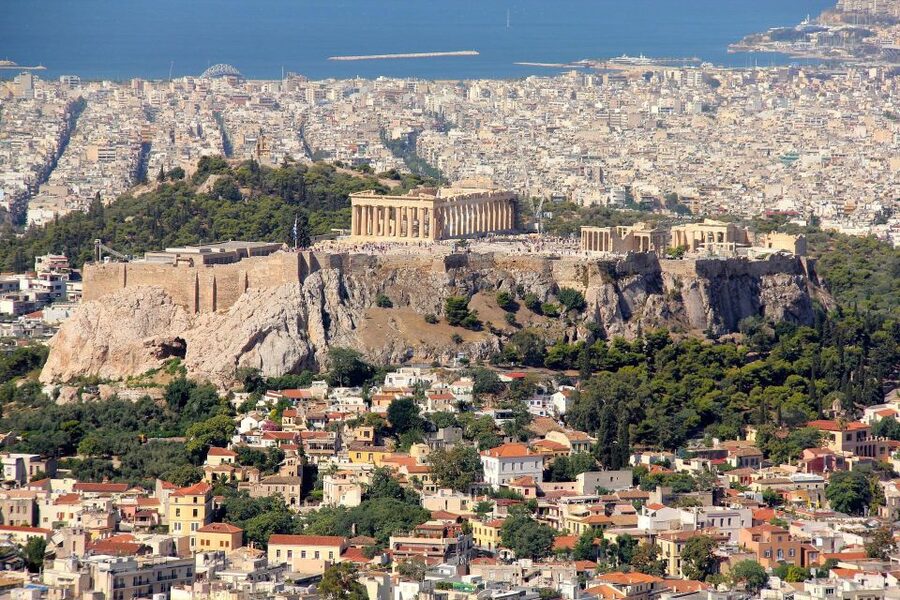
The Acropolis is not just a viewpoint. It is a time machine built out of stone and stubborn ideas about gods, power, and civic pride. A guided walk matters here because the site is crowded with similar-looking blocks and angles, and without context it is easy to miss what each spot is telling you.
On this tour, you are shown how the monuments relate to the religious festivals and Greek mythology centered in ancient Athens. You also get a guide who can answer questions, which is where the experience usually improves fast. When you hear a myth tied directly to a ruin, the place stops being a postcard and starts feeling readable.
The other practical win is focus. In about two hours, you cover the main “what to see” areas without rushing at the pace of a full-day marathon. And after the tour, you can linger where you personally want more time, instead of being herded onward.
More Walking Tours in Athens


Starting at the right angle: meeting point, timing, and ticket reality
The meeting point can vary depending on the option you book, so you should be ready to follow the exact instructions you receive. The tour itself runs for 2 hours, so arriving a few minutes early helps you avoid any last-minute panic on busy footpaths.
A big planning detail is the entry ticket. If you choose the option without the Acropolis entry ticket, you must buy it previously. The tour operator also gives timing guidance for ticket time slots, which depends on whether it is low season or high season.
If you buy online, do it ahead of time when possible. If tickets are only available through the ticket office, you will need to go to the South entrance ticket office area about 30 minutes before the tour time, then move to a nearby meeting point that is less than 2 minutes on foot after you get your tickets. That last part matters because you do not want to burn time once you finally have the ticket in hand.
Propylaea: the gateway into the rocky citadel
You start the experience by moving through the dramatic approach to the Acropolis, especially the Propylaea, the monumental gateway into the rocky citadel. Even if you think you know what the Acropolis looks like from photos, the first real views on the ground feel sharper. You understand the elevation, the geometry, and why the entrance alone was meant to impress.
This gateway also sets the tone for everything after it. Ancient Athens used architecture like messaging. The Propylaea is your first hint that this is not a random collection of ruins, but a designed procession space. As you walk in, you can mentally shift from modern Athens back to the world of ceremonies and public gatherings.
Potential drawback here is simple: the Acropolis is not a flat museum floor. Expect uneven surfaces and stairs as you climb between key spots. If you are sensitive to walking on rocky ground, bring water and pace yourself.
Parthenon area: seeing Athena’s city as a living idea
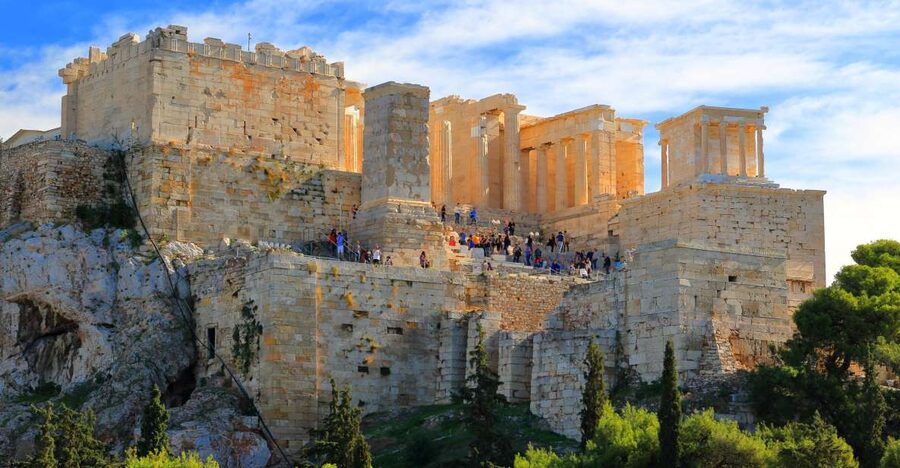
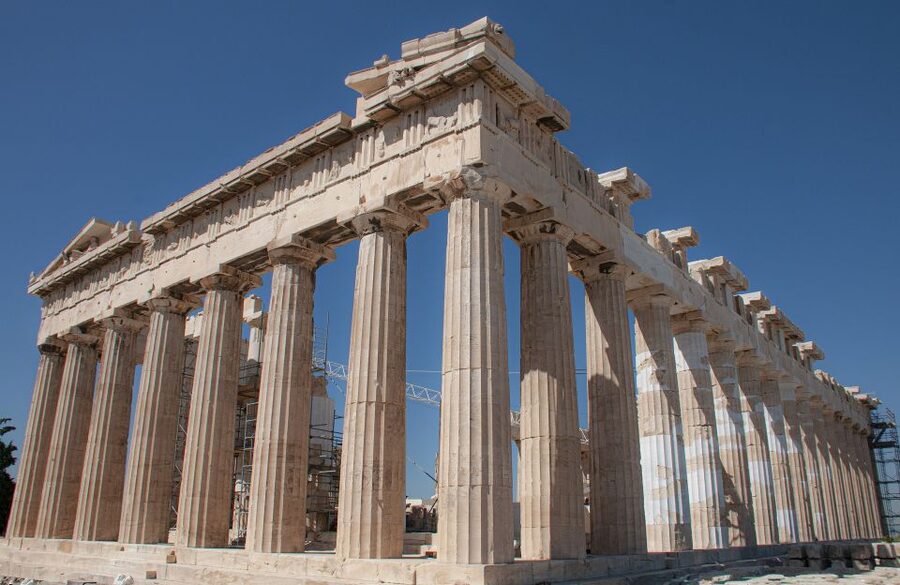
From the gateway zone, you will spend time around the Parthenon area and the broader space dedicated to Athena, the goddess protector of the city. The guide’s job is to connect what you see to what it meant, and the best payoff is when you stop treating the Parthenon like a standalone icon.
You will also learn how the capital of modern Greece has a long story, tied to the ancient center of gravity you are standing in. That modern thread matters because it helps explain why the Acropolis remains the emblem it is today, even when the city has changed completely.
One of my favorite ways to think about this stop is that you are looking at choices made by a city. Some pieces survive, some are fragments, and some are replaced by their own absence. With the guide’s context, the gaps do not feel like failure. They feel like part of the story.
Theater of Dionysus: where festivals turned into spectacle
The theater of Dionysus is one of those places where ruins suddenly feel alive. The tour highlights its capacity, about 17,000 spectators, which gives you a useful mental scale for what festival crowds could look like. You are not just hearing that theater existed, you are picturing how people gathered for religious events tied to myth.
This is also where the connection to Greek gods gets practical. The guide explains how festivals honoring the birth of the Greek god were hosted there, so the theater becomes more than entertainment. It becomes a civic and spiritual space.
If you love storytelling with real-world anatomy, this stop tends to land well. The seating structure helps you understand sightlines and why performances mattered. The drawback is that it can feel hot and exposed during parts of the day, especially in brighter seasons. Plan for sun and take your breaks when you can.
More ascents of the sacred rock:
- Athens: Acropolis & up to 5 Archaeological Sites Combo Pass
★ 4.2 · 13,904 reviews - Athens: Acropolis Ticket with Optional Audio or Live Guide
★ 4.2 · 11,055 reviews - Athens: Acropolis, Parthenon & Acropolis Museum Guided Tour
★ 4.8 · 9,316 reviews - The Acropolis, Parthenon & Acropolis Museum Guided Tour
★ 4.7 · 8,493 reviews
Erechtheion: myth attached to real architectural details
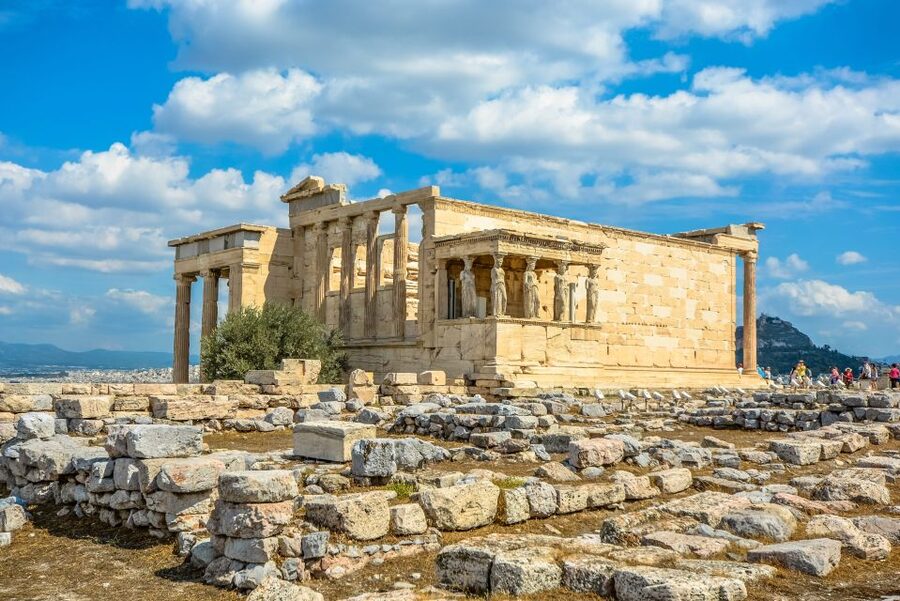
Next up is the Erechtheion, named after the demi-god Erechtheus, plus nearby views that reinforce how myth shaped sacred architecture. This is a major “read the building” moment. The Acropolis is famous for big, famous landmarks, but the Erechtheion is where you often start noticing the more intricate and symbolic side.
The tour also connects mythology to the ruins through the guide’s commentary, so you understand why specific elements exist where they do. That makes a huge difference because you are not just admiring carvings. You are learning why those carvings mattered to the people who built and used the site.
One practical note: parts of the Acropolis require slow, careful steps. If you rush, you will miss small details. If you pause, you will get more. This stop rewards patience.
Caryatides: the carved figures that make the site feel human
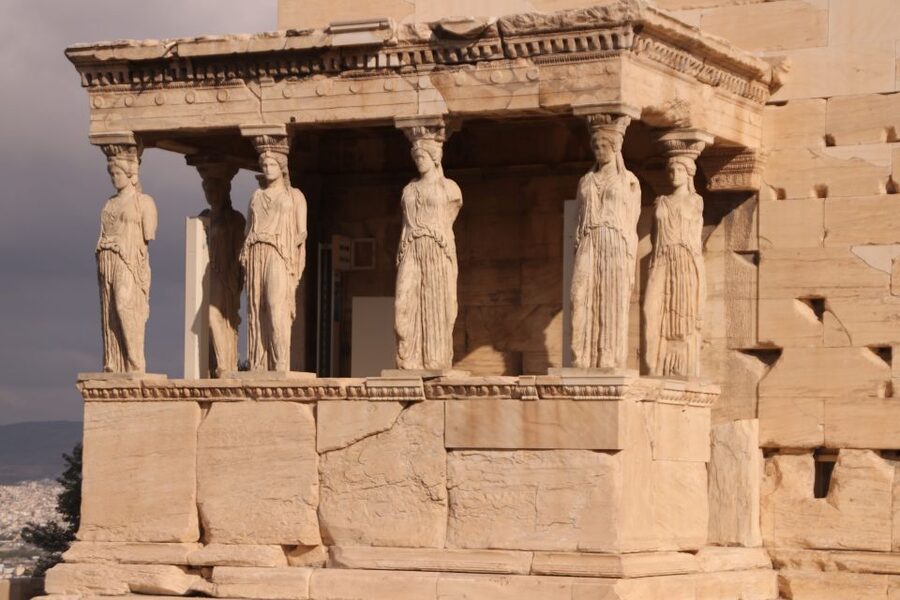
The tour includes a chance to look at the Caryatid stone carvings. These are some of the most memorable figures on the Acropolis because they feel like people transformed into architecture. You see bodies and posture, not just decoration, and that makes the experience more emotional than purely educational.
In a guided setting, you also learn what you are looking at, instead of just seeing a famous statue. The carvings help you read the site in layers, like artwork with a job.
Even if you have seen photos, seeing them in person changes the scale. Up close, you notice wear, shape, and the way the figures interact with the structure behind them. It is one of the stops where your brain shifts from “tour mode” to “why did they do this?” mode.
Odeon of Herodes Atticus: the giant stone theater effect
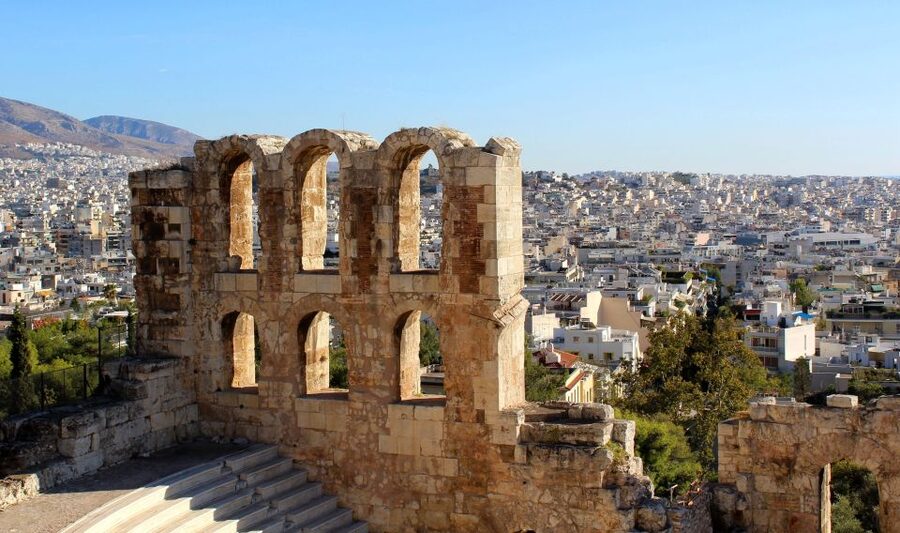
You also visit the Odeon of Herodes Atticus, described as a giant stone theater. The point here is not just the size, it is the continuity of public performance. This is where you can start comparing ancient theater spaces to modern ideas of crowds, acoustics, and communal events.
If you like understanding how people used spaces for gathering, this stop gives you the “why” behind the spectacle. You can also use it as a visual bridge between the theater of Dionysus and the wider world of ancient festivals.
Because it is an outdoor stone environment, it can get windy or bright depending on the time of day. Bring layers if you are visiting when weather changes quickly. And if you are photosensitive, plan to spend a little extra time in the shade whenever the group pauses.
Temple of Athena Nike: small temple, sharp details
The tour ends up at the Temple of Athena Nike, described as the smallest temple. That detail matters because it flips the usual logic. People often assume the biggest ruins must be the most important, but small temples can carry big meaning through design and symbolism.
Here, you get the feeling that sacred worship was not limited to one megastructure. It was distributed across a sacred precinct where different parts expressed different aspects of devotion.
This stop is also a good one for close-up looking. The tour context helps you focus on why it exists and what role it played, rather than treating it like a quick photo moment.
Your guide in Spanish: getting value without getting lost
This tour is a live guided tour in Spanish, led by a licensed guide. That is a real factor in your enjoyment. If you understand Spanish well enough to follow explanations, you will likely get a lot more out of the walk.
One reason this kind of tour earns high praise is the chance to ask questions in a smaller group setup. You can use that to your advantage. Ask what a symbol means, or how a myth connects to the spot you are standing in. Even simple questions can lead to better understanding of what you are seeing.
The name Sara comes up in the best-reviewed experiences, with mentions of humor and clear commentary about historical and architectural elements. If you get a guide with that style, you will probably feel like you are walking with a teacher who keeps the story moving, not one who reads facts at you.
Price and value: why $34 can make sense
At $34 per person for a 2-hour guided walk, you are paying mainly for the guide, the structure of the route, and the meaning. The Acropolis entry ticket is optional depending on your option choice. So the real value comes from what you avoid: wandering around trying to decode the site on your own.
If you are the kind of traveler who likes seeing “why this matters,” the guide’s interpretation earns its keep. The tour also helps with efficiency. Two hours is often the sweet spot for first-time Acropolis visitors who want the biggest hits, plus myth context, without burning the whole morning or afternoon.
If you prefer to travel solo with an audio guide and you already know Greek mythology deeply, you might feel the cost is less justified. But for most people, a live guide is the fastest path from confusion to clarity.
Who should book this Acropolis walk, and who might feel limited
This tour is a great fit if you:
- Want a guided interpretation of Greek myths tied directly to ruins
- Like asking questions and staying engaged in a small group
- Are visiting for the first time and want the main Acropolis stops in one focused walk
- Want to add time after the tour to explore on your own
It may be less ideal if:
- You need the tour in a language other than Spanish
- You struggle with stairs and uneven outdoor surfaces
- You rely on items that are not allowed, like baby strollers and non-folding or electric wheelchairs
That last point matters for planning. The site is manageable for many people, but the tour has restrictions, so you should match your mobility needs to what is allowed before you commit.
Best times and ticket time slots to think about
The tour offers specific starting times, and the entry ticket time slot requirements differ by season. In low season, examples include tours at 09:30 and 15:00, linked to ticket time slots 09:00-10:00 and 15:00-16:00. In high season, examples include tours at 08:45, 09:45, 17:00, and 17:45, paired with ticket time slots such as 09:00-10:00, 10:00-11:00, and 17:00-18:00 or 18:00-19:00.
You do not need to memorize this, but you should take it seriously when choosing a time. Picking the wrong ticket slot is how day-of stress happens. Plan early, especially in high season when slots can be tight.
Should you book this Athens: Acropolis Guided Walking Tour?
Book it if you want the Acropolis to make sense fast. A licensed Spanish guide, a focused 2-hour route, and stops that connect mythology to architecture is a strong mix for value. You also get small-group attention, which is where questions turn into real understanding.
Skip or rethink if language is a barrier for you, or if your mobility needs conflict with the tour rules. In those cases, you could still visit the Acropolis, but you would want a different format that matches your needs.
If you do book, go with the mindset of learning a few myths, spotting the key structures the guide points out, and then using your free time after the tour to linger where you feel curious. That approach makes the two hours feel long, not rushed.
FAQ
What language is the Acropolis guided walking tour?
The tour is guided live in Spanish.
How long is the tour?
The duration is 2 hours.
Is the Acropolis entry ticket included?
It depends on the option you choose. The Acropolis entry ticket is listed as optional.
If I do not choose the entry ticket option, do I need to buy it myself?
Yes. If you do not choose the option with the Entry ticket, you must buy the ticket previously.
Where is the meeting point?
The meeting point may vary depending on the option booked.
Are baby strollers allowed on this tour?
No, baby strollers are not allowed.
Are wheelchairs allowed?
Non-folding wheelchairs and electric wheelchairs are not allowed.
Can I cancel for a full refund?
Yes. You can cancel up to 24 hours in advance for a full refund.
Stepped Lanes, Kastro Quarters




New pins on the Athens chart
- Mycenae, Epidaurus, Nafplio, Corinth Canal Private Full Day Trip From Athens★ 5.0 · 83 reviews
- From Athens: Mycenae, Epidaurus & Nafplion Private Tour★ 4.9 · 83 reviews
- Delphi with Professional English Guide and Transportation★ 4.5 · 84 reviews
- Acropolis of Athens, Ancient Agora and the Agora Museum Tour★ 5.0 · 86 reviews
- Athens: 2.5-Hour Private City Tour Off the Beaten Track★ 4.7 · 86 reviews
- Thermopylae The battle of the 300 Spartans & Delphi Day Tour★ 5.0 · 86 reviews
Acropolis Tickets & Tours, compared.
Acropolis & up to 5 Archaeological Sites Combo Pass
Read our review →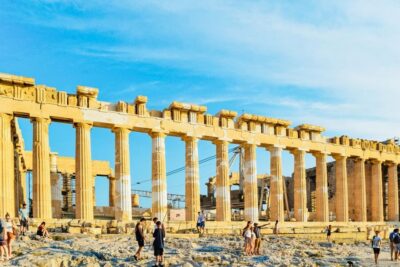
Acropolis Ticket with Optional Audio or Live Guide
Read our review →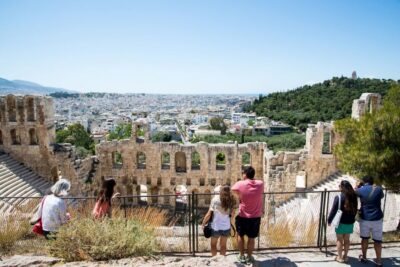
Acropolis, Parthenon & Acropolis Museum Guided Tour
Read our review →
The Acropolis, Parthenon & Acropolis Museum Guided Tour
Read our review →
Acropolis and Parthenon Guided Walking Tour
Read our review →Acropolis, Parthenon & Acropolis Museum Guided Tour
Read our review →
Browse the lists this tour appears in