
Reviewed · ACROPOLIS TICKETS & TOURS
Athens & Acropolis Highlights: Greek Mythology Small-Group Tour
Myths feel real on these ruins. This 4-hour small-group tour uses Greek mythology to bring Athens’ ancient monuments to life, starting at the Temple of Olympian Zeus and ending at the Ancient Agora and the Temple of Hephaestus.
I like the stop-by-stop pacing, with quick orientation time at Zeus and then a longer, focused stretch on the Acropolis. I also like the way the guide ties what you’re seeing to why it mattered, from Parthenon architecture to Athena Nike’s victory symbolism and the Agora as Athens’ social and political engine.
One drawback to plan for: entry tickets cost extra, and the Acropolis has strict rules (no strollers, backpacks, or big bags).
In This Review
- Key highlights to know before you go
- Meeting at the Arch of Hadrian, then myth on the move
- Zeus at the Olympeion: the stories you hear before the climb
- Acropolis in 1.5 hours: Parthenon, Athena Nike, Erechtheion, and Dionysus
- The climb reality check: stairs, shade, water, and hearing
- Temple of Athena Nike and the Parthenon view logic
- Erechtheion and Theatre of Dionysus: why the details matter
- Ancient Agora: where daily Athens happened
- Temple of Hephaestus finish: the payoff of “best preserved”
- Price and value: how $54.42 fits with the ticket reality
- Tips that make this tour smoother (and more enjoyable)
- Who should book this Athens mythology highlights tour?
- Should you book this myth-focused Athens tour?
- FAQ
- Do I need tickets for the Acropolis and Ancient Agora?
- How long is the tour?
- Where do I meet the guide and where does the tour end?
- Is this tour in English?
- How big is the group?
- Can I bring a stroller or large bags?
Key highlights to know before you go
- Myth-to-stone explanations: you connect the gods to the actual monuments, not just dates on a board
- A real Acropolis run, not a drive-by: Parthenon, Athena Nike, Erechtheion, plus the Theatre of Dionysus area
- Agora context that clicks: you learn how the ancient city worked as politics, commerce, religion, and justice
- Great-preservation finale: the Temple of Hephaestus wraps up the tour with one of Athens’ best intact ancient temples
- Small group size (max 15): easier listening, easier crowd management, and more time to ask questions
Meeting at the Arch of Hadrian, then myth on the move
The tour starts at the Arch of Hadrian area on Leof. Vasilisis Amalias, a central meet-up spot that’s easy to find if you’re already exploring Athens. From the first stop, the tone is practical: you’re not just seeing ruins, you’re learning how ancient Athenians explained their world through myth.
You’ll be in a small group (up to 15). That matters here, because the Acropolis area is crowded and stairs slow everyone down. A few guides for this route are known for using visuals and plain language, including Irene/Irini and Michael, which helps when the stones look similar at first glance.
And yes, it’s in English, and you’ll use a mobile ticket. This is one of those tours where arriving on time really helps, because the afternoon light and crowds can change fast.
More ascents of the sacred rock:
Zeus at the Olympeion: the stories you hear before the climb
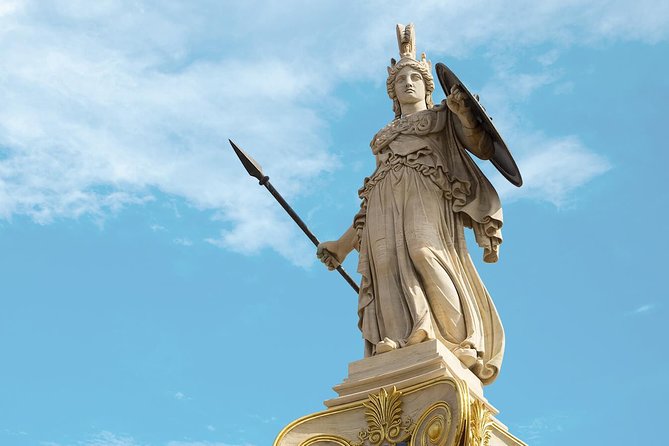
Your first monument is the Temple of Olympian Zeus, also called the Olympeion. You only stop outside, and that’s a good thing early on. It gives you a mental map for what’s ahead, because this site sits between the Acropolis area and the Ilissos river.
Even from the outside, the guide’s job is to set the scene: Zeus was the big-name ruler of the Greek pantheon, and this temple was meant to reflect that power. You’re there for about 15 minutes, so don’t expect a long walk through interpretive exhibits. Instead, you’re getting the backstory that makes the rest of the tour feel connected.
One practical point: this is an exterior stop, but it’s still part of the walking day. If you’re sensitive to sun, have water ready early, not later.
Acropolis in 1.5 hours: Parthenon, Athena Nike, Erechtheion, and Dionysus
The heart of the tour is the Acropolis, where you spend about 1 hour 30 minutes. Expect a real climb. The terrain is uneven and you’ll deal with steps and bottlenecks as crowds move through the same viewpoints.
Your guide will lead you past the major highlights you came for:
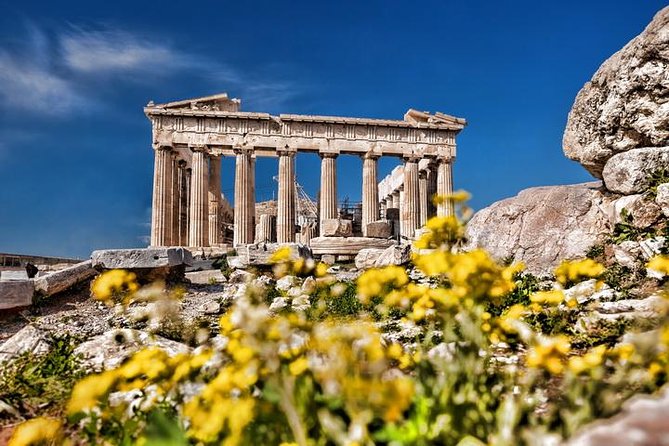
- Parthenon: dedicated to Athena Parthenos, often described as the culmination of Doric-era design evolution
- Temple of Athena Nike: tied to victory, with the idea that Nike as the goddess of victory stays in Athens
- Erechtheion: tied to Athena and the cult statue tradition, built on sacred ground with a temple layout shaped by the terrain
- The Theatre of Dionysus Eleuthereus area: connected to early performances by major playwrights like Aeschylus, Sophocles, Euripides, and Aristophanes
You’ll also have a short stop at the Theatre of Dionysus Eleuthereus (about 15 minutes). This is one of my favorite types of stops on any Acropolis itinerary because it turns the site from scenery into culture. When a guide connects Dionysus to wine and harvest, and then points to the theatre’s role in early Greek drama, you suddenly understand why people gathered here in the first place.
Two things to watch for as you go:
1) The guide’s explanations will often make you look at building details instead of just taking photos.
2) The best moments tend to come when the guide slows down, points out a monument, then links it to a myth you now can picture.
Some guides known for this route, such as Dani and Sophia, are praised for keeping groups together and making short story pauses at points of interest, which is ideal when you’re climbing in heat.
The climb reality check: stairs, shade, water, and hearing
This is where your planning matters more than the itinerary. Multiple guides on this tour style are known for managing the pace in small stages and pausing in shade. You’ll also benefit if you follow the common-sense advice that pops up again and again for this area: good walking shoes, a hat, and water.
The Acropolis climb is steep. Even if you’re fit, it’s not a quick stroll, and uneven surfaces can feel tiring even when the total distance isn’t huge. If you’re traveling with older relatives or anyone with limited mobility, you might still do this tour, but only if they can handle stairs and standing time in crowds.
One extra consideration: at least one group noted that there wasn’t a microphone, so hearing everything can be tougher in louder sections. If you know you struggle to hear in crowds, sit or stand where your guide positions the group, and don’t be shy about asking for clarity when you can.
Temple of Athena Nike and the Parthenon view logic
The Temple of Athena Nike and the Parthenon are both “you came here for this” stops. But the value of a guided walk is how the guide helps you interpret what you’re seeing quickly.
For Athena Nike, the symbolism is the point. The tour frames it as a victory-focused cult space, connected to Athena worship in the form of Nike. That matters because otherwise, the monument can look like just another set of columns and stones.
For the Parthenon, the guide usually gives you the why behind the wow. You learn it was built in the mid-5th century BCE and dedicated to Athena Parthenos. You also get context for why it’s considered a high point in Doric design development. When you understand the purpose, the building’s rhythm becomes easier to notice.
Also, you’ll likely see other structures in the same complex, even if the guide’s main time is on the big three. This is one reason the Acropolis section is long enough to feel meaningful, not just rushed.
More Things to Do in Athens
- The Acropolis, Parthenon & Acropolis Museum Guided Tour
★ 4.7 · 8,493 reviews - Athens: Cape Sounion & Poseidon Temple Sunset Half-Day Trip
★ 4.8 · 8,241 reviews - Acropolis: Premium Acropolis and Parthenon Guided Tour
★ 4.8 · 5,208 reviews - Athens: Mythology of Delphi, Museum and Arachova Guided Tour
★ 4.7 · 5,102 reviews
Erechtheion and Theatre of Dionysus: why the details matter
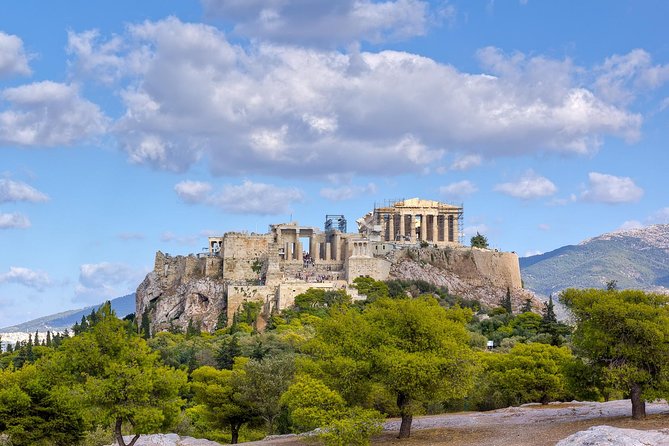
The Erechtheion can be tricky for first-time visitors because it’s visually different from the “classic temple” look people expect. The guide explains that it was built on the Acropolis to house a tradition tied to Athena’s cult statue, and it reflects Athens at the height of its influence.
If you’re even mildly into mythology, this stop tends to become a memory anchor. People often remember “what happened there” more than “what it’s called,” and the guide’s role is to give you the myth thread that ties the sacred story to the physical site.
Then the Theatre of Dionysus stop gives you a culture bridge. Dionysus is linked to wine and grape harvest, and the theatre is described as the oldest founded in Athens. When the guide connects it to the first performances of works by Aeschylus, Sophocles, Euripides, and Aristophanes, you start to see that myths weren’t just bedtime stories. They were also entertainment, shared ideas, and public life.
Ancient Agora: where daily Athens happened
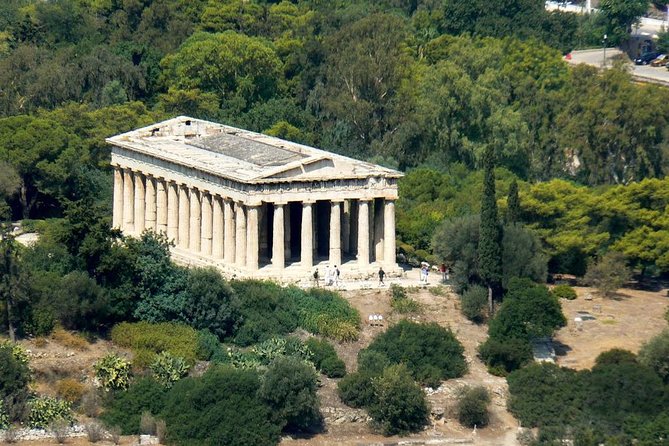
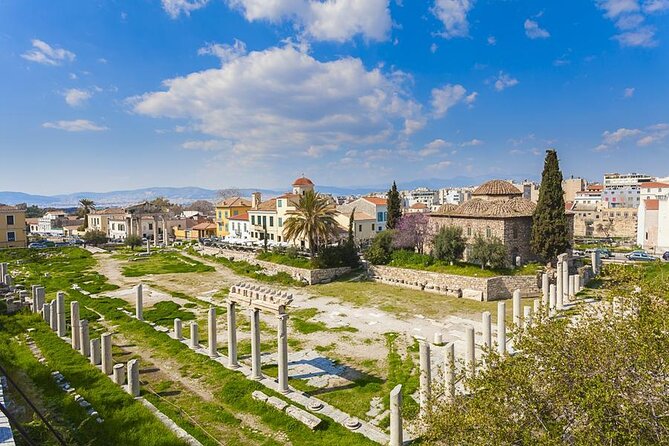
After the Acropolis, the tone shifts. You move to the Ancient Agora of Athens, where you spend about 1 hour. This part is valuable because it helps you understand Athens as a living place, not just a hill of monuments.
The Agora was presented as the heart of Athens: political, commercial, administrative, social, religious, and the seat of justice. That’s a lot, and you’ll feel it most when the guide explains the idea of how different parts of daily life overlapped.
If you’ve ever wondered what “democracy” looks like on the ground, this is the kind of stop that starts answering that question. You won’t get a full museum experience here, but you’ll walk away with a clearer mental map for where things happened and why people cared.
One practical note: because you spend a full hour here, plan for shade breaks and water. The pacing is often thoughtful, and some guides are known for pointing out where you can fill water bottles.
Temple of Hephaestus finish: the payoff of “best preserved”
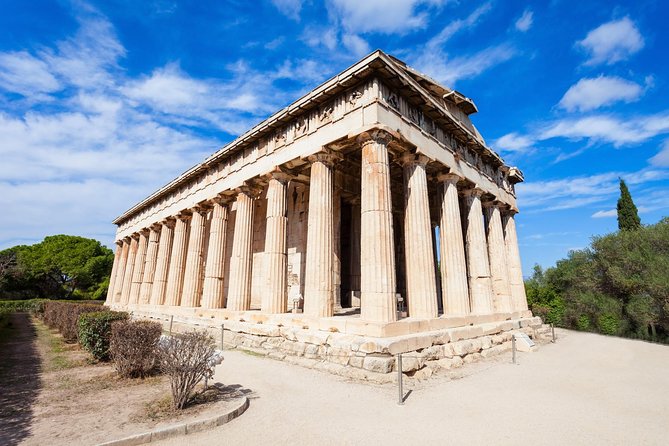
The tour ends at the Temple of Hephaestus, described as one of the best-preserved ancient temples in the world. This is a satisfying closer because you can see the difference between “ruins that tell a story” and “a temple that still looks like a temple.”
The guide’s explanation connects the site to the daily work of merchants and shop owners in the Agora area. Hephaestus is linked to metallurgists, and Athena Ergani is linked to potters and cottage industries. That combination is smart tour design: it takes you from big myth and civic life down to crafts and commerce.
It’s also a nice way to end if you’re tired. By the final stop, you’re usually ready for a strong visual and a clear takeaway.
Price and value: how $54.42 fits with the ticket reality
The tour price is $54.42 per person, and what you’re paying for is the guide, the small-group format, and the structure that keeps you from guessing your way through sacred sites. I like that the tour doesn’t pretend the entry fees are included. It’s honest about what’s extra.
Here’s the practical math for the full experience: for the 4-hour option, plan on entry fees in addition to the tour price. The Acropolis requires an admission fee of €30 per person, and the Ancient Agora requires €20 per person. That means the total out-of-pocket cost depends on the tickets you need, but it’s usually best to budget as if you’re paying the tour plus around €50 in site admissions.
Is it worth it? If you care about mythology and you don’t want to spend your limited Athens time trying to decode temple symbolism on your own, yes. A guide helps you connect the names you read on signs to the myths and the reasons Athenians built these places.
If you’re the type who loves self-guided wandering, you can save some money by skipping tours. But you’ll lose a chunk of meaning. This is the tour category where the guide does real work, especially on the Acropolis and the Agora.
Tips that make this tour smoother (and more enjoyable)
A few practical habits will pay off fast:
- Bring water and take shade breaks when your guide offers them. Some guides are proactive about this, helping you stay comfortable without falling behind.
- Wear good walking shoes. The surfaces are uneven, and there’s a moderate amount of walking plus stairs.
- Leave space for your bag rules. At the Acropolis, strollers, backpacks, and big bags aren’t allowed, so travel light.
- If you’re under 25, bring your ID or passport. Discounts may apply.
- You can ask to pre-purchase entrance tickets if you want less stress.
- Keep an eye on weather. The experience requires good weather, so if conditions are bad, plans may shift.
And for the record, if you’re worried you won’t enjoy mythology because you think you only know a few names, you’ll likely be pleasantly surprised. The best guides on this route teach you the basics while building stories around each monument, so you don’t feel lost.
Who should book this Athens mythology highlights tour?
This one fits best if you want:
- a guided route through the big Acropolis highlights with myth context
- a clearer sense of how the Ancient Agora functioned in daily life
- a small group experience that makes questions easier
- an overall length that works as a half-day plan (about 4 hours)
It might be a mismatch if:
- you hate stairs and uneven ground
- you’re expecting all ticket costs to be included
- you rely on a microphone for clear hearing and can’t reposition when groups get loud
Should you book this myth-focused Athens tour?
I think it’s a solid booking when you want more meaning than a self-guided checklist. The Acropolis is the star, but the Agora finish at the Temple of Hephaestus gives the day balance, so you leave with both myth and how people actually lived.
If you’re planning your tickets anyway and you’re okay paying entry fees on top of the tour price, this is an efficient way to get context fast. Just plan for the climb, travel light for the Acropolis rules, and bring water. Do those basics and you’ll get a tour that feels like Athens made of stories, not just stone.
FAQ
Do I need tickets for the Acropolis and Ancient Agora?
Yes. Entry fees to archaeological sites are not included in the tour price. The Acropolis admission is listed as €30 per person, and the Ancient Agora admission is listed as €20 per person for the 4-hour tour option.
How long is the tour?
It runs for approximately 4 hours.
Where do I meet the guide and where does the tour end?
You start at the Arch of Hadrian (Leof. Vasilisis Amalias 50). The tour ends at the Ancient Agora of Athens.
Is this tour in English?
Yes, it is offered in English.
How big is the group?
The tour has a maximum of 15 travelers.
Can I bring a stroller or large bags?
No. Strollers, backpacks, and big bags are not allowed at the Acropolis and should not be taken on the tour.
New pins on the Athens chart
- Mycenae, Epidaurus, Nafplio, Corinth Canal Private Full Day Trip From Athens★ 5.0 · 83 reviews
- From Athens: Mycenae, Epidaurus & Nafplion Private Tour★ 4.9 · 83 reviews
- Delphi with Professional English Guide and Transportation★ 4.5 · 84 reviews
- Acropolis of Athens, Ancient Agora and the Agora Museum Tour★ 5.0 · 86 reviews
- Athens: 2.5-Hour Private City Tour Off the Beaten Track★ 4.7 · 86 reviews
- Thermopylae The battle of the 300 Spartans & Delphi Day Tour★ 5.0 · 86 reviews
Acropolis Tickets & Tours, compared.
Acropolis & up to 5 Archaeological Sites Combo Pass
Read our review →
Acropolis Ticket with Optional Audio or Live Guide
Read our review →
Acropolis, Parthenon & Acropolis Museum Guided Tour
Read our review →
The Acropolis, Parthenon & Acropolis Museum Guided Tour
Read our review →
Acropolis and Parthenon Guided Walking Tour
Read our review →Acropolis, Parthenon & Acropolis Museum Guided Tour
Read our review →
Browse the lists this tour appears in