

Reviewed · MUSEUMS
Athens: National Archaeological Museum Ticket & Audio Guide
Ancient Athens feels close up with headphones. I like the pre-booked e-ticket, which helps you get in without wrestling over lines, and I like the offline audio tour you can replay before or after your visit. One thing to keep in mind, though: the museum is large enough that you may need to manage your own pace and navigation.
The payoff is you can spend time on the pieces that catch your eye, with audio that focuses on major stories and standout objects like the Mask of Agamemnon. Still, the audio tour may not cover every single exhibit, so plan for some extra wandering if you want the full museum sweep.
In This Review
- Key Highlights You’ll Notice Right Away
- National Archaeological Museum in Athens, What This Experience Actually Feels Like
- Your Pre-Booked E-Ticket, Why It Matters on Arrival
- The Offline Audio Tour on Your Phone, How to Use It Well
- What You’ll See Inside, A Museum That Moves Through Greek Time
- Agamemnon’s Mask and the Mycenaean Bull, Your High-Impact Listening Stops
- Bronze Statues, Classical Rooms, and the Zeus or Poseidon Connection
- The Horse Rider, Plus Other Standout Figures You Can’t Ignore
- How Much Time You Should Plan, From 90 Minutes to a Half Day
- The On-Site Cafe and Inner Courtyard Break, Worth Building In
- Navigation Tips in a Museum That Can Feel Like a Maze
- Price and Value at About $31, What You’re Really Buying
- What’s Included and What You Must Bring
- Compatibility Notes That Can Save You Real Headaches
- Who This Works Best For in Athens
- Should You Book This National Archaeological Museum Ticket and Audio?
- FAQ
- How long does this experience take?
- What languages are included in the audio guide?
- Does this include a live guide?
- What phone devices are compatible with the audio tour?
- Can I bring pets into the museum?
- Is the ticket refundable if my plans change?
Key Highlights You’ll Notice Right Away

- E-ticket delivery by email so you can scan and move quickly at the entrance
- Offline audio, text, and maps you can use during and after the visit
- English plus multiple languages (French, German, Greek, Italian, Spanish)
- Built around major museum icons, including Agamemnon’s mask and the Mycenaean Bull
- Free time to explore at your pace, since there is no live guide guiding you room to room
- Long visit potential, with time windows from about 45 minutes up to 4 hours
National Archaeological Museum in Athens, What This Experience Actually Feels Like

This is the National Archaeological Museum, but experienced in a way that’s more practical than random wandering. With your smartphone and the audio loaded for offline use, you get a narrated path through the museum’s most talked-about eras and objects, without being stuck with a group schedule.
I especially like the tone of this kind of self-guided plan: you can pause, look longer, or skip ahead when you spot something that pulls your attention. That freedom matters in Athens, because museum days are rarely just one “perfect” chunk of time.
The one tradeoff is also part of the charm. Since the audio tour is built to hit the highlights, you might find yourself wanting extra context for side exhibits, or you might miss a room because you went faster than the audio expects.
Your Pre-Booked E-Ticket, Why It Matters on Arrival
The ticket is sent to your email after booking, and the idea is simple: arrive, scan, and go. That matters here because the museum can have a long line for tickets, and having your entry sorted reduces stress at the worst possible moment, when you are already standing with a crowd around you.
You do not need to coordinate with a meeting guide to get inside. Your instructions email tells you how to download your ticket and audio tour, and from there it’s on you to enter and start the route.
If you qualify for free or reduced-price entry, do not assume this option automatically handles it. The guidance for this product says that if you are entitled to free or reduced-price entry, you should go directly to the ticket booth.
The Offline Audio Tour on Your Phone, How to Use It Well

This experience includes a self-guided smartphone audio tour (Android or iOS), with offline content. That means text, audio narration, and maps are available without cell service, which is a lifesaver in museums where signal can be spotty and you want to stop digging for Wi-Fi.
Before you go, charge your phone. This sounds obvious, but it’s the difference between a calm visit and a frantic one when you reach a room and realize your battery is under 20 percent. Also bring headphones, since headphones are not included.
One practical tip: download the audio and maps before you arrive, not while you are in a queue. You want your “museum brain” to kick in, not your “settings and downloads” brain.
Audio setup can also involve a quick desk process for the audio guide experience. One useful detail from a visitor account is that you may need to leave a picture ID as collateral at the desk, such as a driver’s license or passport. If that might apply to how the audio is handled during your visit, bring a photo ID so you are not scrambling.
What You’ll See Inside, A Museum That Moves Through Greek Time
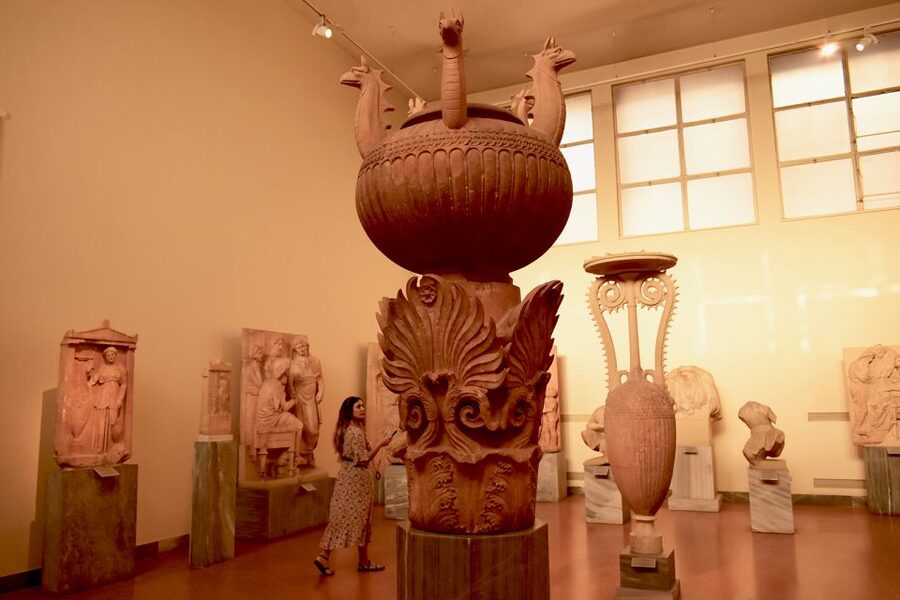
The museum’s layout follows a historical line, and the rooms are generally organized in a chronological way. That makes it easier to understand how different periods of Greek art and culture connect, instead of treating everything like isolated masterpieces.
You will notice strong representation from earlier periods, including Mycenaean works and metal-age objects. Visitors often point to the Mycenaean displays as a highlight, especially when you get the chance to see gold, silver, and bronze pieces in one place.
Then the museum shifts into the big sculptural tradition, where bronze and classical-era works help you see what later generations copied, admired, and adapted. The building itself also helps, with light and airy rooms that make long viewing sessions easier.
And yes, there is often a Roman thread too. One of the clever parts of a chronological museum is that it helps you spot how Roman rulers and artists interacted with earlier Greek styles, rather than treating “Greek” and “Roman” as separate worlds.
Agamemnon’s Mask and the Mycenaean Bull, Your High-Impact Listening Stops
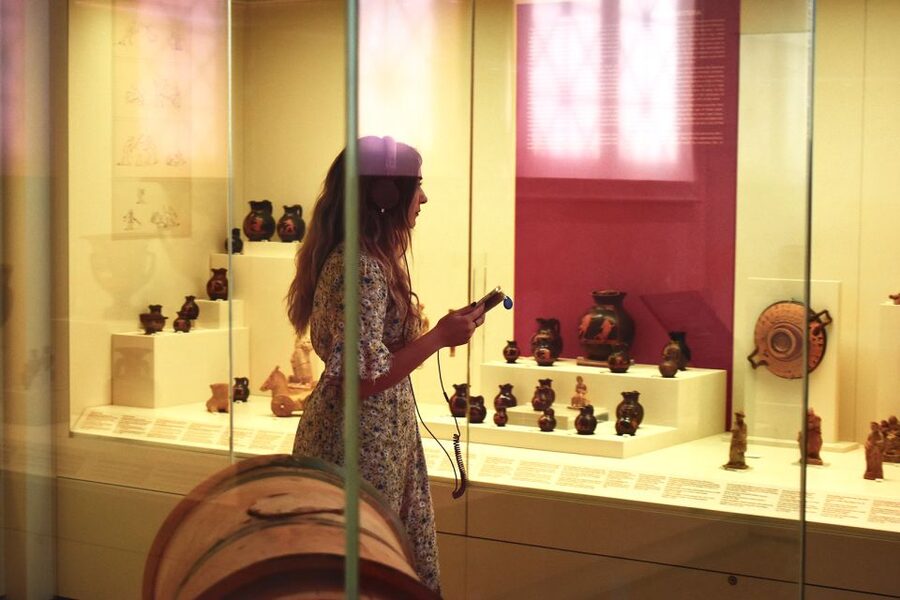
Some objects in this museum act like magnets. If the audio tour nudges you toward them, you can get a huge return for your time, even if you do not end up seeing every single display.
Agamemnon’s mask is one of those objects. It tends to be described as a star attraction, and it’s the kind of piece that makes people slow down, because it feels both monumental and strangely human.
The Mycenaean Bull is another highlight that gives you a sense of scale and storytelling. These pieces are not just decorative, they are evidence of what people cared about, how they worked with material, and how they presented power.
When you listen to the audio at these stops, treat the narration as a lens, not a script. Look first with your own eyes, then let the audio add context. That order keeps you from tuning out because you already know the story.
Bronze Statues, Classical Rooms, and the Zeus or Poseidon Connection
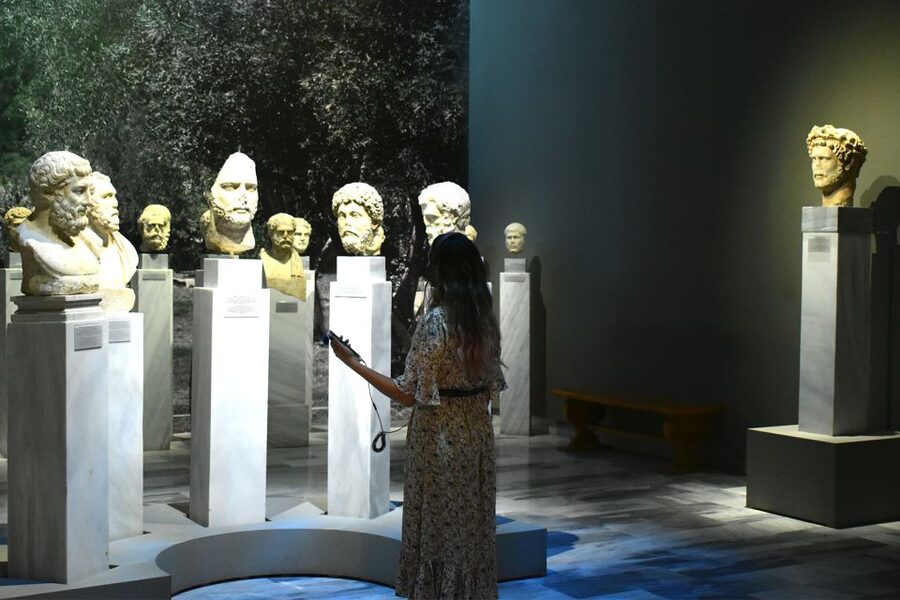
The audio tour also calls attention to major bronze sculpture moments, including the bronze statue of Zeus or Poseidon. Bronze pieces can be tricky from photos alone, because the magic is in how form, posture, and finish communicate presence.
You might also find you spend extra time in the bronze-focused areas, especially if you’re a sculpture person. Even if you are not, the museum makes it hard not to pause. Bronze and classical-era works bring a strong sense of craft, and the museum’s organization makes that craft easier to appreciate as part of a broader story.
If you want to get the most out of this section, do it when you still have energy. The earlier rooms can be intense, but sticking with the classical and bronze highlights is what often makes a first museum visit feel complete.
The Horse Rider, Plus Other Standout Figures You Can’t Ignore
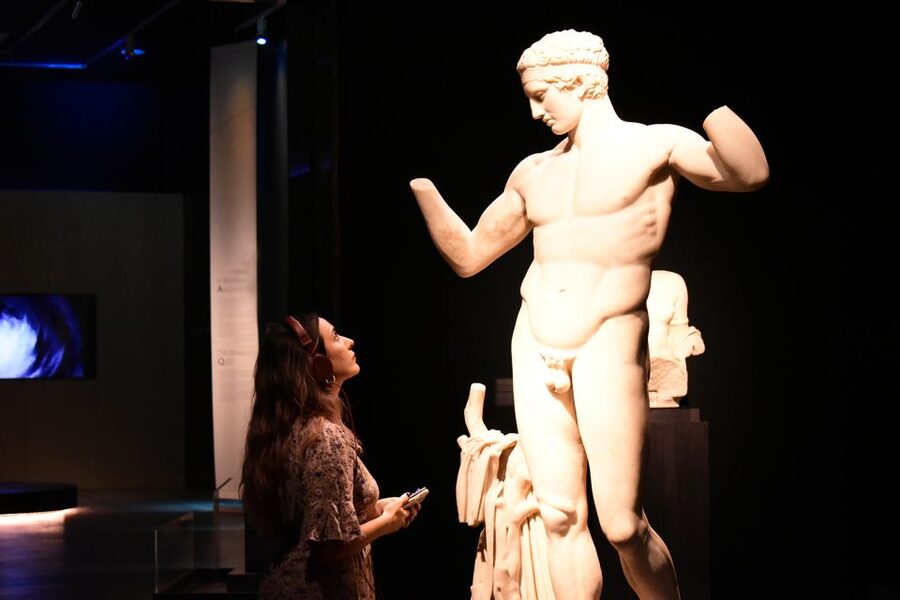
The audio tour includes stories about the horse rider, which is exactly the type of object that benefits from narration. Figures like this create a connection through movement and expression, and the audio helps you translate why that matters in its original cultural setting.
The museum is also known for having a lot of impressive smaller details, like jewelry and tools, not just big statues. If your attention span is short on museum days, choose a few “anchor objects” like these and listen closely at those stations.
Then, after you’ve done your anchor stops, you can let your eyes roam. You will be better at spotting patterns once you have a few key stories in your head.
How Much Time You Should Plan, From 90 Minutes to a Half Day
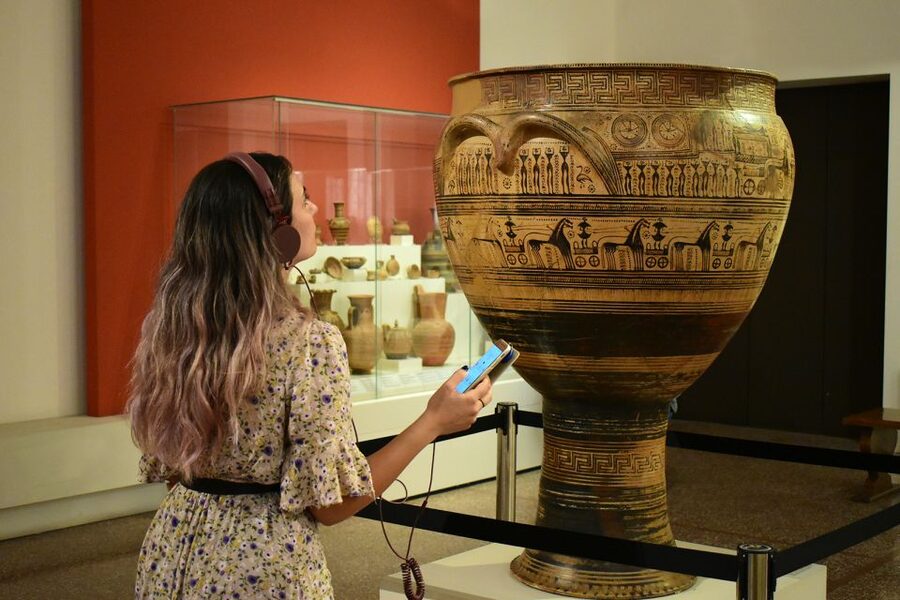
This experience is flexible, with suggested durations from about 45 minutes up to 4 hours depending on starting times. In real life, I would plan around 2 hours if you want a solid highlights experience with time to breathe.
Some visitors finish around 1.5 hours, especially when they focus on what the audio covers and do not get side-tracked. Others spend 3 hours or more, particularly when they linger over sculptural rooms or keep returning to certain eras.
My practical suggestion: treat the audio tour as a backbone, then add buffer time. If the museum feels maze-like, that buffer helps you recover without feeling rushed. Save a chunk for the later rooms, because it’s easy to burn energy early and then feel hurried halfway through.
The On-Site Cafe and Inner Courtyard Break, Worth Building In
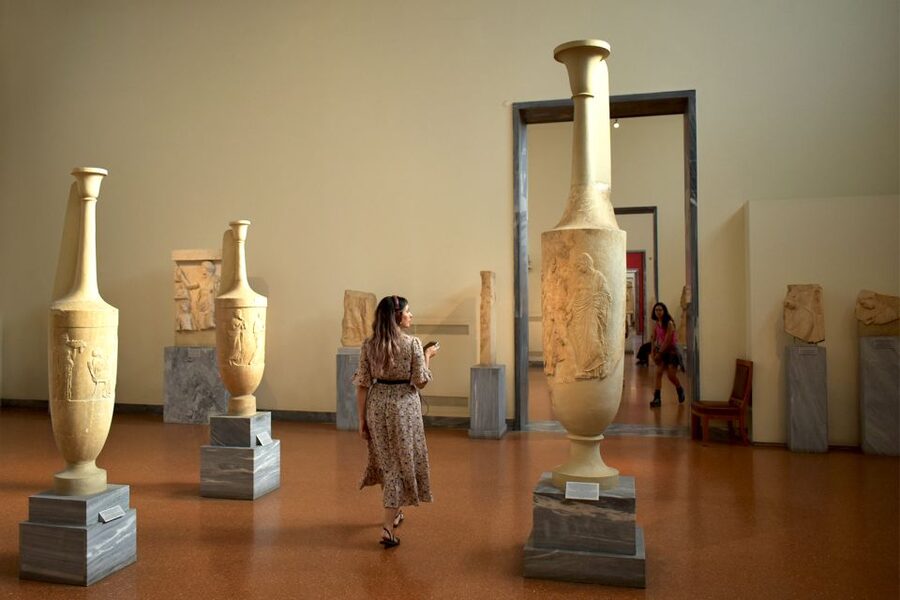
A big quality-of-life win here is the cafe and the chance to step out into an inner courtyard feel. There’s a restaurant or cafe on the ground floor, and one visitor specifically liked the atmosphere, greenery, and art there.
This break does more than stop your feet from hurting. It helps your brain reset, which makes the second half of the museum more satisfying. If you plan to do a longer visit, schedule your break after you’ve hit the most intense “anchor” periods.
And if you are visiting in hot months, you’ll be glad the museum has working air conditioning, which helps turn a sweaty slog into a manageable walk.
Navigation Tips in a Museum That Can Feel Like a Maze
Even with signage and a path, the museum can be disorienting. It’s large, room-to-room, and easy to lose track of where you came from, especially if you take a long look at one object and forget the order of rooms.
A simple fix: use the offline maps included with the audio tour, and download everything before arrival. If you like having a second layer of help, also save or review a museum map ahead of time, so you can get your bearings fast if you drift.
If you want to avoid getting lost, do your anchor listening stops first, then switch to a looser browsing mode once you know the general direction of your route.
Price and Value at About $31, What You’re Really Buying
At around $31 per person, you are paying for two main benefits: pre-booked entry and an audio experience that works offline. You are not buying a live guide, a smartphone, or headphones, so the “value” comes down to whether audio narration is how you like to learn.
If you prefer reading wall labels, you can still do that. But the audio tour is a time saver because it narrows the museum’s overwhelming scale into a prioritized path.
Also, since the audio can be used repeatedly and at any time before or after your visit, you can turn this into a more flexible study tool. If you want to remember what you saw later in the day or even after you leave Athens, audio replay is a practical perk.
The only value wobble is that the audio tour may not cover every exhibit in the museum. If your goal is to read everything and see everything, you might feel like the audio is only a partial guide. Still, most people come out feeling they hit the major highlights without losing an entire day.
What’s Included and What You Must Bring
Here’s the practical checklist. Included is a regular entry ticket and the self-guided smartphone audio tour with offline content, plus free time to explore.
What you must handle yourself:
- Bring your own smartphone (Android or iOS compatibility matters)
- Bring headphones
- Bring a charged phone
- Bring your own time and walking shoes, since transportation and food are not included
No live guide means no one is standing there waiting to answer your questions. That’s fine if you like self-paced museums, and it’s not ideal if you want interaction.
Compatibility Notes That Can Save You Real Headaches
The audio tour is not compatible with certain devices. It’s not compatible with Windows phones, iPhone 5/5C or older, iPod Touch 5th generation or older, iPad 4th generation or older, or iPad Mini 1st generation.
Before you book, double-check your phone model. If you are traveling with an older device, plan to borrow a more recent phone or adjust your approach, because the whole point is offline audio on your phone.
Also, when the audio is not working, the experience becomes just a standard museum ticket. It can still be great, but you will lose the guided context you paid for.
Who This Works Best For in Athens
This is a strong fit if you want the museum’s big objects and major stories, without being tied to a group tour pace. It’s also a good fit if you like learning in short, structured segments while you walk.
I think it’s especially good for:
- Solo travelers who want direction but still want freedom
- Couples and friends who want to stay together while moving at their own speed
- People who want a reliable “highlights path” through a big museum
If you want hands-on interaction, or you enjoy museum days that are purely reading-based with no audio, you might not get as much value from the narration.
Should You Book This National Archaeological Museum Ticket and Audio?
Book it if you want an easy entry plan plus an offline audio guide that helps you focus on the museum’s most important eras and objects. At about $31, it’s a decent value when you factor in the ticket convenience and the fact that you can reuse the audio before and after your visit.
Skip it or reconsider if you have a phone that is not compatible with the audio tour, or if you strongly prefer a low-tech museum experience with only reading. Also plan extra wandering time if your goal is truly seeing everything, because the audio tour is designed to hit the highlights rather than act as a full-room-by-room catalog.
FAQ
How long does this experience take?
Duration ranges from about 45 minutes up to 4 hours, depending on the option and starting times available.
What languages are included in the audio guide?
The audio tour is available in English, French, German, Greek, Italian, and Spanish.
Does this include a live guide?
No. This option is self-guided, so there is no live guide included.
What phone devices are compatible with the audio tour?
The audio tour works with Android and iOS, but it is not compatible with Windows phones, iPhone 5/5C or older, iPod Touch 5th generation or older, iPad 4th generation or older, or iPad Mini 1st generation.
Can I bring pets into the museum?
Pets are not allowed. Assistance dogs are allowed.
Is the ticket refundable if my plans change?
No. This activity is non-refundable.
If you want, tell me what month you’re visiting and whether you prefer sculpture first or pottery first, and I can suggest a simple order for using the audio tour so you do not lose time inside the museum.
More Audio Tours in National Archaeological Museum Of Athens




Marble Under Roof



Museums, compared.

Acropolis, Parthenon & Acropolis Museum Guided Tour
Read our review →
The Acropolis, Parthenon & Acropolis Museum Guided Tour
Read our review →
Mythology of Delphi, Museum and Arachova Guided Tour
Read our review →Acropolis, Parthenon & Acropolis Museum Guided Tour
Read our review →
Acropolis monuments & Parthenon Walking Tour with Optional Acropolis Museum
Read our review →
Athens All Included: Acropolis and Museum Guided Tour with Ticket
Read our review →
Combo: Acropolis & Acropolis Museum with Optional Tours
Read our review →
Acropolis Museum Ticket with optional Audio Guide
Read our review →Browse the lists this tour appears in