
Reviewed · THINGS TO DO IN ATHENS
Athens: Women in Ancient Greece
Women change how you see Athens. This 2-hour Athens walking tour turns the city into a story about Greek women, guided by Maelle and told in a way that feels like a conversation, not a lecture, with the spotlight on women like Sappho and Aspasia.
What I like most is how you get a female perspective on major sites you thought you already knew, including the Ancient Agora and Pnyx, plus those myth-borne role models like Athena and Penelope. One thing to plan for: it involves walking and steps, so it is not a good fit if you have mobility limits or heart issues.
In This Review
- Key highlights to look for
- Why this Women in Ancient Greece walk matters in Athens
- Start at Monastiraki, right by the Church of the Virgin Mary
- Hadrian’s Library: where women’s stories meet the stone
- Plaka streets: the easy way to understand Athens daily life
- The Gate of Athena Archegetis: myth as a social clue
- A secret stop that adds texture to the story
- Ancient Agora: seeing power through women’s roles
- Pnyx and early democracy: the woman-question you cannot ignore
- Viewpoints on the way: small breathers with big rewards
- Filopappou Hill: closing with a scenic sense of scale
- What stories you’ll hear about women, myth, and defiance
- The guide, Maelle, and what makes the tour feel personal
- Walking and comfort notes, so you enjoy the full 2 hours
- Tickets are not included, so focus on exterior views and storytelling
- Price and value: why $88 makes sense for this style of tour
- Who should book this tour, and who might skip it
- Should you book Athens: Women in Ancient Greece?
- FAQ
- Where do I meet the guide for Women in Ancient Greece?
- How long is the Athens: Women in Ancient Greece walking tour?
- Is the tour only outside the archaeological sites?
- What is included in the price?
- What languages is the guide available in?
- Is it suitable for people with mobility or heart conditions?
- What should I bring for the walk?
- Can I cancel for a full refund?
Key highlights to look for
- Monuments with a new lens: the Agora and Pnyx explained through women’s lives and roles
- Myth connected to daily reality: Athena, Penelope, Demeter, Pandora, and how stories shaped expectations
- Women who refused the rules: Sappho, Aspasia, and Agnodice as real examples of defiance
- A city-walk built around Athens streets: lively neighborhoods, not just ruins
- A guide who talks back: Maelle keeps it interactive, with time for questions and discussion
- Heat-aware pacing: the route includes breaks in shade when it gets hot
Why this Women in Ancient Greece walk matters in Athens

Most Athens tours hit the big male names and call it a day. This one does the opposite. You walk past famous stone and then ask a different question: what did women experience, control, hope for, and fear?
I love that you are not stuck with classroom history. You get stories that connect myth to everyday life, then test those ideas as you watch where you are standing. It changes how you read the city fast, especially around the Ancient Agora area and the hill viewpoints.
The price, $88 per person for about two hours, is reasonable for a guided, focused tour that does not rely on ticketed museum time. It is not a “see everything” pass, but it is strong value if you want depth in a tight window and you are open to thinking while you walk.
More Things to Do in Athens
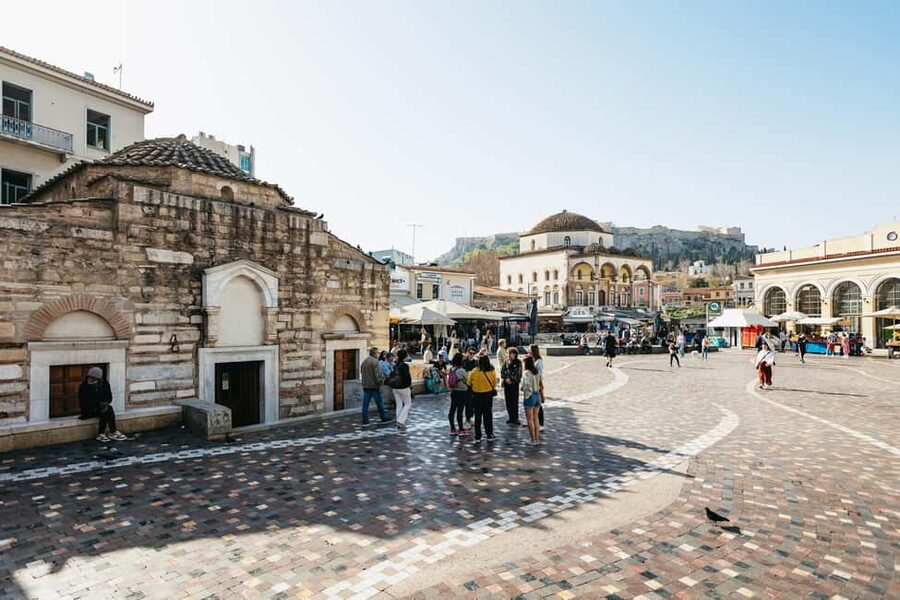
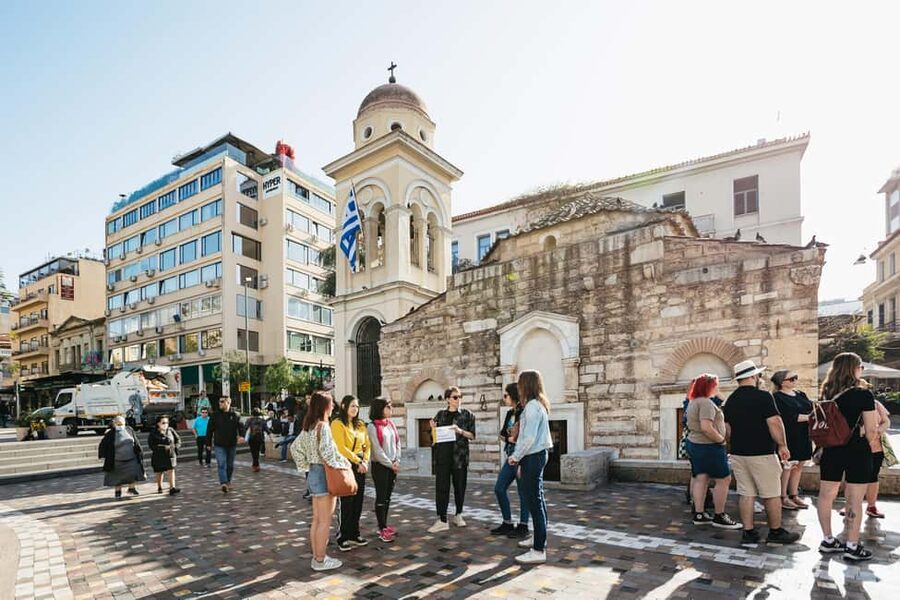
Start at Monastiraki, right by the Church of the Virgin Mary
You meet your guide at Monastiraki Square, in front of the Church Pantanassa. Your guide will be holding a sign that reads Women in Ancient Greece, which is an easy visual anchor when you arrive.
The first part of the walk matters because it sets the tone. You are not just being shown sights, you are being given a framework for how to interpret what you see. Within minutes, the city starts feeling like a lived-in place where women had jobs, limits, and influence.
Practical tip: Monastiraki is busy, and early minutes can be a little hectic. Give yourself a few extra minutes so you are not rushing your meeting point.
Hadrian’s Library: where women’s stories meet the stone
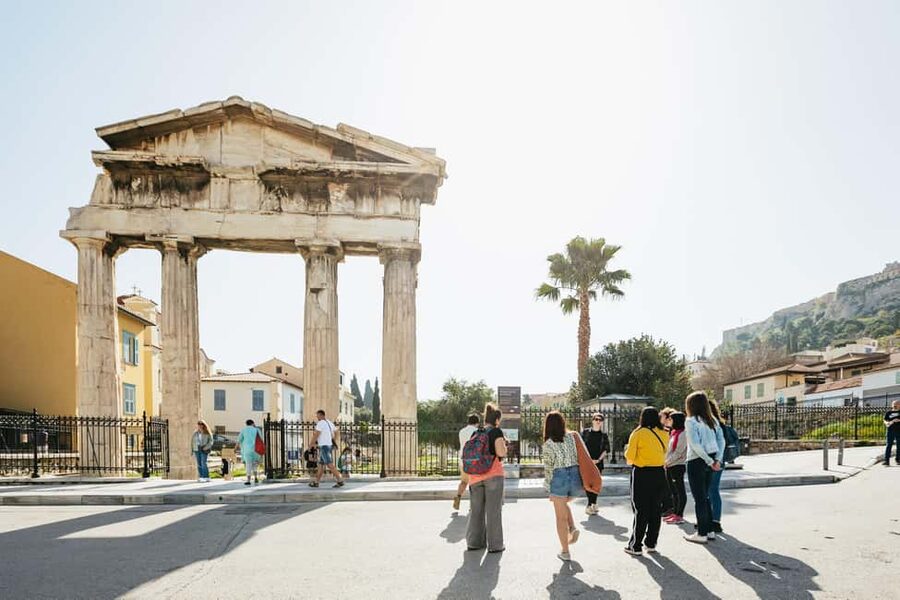
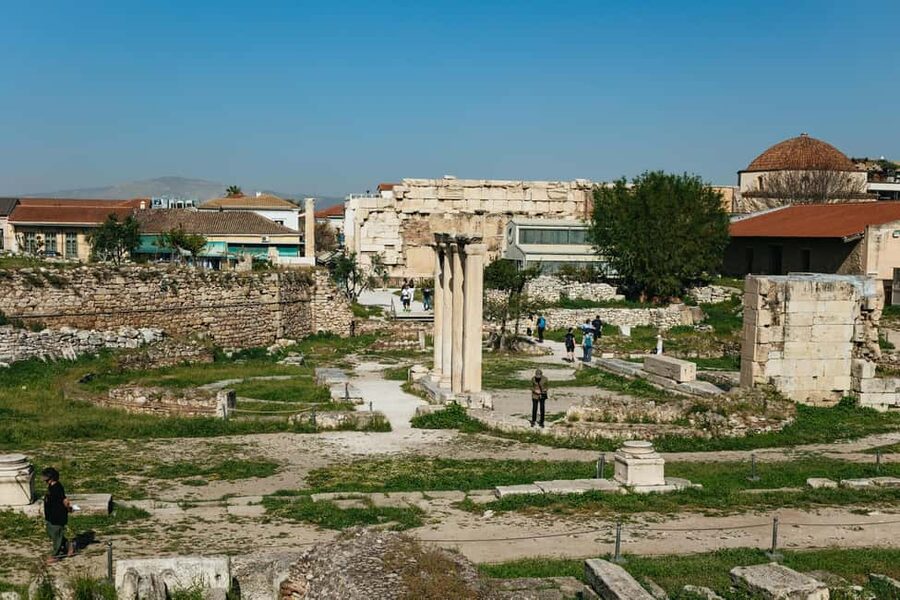
After the Monastiraki start, the walk includes a stop by Hadrian’s Library. Even if you only see it from the outside, the site is worth it because the library stands for learning and civic life, the kinds of spaces people usually assume were purely male.
Here is the clever shift you get on this tour. Instead of treating “women in ancient Greece” as a side topic, you treat it like a lens for the whole city. Myth and social roles show up early, so the background stops feeling abstract.
What to watch for: as your guide connects places to stories, try to notice what is emphasized in each location. Sometimes it is not the monument itself, it is what the monument suggests about who belonged where.
Plaka streets: the easy way to understand Athens daily life

Plaka is next on the route, and it works as a mental reset. You are already walking through ancient context, but Plaka helps you absorb the human scale of the city.
This is also where the tour’s best habit shows up. Your guide keeps returning to day-to-day life, not just famous legends. Greek myth does not float above the real world here. It explains social expectations, then shows where women pushed back.
Small consideration: Plaka can be sun-heavy in summer. Bring water and be ready for short stretches without shade.
The Gate of Athena Archegetis: myth as a social clue
You pass the Gate of Athena Archegetis, and this is where the tour’s myth-to-society approach clicks. Athena is not only a goddess to name on a map. Your guide uses Athena to show how mythology shaped how people talked about wisdom, strategy, and the kinds of behavior expected from women.
You also get a practical sense of how myths worked like cultural rules. In many stories, goddesses model ideals, but real women live under imperfect versions of those ideals.
If you like connections and comparisons, this part rewards you. The tour keeps nudging you to ask what the symbol meant to ordinary people, not just what it meant in art.
One cove over in Athens:
- The Acropolis, Parthenon & Acropolis Museum Guided Tour
★ 4.7 · 8,493 reviews - Athens: Cape Sounion & Poseidon Temple Sunset Half-Day Trip
★ 4.8 · 8,241 reviews - Acropolis: Premium Acropolis and Parthenon Guided Tour
★ 4.8 · 5,208 reviews - Athens: Mythology of Delphi, Museum and Arachova Guided Tour
★ 4.7 · 5,102 reviews
A secret stop that adds texture to the story
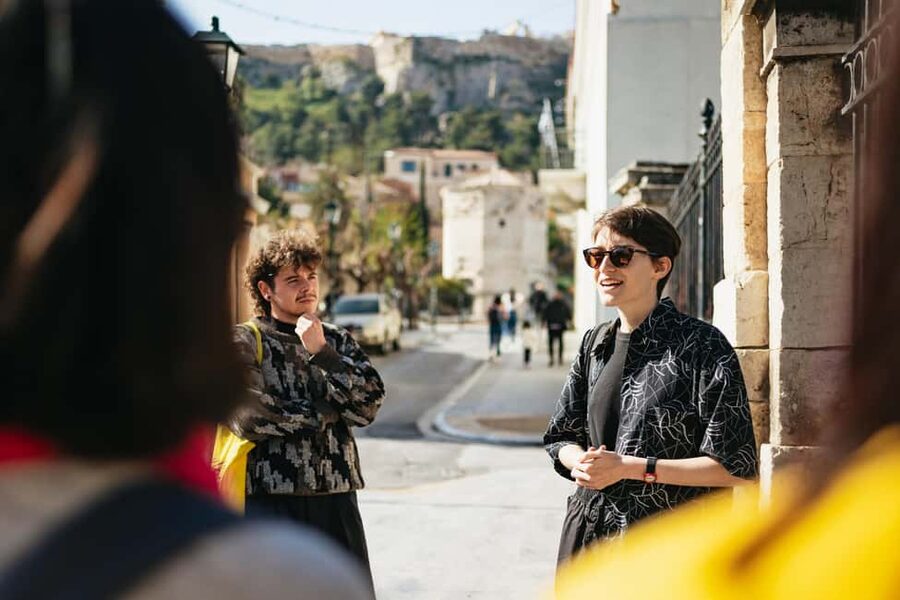
Midway through the walk, there is a secret stop. That sounds vague on purpose, and it is one of the reasons the tour feels more personal than a standard checklist.
This pause usually does something useful: it slows you down so the guide can connect a story to the emotional feel of the street. If you start to think of women in ancient Athens as only “famous names,” this is where you regain the sense of ordinary lives, routines, and local spaces.
Drawback to know: since it is called a secret stop, you cannot plan a specific photo or landmark beforehand. If you only care about the most famous ruins, you might prefer tours with fixed, obvious attractions.
Ancient Agora: seeing power through women’s roles

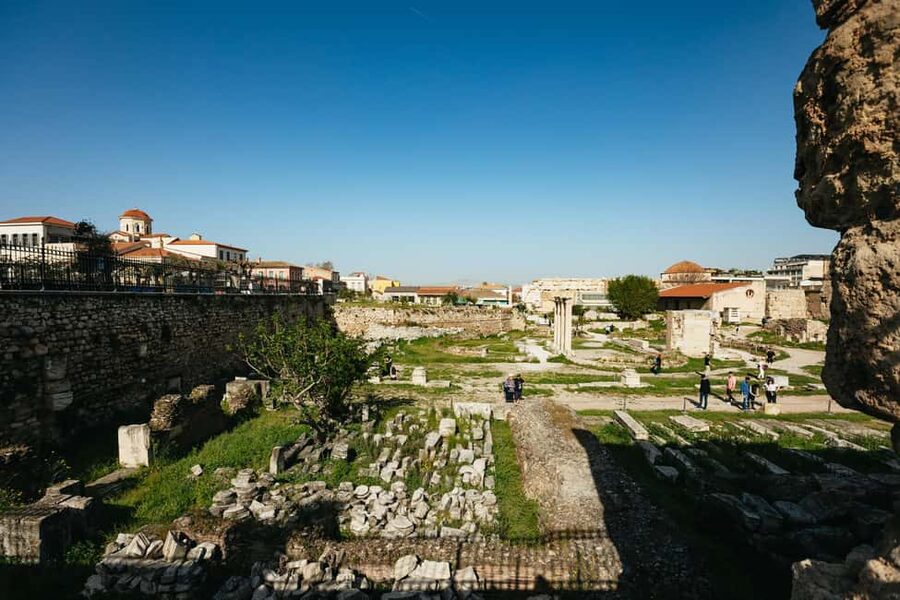
Then you reach the Ancient Agora of Athens, one of the city’s biggest “power” zones. Most visitors think only of politics and speeches. This tour asks you to look at power through women’s lives.
You hear how women’s roles were shaped by mythology, but you also learn the reality of what that meant socially. Even when women were not fully in public decision-making, they were still part of civic life through family, religious practice, labor, and household influence.
What I like here is the way your guide handles contrasts. You get both the ideals and the restrictions, which prevents the story from turning into a simple slogan. It also makes the Agora feel less like a stone stage and more like a lived system.
Tip: take a few extra seconds to look around before you listen. The guide’s explanations land better when you already know where you are standing relative to major spaces.
Pnyx and early democracy: the woman-question you cannot ignore
From the Agora area, the route heads toward Pnyx, where early democratic votes were cast. This is a big moment because it forces a tough but important question: who got to vote, who got to speak, and who stayed outside the formal process?
The tour does not pretend women were equal participants in that system. Instead, it uses Pnyx as a springboard into what women were expected to do and what some women managed to do anyway.
And yes, your guide brings in famous names like Sappho and Aspasia, but she also frames them in their social context, so you understand why their stories were shocking when they happened. That is the point. These figures are not only interesting, they are evidence of pressure and possibility.
If you love civic history, this is where you get the most “think while you see” payoff.
Viewpoints on the way: small breathers with big rewards
There’s a short viewpoint section during the walk, and it matters more than you might expect. Athens is a city of layers, and a viewpoint helps you reset your orientation.
Use this time to look back over the route you just walked. When you later see the Acropolis area from a distance, your brain will connect the dots faster.
This is also the moment to sip water and cool down a bit, especially in hotter months.
Filopappou Hill: closing with a scenic sense of scale
The tour ends at Filopappou Hill, where you get scenic views and a final round of reflection. It is a strong finish because the city looks different when you are leaving it with women’s stories in your head.
You are not just tired from walking. You feel like you understand the city’s layout as a social map. Hills and sightlines start to mean something, and that makes Athens feel more human.
You finish with drop-off locations listed near Rovertou Galli 69, at a kiosk. If you plan dinner afterward, pick something walkable from that area rather than trying to cram in a cross-city trip.
What stories you’ll hear about women, myth, and defiance
This tour is built on narratives, and the highlights are specific. You hear about myth and goddesses like Athena, Penelope, Demeter, and Pandora, and how those stories shaped the societal role of women.
You also hear about women who did not fit expectations, including:
- Sappho, known as a poet who challenged cultural assumptions
- Aspasia, linked with intellectual influence
- Agnodice, associated with learning that defied norms
A particularly memorable theme is the blend of legend with plausible social consequences. Your guide also brings in stories like kidnapped Spartan girls, and you get mention of a mysterious women’s festival in Athens. Even when details are legendary, the point stays practical: the culture treated women’s lives as powerful enough to mythologize.
One of the best things from the guide side is tone. Maelle keeps the mood thoughtful and engaging. People report that it does not feel rehearsed or stiff. You get encouraged to ask questions, which helps you make the story stick.
The guide, Maelle, and what makes the tour feel personal
Maelle is the star here. Over and over, people mention her ability to make the two hours feel quick, because she keeps the pace lively and the explanations clear without sounding like a textbook.
You will likely notice three strengths during your walk:
- She answers questions instead of rushing past them
- She separates history from legend so you know what is symbol versus fact
- She connects ancient themes to modern reflections, without turning the tour into a lecture
That combo is why this tour gets such high ratings. It is not just “content.” It is delivery.
Bonus practical detail: in hot weather, your guide helps you stay comfortable by finding shade to stand in. That is not guaranteed on every walking tour, so it is worth valuing.
Walking and comfort notes, so you enjoy the full 2 hours
This is a walking tour with steps. It may not be suitable for people with health or mobility difficulties, and it is not for wheelchair users or people with heart problems.
So plan like you are going to do a real walk, even if the duration is only two hours. Wear comfortable shoes. Bring sunscreen, water, and a sun hat, especially in summer.
The best approach is mental too. This tour rewards attentive listening. If you are constantly distracted by discomfort, you will miss what makes it special.
Tickets are not included, so focus on exterior views and storytelling
One practical point: tickets to archaeological sites are not included. That means you should expect exterior viewing rather than going inside major ticketed areas.
That is totally fine because the tour is designed around interpretation. The guide builds context as you look, so the lack of entry tickets is less of a problem than it would be on a museum-heavy itinerary.
If you want interior museum time, pair this with another activity that includes entry tickets. For example, you might do this walk first to get your bearings, then explore the Acropolis area afterward with a women’s-lens in your head.
Price and value: why $88 makes sense for this style of tour
At $88 per person for about two hours, you are paying for a specialized guide, a focused route, and stories that are not usually part of a general Athens overview.
Here is how I evaluate value:
- You get a true theme tour, not just a route with a topic label
- You see key Athens sites from outside while your guide gives context that changes how you interpret them
- You get time for questions, which you do not always get on faster, more crowded tours
- A small gift is included at the end, and at least some groups receive postcards themed to the women discussed
Is it the cheapest thing you can do in Athens? No. Is it a smart use of time if you want a distinctive perspective that makes the city feel new? Yes, especially if you are on a short schedule.
Who should book this tour, and who might skip it
Book this if you:
- Want a different angle on Athens, beyond the usual male-centered storytelling
- Enjoy myth that connects to real social life
- Like interactive guides who answer questions and guide discussion
- Have limited time and want a focused two-hour walk that still feels substantial
You might consider skipping if you:
- Only want museum entrances and ticketed sites
- Get impatient with storytelling that asks you to think, not just take photos
- Cannot do a walking route with steps
Should you book Athens: Women in Ancient Greece?
If you want Athens to feel personal, not just historic, I think you should book. This is one of those tours where the theme is not a gimmick. It genuinely changes what you notice in the Agora, Pnyx, and the surrounding streets.
My strongest recommendation is for couples, friends, and solo travelers who enjoy asking why the record looks the way it does. If you are bringing teens or adult friends, it is also a great choice because it can be empowering without being naïve.
One last check before you book: confirm you are comfortable with walking and steps. If that is good to go, you will leave with a sharper mind and a warmer view of Athens, one where women are not an afterthought.
FAQ
Where do I meet the guide for Women in Ancient Greece?
Meet your guide on Monastiraki Square in front of the Church Pantanassa. Your guide will be holding a sign that says Women in Ancient Greece.
How long is the Athens: Women in Ancient Greece walking tour?
The tour runs for about 2 hours.
Is the tour only outside the archaeological sites?
Yes. Tickets are not included, and you will have exterior views of archaeological sites.
What is included in the price?
A guide, a walking tour, a private tour if that option is selected, and a small gift are included.
What languages is the guide available in?
The live tour guide is available in English and French.
Is it suitable for people with mobility or heart conditions?
No. It includes steps and is not suitable for people with mobility impairments, wheelchair users, or people with heart problems.
What should I bring for the walk?
Bring sun hat, sunscreen, and water.
Can I cancel for a full refund?
Yes, you can cancel up to 24 hours in advance for a full refund.
New pins on the Athens chart
- Mycenae, Epidaurus, Nafplio, Corinth Canal Private Full Day Trip From Athens★ 5.0 · 83 reviews
- From Athens: Mycenae, Epidaurus & Nafplion Private Tour★ 4.9 · 83 reviews
- Delphi with Professional English Guide and Transportation★ 4.5 · 84 reviews
- Acropolis of Athens, Ancient Agora and the Agora Museum Tour★ 5.0 · 86 reviews
- Athens: 2.5-Hour Private City Tour Off the Beaten Track★ 4.7 · 86 reviews
- Thermopylae The battle of the 300 Spartans & Delphi Day Tour★ 5.0 · 86 reviews
Things to Do in Athens, compared.
Acropolis & up to 5 Archaeological Sites Combo Pass
Read our review →
Acropolis Ticket with Optional Audio or Live Guide
Read our review →
Acropolis, Parthenon & Acropolis Museum Guided Tour
Read our review →
The Acropolis, Parthenon & Acropolis Museum Guided Tour
Read our review →
Cape Sounion & Poseidon Temple Sunset Half-Day Trip
Read our review →
Mythology of Delphi, Museum and Arachova Guided Tour
Read our review →