
Reviewed · ANCIENT CORINTH TRIPS
Biblical Corinth: St. Paul and His Letters to the Corinthians
Mars Hill feels real fast. This private day trip strings together Paul’s Athens and Corinth, so the places connect like chapters. You’ll also get your own pacing and real WiFi-on-board help for tickets and planning.
I love how the route mixes big-name sights with Paul-specific stops. You’ll stand on Areopagus Hill, often called Mars Hill, then later visit Corinth sites tied to the letters you read in a quiet, focused way, not in a rushed sprint.
One thing to watch: your driver is not a licensed guide for inside the ruins. You can still get fluent commentary, but if you want someone inside Ancient Corinth, you’ll need to request that separately, and you should budget entrance fees where they apply.
In This Review
- Key points to know before you go
- A St. Paul day trip that actually connects the dots
- Private transportation: what you gain (and what you must plan)
- Areopagus Hill to Corinth: Mars Hill before you hit the ruins
- Corinth Canal and the Diolkos: seeing Paul’s trade world
- Isthmia, Poseidon, and the games: faith in the middle of public life
- Isthmia Museum: a small stop that adds a big layer
- Ancient Corinth and the bema: where faith met Roman procedure
- Kenchreai port, Apostolou Pavlou, and Paul’s onward journey
- Akrokorinthos views and lunch that actually refuels you
- Price and value: what $218.43 buys you, and what costs extra
- Who should book this St. Paul Corinth route?
- Should you book it?
- FAQ
- How long is the tour?
- Where do you get picked up?
- Is this a private tour?
- Is WiFi available during the trip?
- What language is the tour offered in?
- Is lunch included?
- Do I need to pay entrance fees?
- Does the driver enter the archaeological sites with you?
- Can the pickup time be adjusted?
- What is the cancellation rule?
- What ticket format will I use?
Key points to know before you go
- Mars Hill plus Corinth in one day keeps Paul’s story in order, not scattered across trips.
- Private pacing means you can linger at viewpoints like Akrokorinthos without the “next stop” pressure.
- Canal and Diolkos engineering stops make Paul’s trade world feel physical, not abstract.
- Isthmia connects athletes and faith through the Poseidon sanctuary and the Paul-tentmaker angle.
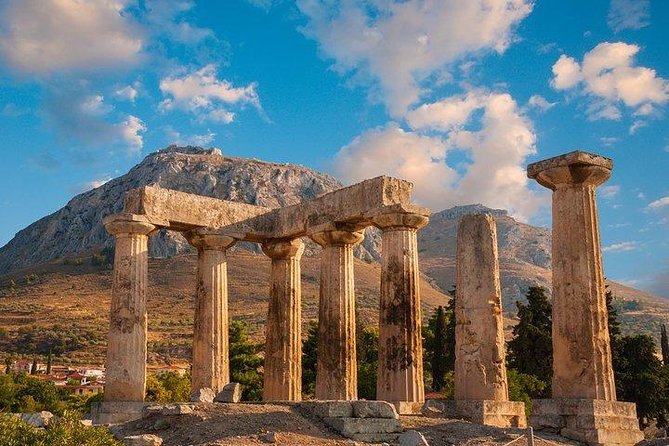
- The bema and Temple of Apollo place Gallio’s decision and the skyline Paul would have recognized right in front of you.
- Good-value add-on lunch is available if you choose the Greek traditional food option.
A St. Paul day trip that actually connects the dots

Corinth is one of those places where people expect a list of ruins. This tour gives you the bigger story: how a Roman city, a Greek trade crossroads, and a working faith community all collided in Paul’s lifetime.
What makes this day feel different is the ordering. You start in Athens with Areopagus Hill and then you drive through the Isthmus, so the geography explains the theology. Later, when you reach Corinth and stand by the bema, it feels like you’re not just seeing stones, you’re seeing a turning point in the spread of Christianity.
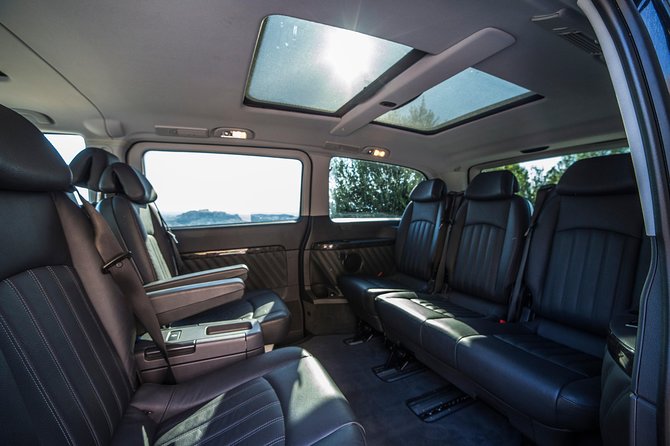
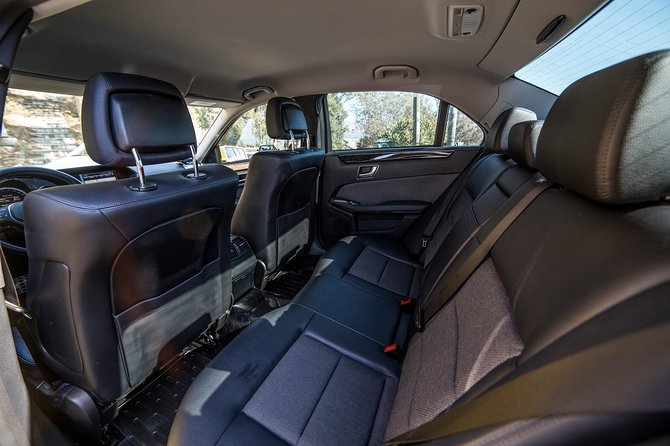
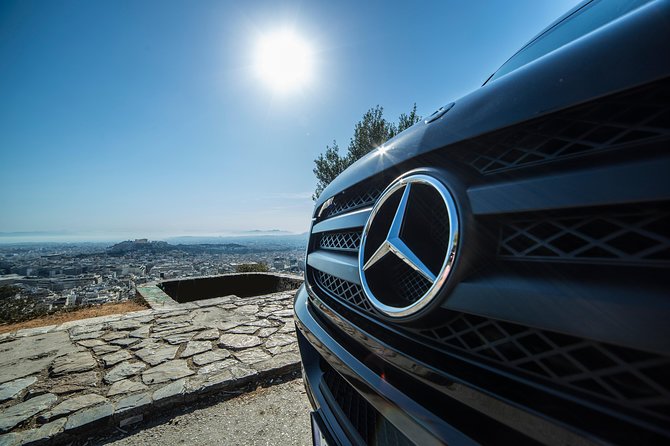
And yes, you get the practical perks that make a long day easier. You’ll travel in an air-conditioned vehicle with onboard WiFi, bottled water, and pickup and drop-off from your hotel or port.
More stops at ancient Corinth:
Private transportation: what you gain (and what you must plan)
This is a private tour, so only your group rides along. That matters on a day like this because the route includes walking segments, stairs, and viewpoints. Instead of being pulled by a large group, you control the pace.
Your driver is the key personality. Many drivers on this route have strong English and can explain what you’re seeing while you’re on the move and between stops. Names that have shown up include Alex, George, Stephanos, Panos, Kostas, Visili, and Spiros. (You might have one of these, depending on availability.) Expect clear explanations from the car, and time to ask questions.
The main trade-off is licensing. The included service does not list a licensed tour guide entering the archaeological sites with you. You can still learn a lot from your driver, but if you want someone walking with you inside Ancient Corinth and other sites, you’ll need to arrange that on request. This is a big reason some people feel thrilled and some people feel slightly disappointed if they assumed full guided-site access was included.
Areopagus Hill to Corinth: Mars Hill before you hit the ruins
The morning starts with a walk through the sacred area around the Acropolis. Then you focus on Areopagus Hill, also known as Mars Hill, where Apostle Paul delivered one of his most famous sermons.
This stop works because it sets the tone. Athens was a place where ideas were argued in public. Standing there, you can connect the dots between Greek philosophy and Paul’s message. He addressed the council and introduced Christianity by challenging the city’s prevailing beliefs, including his famous reference to the unknown God.
It’s also a smooth starter in terms of logistics. This part is listed as a short, admission-free stop, so you can spend your energy on absorbing what the site meant, rather than juggling tickets.
Corinth Canal and the Diolkos: seeing Paul’s trade world
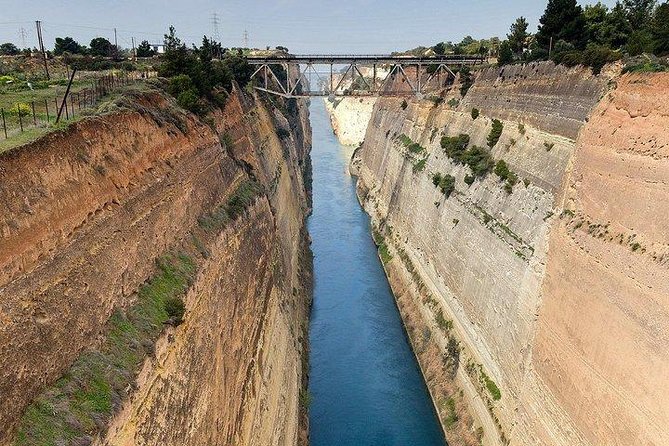
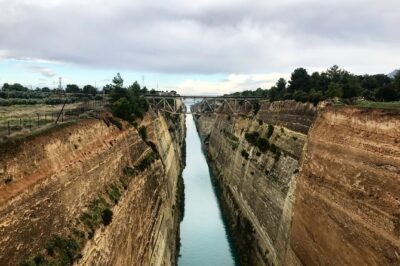
On the drive from Athens toward Corinth, you stop at the Corinth Canal. Even if you’ve seen photos, it hits differently up close. The views from higher ground give you the clearest sense of what the canal does to the coastline and how narrow that passage really is.
The canal is a sea-level cut with no locks, joining the Gulf of Corinth on one side to the Saronic Gulf on the other. It’s short, around 6.4 kilometers long, but it’s only about 21.4 meters wide at the base. Modern ships can’t pass through easily, which is a reminder that this is an ongoing story in engineering, not a perfect solution.
Then you’ll visit the Diolkos, an older concept that predates the canal. The Diolkos was a roadway built for dragging ships overland across the Isthmus, connecting the two seas. It’s a great stop because it makes the maritime route feel layered in time. When you later see how Paul’s story moved through ports and cities, you’ll have a mental model of how people and goods actually traveled.
Isthmia, Poseidon, and the games: faith in the middle of public life
Next comes Isthmia, a sanctuary area tied to Poseidon and the famous Isthmian Games, second in importance only to the Olympic Games. If you’ve ever wondered how Christianity grew without living in a bubble, this is your answer.
Isthmia wasn’t quiet or private. It pulled crowds from across the Greek world. That matters for Paul, because the Bible notes his time in the area, and he’s believed to have worked as a tentmaker. Even if you don’t treat that as a checklist item, the setting explains why Paul could speak to so many people. Big gatherings create big conversations.
You’ll also spend time at the archaeological site areas associated with the games and sanctuaries. Expect to see the Temple of Poseidon area and the nearby stadium setting where the games happened. Nearby is the Sanctuary of Palaimon, devoted to a patron tied to sailors, which reinforces the port and travel theme behind Paul’s movements.
There’s also a theatrical stop tied to the games’ musical contests. You’ll notice Roman-era mosaics with sea creatures and Dionysian mythology. That contrast is one of the most memorable parts of the day: Paul’s message is about Christ, but the cultural stage around it was full of other gods and stories.
More Things to Do in Athens
- Athens: Acropolis & up to 5 Archaeological Sites Combo Pass
★ 4.2 · 13,904 reviews - Athens: Acropolis Ticket with Optional Audio or Live Guide
★ 4.2 · 11,055 reviews - Athens: Acropolis, Parthenon & Acropolis Museum Guided Tour
★ 4.8 · 9,316 reviews - The Acropolis, Parthenon & Acropolis Museum Guided Tour
★ 4.7 · 8,493 reviews
Isthmia Museum: a small stop that adds a big layer
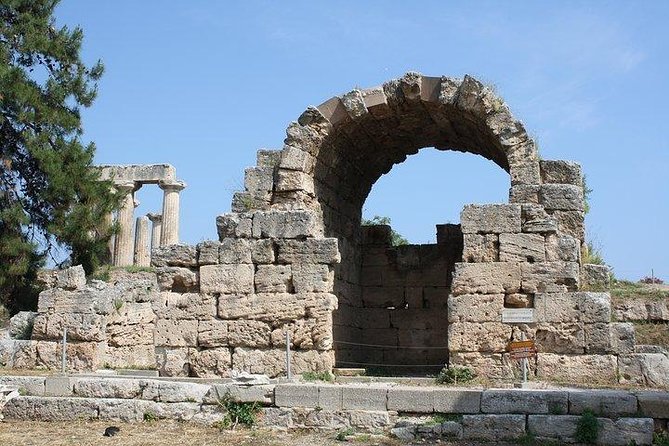
The Archaeological Museum of Isthmia is a shorter visit, but it’s the kind of stop that turns scenery into evidence. You’ll see artifacts connected to the sanctuary environment and the games context.
One standout detail mentioned in the available tour description is glass panels from Kenchreai, the nearby port connected to Paul’s travel. When you link that museum object to the port stop later in the day, Paul’s route starts to feel traced, not guessed.
The museum’s entrance fee is not included, so plan for it. It’s listed separately from the free stops.
Ancient Corinth and the bema: where faith met Roman procedure

When you reach Ancient Corinth, you’re stepping into one of the most important cities for early Christianity. Corinth sat on a strategic isthmus, thriving on trade, religion, and political influence.
Paul spent more than a year and a half there, helped establish a Christian community, and later wrote letters to the Corinthians that address real moral and spiritual challenges. Even if you’re not quoting verses, you’ll feel why those letters were necessary: Corinth was busy, diverse, and complicated.
A highlight is the bema, the judgment seat area associated with the case where Paul was brought before Proconsul Gallio. The story you’ll have in mind is that Gallio refused to judge the matter, viewing it as an internal religious dispute. That refusal let Paul keep working rather than getting buried under Roman legal process.
Seeing the bema in person gives the story weight. It’s easier to understand why early Christianity spread the way it did when you can picture the line between local religious life and Roman authority.
You’ll also visit the Temple of Apollo at the heart of Ancient Corinth. Built around 560 BC, it’s a major skyline element with Doric architecture. It’s a visual reminder of the polytheistic world Paul entered. When you look at a place like this right after thinking about Paul’s message, the contrast hits hard in a good way.
Kenchreai port, Apostolou Pavlou, and Paul’s onward journey
A key section of the route focuses on the eastern port area, tied to ancient Cenchreae. The stop at Kenchreai connects to Paul’s second missionary journey and the moment when he and partners sailed for Syria.
You’ll hear about the vow moment described in Acts: Paul cut his hair before departure, likely connected to a Nazirite-style vow. Even without turning it into a deep theological argument, it’s a human detail that makes the journey feel grounded.
This port area also connects to Paul’s letters. In Romans, Paul mentions Phoebe, a trusted servant, a diakonos, connected to the church in that region. When you hear this and then walk through the setting, you get a stronger sense that Paul’s letters were tied to actual people in real places, not just distant ideas.
You’ll also visit a church dedicated to Apostle Paul, Apostolou Pavlou, which stands as a tribute to Paul’s time in Corinth around 51 to 52 AD. It’s not meant to replace the ruins. It’s a different kind of spiritual marker that helps you end the day with something reflective.
Akrokorinthos views and lunch that actually refuels you
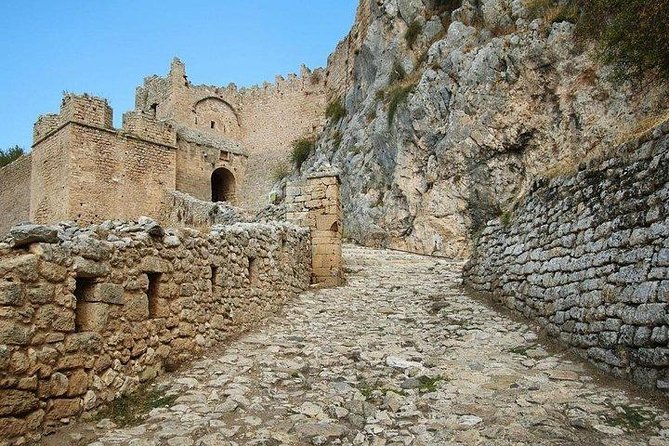
Akrokorinthos, the fortress above Ancient Corinth, is where the day turns into a real physical experience. You’ll ascend its ancient paths and walls and end up with a commanding overview of the area.
This stop is worth it for one simple reason: scale. Corinth and the isthmus stop feeling like a map and start feeling like a place where you could look out and plan, preach, and travel. It’s also where the walking effort pays off with views that make the earlier canal and port stops make more sense.
Then there’s lunch in Corinth at a traditional seaside Greek taverna. If you select the option with Greek traditional food, lunch cost is included. If you didn’t select that option, you should plan for a paid meal instead. Either way, aim to eat well, because it’s an 8 to 9 hour day and you’ll want energy for the later walking and museum time.
Price and value: what $218.43 buys you, and what costs extra
At about $218.43 per person, you are paying mainly for private transport, onboard comfort, and a driver who can explain the story as you travel. For most people, that is the biggest value piece. Athens to Corinth is a long ride, and doing it privately saves time and frustration.
Two things can change the effective price though:
- Entrance fees for Ancient Corinth and the Archaeological Museum of Isthmia are not included. Those are listed as €15 per person, and you can buy them on-site.
- A licensed guide inside the sites is not included. The included commentary is from the driver, who does not enter the archaeological sites.
If you want a fully guided museum-and-ruins experience with commentary inside every site, you should budget for possible added guide time. If you’re happy with a strong driver briefing plus self-guided time in the ruins, this price can feel fair for the amount of ground you cover.
Also note that this tour is typically booked well ahead on average, around 73 days. If your dates are fixed, don’t wait until the last minute.
Who should book this St. Paul Corinth route?
Book it if you want:
- A Paul-focused day that connects Athens, the Isthmus, and Corinth in one logical flow.
- A private format that lets you slow down at places like Akrokorinthos and spend time looking instead of rushing.
- A driver who can explain what you’re seeing between stops, in clear English, with a calm pace.
You might choose something else if you strongly prefer a licensed guide inside every archaeological area and you assumed that was included. In that case, double-check whether you’re requesting that add-on.
It also suits couples and small groups who want a calm day, plus people who like the blend of faith history and actual Greco-Roman city life, not just church stops.
Should you book it?
If your goal is to follow Paul’s story through the geography of Athens and Corinth, I think this is an excellent way to do it. The route links Mars Hill themes, the movement of ships and trade routes, the crowd energy at Isthmia, and the legal moment at the bema into one day that feels coherent.
Just go in with clear expectations: you’ll rely on a driver for guided context, then explore the ruins yourself. Budget the site entrance fees for Ancient Corinth and the museum. If you do that, this day trip can be one of the most meaningful ways to experience Corinth without turning your day into a stress test.
FAQ
How long is the tour?
The tour runs about 8 to 9 hours.
Where do you get picked up?
Pickup is offered from your hotel or from the port gate. You’ll be returned to the same place or a preferred point.
Is this a private tour?
Yes. It is private, so only your group participates.
Is WiFi available during the trip?
Yes. There is WiFi onboard, along with bottled water.
What language is the tour offered in?
The tour is offered in English.
Is lunch included?
Lunch is included only if you choose the option with Greek traditional food.
Do I need to pay entrance fees?
Yes for some sites. Entrance fees for Ancient Corinth and the Archaeological Museum of Isthmia are not included and are listed as €15 per person, payable on-site.
Does the driver enter the archaeological sites with you?
No. The drivers are knowledgeable and can explain the places, but they are not licensed to accompany you inside the archaeological sites.
Can the pickup time be adjusted?
Yes. Since it’s private, the pick-up time is adjustable upon request.
What is the cancellation rule?
Free cancellation is available. You can cancel up to 24 hours in advance for a full refund. If you cancel less than 24 hours before the experience starts, the amount paid is not refunded.
What ticket format will I use?
You’ll use a mobile ticket.
New pins on the Athens chart
- Shore Excursion: Acropolis, Athens City tour and The New Acropolis Museum★ 4.5 · 30 reviews
- Private Luxury Tour: Marathon – Battle & Run That Changed History★ 5.0 · 30 reviews
- 2 Day Private Tour Of Delphi, Thermopylae & Meteora From Athens★ 5.0 · 30 reviews
- Athens Airport – Athens Center Private Transfer★ 4.0 · 30 reviews
- From Athens: Ancient Corinth Half-Day Private Tour★ 4.8 · 30 reviews
- Private City Kickstart Tour: Hidden Districts★ 5.0 · 30 reviews
Ancient Corinth Trips, compared.
Ancient Corinth Day Trip with Canal & VR Guide
Read our review →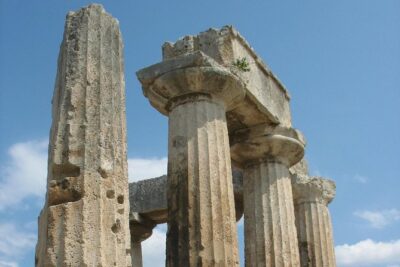
Private Biblical Tour Ancient Corinth & Isthmus Canal from Athens
Read our review →
Corinth Canal, Mycenae & Nafplio Premium Guided Tour
Read our review →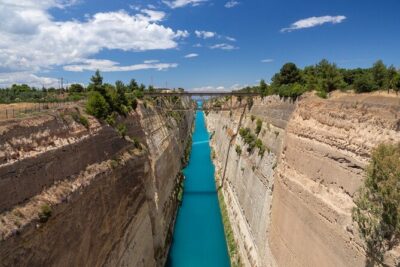
Private Tour of Apostle Paul’s Footsteps in Ancient Corinth
Read our review →
Corinth Half-Day Trip from Athens with Entrance Tickets
Read our review →
Ancient Corinth Tour with Official Guide & Tickets
Read our review →Browse the lists this tour appears in