Reviewed · THINGS TO DO IN ATHENS
Biblical Tour Letters ToThe Corinthians St Paul’s Footsteps 6Hour
Six hours can feel like a full chapter. This small-group Paul’s Footsteps tour pairs easy, air-conditioned pickup from your hotel or cruise ship with focused stops tied to the letters to the Corinthians, plus plenty of time to look around. I like the comfort and the low-stress pace, with bottled water and Wi-Fi onboard, and I like that the day is built for meaning, not just photo stops.
The only real drawback to plan for is entrance fees at key sites like Ancient Corinth and the Isthmia archaeological area, so your final cost is a bit higher than the base price.
In This Review
- Key things I’d highlight before you go
- How this half-day-plus tour really feels: pickup to drop-off
- Comfort details that make a biblical tour work
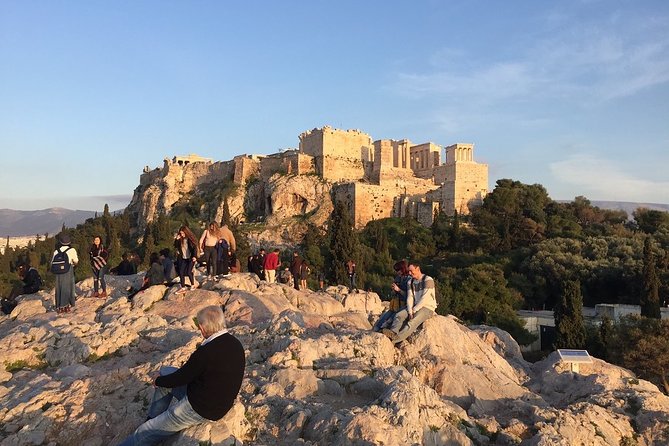
- Mars Hill at the Areopagus: where the Unknown God talk lands
- Daphni Monastery: Byzantine mosaics and layers of older worship
- Corinth Canal: a 19th-century cut across a 2,000-year dream
- Museum of Isthmia: artifacts you can’t get from a quick photo
- Isthmia ruins: sports, sanctuaries, and the feel of a big festival
- Ancient Corinth and the Bema: where the letters start to make sense
- St Paul’s Church in Corinth: a living endpoint, not just ruins
- Kechreai (Kenchreai) and the Temple of Apollo: small names with Bible weight
- Price and value: what $170.50 likely means for you
- Who this tour fits best, and who might prefer a different plan
- Should you book it: my straight answer
- FAQ
- Is pickup and drop-off included?
- How long is the tour?
- What language is the tour in?
- Is Wi-Fi and bottled water provided?
- Is this a group tour or private?
- Are site entrance fees included?
- Do I need a licensed guide at the archaeological sites?
- Are meals included?
- What if weather is bad?
Key things I’d highlight before you go
• Small group feel, with a luxury minivan that makes the long day easier on your back and patience.
• Mars Hill (Areopagus) ties straight to the Unknown God talk you read about in Acts.
• Isthmia is more than ruins, it’s sports, worship, and mosaics in the same landscape.
• Ancient Corinth focuses on the places behind Paul’s letters including the Bema area and the church of St Paul.
• Optional licensed guide inside sites is available on request if you want that extra layer at specific museums or ruins.
How this half-day-plus tour really feels: pickup to drop-off
This is one of those “thank you, logistics” tours. You start with pickup from your Athens hotel, Airbnb, or the cruise port, then you ride out in a private, air-conditioned minivan. After the tour, you go right back to where you started.
The time target is about 6 hours and 15 minutes, and the whole schedule is built around keeping you moving without rushing you through every stop. Even better, you get a driver who speaks English and shares context on Paul’s life and missionary journeys, plus what you’re looking at along the way.
A nice practical detail: if you have luggage, they can store it in the car during the tour depending on how many people are traveling and how much you bring.
More Things to Do in Athens
Comfort details that make a biblical tour work
Religious sites can be tiring. This tour helps with that in the day-to-day ways that matter. You’re in a modern private vehicle, with Wi-Fi and bottled water included as you ride, so you’re not hunting for shade and snacks between stops.
The vehicle setup also makes the day feel organized. The stops are short enough that you stay fresh, but long enough that you can actually see and understand what’s in front of you. And because the group is small, your questions do not get lost in a crowd.
One more point from the trip vibe: several guides linked to this tour style were praised for being personable, patient, and even funny. If you like history with real human energy, that’s a plus.
Mars Hill at the Areopagus: where the Unknown God talk lands
The Athens stop begins at Areopagus Hill, sometimes called Mars Hill. You visit the Holy Rock of the Acropolis area, specifically tied to the place where Paul gave a dramatic speech to the Athenians about the Unknown God.
This is an included stop, and it’s short, around 15 minutes, which is exactly right for this kind of viewpoint. You’re there to connect ideas to location. Even if you only take a few minutes to look over the area, the geography helps you understand why Paul’s message worked in that setting.
Practical tip: wear comfortable shoes. You’re on a hill with outdoor walking, and it’s not the kind of place where flip-flops feel like a good life choice.
Daphni Monastery: Byzantine mosaics and layers of older worship
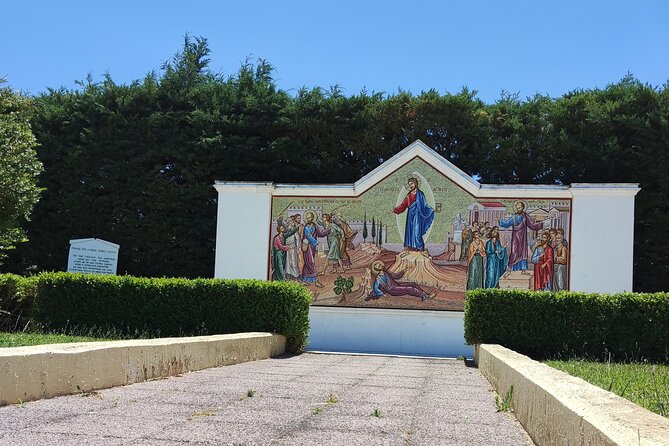
Next you head to the Monastery of Daphni on the slopes of Mount Aigaleo. This stop is about 20 minutes with admission included, and it’s a great “pause” from the ancient streets because the style shifts into Byzantine Greece.
Here’s what makes it especially interesting: the monastery sits on the site of an earlier ancient temple, believed to relate to Apollo worship. Over time, the location has been used and re-used, including periods when it was in Catholic control under Cistercian monks, then later under Orthodox control after the Ottoman conquest.
Also, the monastery suffered earthquake damage, but restoration continues, with a focus on its stunning mosaics. That gives you a real sense of continuity, not just a single time capsule.
Corinth Canal: a 19th-century cut across a 2,000-year dream
Then it’s off to the Corinth Canal, where you get about 20 minutes and admission is free. It’s one of those places that looks simple from a distance, but the idea behind it is huge.
The canal connects the Gulf of Corinth and the Saronic Gulf, turning the Peloponnese into something you feel like you could almost walk around. And historically, it ended a long detour. Before the canal, ships could be forced to sail around the Peloponnese, adding about 185 nautical miles.
One detail I like from the tour description is the older background: people dreamed about this route long before the modern canal existed. Even Periander, the tyrant of Corinth, is linked to the idea, with the earlier diolkos stone road concept for hauling ships across.
If you like big geography stories, this stop will click.
One cove over in Athens:
- The Acropolis, Parthenon & Acropolis Museum Guided Tour
★ 4.7 · 8,493 reviews - Athens: Cape Sounion & Poseidon Temple Sunset Half-Day Trip
★ 4.8 · 8,241 reviews - Acropolis: Premium Acropolis and Parthenon Guided Tour
★ 4.8 · 5,208 reviews - Athens: Mythology of Delphi, Museum and Arachova Guided Tour
★ 4.7 · 5,102 reviews
Museum of Isthmia: artifacts you can’t get from a quick photo
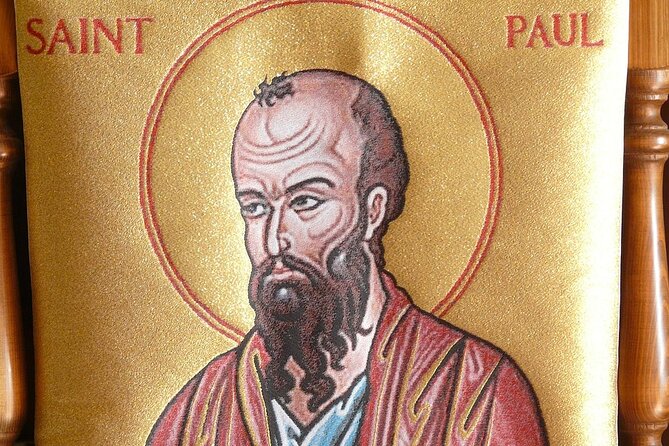
You spend another 20 minutes at the Archaeological Museum of Isthmia. Admission here is listed as not included. This is a short museum stop, so it won’t replace a full museum day, but it gives you context you carry into the ruins.
The museum highlights include:
- An archaic marble pediment placed at the entrance of the first Temple of Poseidon
- Colored glass sections of Kechreon, found submerged on the floor of a Temple of Isis area, with scenes and figures
- An imperial statue type of Zeus from the mid-2nd century BC
- An epinician stele linked to the Corinthian musician Lefkios Cornelius
- Animal figurines, including a golden bull vow
- Items from cemeteries and commercial amphorae tied to Isthmia
Even if you’re not a museum person, these objects help you “see” what the site was doing culturally. You’re not just reading about sports or religion. You’re seeing the material side of it.
Isthmia ruins: sports, sanctuaries, and the feel of a big festival
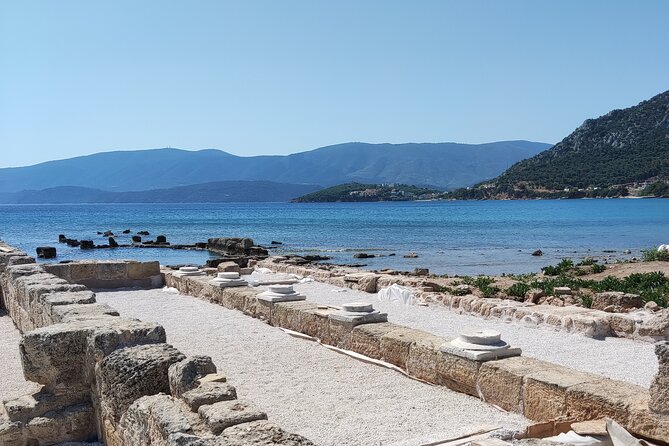
The core of the day’s archaeology is Isthmia. First, you have an included stop for about 1 hour at Isthmia, tied to the famous games.
What connects this to Paul is direct and specific. The tour framing emphasizes that Paul’s presence in the Isthmian region matters because it connects to the mention of the games in scripture. Paul’s work as a tent maker for athletes and visitors is highlighted, and the idea is that he shared the message of Christ with people gathered for competition.
Then you spend time again in the broader Isthmia archaeological area. The itinerary includes key structures like:
- The Temple of Poseidon and Amphitrite area
- The stadium, including a preserved triangular athlete release system called the “ysplex”
- The Sanctuary of Palaimon, connected to worship of sailors
- A theater area tied to musical competitions, with mosaics including sea-creature imagery
Some parts of this section list admission as not included, so plan for that if you want full access.
Practical expectation: you’ll be walking outdoors. Take your time. This is not a place where the meaning shows up only if you rush.
Ancient Corinth and the Bema: where the letters start to make sense
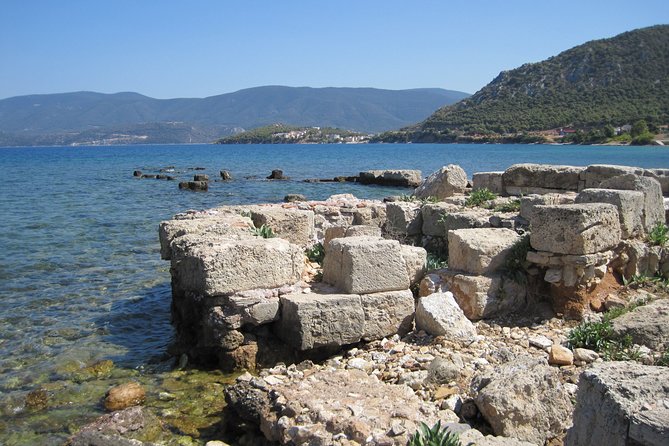
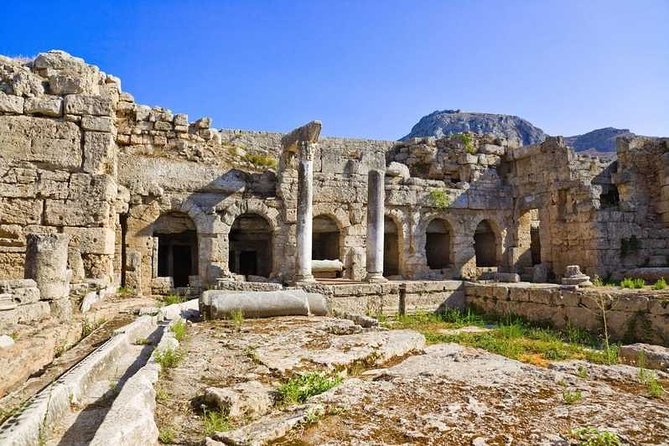
Now you land in the big name zone: Ancient Corinth, including the area associated with Paul’s public address.
A separate note in the route points to the Agora and the podium or Bema. This is described as the elevated platform from which Paul addressed the Corinthians around 52 AD. In later tradition, the Bema area is connected to early Christian transformation during Byzantine times.
You’ll also visit the Ancient Corinth archaeological site for about 1 hour. Admission here is listed as not included, and it’s also where you’ll feel the difference between reading and standing in place.
Context that helps: Corinth was a major city-state on the Isthmus, roughly halfway between Athens and Sparta. It later gets Roman redevelopment after destruction. For Christians, it matters because it’s tied to Paul’s missionary travels and both letters to the Corinthians.
The practical upside of structuring this part around Paul is that you’re not wandering. Even if you don’t catch every detail, the sites are connected to the stories you came for.
St Paul’s Church in Corinth: a living endpoint, not just ruins
After the archaeology, you can shift from stones to worship at Apostolou Pavlou Church, the church of St Paul in Corinth. This stop is about 20 minutes, and admission is listed as free.
The site is connected to the period when Paul stayed in Corinth about a year and a half around 51 to 52 AD, and it’s tied to the metropolitan church tradition referenced in Acts and the Corinthian letters.
This stop is short, but it works as an emotional reset. You go from large-scale remains to a place that feels like it’s still doing the job it always did, carrying meaning forward.
Kechreai (Kenchreai) and the Temple of Apollo: small names with Bible weight
Two quieter stops round out the day, and they’re worth paying attention to if you like the text-location connection.
Kechries (Kenchreai) is included with about 30 minutes, and admission is free. The stop ties to Acts 18:18, where Paul stays a good while and shaves his head in connection with a vow. The tour also mentions Paul’s reference to Phoebe in his letter to the Romans.
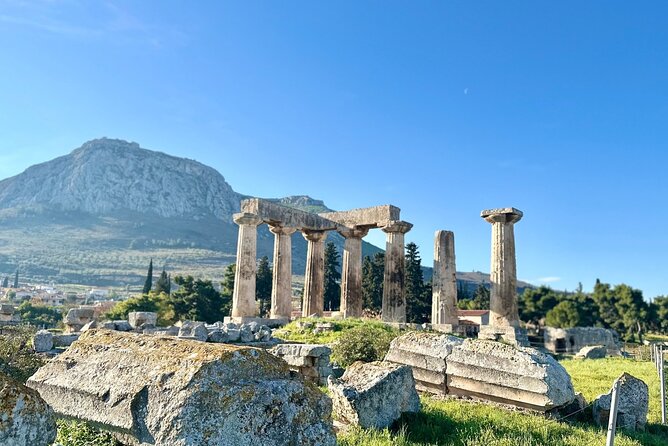
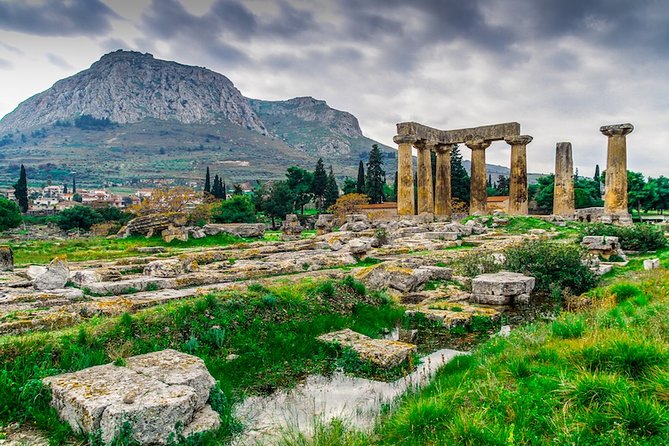
Then you go to the Temple of Apollo at Corinth. This is about 10 minutes, and admission is listed as not included. The temple is described as constructed around 550 BC, and it’s noted as one of the early Doric temples in the Peloponnese and Greek mainland, with rare monolithic columns in the ancient world.
If you’re thinking, yes, these are quick stops, you’re right. But the point here is to tighten the Bible map. You leave with fewer blank spots in your mental atlas.
Price and value: what $170.50 likely means for you
The base price is $170.50 per person, for a tour lasting about 6 hours and 15 minutes. That price buys you the big-ticket value items: private, air-conditioned transport, English-speaking driver commentary, and the included stops like Areopagus Hill, Monastery of Daphni, and multiple free admission sections including parts of Isthmia and the St Paul church.
But two main entrance costs are listed as not included:
- Ancient Corinth entrance fee: €15 per person
- Isthmia archaeological site entrance fee: €5 per person
So, for many people, your realistic all-in is closer to around $170.50 plus about €20 in main site fees, before anything optional like a licensed guide inside sites. Meals are also not included, though lunch stops are scheduled.
This is a good value if:
- You want a low-stress day with pickup and drop-off
- You care about the Paul connections enough to follow a structured route
- You’re time-limited, especially if you’re on a cruise
It may be less ideal if:
- You’re a budget-only traveler who wants everything free
- You prefer going at your own pace with public transport only
Who this tour fits best, and who might prefer a different plan
This tour is built for cruise passengers with limited time and for first-time visitors who want the key Corinth sites without the headache of renting a car and figuring out parking.
It’s also a strong match if you want your day to be explicitly framed around Paul and the Corinthian letters. Instead of bouncing randomly between ruins, you get the through-line.
Where it might not fit perfectly is if you want a long, slow museum and beach day. This route is designed for momentum, not wandering.
Should you book it: my straight answer
Book it if you want your Bible reading to feel real in your feet. The schedule connects Mars Hill, the Canal, Isthmia, Ancient Corinth with the Bema focus, and the St Paul church in a way that makes sense for a single day.
I’d especially book if you dislike logistical stress. The private vehicle, pickup from your exact starting point, and the driver-led storytelling cut down the friction that can ruin a history day.
Skip or rethink it if you’re trying to minimize entrance fees, or if you want a fully guided museum experience inside every site. The driver provides context, but for inside areas, only officially licensed guides are allowed, and that option costs extra if you add it.
If you do book, plan for comfortable shoes, budget for the main entrances, and bring questions. The strongest parts of the experience tend to happen when you let the driver run with your interests.
FAQ
Is pickup and drop-off included?
Yes. Pickup and drop-off are offered from your Athens hotel, Airbnb residence, or the cruise ship, and you return to the same place after the tour ends.
How long is the tour?
The duration is about 6 hours and 15 minutes (approx.).
What language is the tour in?
The tour is offered in English.
Is Wi-Fi and bottled water provided?
Yes. The private vehicle includes complimentary Wi-Fi and bottled water.
Is this a group tour or private?
This is described as a private, small group experience. Only your group participates.
Are site entrance fees included?
Some are included and some are not. Ancient Corinth entrance fees (€15 per person) and the Isthmia archaeological site entrance fee (€5 per person) are not included. Admission is included for other listed stops such as Areopagus Hill and Monastery of Daphni.
Do I need a licensed guide at the archaeological sites?
Your driver cannot accompany you inside archaeological sites due to Greek legislation. A licensed guide can be arranged upon request for an additional fee, depending on availability.
Are meals included?
Lunch stops are scheduled, but meal costs are not included.
What if weather is bad?
The experience requires good weather. If it is canceled due to poor weather, you will be offered a different date or a full refund.
New pins on the Athens chart
- Mycenae, Epidaurus, Nafplio, Corinth Canal Private Full Day Trip From Athens★ 5.0 · 83 reviews
- From Athens: Mycenae, Epidaurus & Nafplion Private Tour★ 4.9 · 83 reviews
- Delphi with Professional English Guide and Transportation★ 4.5 · 84 reviews
- Acropolis of Athens, Ancient Agora and the Agora Museum Tour★ 5.0 · 86 reviews
- Athens: 2.5-Hour Private City Tour Off the Beaten Track★ 4.7 · 86 reviews
- Thermopylae The battle of the 300 Spartans & Delphi Day Tour★ 5.0 · 86 reviews
Things to Do in Athens, compared.
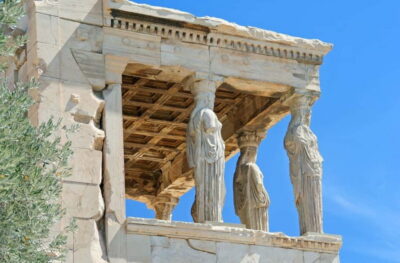
Acropolis & up to 5 Archaeological Sites Combo Pass
Read our review →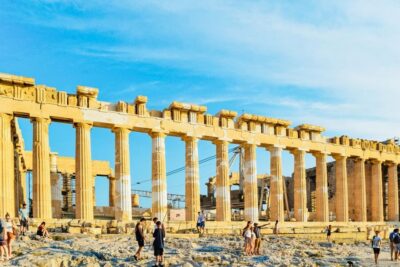
Acropolis Ticket with Optional Audio or Live Guide
Read our review →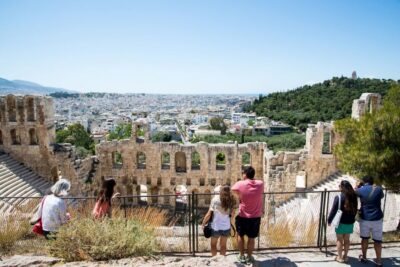
Acropolis, Parthenon & Acropolis Museum Guided Tour
Read our review →
The Acropolis, Parthenon & Acropolis Museum Guided Tour
Read our review →
Cape Sounion & Poseidon Temple Sunset Half-Day Trip
Read our review →
Mythology of Delphi, Museum and Arachova Guided Tour
Read our review →