
Reviewed · MUSEUMS
Hellenic Motor Museum Entrance Ticket
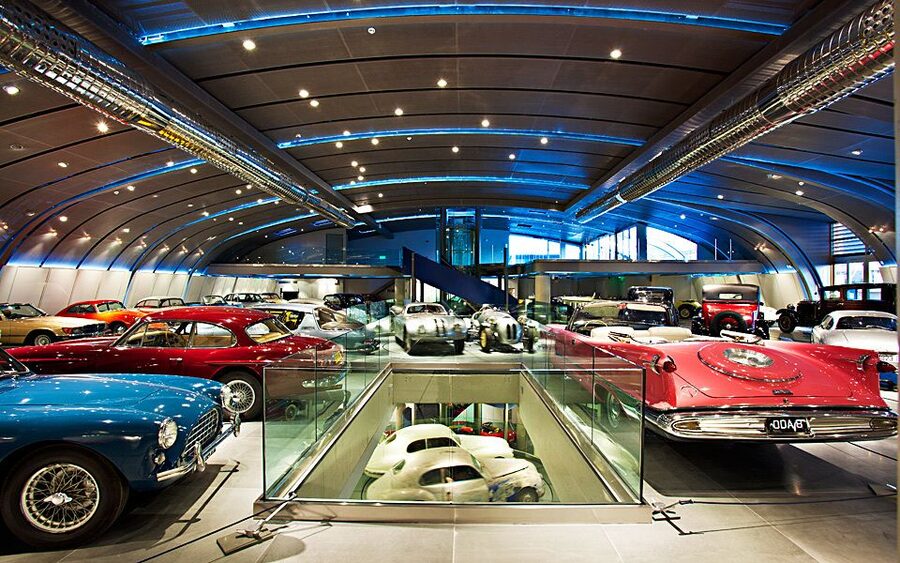
Car museum in Athens sounds odd. Then you walk in and realize why it works: the Hellenic Motor Museum is built for hands-on curiosity, with three floors of cars and themes that actually explain how the automobile changed over time.
I especially love the way the museum uses space like a timeline, including the spiral ramp where you can admire 72 exhibits dating from 300 B.C. to the end of the 20th century. It is a simple layout, but it helps you connect the details instead of just snapping photos and moving on.
One practical note: finding it can take a minute. The museum sits on the top-most floor of Capitol Mall, inside a building that also has lots of offices, so signage can feel weak and navigation takes a little effort.
In This Review
- Key things to know before you go
- Entering Capitol Mall: Getting to the Top Floor Fast
- The Spiral Ramp Experience: A Built-In Timeline of Wheels and Cars
- More Than 110 Vehicles: Why the Collection Feels Fresh
- The Old Car Workshop: Tools, Setup, and the Human Side
- Using the Audio Guide and Reading the Exhibits Without Stress
- Price and Value: Is $14 a Good Use of Time?
- Practicalities for Your Day in Athens: Timing and What to Pair
- Should you book the Hellenic Motor Museum ticket?
- FAQ
- What is the price and how long is the visit?
- Where is the Hellenic Motor Museum located?
- What are the opening hours?
- When is the last admission?
- What languages and guidance are included?
- Is it wheelchair accessible?
Key things to know before you go
- 110+ unique exhibits focused on the global automotive industry
- Spiral ramp timeline with displays spanning from 300 B.C. onward
- Rotating collection that includes makes no longer in business
- Old car workshop walk-through to see tools and setups from another era
- Wheel-focused learning that helps you understand the evolution of the vehicle
- Bright, air-conditioned comfort that makes it a solid stop on hot days
Entering Capitol Mall: Getting to the Top Floor Fast
The Hellenic Motor Museum is in central Athens, inside Capitol Mall. The address to use for your navigation or meeting point is IOULIANOU 33-35 and C Septemvriou 74-78, Athens. That matters because this site is not in a standalone building with obvious car-themed signage everywhere. You are walking through a bigger complex, and the museum is tucked above.
What I like about this setup is that it is easy to combine with a day in Athens, since you can hit it when the sun is harsh or when you want a break from streets and sidewalks. What to watch for is time. If you show up close to closing, you will feel rushed. The museum’s last admission is 30 minutes before closing, so I suggest aiming to arrive with buffer, not at the last minute.
Also, you do get an English audio guide, plus there is an English and Greek host or greeter. Even if you do not speak Greek, you can still follow the stories behind the exhibits.
More marble under museum roofs:
The Spiral Ramp Experience: A Built-In Timeline of Wheels and Cars
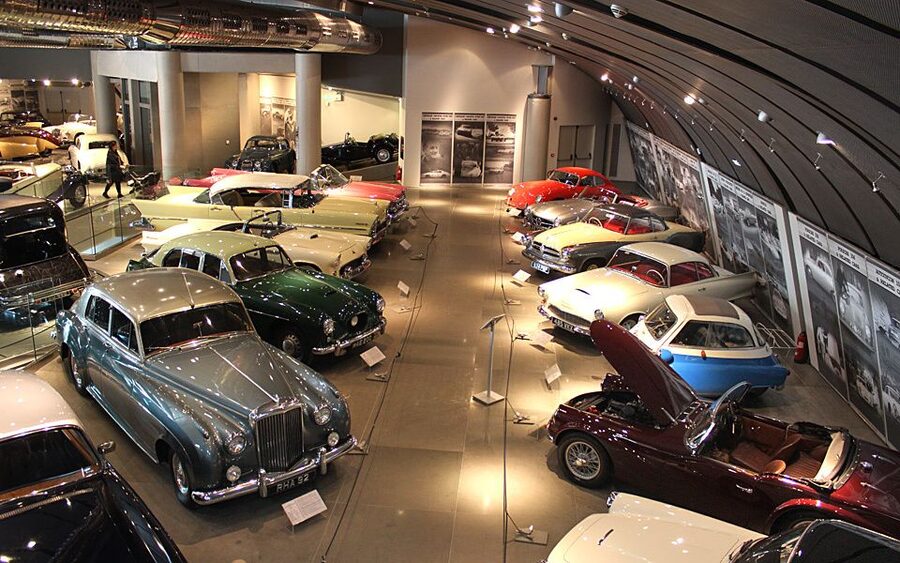
The museum is arranged across three floors, and one of the smartest features is the spiral ramp. As you ascend, you are not jumping randomly from car to car. You move through a structured sequence that highlights key periods in automotive development.
On the ramp, you can see 72 unique exhibits stretching from around 300 B.C. up through the end of the 20th century. That sounds like a massive scope, but the layout helps you handle it. You are essentially learning the evolution of the automobile step by step, with the display design pushing you to look at the details that actually changed: wheel design, carriage concepts, and how vehicles became more recognizable over time.
One of the best parts of the ramp is that it makes the history feel physical. You can stand close enough to notice the kinds of engineering and design choices that later become the norms of everyday cars. If you are the type who likes knowing why something looks the way it does, this will click.
More Than 110 Vehicles: Why the Collection Feels Fresh
The museum’s ticket is about more than seeing a pile of cars. You are getting a curated collection that aims to cover the global automotive industry, not only a few famous brands.
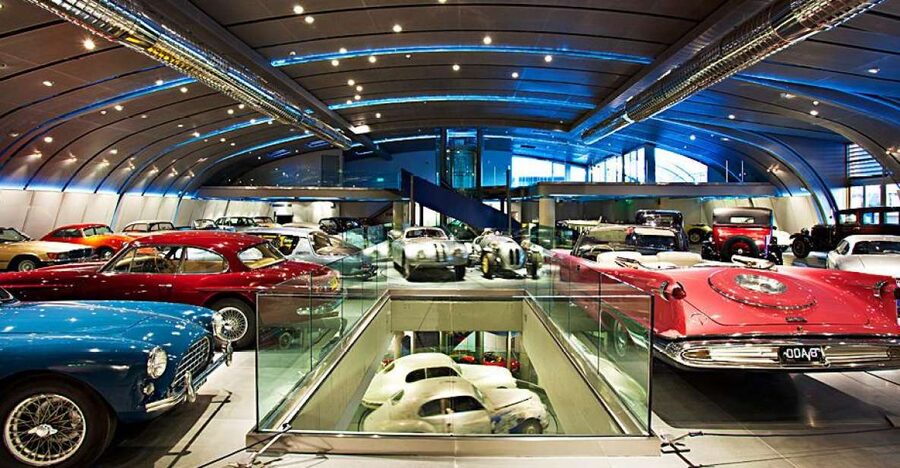
The display count is over 110 unique examples, and the collection is rotating. That is a big deal for repeat visits or for people who worry that they will see the same set every time. It also means you might catch different cars depending on when you go.
A highlight is that you can see car makers that no longer exist. That is one of those details that changes how you look at cars. Instead of thinking only about present-day brands and modern models, you start seeing the industry as something that rose, changed, and sometimes vanished. In a small way, it is like learning how businesses and technology evolve together.
I also like that the museum keeps a mix of older exhibits and classic models from well-known current manufacturers. One review noted a particular eye-catching example from the Italian classic world, the Testarossa, even though the overall collection might not match what someone expects if they are hunting for a specific set of brands. That is not a problem, it is just a reminder: come for variety and context, not for a guaranteed hit list.
And yes, if you love pop culture, you might spot recognizable characters and vehicles, like Lightning McQueen and the Flintstones Mobile. Whether you are bringing kids or just like fun surprises, this is the kind of museum moment that makes the visit easier to enjoy without losing the historical thread.
The Old Car Workshop: Tools, Setup, and the Human Side
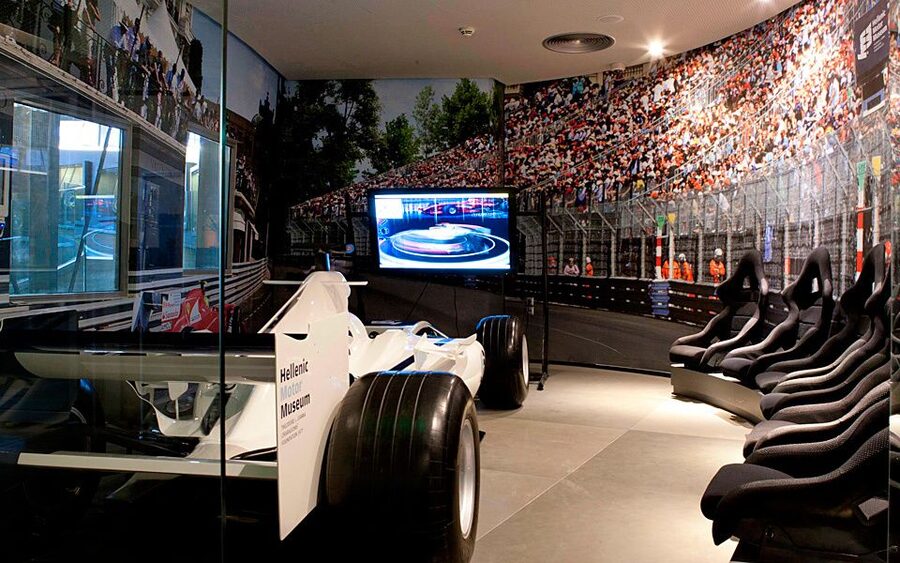
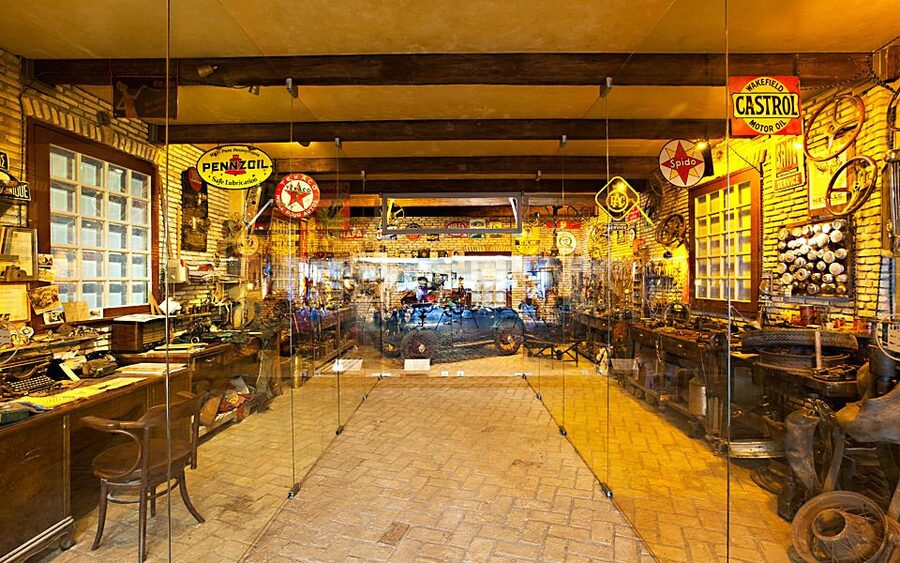
If you want one area that feels like you are stepping into a different era, it is the old car workshop section. The museum includes a walk-through of an old workshop with features that help you picture how cars were maintained and worked on.
This is where the museum goes beyond “look at the vehicle” and starts “understand the environment around it.” Cars do not exist alone. They depend on parts availability, repair habits, and what mechanics could realistically do at the time. Even without technical training, you can often connect the dots just by observing the tools and how the space is arranged.
This workshop area also makes sense alongside the wheel learning displays. Wheels are where the rubber meets the road, but workshop knowledge is where the design becomes reality for drivers. Seeing both themes in the same visit helps you understand that automotive evolution is not only about factories. It is also about service, maintenance, and the day-to-day reality of keeping machines running.
If you are traveling with teens or adults who get bored by pure museum storytelling, this workshop section is one of your best chances of keeping everyone interested.
Using the Audio Guide and Reading the Exhibits Without Stress
The museum includes an audio guide in English. That is helpful because the exhibits span a long timeline, and it is easy to get lost in dates if you only rely on captions. With the audio guide, you can follow the main ideas and spend your attention on the parts you care about.
Lighting is another thing I appreciate here. The spaces are bright, so you do not feel like you are fighting shadows to see details. One review even mentioned the air conditioning, which is a big plus if you come in summer or on a humid day.
One practical tip: give yourself time to slow down on the cars that catch your eye. Some exhibits are close together, and you may find that you can only view certain cars from the front. That is not unusual in compact collections, but it does affect how you photograph and how you plan your path through the floors.
I recommend doing it like this:
- First pass, follow the ramp and get the timeline in your head.
- Second pass, circle back to the cars that really grabbed you.
- End in the workshop area while you still remember how the timeline connects.
If you only do one quick pass, you might miss the deeper connections. If you go too slowly, you might feel stuck navigating between tight viewing angles. The sweet spot is an hour or so, but if you love car history, you could easily stretch longer across all three floors.
More Things to Do in Athens
- Athens: Acropolis & up to 5 Archaeological Sites Combo Pass
★ 4.2 · 13,904 reviews - Athens: Acropolis Ticket with Optional Audio or Live Guide
★ 4.2 · 11,055 reviews - Athens: Cape Sounion & Poseidon Temple Sunset Half-Day Trip
★ 4.8 · 8,241 reviews - Acropolis: Premium Acropolis and Parthenon Guided Tour
★ 4.8 · 5,208 reviews
Price and Value: Is $14 a Good Use of Time?
At about $14 per person, the entrance ticket is priced like a museum that expects you to spend real time. For the money, you get:
- three floors of exhibits
- 110+ unique vehicles
- an English audio guide
- an old workshop walk-through
- educational elements about the evolution of the car, including the history of the wheel
To me, the value is not just the number of cars. It is the way the museum teaches you to look. When a car museum is only about displays, you can feel like you are wasting time unless you already know everything. Here, the timeline ramp and workshop learning give context, so even if you are not a car expert, you can still enjoy the stories.
The rotating collection also improves value. If your visit happens to overlap with a particularly strong set of exhibits, you get a bonus. If it does not, you still get a solid historical layout and enough variety to feel like you saw something you cannot recreate at home.
Practicalities for Your Day in Athens: Timing and What to Pair
This is a one-day experience, but it is not a long guided tour. Think of it as a self-paced museum visit where the building layout does the pacing for you.
Opening hours are:
- Monday to Friday, 10:00 to 17:00
- Saturday and Sunday, 11:00 to 18:00
It is closed on January 1, January 6, Easter Sunday and Easter Monday, August 15, and December 25. Last admission is 30 minutes before closing time, so if you are planning around dinner or a show, work backwards from the last entry.
Because food and beverages are not included, plan ahead if you get hungry. Since the museum is in Capitol Mall, you can usually find something nearby, but I would not count on a meal being part of the ticket. I treat this as a good morning or early afternoon plan, then I eat afterward.
Who is it best for?
- Car lovers who want history, not only shiny models
- Families who need a break from the heat and still want everyone to enjoy the same stop
- Curious travelers who like museums but do not want something overly abstract
Who might find it less ideal?
- People who only want a super specific brand or make list. The collection is global and rotating, so it is not designed like a single-make shrine.
- People who need lots of space between exhibits for comfort. Some cars are tightly arranged, and you may need to reposition to get a full view.
Should you book the Hellenic Motor Museum ticket?
Yes, I think you should book if you want a high-value indoor activity in Athens that mixes real vehicles with clear context. For the price, the combination of three floors, an English audio guide, a rotating global collection, and the old workshop area is strong. If you are visiting with kids, it is also one of those museums where fun surprises can sit next to serious detail.
Skip it only if you are short on time and you know you only want a fast stop with minimal walking, or if you are chasing one exact set of brands. Otherwise, this is the kind of place that turns an ordinary day into a satisfying one, because you leave understanding a bit more about how cars became what they are today.
FAQ
What is the price and how long is the visit?
The entrance ticket costs about $14 per person, and it is valid for 1 day.
Where is the Hellenic Motor Museum located?
It is in central Athens in Capitol Mall. The meeting point/address is IOULIANOU 33-35 and C Septemvriou 74-78, Athens.
What are the opening hours?
Monday to Friday it is open 10:00 to 17:00. Saturday and Sunday it is open 11:00 to 18:00.
When is the last admission?
Last admission is 30 minutes before closing time.
What languages and guidance are included?
An English audio guide is included. There is also a host or greeter who speaks English and Greek.
Is it wheelchair accessible?
Yes, the museum is wheelchair accessible.
New pins on the Athens chart
- Mycenae, Epidaurus, Nafplio, Corinth Canal Private Full Day Trip From Athens★ 5.0 · 83 reviews
- From Athens: Mycenae, Epidaurus & Nafplion Private Tour★ 4.9 · 83 reviews
- Delphi with Professional English Guide and Transportation★ 4.5 · 84 reviews
- Acropolis of Athens, Ancient Agora and the Agora Museum Tour★ 5.0 · 86 reviews
- Athens: 2.5-Hour Private City Tour Off the Beaten Track★ 4.7 · 86 reviews
- Thermopylae The battle of the 300 Spartans & Delphi Day Tour★ 5.0 · 86 reviews
Museums, compared.

Acropolis, Parthenon & Acropolis Museum Guided Tour
Read our review →
The Acropolis, Parthenon & Acropolis Museum Guided Tour
Read our review →
Mythology of Delphi, Museum and Arachova Guided Tour
Read our review →Acropolis, Parthenon & Acropolis Museum Guided Tour
Read our review →
Acropolis monuments & Parthenon Walking Tour with Optional Acropolis Museum
Read our review →
Athens All Included: Acropolis and Museum Guided Tour with Ticket
Read our review →
Combo: Acropolis & Acropolis Museum with Optional Tours
Read our review →
Acropolis Museum Ticket with optional Audio Guide
Read our review →Browse the lists this tour appears in