
Reviewed · THINGS TO DO IN ATHENS
Philosophical Tour in Athens
Athens gets philosophical fast. This walking tour strings together iconic sites and turns them into real-life questions about how we think, judge, and live. You start near the Acropolis area and move through the places tied to tragedy, Socrates, Plato, democracy, stoicism, and happiness theories, with speakers and multimedia to keep the ideas clear.
I especially like Lampros storytelling, because he connects ancient thinking to modern psychology in a way that stays understandable. I also like the pacing, with stops that include shaded moments and short video bits so the concepts actually stick, not just fly by.
One possible drawback: expect big abstract ideas. If you want a straight archaeology lecture, this can feel more like walking with a mind coach than a museum guide.
In This Review
- Key highlights worth centering
- Why this Athens philosophical walk works (more than a sightseeing loop)
- Meeting near the Acropolis: timing, comfort, and what to bring
- The itinerary in order: tragedy, Socrates, democracy, and happiness
- Stop 1: Theatre of Dionysus Eleuthereus and the psychology of judgment
- Stop 2: Herod Atticus Odeon and Jung’s archetypes in open-air form
- Stop 3: Prison of Socrates and Plato’s Allegory of the Cave
- Stop 4: Eglise D’agios Dimitrios Loumbardiaris and the birth of democracy
- Stop 5: Philopappos Monument and the happiness recipe with a Parthenon view
- Stop 6: Pnyx and Eudaimonia, with Socrates in the mix
- Stop 7: Keramikos Archaeological Site and Epicurus’s garden-style happiness
- Stop 8: The place stoicism was born, plus philosophy, theater, and democracy themes
- Stop 9: Roman Agora, stoicism in real life, and the weather-station moment
- Stop 10: Lysikratous Square and the Apollonian versus Dionysian idea
- Stop 11: Anafiotika and the Cycladic-feeling break
- How Lampros ties ancient ideas to modern thinking (including AI vibes)
- Views, comfort breaks, and lunch timing that actually works
- Who should book this tour, and who might want a different Athens plan
- Should you book this philosophical walking tour in Athens?
- FAQ
- What is the duration of the Philosophical Tour in Athens?
- Where does the tour start?
- What language is the tour offered in?
- Is this a private tour?
- Does the tour include any admission tickets?
- What does the tour include for the presentations?
- Is mobile ticketing used?
- What happens if weather is poor?
Key highlights worth centering
- Private group up to six for real back-and-forth, not a lecture line
- Socratic and Platonic ideas mapped onto the actual spaces where they were discussed
- Multimedia presentations and speakers to make psychology themes land
- Two top-view breaks at Philopappos Monument and Pnyx for Parthenon and Acropolis sightlines
- Happiness frameworks from multiple schools, not just one favorite
- A lunch-friendly stretch around the Mnisikleous stair area, where the atmosphere is the point
Why this Athens philosophical walk works (more than a sightseeing loop)
This tour is built around the idea that philosophy is not a dead topic. It is a way to train your mind, notice your habits, and rethink your defaults. Athens is perfect for that, because the city itself feels like an argument in stone.
What makes this experience click is the way the tour treats each stop like a chapter. Tragedy is not just drama. Democracy is not just politics. Even a cemetery can become a lesson about what “a good life” means. And yes, you will hear the conversation stretch beyond ancient Greece, including modern psychology angles, and even future-thinking that connects to how humans reason.
The group is small, up to six people, and it is framed as private. That matters because you can ask questions, steer the depth level, and keep the pace comfortable in the heat. At $90.11 per person for about 2 hours 30 minutes, the value is strongest when you share it within your group, but even solo you get a guided experience that feels personal rather than rushed.
More Things to Do in Athens
Meeting near the Acropolis: timing, comfort, and what to bring
The tour starts at 11:00 am near AcropoliAthens 117 42, Greece and ends back at the same meeting point. It is offered in English, with mobile tickets, speakers, and multimedia presentations. That means you are not hunting for a ticket window on a busy day.
Plan for walking on uneven stone and lots of standing in sun between shaded pauses. The guide builds in breaks, and you will likely appreciate the effort to choose quieter spots for explanations. Still, bring the usual Athens survival kit: water, sun protection, and shoes that do not complain.
One more practical note: good weather is required. If Athens is doing its usual summer thing with heat and haze, you will want to dress for comfort and give yourself some flexibility.
The itinerary in order: tragedy, Socrates, democracy, and happiness
Here is the route as it unfolds, and why each stop matters beyond the postcard.
Stop 1: Theatre of Dionysus Eleuthereus and the psychology of judgment
You begin at the Theatre of Dionysus Eleuthereus, framed as the birthplace of tragedy. The focus is not on architecture first. It is on why watching tragedy was treated like a kind of mental medicine, a cure for easy judgment.
The guide also brings in psychological thinking, including Carl Jung, to show how tragedy can help people become their best selves. If you like philosophy that has teeth, this is a strong opening.
What to watch for: listen for the way the guide connects emotional experience to thinking, not just the story itself.
Stop 2: Herod Atticus Odeon and Jung’s archetypes in open-air form
Next comes Herod Atticus Odeon, described as one of the most well-known open-air theaters. Here, the tour turns from tragedy as therapy to the idea of personality, with persona, animus, and anima themes.
This is a fascinating stop if you enjoy symbol and metaphor. It can also feel a bit abstract if you want only historical facts.
Consideration: this is philosophy-through-symbol territory. Stay with it, and it gets clearer as you go.
One cove over in Athens:
- The Acropolis, Parthenon & Acropolis Museum Guided Tour
★ 4.7 · 8,493 reviews - Athens: Cape Sounion & Poseidon Temple Sunset Half-Day Trip
★ 4.8 · 8,241 reviews - Acropolis: Premium Acropolis and Parthenon Guided Tour
★ 4.8 · 5,208 reviews - Athens: Mythology of Delphi, Museum and Arachova Guided Tour
★ 4.7 · 5,102 reviews
Stop 3: Prison of Socrates and Plato’s Allegory of the Cave
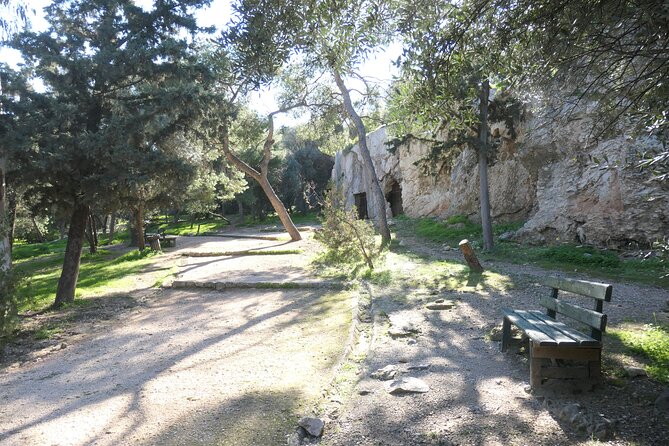
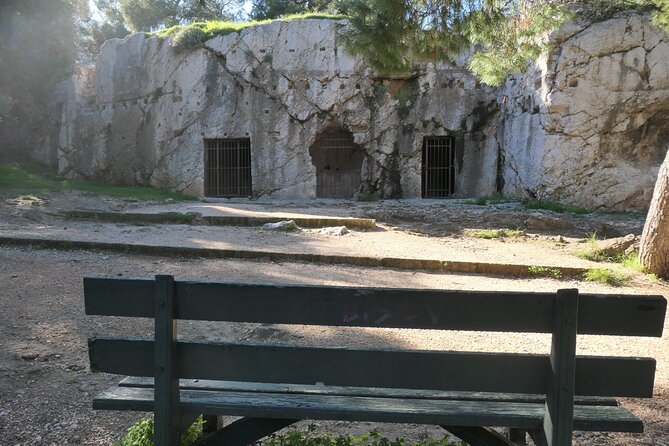
At the Prison of Socrates, the discussion centers on Plato’s philosophy and the Allegory of the Cave. The lesson is basically about perception, limits of awareness, and how people mistake shadows for reality.
You do not just hear the allegory. You stop and talk about what it means to live inside your own assumptions, then compare that to how we form beliefs today.
Best moment for beginners: this is one of the stops that helps first-timers connect quickly.
Stop 4: Eglise D’agios Dimitrios Loumbardiaris and the birth of democracy
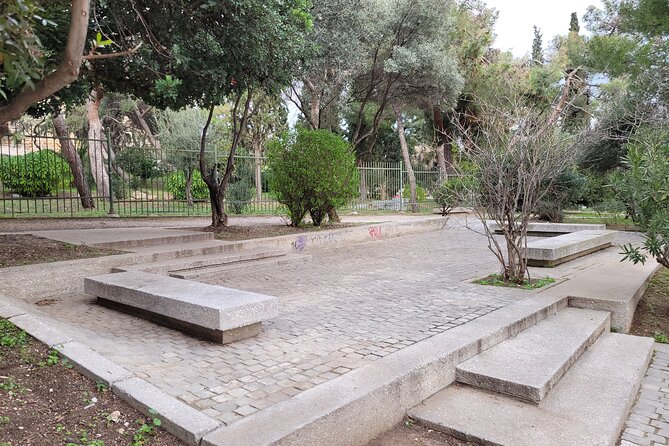
At Eglise D’agios Dimitrios Loumbardiaris, the tour brings you into a story about the birth of democracy. The point is that democracy is not only an event in the past. It is a practice in how people debate, decide, and hold each other accountable.
This stop gives the tour a civic backbone. It helps the philosophy land in real social life, not only personal insight.
Stop 5: Philopappos Monument and the happiness recipe with a Parthenon view
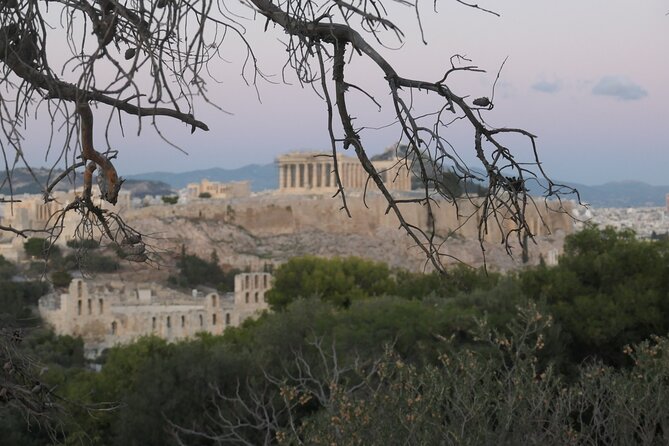
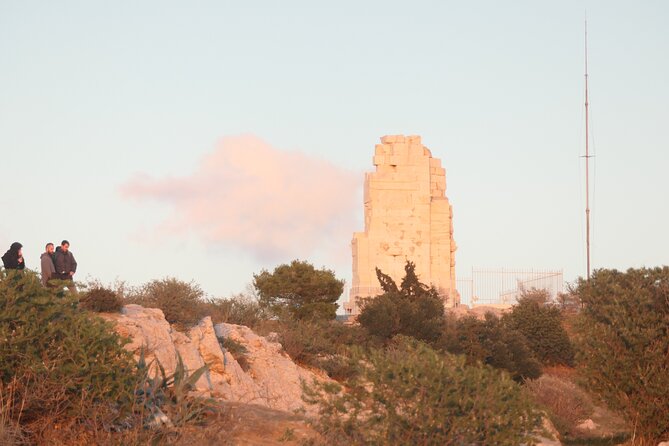
You move up to Philopappos Monument, framed as one of the most energetic points in Athens. The reason is practical and visual: you get one of the best viewpoints toward the Parthenon and Acropolis.
Then the tour makes the jump from landscape to mindset, using Plato and Socrates to discuss a recipe for happiness. It is one of those moments where you can breathe, look far, and let the ideas sink.
Photo tip: this is a great spot for photos, but also for listening. The view makes the discussion feel bigger.
Stop 6: Pnyx and Eudaimonia, with Socrates in the mix
At Pnyx, you are at the assembly area of Athenian citizens. The guide frames it as a place where you can feel how speech and decision-making were lived, not just theorized.
The philosophy theme here is Aristotle’s perspective of Eudaimonia and discussion of Socrates. Expect the tour to talk about what a good life means, not as a slogan but as a daily discipline.
Why it matters: you get the feeling of philosophy as public life, not just private thought.
Stop 7: Keramikos Archaeological Site and Epicurus’s garden-style happiness
At Keramikos Archaeological Site, you visit the ancient cemetery of Athens. The stop is used to explore Epicurean happiness ideas, described as an Epicurus garden type of mindset.
This is a great contrast after the big civic and dramatic stops. The message tends to shift toward calm, clarity, and choosing what you actually need.
Good for reflective travelers: cemeteries can make stoic and epicurean lessons feel less abstract.
Stop 8: The place stoicism was born, plus philosophy, theater, and democracy themes
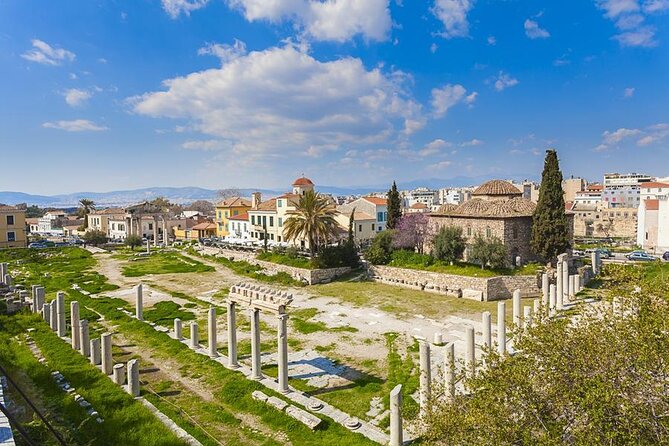
From there, the tour points you to the place where stoicism was born, while also bundling the broader idea that philosophy, theater, and democracy took shape in Athens in a way that shaped the world. It is also where the tour includes the most beautiful street in Athens pause.
This section works like a thematic bridge. It helps you see how schools of thought compete, overlap, and evolve, instead of living in separate boxes.
Stop 9: Roman Agora, stoicism in real life, and the weather-station moment
At the Roman Agora, the discussion returns to stoicism as a philosophy of life. You get an angle on how stoicism can be used when things go wrong, how you respond, and what you focus on.
Then the tour adds a quirky historical note with a stop linked to the first meteorological station in the world. After that, you reach the discussion point of the philosophers area, where you experience the atmosphere around the Mnisikleous stair, and it is also described as the best place for lunch.
Even if you do not actually eat there, it is the kind of spot where the guide’s explanations make sense because you are sitting and watching Athens move.
Stop 10: Lysikratous Square and the Apollonian versus Dionysian idea
At Lysikratous Square, the tour brings up the Apollonian and Dionysian sides of Athens. It is a neat way to summarize the earlier tragedy and balance themes, because Apollonian tends toward order and Dionysian toward emotion and chaos.
If you want a framework that helps you remember the whole tour, this is one of the best anchors.
Stop 11: Anafiotika and the Cycladic-feeling break
The final stretch includes Anafiotika, described as a place where Athens feels like a Cycladic island. This is a soft landing after the heavy ideas.
It also gives you a change of scene: tighter streets, a different vibe, and a chance to process what you learned before you head back.
How Lampros ties ancient ideas to modern thinking (including AI vibes)
The biggest reason this tour gets such strong ratings is not just the sites. It is the guide’s approach: symbol, psychology, and real questions in plain language.
Lampros blends philosophy with psychology themes, including references to Jung and personality archetypes, plus connections to how people reason and judge. One guide approach you will notice quickly is that he keeps the ideas connected to experience, not only definitions.
Another thing that helps: multimedia. The tour uses speakers and short videos to reinforce key points, so you are not trying to remember everything just from speech. And if you want depth, you can ask follow-ups, and the tour adjusts to your interest level.
If you enjoy today-day topics, the tour can also connect ancient questions to the future of human reasoning, including AI-type reflections that help you think about what remains human in the middle of technology.
Views, comfort breaks, and lunch timing that actually works
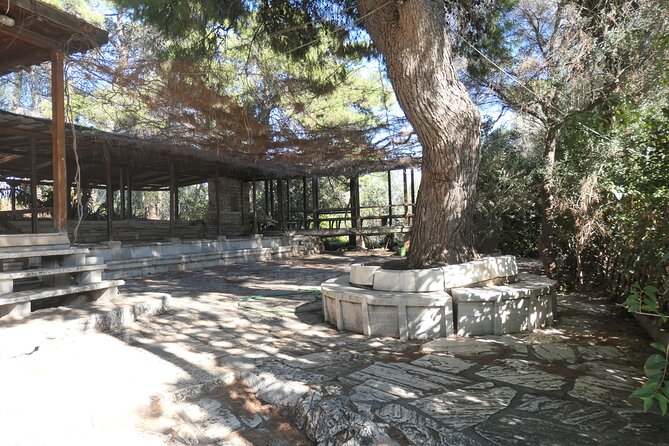
This is a walking tour, but it does not treat it like a grind. The route includes viewpoints at Philopappos Monument and Pnyx, plus shaded pauses where the guide explains concepts. That combination keeps the experience enjoyable instead of exhausting.
For lunch, the tour flags the Mnisikleous stair area as a best spot for lunch. Even if you are not ready to eat, use that time to reset. Grab water, cool down, and let the philosophy settle while you watch people move through the space.
If you are the type who likes good food plans, you may also get practical suggestions from Lampros, including rooftop bars and an open-air cinema idea, and a hint about a tasty lunch stop that includes meatballs if you ask.
Who should book this tour, and who might want a different Athens plan
This private philosophical tour is ideal if you like your travel with questions. It suits you if you want to learn Socrates, Plato, Aristotle, stoicism, epicurean thinking, and democracy as living ideas, not just museum labels.
It also fits groups who want interaction, since it is up to six people and private. And if you are traveling with kids or mixed experience levels, the guide style is designed to meet people at different levels of interest.
If you are in Athens for archaeology-only facts and strict historical dates, you might find the psychology and symbolism heavy. In that case, pair this with a more traditional ruins-focused tour so you get both layers.
Should you book this philosophical walking tour in Athens?
Yes, if you want an Athens experience that feels like thinking, not just seeing. At $90.11 per person for about 2 hours 30 minutes, the best value comes when your group stays small and interactive, which this tour is designed for.
Book it early in your planning window if you can, since it is often scheduled in advance. And come in with curiosity. You do not need to be a philosophy student. You just need the willingness to ask why.
FAQ
What is the duration of the Philosophical Tour in Athens?
It lasts about 2 hours 30 minutes.
Where does the tour start?
The meeting point is AcropoliAthens 117 42, Greece.
What language is the tour offered in?
It is offered in English.
Is this a private tour?
Yes. Only your group participates, with up to six people.
Does the tour include any admission tickets?
All listed sites show free admission except Pnyx, which is indicated as admission ticket included.
What does the tour include for the presentations?
The tour includes speakers and multimedia presentations.
Is mobile ticketing used?
Yes, the tour uses a mobile ticket.
What happens if weather is poor?
The experience requires good weather. If it is canceled due to poor weather, you will be offered a different date or a full refund.
New pins on the Athens chart
- Shore Excursion: Acropolis, Athens City tour and The New Acropolis Museum★ 4.5 · 30 reviews
- Private Luxury Tour: Marathon – Battle & Run That Changed History★ 5.0 · 30 reviews
- 2 Day Private Tour Of Delphi, Thermopylae & Meteora From Athens★ 5.0 · 30 reviews
- Athens Airport – Athens Center Private Transfer★ 4.0 · 30 reviews
- From Athens: Ancient Corinth Half-Day Private Tour★ 4.8 · 30 reviews
- Private City Kickstart Tour: Hidden Districts★ 5.0 · 30 reviews
Things to Do in Athens, compared.
Acropolis & up to 5 Archaeological Sites Combo Pass
Read our review →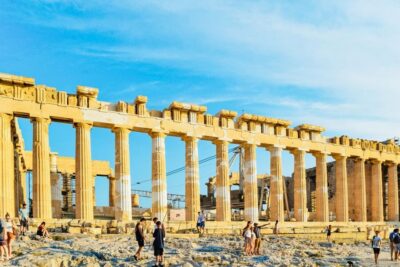
Acropolis Ticket with Optional Audio or Live Guide
Read our review →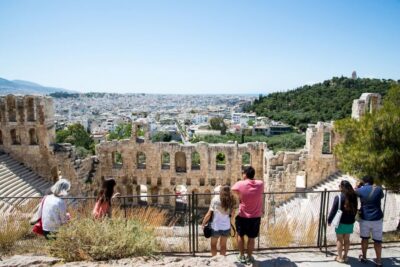
Acropolis, Parthenon & Acropolis Museum Guided Tour
Read our review →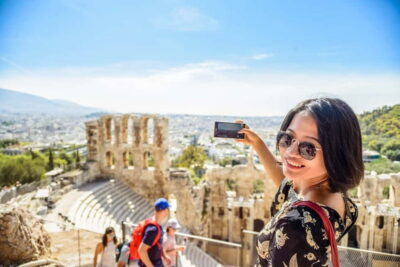
The Acropolis, Parthenon & Acropolis Museum Guided Tour
Read our review →
Cape Sounion & Poseidon Temple Sunset Half-Day Trip
Read our review →
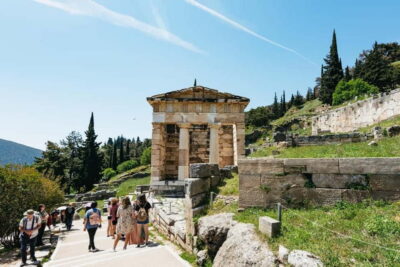
Mythology of Delphi, Museum and Arachova Guided Tour
Read our review →