
Reviewed · WORKSHOPS
Philosophy Experiential Workshop at Plato’s Academy Park -Athens
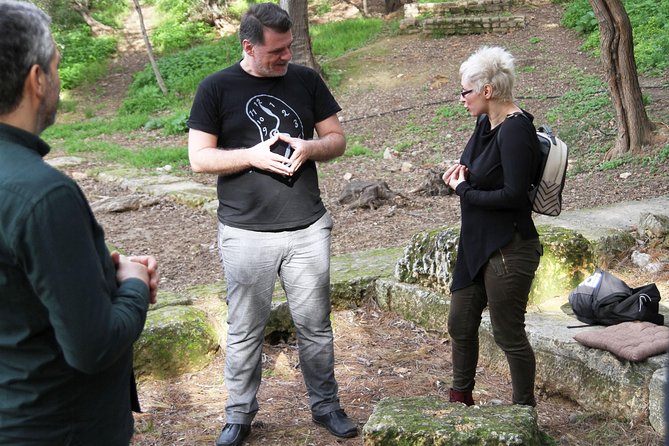
Plato’s ideas, acted out in ruins. This small-group workshop at Plato’s Academy Park uses a hands-on Allegory of the Cave discussion and a structured Socratic method format, then caps it with a lively debate using a replica water-timer. I also like the start at the Plato’s Academy Digital Museum, which gives you just enough context to join the conversation without feeling lost. The only real catch is that it’s outdoors, so you’ll want good weather, and the museum stop can vary by day.
I love how this experience stays practical and human. You’re not expected to have a philosophy degree, and the facilitator keeps things in plain English with interactive Q and A that makes the ideas feel usable. Because it’s limited to a maximum of 10 travelers and fits adults and teens 14 and up, it feels like a real classroom conversation, not a lecture.
In This Review
- Key Highlights Worth Booking For
- What You Actually Experience in 2 Hours at Plato’s Academy Park
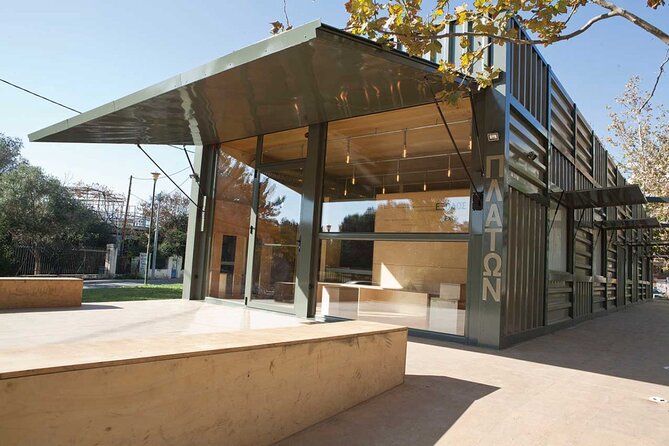
- Starting at the Plato’s Academy Digital Museum, Alkmeonos 1
- The Philosophy Warm-Up: Reading Ancient Texts Without the Jargon
- Walking Plato’s Academy Park and the Gymnasium Ruins
- The Socratic Method Discussion of the Allegory of the Cave
- Role-Play Debate With a Real Water-Timer Replica
- Optional Extra Hour: Aristotle, Virtue, and Choice
- Who Should Take This Workshop (and Who Might Skip It)
- Price and Value: What $53.92 Buys You in Athens
- Practical Tips for a Better Experience at a Historic Site
- Should You Book This Plato’s Academy Philosophy Workshop?
- FAQ
- How long is the Plato’s Academy Park philosophy workshop?
- Where does the workshop start and end?
- Is the workshop offered in English?
- Do I need prior knowledge of philosophy?
- What ages can participate?
- How big is the group?
- Is the Plato’s Digital Museum included?
- What happens if the Digital Museum is closed?
- Is the workshop outdoors?
- What if archaeological excavation is taking place at the park?
Key Highlights Worth Booking For
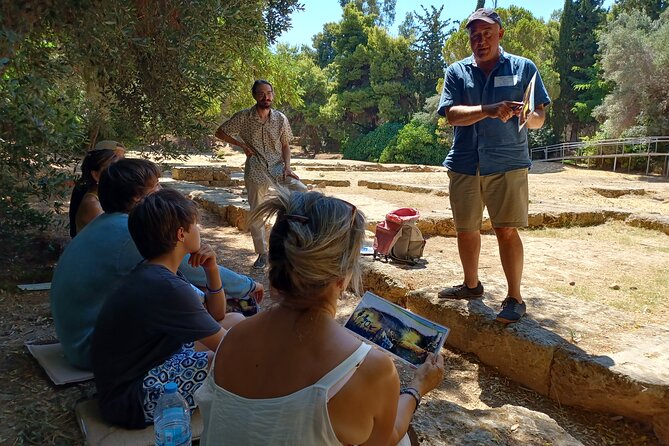
- Small group size (max 10) means more participation and less sitting quietly
- Digital Museum warm-up helps you get oriented, and it has free entrance
- Ancient text reading and interpretation gives you a simple entry point into Greek philosophy
- Socratic method discussion of the Allegory of the Cave turns ideas into a conversation
- Role-play debate with a water-timer replica makes the argument process memorable
- Optional extra hour on Aristotle adds a game about virtue and choice
What You Actually Experience in 2 Hours at Plato’s Academy Park
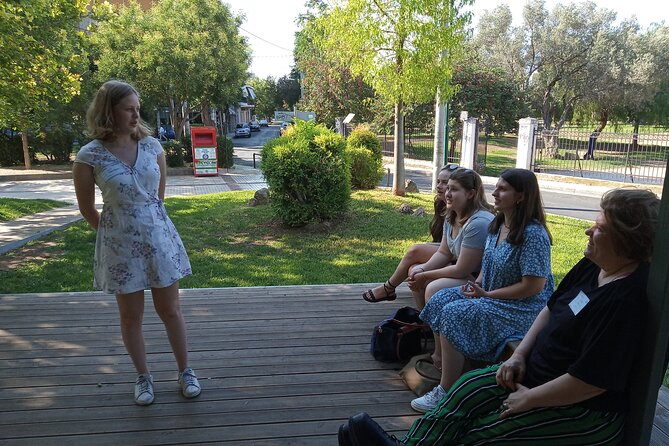
This is not the typical Athens “walk and listen” tour. It’s an educational interactive workshop, built around discussion, interpretation, and role-play. Plan for about 2 hours, with an option to add a third hour focused on Aristotle’s philosophy.
You’ll move through three phases that steadily increase your involvement. First, you get orientation with a brief museum stop (when it’s open) and a warm-up where you read and interpret ancient Greek texts. Next, you stroll the park and get a timeline that connects Socrates, Plato, and Aristotle, anchored to what remains at the site. Finally, you have an active discussion of Plato’s Allegory of the Cave using the Socratic method, then you finish with a role-play debate that uses an ancient-style water-timer replica to shape the flow.
If you enjoy thinking with other people, asking questions, and learning by doing, this format is a strong match.
More Athens landfalls to plot
Starting at the Plato’s Academy Digital Museum, Alkmeonos 1
The workshop begins at Plato’s Academy Digital Museum, Alkmeonos 1, Athina 104 42, Greece. If you like structure, the meeting point is clear, and the activity ends back where it starts.
On days the museum is open, you’ll start with a brief visit before heading out into the park. The museum’s open hours are Tuesday to Friday, 10:00 AM to 4:00 PM, and it has free entrance. That’s a big value detail for budget-minded travelers: you’re getting a guided-style orientation without needing to pay extra on top of the workshop price.
On other days, they swap out the museum visit for an engaging discussion that covers the same key insights. There’s also a note that the museum sometimes closes without announcement, so flexibility is part of the design. Practically, that means you should treat the “museum first” idea as a variable, not a guarantee, and focus on the workshop’s bigger goal: understanding Plato’s ideas in context.
The Philosophy Warm-Up: Reading Ancient Texts Without the Jargon
Right after the start, you’ll do a philosophy warm-up where you read and interpret ancient Greek texts. The aim is not to test your knowledge or teach difficult terminology. The workshop is designed for adults and teenagers 14 and up, and it’s described as suitable even if you have no previous knowledge.
I like this approach because it lowers the barrier. Instead of starting with big concepts you might nod through, you practice the mental skill the philosophers used: reading carefully, then asking what the text is trying to say. That makes later discussion easier because you have a shared starting point.
The workshop also promises plain English and no difficult words. In a topic like philosophy, that matters. It keeps you in the conversation instead of watching the group leader translate concepts in your head.
Walking Plato’s Academy Park and the Gymnasium Ruins
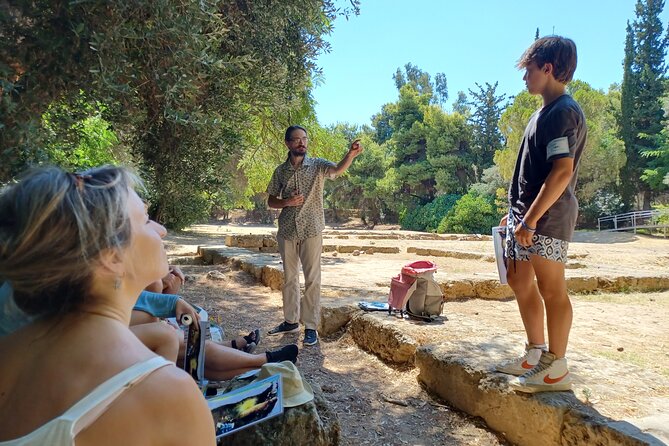
After the warm-up, you’ll stroll through Plato’s Academy Park. As you walk, the philosophy instructor sets the scene with a timeline of Greek philosophical heritage, connecting Socrates, Plato, and Aristotle.
Then you’ll reach the ancient Gymnasium ruins. This is where the whole experience becomes physical. You’re not just picturing an “academy” from a guidebook page. You’re standing in a place where the intellectual lineage they describe is tied to actual stone and layout.
There’s one practical consideration. There’s a small chance of archaeological excavation during your visit. If that happens, you’ll view the gymnasium ruins from a short distance and then settle at a different spot in the park. That’s not ideal if you’re chasing perfect photo angles, but it’s common enough at heritage sites, and the workshop is set up to adapt.
The Socratic Method Discussion of the Allegory of the Cave
The heart of the workshop is the Allegory of the Cave discussion. You’ll use the Socratic method, which basically means you’re guided through questions rather than receiving a single “here’s the answer” lecture.
This is the part that tends to feel most alive. The discussion is described as dynamic, and the format encourages active participation. You interpret ideas, respond to prompts, and build meaning step by step. If you’ve ever found philosophy lectures hard because they move too fast or assume background, this approach helps because it treats questions as progress.
What I appreciate about this is that the allegory is built for group thinking. The topic naturally leads to debate: What is real? How do we learn? Who controls what we see? The instructor’s job is to keep the logic moving and keep the conversation accessible.
Because the workshop is in plain English, you don’t need to have read Plato in advance. You just need to be willing to think out loud in a respectful way in a historic setting.
More Things to Do in Athens
- Athens: Acropolis & up to 5 Archaeological Sites Combo Pass
★ 4.2 · 13,904 reviews - Athens: Acropolis Ticket with Optional Audio or Live Guide
★ 4.2 · 11,055 reviews - Athens: Acropolis, Parthenon & Acropolis Museum Guided Tour
★ 4.8 · 9,316 reviews - The Acropolis, Parthenon & Acropolis Museum Guided Tour
★ 4.7 · 8,493 reviews
Role-Play Debate With a Real Water-Timer Replica
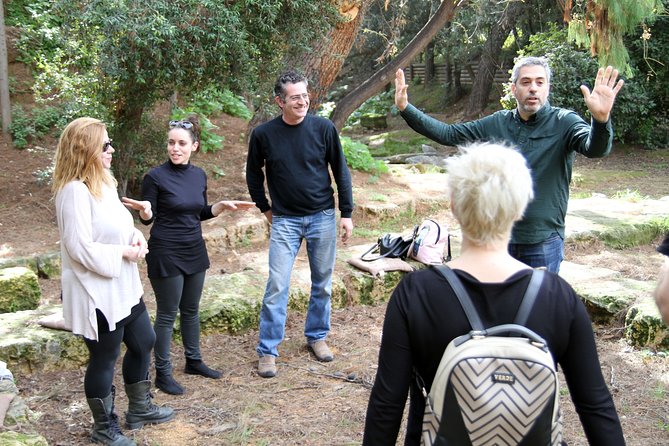
After the discussion, you switch from analysis to practice with a role-play debate. You’ll use a real replica of an ancient water-timer. That might sound like a gimmick, but it’s actually a clever learning tool.
Water-timers were part of how ancient debates worked, and this role-play brings that structure into the workshop. The idea is to make the “how” of argument tangible: how to make a point, how to respond, and how to stay on track when time matters.
This is also where the workshop often feels most fun. The role-play format turns abstract ideas into something you do with your body, your voice, and your decisions. If you want a memorable Athens activity that doesn’t feel like “another tour,” this is likely the moment you’ll remember later.
And because the group size is capped at 10, it stays manageable. You’re not one of many faces. You can actually play a role in the debate rather than observing from the sidelines.
Optional Extra Hour: Aristotle, Virtue, and Choice
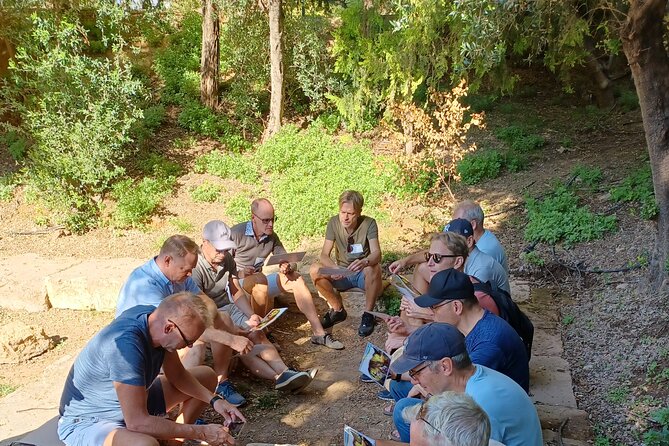
There’s an optional enhancement: an additional hour on Aristotle’s philosophy. The added session includes a thought-provoking game focused on virtue and choice.
If you’re the type who likes your learning to continue, this is the upgrade. It extends the arc from Plato to Aristotle while keeping the same interactive style. It also gives the group a new angle: not just “what is true,” but “what should we do,” and how values shape decisions.
If you’re short on time, you can also skip the extra hour and keep the core 2-hour workshop.
Who Should Take This Workshop (and Who Might Skip It)
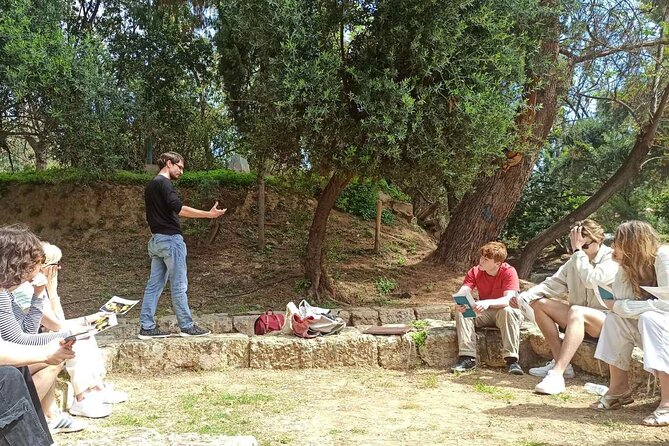
This workshop is designed for adults and teenagers over 14. Underaged participants cannot book alone, so at least one adult should book and supervise them. That makes it a strong choice for families who want something more meaningful than a standard site walk.
It’s also a good fit for adults who want a break from passive sightseeing. If you like your travel experiences to ask questions, try this. The workshop is built for people without prior knowledge, and it stays in plain English.
If you strongly prefer quiet history viewing, with photos as the main activity, you may find this workshop more demanding than a traditional guided tour. You are expected to participate in discussion and role-play.
In other words, you should book it if you’re curious and willing to talk. Skip it if you want a silent, photo-first outing.
Price and Value: What $53.92 Buys You in Athens
At about $53.92 per person for roughly 2 hours, this is priced like a midrange guided experience in Athens. What makes it feel fair is what you get for the money: an expert facilitator, liability insurance, and VAT, plus a small-group, hands-on format that replaces the usual “ride past monuments” style.
The real value is participation. You’re not just consuming information, you’re practicing interpretation and debate. For many people, that changes the whole travel payoff. A traditional tour can end and fade. This workshop is designed to leave you thinking, and that’s what philosophy is good at.
One more value point: the Plato’s Academy Digital Museum is free to enter, and it’s folded into your morning flow when open. Even if the museum stop changes by day, the workshop aims to deliver the same key insights.
Practical Tips for a Better Experience at a Historic Site
This is an outdoor experience at a historical and cultural site, so keep the practical stuff in mind.
Dress and behavior matter. The workshop notes that participants must respect heritage and conduct etiquette, including sobriety, cleanliness, appropriate dress, and avoiding loudness. The facilitator has the right to terminate participation without refund if behavior becomes disrespectful.
Because it’s outdoors, good weather is important. If cancellation happens due to poor weather, you’ll get notified at least 3 hours ahead, and you’ll be offered a different date or a full refund.
Also, assume there may be photo or video recording during the session in a public space. Service animals are allowed, and the site is near public transportation.
Finally, if you’re bringing teens, consider whether they’re the kind who enjoys discussion. This is built around answering questions and taking part, not just listening.
Should You Book This Plato’s Academy Philosophy Workshop?
Yes, if you want Athens to feel like more than postcard sightseeing. This workshop is built around active participation: reading, Socratic questioning, role-play debate, and the Allegory of the Cave discussion in a real historic setting. With a max group size of 10, it’s not crowded, and it’s designed for adults and teens 14 and up.
Book it especially if you enjoy learning by doing. The water-timer role-play and the structured debate format make Plato easier to remember. And if your goal is to understand philosophy with less intimidation, the plain English approach and beginner-friendly design are a big plus.
Consider skipping it if you want a quiet, strictly scenic outing. This is interactive, and you’ll need to be willing to talk and participate.
If you want, tell me your travel dates and who’s going (age range), and I can suggest whether the workshop fits your schedule and what to do if the Digital Museum is closed on your day.
FAQ
How long is the Plato’s Academy Park philosophy workshop?
The workshop runs for about 2 hours. There is also an optional additional hour that focuses on Aristotle.
Where does the workshop start and end?
It starts at Plato’s Academy Digital Museum, Alkmeonos 1, Athina 104 42, Greece, and ends back at the same meeting point.
Is the workshop offered in English?
Yes, it is offered in English.
Do I need prior knowledge of philosophy?
No. It is described as suitable for people without previous knowledge, with plain English and no difficult terminology.
What ages can participate?
It is suitable for adults and teenagers over 14. Underaged participants cannot book alone, so at least one adult must book and supervise them.
How big is the group?
The workshop has a maximum of 10 travelers.
Is the Plato’s Digital Museum included?
A brief visit to Plato’s Academy Digital Museum is part of the workshop. The museum also has free entrance.
What happens if the Digital Museum is closed?
On days when the museum is not open, the museum visit is replaced with an engaging discussion that covers the same key insights.
Is the workshop outdoors?
Yes, it takes place outdoors and depends on good weather.
What if archaeological excavation is taking place at the park?
There is a small chance excavation may affect the visit. If it happens, you will see the ancient Gymnasium ruins from a short distance and then move to a different spot in the park.
New pins on the Athens chart
- Shore Excursion: Acropolis, Athens City tour and The New Acropolis Museum★ 4.5 · 30 reviews
- Private Luxury Tour: Marathon – Battle & Run That Changed History★ 5.0 · 30 reviews
- 2 Day Private Tour Of Delphi, Thermopylae & Meteora From Athens★ 5.0 · 30 reviews
- Athens Airport – Athens Center Private Transfer★ 4.0 · 30 reviews
- From Athens: Ancient Corinth Half-Day Private Tour★ 4.8 · 30 reviews
- Private City Kickstart Tour: Hidden Districts★ 5.0 · 30 reviews
Workshops, compared.

Classic Cooking Class with Market Visit and Wine
Read our review →
Food Market Visit and Cooking Class with Wine
Read our review →
Greek Cuisine Cooking Class in Santorini with Recipes and Wine
Read our review →
Half-Day Cooking Class at Basiliko Family Tavern
Read our review →
Greek Cooking Class in Athens Including Rooftop Dinner with Acropolis View
Read our review →
Greek Small-Group Athens Cooking Class & Dinner
Read our review →
Authentic Cooking Class in the White Mountains
Read our review →
Browse the lists this tour appears in