
Reviewed · MUSEUMS
Private local tour of the archaeological site and museum of Olympia
Olympia hits fast. In about 2.5 hours, you get the ancient sports complex and the museum finds that explain it. What I like most is traveling with a licensed guide such as Zoe or Niki, who makes the place feel logical instead of random stones.
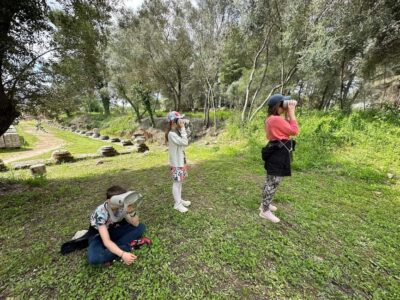
I also love how the tour works for different people. Guides like Georgia and Niki kept explanations moving at a good pace, and I especially like that kids (and visitors needing extra engagement) were brought in rather than left behind.
One thing to plan for: the entrance tickets are not included, and there’s enough walking that you should be in moderate physical fitness shape. If you want private van service from your hotel, you’ll need another option because private transportation is not part of this tour.
Key takeaways
- Private group only means you can ask questions and set the pace.
- Archaeological site first, museum second helps the artifacts make instant sense.
- You’ll see major Olympia anchors like the gymnasium and palaestra, the Temple complex, and the stadium.
- The museum stop focuses on finds tied to the site, including bronze, ceramics, armor, and sculptural pieces.
- Entrance tickets are separate, listed at €20.00 per person.
In This Review
- Olympia in 2.5 Hours, What You Really See
- Stop 1: Archaeological Site of Olympia, Sports, Worship, and Zeus
- Gymnasium and palaestra
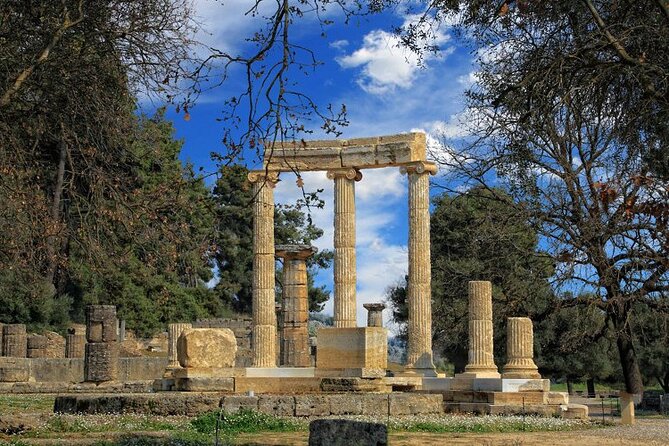
- The Philipeion and a round landmark
- Workshop of Phidias and the Zeus statue story
- Temples of Zeus and Hera
- Altar and the Olympic torch connection
- Ancient Olympic stadium
- Admission ticket note
- Stop 2: The Olympia Museum, Where Finds Turn Into Meaning
- Offerings in bronze and clay
- Armor, ceramics, and tools from the workshop
- Sculptures you can actually study
- Admission ticket note
- Price and Value, What You’re Paying For
- How the Private Format Changes the Experience
- Timing, Shoes, and Comfort on the Ground
- Is This the Right Olympia Tour for You?
- FAQ
- FAQ
- What does the tour include?
- How long is the tour?
- Do I need to pay for entrance tickets?
- Is transportation included?
- What language is the tour offered in?
- Can I cancel for a full refund?
Olympia in 2.5 Hours, What You Really See
This is the kind of tour that respects your time. Instead of treating Ancient Olympia as a long self-guided maze, you go in with a guide and a plan: ruins at the site first, then the museum finds that decode what you saw.
The format is simple. Stop 1 is the archaeological site for about 90 minutes, then Stop 2 is the museum for about an hour. That time split matters, because Olympia’s story changes depending on where you stand, and the museum makes those shifts click.
You’ll also notice a big difference between seeing ruins and understanding them. With a guide, you’re not just pointing at columns. You’re learning why particular buildings existed, what they were used for, and how the modern Olympic torch ties into the ancient ritual space.
Stop 1: Archaeological Site of Olympia, Sports, Worship, and Zeus
The archaeological site walk is built around the key places that shaped Olympia’s identity. Your guide brings context as you move, so each stop feels connected instead of like separate sightseeing errands.
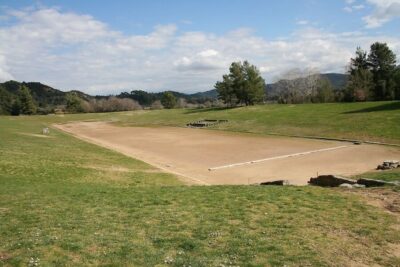
More laps of the original stadium:
Gymnasium and palaestra
You’ll start by looking at the gymnasium and palaestra. These were not just “gym ruins.” They were the backbone of training culture linked to the games. Seeing them with explanation helps you picture athletes preparing in a world where sport, status, and religion were braided together.
One practical win here: this is the point where most people start to get oriented. Once you understand what you’re looking at, the rest of the site becomes much easier to follow.
The Philipeion and a round landmark
Next is the round Philipeion. Even if you’re not a geometry fan, a round structure stands out visually, and your guide can explain why that matters in Olympia’s architectural mix.
This kind of landmark is useful for your brain. It helps you create a mental map. When you later see temples and the stadium, you’re better at tracking the sequence of space and purpose.
Workshop of Phidias and the Zeus statue story
One of the most memorable parts of Olympia is the workshop of Phidias, where the famed gold and ivory statue of Zeus was made. Even though the statue itself is not what you’ll see on-site, the workshop location gives you a tangible sense of how extraordinary craftsmanship was supported by this sacred place.
If you care about art and how it was produced, this stop pays off. It’s not just mythology. It’s materials, labor, and scale.
Temples of Zeus and Hera
Then you move through the temples of Zeus and Hera. In a museum, you learn about sculpture and offerings. On the site, you understand that worship was a daily framework, not a one-time event.
This is also where your guide’s pace matters. Too fast and you miss how the buildings relate to each other. Too slow and you run out of energy before the museum. A good private guide keeps it balanced.
More marble under museum roofs:
- Olympia: Archaeological Site & Museum E-Ticket & Audio Guide
★ 4.3 · 272 reviews - Katakolo: Olympia Tour and Archeological Museum
★ 4.6 · 57 reviews - Olympia Archaeological Site and Museum Private Guided Tour
★ 4.7 · 31 reviews - Athens: Acropolis, Parthenon & Acropolis Museum Guided Tour
★ 4.8 · 9,316 reviews
Altar and the Olympic torch connection
You’ll also see the altar, the one associated with the modern tradition of lighting the Olympic torch. That modern link can feel like a fun fact, but it’s more than branding. It’s a continuation of how ritual language survived over time.
This is the kind of connection that makes Olympia feel current without pretending the past was the same.
Ancient Olympic stadium
Finally, you’ll reach the ancient Olympic stadium. Seeing it after the training and worship areas makes the stadium feel earned. You understand why sport here was more than competition. It was tied to identity and belief.
Potential drawback at the site level: ruins can be weather-exposed and uneven. The tour is listed for moderate physical fitness, so comfortable shoes are not optional.
Admission ticket note
Site entry is not included. You’ll pay the entrance ticket separately at €20.00 per person, so I’d plan that cost early to avoid last-minute surprises.
Stop 2: The Olympia Museum, Where Finds Turn Into Meaning
After the outdoor ruins, you move into the museum for the payoff. The best part is the match between the site and the collection. You’re not seeing random artifacts from Greece. You’re seeing finds excavated from Olympia itself.
The museum is your translation layer. When you return indoors, the bronze and clay pieces stop being objects and start being evidence of what you just walked through.
Offerings in bronze and clay
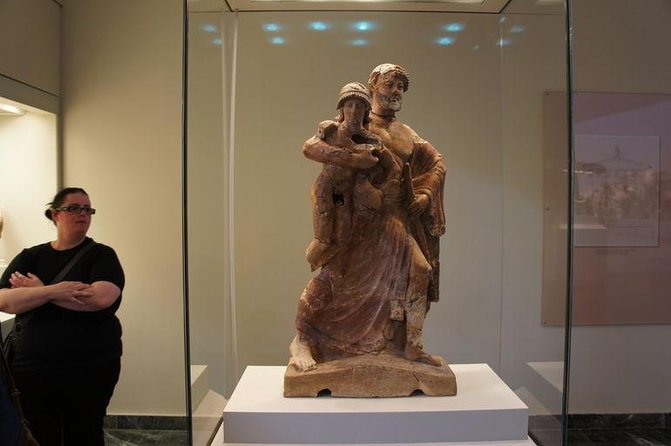
Expect to see bronze and clay offerings such as tripods and figurines. These items help you understand what people valued and what they chose to dedicate.
If you’re the type who likes details, you’ll probably spend extra time here. Tripods in particular connect sport with visible, costly offerings. Your guide can help you read what these objects signal.
Armor, ceramics, and tools from the workshop
You’ll also see armor, vases, tools, and even a cup from Phidias’s workshop. This is where the earlier site stop becomes more real.
Instead of just hearing about Phidias’s workshop on the grounds, you now stand close to the material culture tied to the same creative world. It’s a satisfying sequence: space first, production next.
Sculptures you can actually study
Among the highlights are works such as Hermes by Praxiteles and Nike by Paeonios. The museum also includes impressive and well-preserved classical statues from the pediments of the Temple of Zeus.
For many visitors, this is the moment the tour justifies itself. You start recognizing how Olympia’s religious space shaped what artists made, and how political and athletic prestige shaped what people commissioned.
A small reality check: museums can feel crowded or dim depending on the day. With a private guide, you’re more likely to get pointed to the main pieces quickly and spend time where it matters.
Admission ticket note
Museum entry is also not included in the tour price. The same entrance ticket system applies, listed at €20.00 per person.
Price and Value, What You’re Paying For
The price is $216.02 per person for a private local tour lasting about 2 hours 30 minutes. That’s not a budget price, so I’d look at value in two parts: time efficiency and interpretation.
In Olympia, the ruins are spread out and easy to misread. A guide helps you avoid the most common problem in classical sites, which is walking past key areas without understanding why they mattered. When the museum follows quickly after, the connection becomes even stronger.
What you get included is the licensed tour guide. What you do not get included is private transportation, plus the €20.00 per person entrance fee.
So the real value question is this: do you want someone to help you see what you’re looking at, or do you plan to build that context yourself? If you’re even moderately curious about ancient sport and religious ritual, private guiding tends to make the experience feel far more complete.
If you’re traveling as a small group, check whether group discounts apply. The experience is private, meaning only your group participates, so the per-person cost can make more sense when split among travel companions.
How the Private Format Changes the Experience
Because it’s a private tour, you don’t have to fit into a herd. That matters at Olympia, where people have very different interests: some want architecture, some want sculpture, some want sports history, and some want easy explanations.
In practice, I like what this means for your questions. You can ask for clarifications without feeling rushed, and the guide can adjust your pace based on what you’re responding to.
The reviews also highlight that certain guides handled a mixed group with care, including visitors who needed extra engagement. In a site like Olympia, that flexibility is a genuine quality signal.
One practical tip for you: if you have kids or you’re traveling with someone who gets tired quickly, tell the guide early. A private guide can shift emphasis so the whole group stays interested for the full 2.5 hours.
Timing, Shoes, and Comfort on the Ground
This tour is built around walking through the site and then stepping into the museum. It’s listed as requiring moderate physical fitness, which you should take seriously.
Plan for:
- Comfortable walking shoes for uneven outdoor ground
- Water and a simple sun plan, since the site includes open areas
- A calm expectation for how much you can absorb in 2.5 hours
Also note that the meeting point is on an unnamed road near Archea Olimpia 270 65, Greece, and the tour ends at Archaeological Museum of Olympia, Archaia Olympia 270 65, Greece.
The tour is offered in English, and it’s said to be near public transportation. So even though private transport is not included, you likely have workable options depending on where you’re staying.
Service animals are allowed, which is helpful to know if you travel with one.
Is This the Right Olympia Tour for You?
I’d book this private tour if you want:
- Fast, high-impact sightseeing of both the site and the museum
- A guide to explain what you’re seeing at the moment you’re seeing it
- A calmer experience than you might get in a busier group setting
- A sequence that connects ruins to artifacts quickly
I might skip it if:
- You’re comfortable touring independently and already know what the site means
- You prefer a self-paced museum visit where you can linger as long as you want at the same cases
- You don’t want to pay additional entrance tickets on top of the tour price
If you’re deciding based on value, I recommend you think about the €20.00 entrance fee as part of the “true cost” of the experience. Then decide whether you want interpretation time with a licensed guide to justify the higher per-person tour price.
If you’re traveling in peak season, you’ll likely want to plan ahead. This kind of tour is commonly booked about 58 days in advance on average.
FAQ
FAQ
What does the tour include?
It includes the services of a licensed tour guide. The entrance fees for the archaeological site and museum are not included.
How long is the tour?
It runs for about 2 hours 30 minutes (approx.), split between the archaeological site and the museum.
Do I need to pay for entrance tickets?
Yes. The entrance ticket for the archaeological site and museum is listed as €20.00 per person and is not included.
Is transportation included?
No. Private transportation is not included in this experience.
What language is the tour offered in?
The tour is offered in English.
Can I cancel for a full refund?
Yes, free cancellation is available. You can cancel up to 24 hours in advance for a full refund.
New pins on the Olympia chart
- Olympia Archaeological Site and Museum Private Guided Tour★ 4.7 · 31 reviews
- 5-Day Best of Peloponnese Private Tour: Nafplio/Olympia/Mycenae/Epidaurus/more★ 5.0 · 36 reviews
- Shore Excursion: Katakolo Sightseeing hop on hop off bus tour★ 3.0 · 36 reviews
- Private local tour of the Olympic Games site★ 5.0 · 36 reviews
- Katakolon Shore Ex: Skip-the-Lines Ancient Olympia & Olive market★ 4.5 · 37 reviews
- Olympia – Private Half Day Tour with Mini Bus★ 5.0 · 37 reviews
Museums, compared.
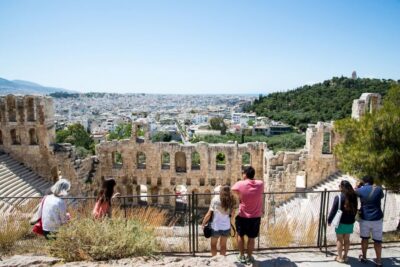
Acropolis, Parthenon & Acropolis Museum Guided Tour
Read our review →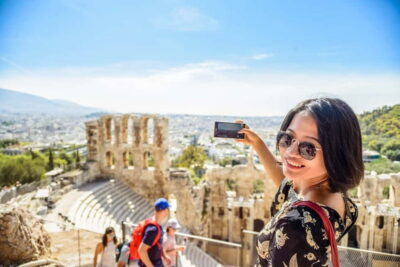
The Acropolis, Parthenon & Acropolis Museum Guided Tour
Read our review →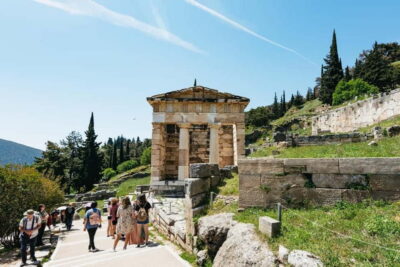
Mythology of Delphi, Museum and Arachova Guided Tour
Read our review →Acropolis, Parthenon & Acropolis Museum Guided Tour
Read our review →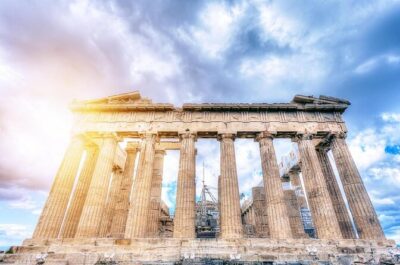
Acropolis monuments & Parthenon Walking Tour with Optional Acropolis Museum
Read our review →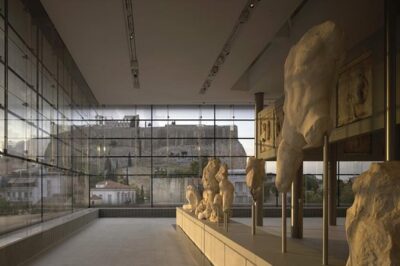
Athens All Included: Acropolis and Museum Guided Tour with Ticket
Read our review →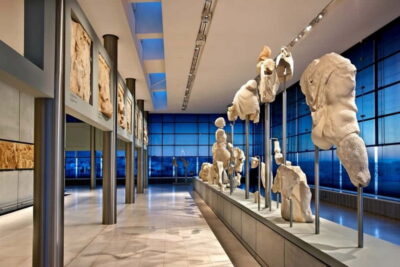
Combo: Acropolis & Acropolis Museum with Optional Tours
Read our review →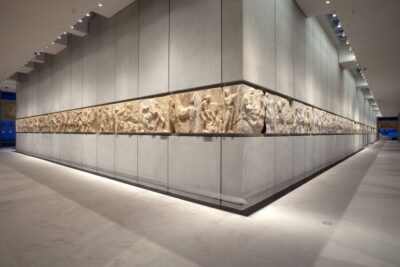
Acropolis Museum Ticket with optional Audio Guide
Read our review →Browse the lists this tour appears in